The Necklace GIF Trend: Top Kinetic Jewelry Styles of 2026
Discover the 2026 necklace GIF trend. We analyze kinetic, liquid-metal, and gyroscopic pendants, exploring the engineering and styling behind moving jewelry.

The Digital Shift: Why the Necklace GIF Defines 2026 Jewelry Trends
The way we consume jewelry has fundamentally shifted from static observation to dynamic interaction. In 2026, the search volume and social media dominance of the necklace gif format has forced designers, metallurgists, and style influencers to rethink how physical adornment is engineered and presented. A static photograph can capture the color of a gemstone or the thickness of a chain, but it completely fails to communicate weight, swing, kinetic articulation, and light-scattering brilliance. The modern consumer does not just want to see a pendant; they want to see how it behaves in motion.
This digital-first demand has birthed a renaissance in kinetic jewelry design. According to market analyses reported by Vogue Business, brands that utilize looping micro-animations and high-frame-rate GIFs in their digital storefronts see a significantly higher conversion rate compared to those relying solely on traditional white-background e-commerce photography. The 'necklace gif' is no longer just a quirky internet search term; it is a vital benchmark for jewelry that possesses true physical presence. To create a piece that looks mesmerizing in a seamless three-second digital loop, jewelers must master specific material grades, precise articulation tolerances, and advanced polishing techniques.
Three Kinetic Styles Dominating the GIF Loop
1. The Molten Liquid-Metal Pendant
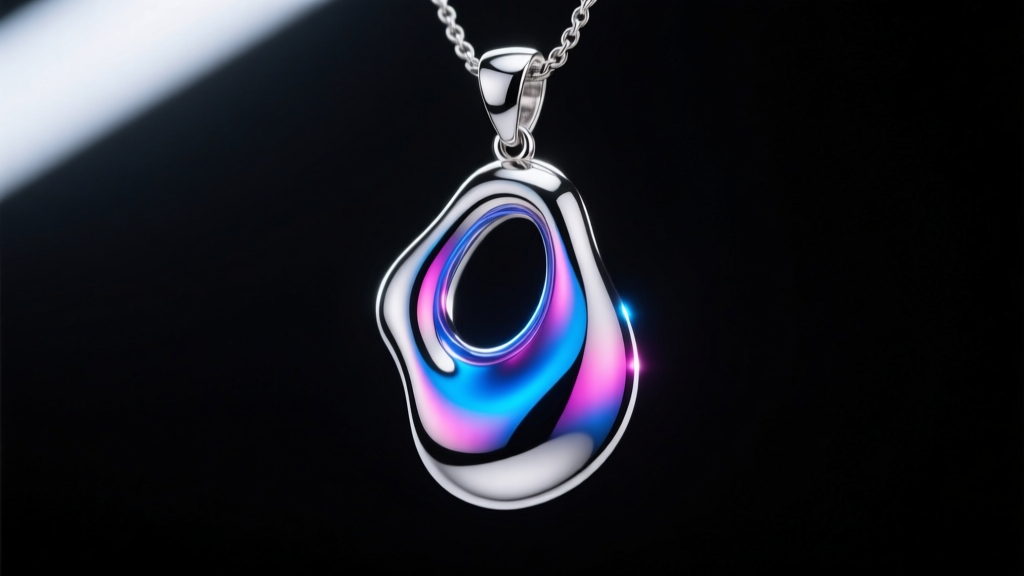
The liquid-metal aesthetic relies on extreme high-polish finishes applied to asymmetric, organic shapes. To achieve the illusion of melting mercury or splashing water frozen in time, metallurgists use 925 sterling silver as a base, followed by a heavy 2.5-micron plating of rhodium. The secret to its GIF-friendly brilliance lies in the finishing process: vibratory tumbling with high-density ceramic media for up to 48 hours, followed by hand-buffing with rouge. This creates a mirror-like surface that catches and distorts ambient light as the wearer moves, creating a hypnotic, rippling effect in digital loops. Fast-fashion alternatives often use stamped brass with a thin 0.1-micron flash plating, which quickly dulls and loses its liquid illusion within weeks of wear.
2. Gyroscopic and Spinning Medallions
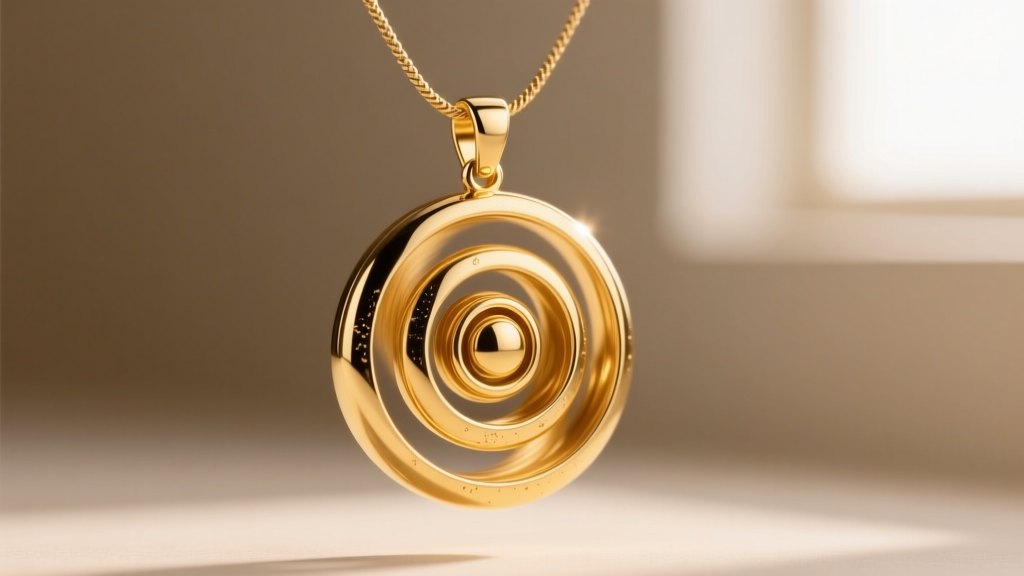
Gyroscopic pendants feature multiple nested rings that rotate independently on different axes. Engineering a piece that spins smoothly for a camera requires microscopic precision. High-end versions utilize 316L surgical stainless steel for the inner 1.0mm rivet pins to prevent galvanic corrosion when paired with 18k gold vermeil outer bezels. The primary failure mode in cheaper kinetic necklaces is 'seizing'—where micro-dust and skin oils accumulate in the 0.5mm tolerance gap between the rings, causing friction and halting the spin. Premium 2026 designs incorporate hidden synthetic sapphire washers at the pivot points to ensure frictionless, perpetual motion that translates beautifully into a seamless necklace gif.
3. Micro-Fringe and Ribbon Chain Cascades
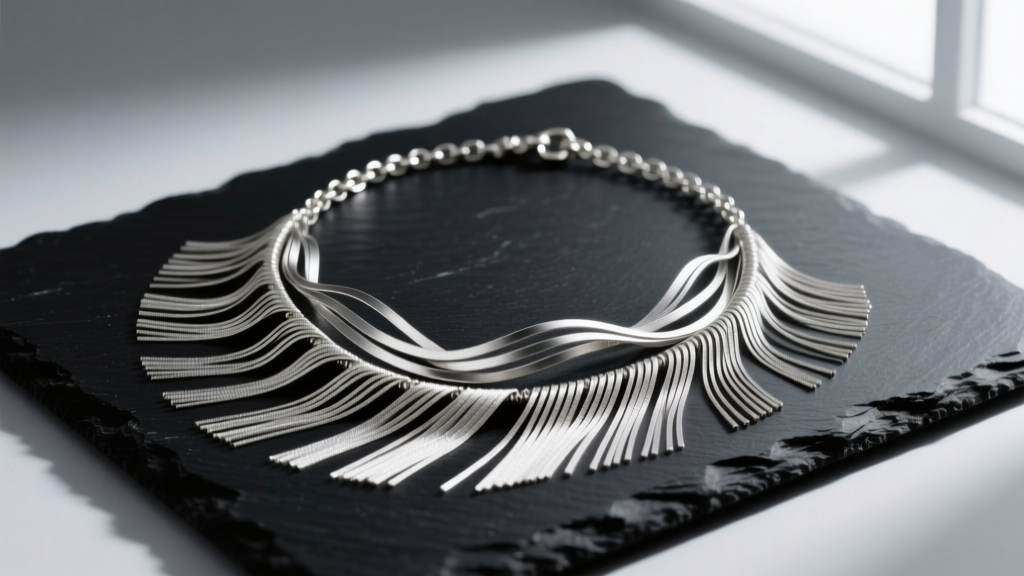
Instead of a single focal pendant, this style utilizes dozens of ultra-fine chains that ripple like water across the collarbone. For a GIF loop, the movement of the fringe is paramount. Designers are favoring 0.8mm stainless steel ribbon chains because their flat, interlocking links catch the light uniformly. When layered in groups of five to seven, the cascading effect creates a mesmerizing wave pattern that static images simply cannot convey.
Technical Specifications: Engineering for Digital Motion
To understand why certain necklaces perform better in animated formats, we must look at the physical properties that dictate movement. The table below breaks down the engineering metrics of the top three kinetic styles.
| Kinetic Style | Primary Material Grade | Optimal Chain Pairing | Movement Arc | Average Price Range (2026) |
|---|---|---|---|---|
| Liquid-Metal Pendant | 925 Silver + 2.5μm Rhodium | 1.5mm Diamond-Cut Rope | 15° - 30° Swing | $250 - $600 |
| Gyroscopic Medallion | 18k Vermeil + 316L Pins | 1.2mm Micro-Cable | 360° Multi-Axis Spin | $450 - $1,200 |
| Micro-Fringe Cascade | 304 Stainless Steel | 0.8mm Ribbon (x7 layers) | Fluid Wave Ripple | $180 - $400 |
As noted by the Gemological Institute of America (GIA), the interaction between light and metal surface topology is critical. A diamond-cut rope chain, for instance, features flattened facets that act as tiny mirrors. When captured in a high-frame-rate GIF, these facets create a 'scintillation' effect that mimics the sparkle of gemstones, relying entirely on kinetic energy to produce visual interest.
Furthermore, the bail—the crucial component connecting the pendant to the chain—must be engineered for low-friction movement. Traditional soldered bails often restrict the swing arc. In 2026, premium kinetic designs utilize a 'floating bail' mechanism, featuring a hidden Teflon-coated interior sleeve that allows the pendant to glide along the chain rather than dragging it, resulting in a much more fluid and mesmerizing GIF loop.
Capturing the Perfect Necklace GIF: Lighting and Styling
Creating a captivating digital loop requires more than just a high-quality kinetic necklace; it demands a precise understanding of lighting physics. To capture the 'flash' of a rhodium-plated liquid pendant or the scintillation of a diamond-cut chain, influencers and brand studios are adopting specific lighting rigs.
- Color Temperature: Use 5600K daylight-balanced LED panels. Warmer lights (3200K) tend to muddy the cool, mirror-like reflection of rhodium and white gold.
- Polarization: A circular polarizing filter on the camera lens is essential. It allows the photographer to dial in the exact amount of glare, preserving the metallic texture without blowing out the highlights into pure white pixels.
- Frame Rate and Shutter Speed: Shoot at 60fps or 120fps and conform to a 24fps playback loop. Use a fast shutter speed (1/250th or higher) to ensure every frame of the spinning gyroscopic bezel is tack-sharp, preventing motion blur that ruins the digital loop.
- The 'Pulse' Technique: Instead of continuous walking, the model should use subtle, rhythmic breathing or slight shoulder pulses. This provides a consistent, looping kinetic energy that keeps the fringe rippling or the pendant spinning without introducing erratic, un-loopable body movements.
- Background Contrast: Matte black slate or dark charcoal velvet absorbs ambient light, ensuring that the only light source reflecting off the jewelry is the controlled 5600K key light. This maximizes the dynamic range and makes the metallic flash pop dramatically in compressed GIF formats, which often struggle with subtle color gradients.
The Future of Kinetic Adornment
The dominance of the necklace gif in digital trend forecasting is a reminder that jewelry is inherently a four-dimensional art form—it exists in space and time. As we move deeper into 2026, the divide between digital presentation and physical engineering will continue to close. Consumers are becoming highly educated on the mechanics of their accessories, demanding sapphire bearings over brass rivets, and heavy rhodium plating over cheap flash finishes. By understanding the material science and styling techniques behind these kinetic masterpieces, you can curate a collection that looks just as breathtaking in a three-second digital loop as it does draped across your collarbone in the physical world. The future of jewelry isn't just about what you wear; it's about how your adornment interacts with the light, the lens, and the endless digital loop.


