Crocodile Tooth Necklace Guide: Sourcing, Resin & Chain Pairing
Master the technical details of a crocodile tooth necklace. Learn CITES sourcing rules, resin stabilization methods, and heavy-duty chain pairings.

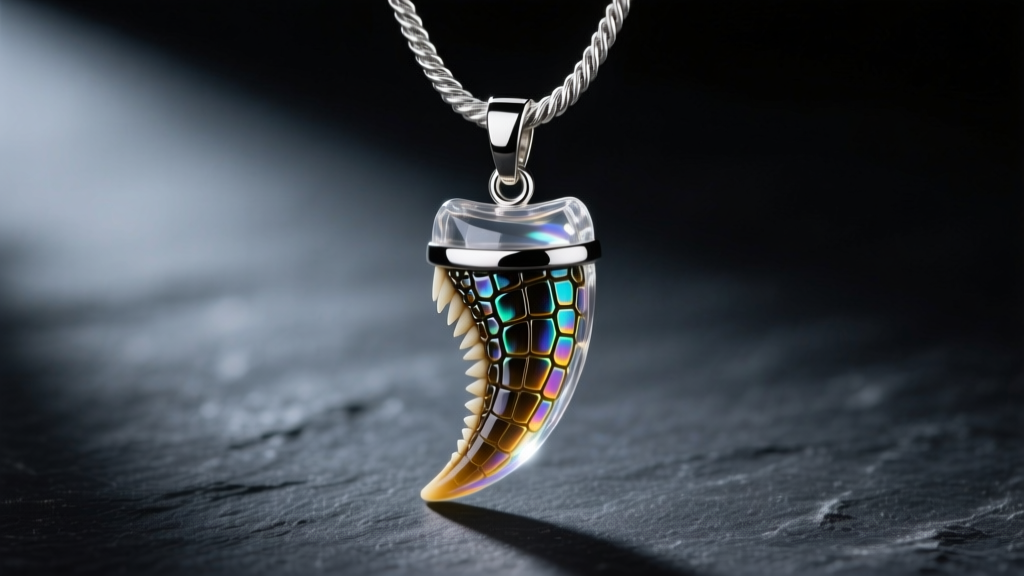
Organic Gemology: The Material Science of Crocodilian Teeth
When evaluating a crocodile tooth necklace from a technical and lapidary perspective, it is crucial to understand that you are not working with a standard mineral gemstone. Crocodilian teeth are biological composites. Unlike human teeth, which are coated in true enamel, crocodile teeth feature an outer layer of enameloid over a core of orthodentin. This enameloid cap is incredibly dense and takes a high polish, but the underlying root structure and pulp cavity are highly porous and spongy.
Because crocodiles are polyphyodont—meaning they continuously replace their teeth throughout their lives—shed teeth can be collected without harming the animal. However, the vast majority of commercially available teeth are byproducts of regulated meat and leather farming. From a structural standpoint, this porosity at the root presents a massive challenge for jewelers: untreated organic bone and dentin will absorb ambient humidity, expand, and inevitably develop micro-fractures or split entirely over time. Proper stabilization is not optional; it is a structural necessity for a wearable crocodile tooth pendant.
CITES Regulations and Ethical Sourcing Protocols
The acquisition, sale, and international transport of crocodilian parts are strictly governed by the Convention on International Trade in Endangered Species (CITES). As of 2026, enforcement at global customs checkpoints has become increasingly digitized and rigorous. You cannot simply order a raw crocodile tooth from an overseas vendor and expect it to clear customs without documentation.
Species such as the Saltwater Crocodile (Crocodylus porosus) and the Nile Crocodile (Crocodylus niloticus) are generally listed under CITES Appendix II. This means that while international trade is permitted, it must be strictly controlled to avoid utilization incompatible with their survival. To legally import a crocodile tooth necklace or raw specimen across international borders, the shipment must be accompanied by a valid CITES export permit issued by the management authority of the exporting country, and often an import permit from the destination country.
For jewelers and collectors, the safest route is to source from domestic, CITES-registered farms or verified exotic leather processors who provide a chain-of-custody certificate. According to the CITES Species Database, verifying the exact scientific name on your permit is critical, as common names can lead to confiscation if the species is actually listed under Appendix I (which bans commercial trade entirely). The IUCN Red List is also an essential resource for verifying the conservation status of specific regional crocodilian populations before making bulk purchases.
Vacuum Stabilization: Preventing Micro-Fractures
To transform a raw, porous crocodile tooth into a durable jewelry component, it must undergo vacuum stabilization. This process replaces the air and moisture inside the dentin tubules and pulp cavity with a hardened polymer, effectively turning the organic material into a stable, wood-and-resin-like composite.
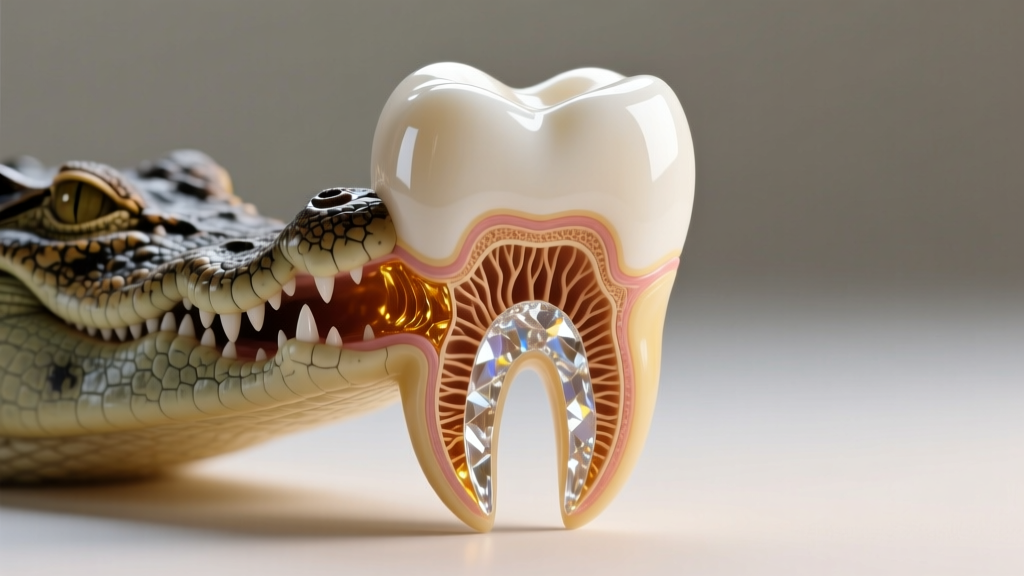
The Professional Stabilization Protocol
- Desiccation: The raw tooth must be dried completely. Jewelers typically bake the specimen in a laboratory oven at 110°F (43°C) for 48 to 72 hours to drive out all internal moisture. Any residual water will prevent resin penetration.
- Vacuum Extraction: The tooth is submerged in a heat-activated stabilizing resin (such as Cactus Juice or a specialized two-part clear epoxy) inside a vacuum chamber. The vacuum is pulled to 25-30 inHg. This boils the remaining air out of the porous root, visible as a stream of bubbles.
- Pressure Infusion: Once the bubbles cease, the vacuum is released. The sudden return to atmospheric pressure forces the liquid resin deep into the microscopic voids of the orthodentin.
- Thermal Curing: The tooth is removed, wrapped in foil, and placed in an oven at 200°F (93°C) for polymerization. The resin cures into a hard, stable plastic, locking the tooth's structure permanently.
After stabilization, the tooth can be sanded up to 3000 grit and polished with a micro-mesh compound, yielding a glass-like finish that will not yellow or crack under normal wear conditions.
Hardware Specifications: Bails, Jump Rings, and Chain Gauges
A mature saltwater crocodile tooth pendant is remarkably dense and can weigh anywhere from 20 to 45 grams. This substantial mass immediately rules out standard, lightweight jewelry findings. Using a flimsy 20-gauge jump ring or a glued-on pinch bail will result in catastrophic failure, leading to the loss of the pendant.
Structural Findings Requirements
- The Bail: The most secure method for mounting a heavy, asymmetrical tooth is a custom wire-wrapped bail using 16-gauge or 14-gauge dead-soft sterling silver or 14k gold-filled wire. The wire must be woven tightly around the crown and the upper root to distribute the weight evenly. Alternatively, a cast metal cap (copper or brass base, heavily gold-plated) can be affixed using a two-part jeweler's epoxy (like G-S Hypo Cement or JB Weld ClearWeld), but the interior of the cap must be scored for mechanical adhesion.
- Jump Rings: The jump ring connecting the bail to the chain must be soldered closed. A 16-gauge or 14-gauge soldered sterling silver or stainless steel ring is mandatory. Unsoldered rings will pull apart under the dynamic stress of walking and movement.
- Clasps: Standard spring-ring clasps are insufficient. You must use a heavy-duty 12mm to 15mm lobster clasp or a solid T-bar toggle clasp, which relies on gravity and tension rather than a fragile internal spring mechanism.
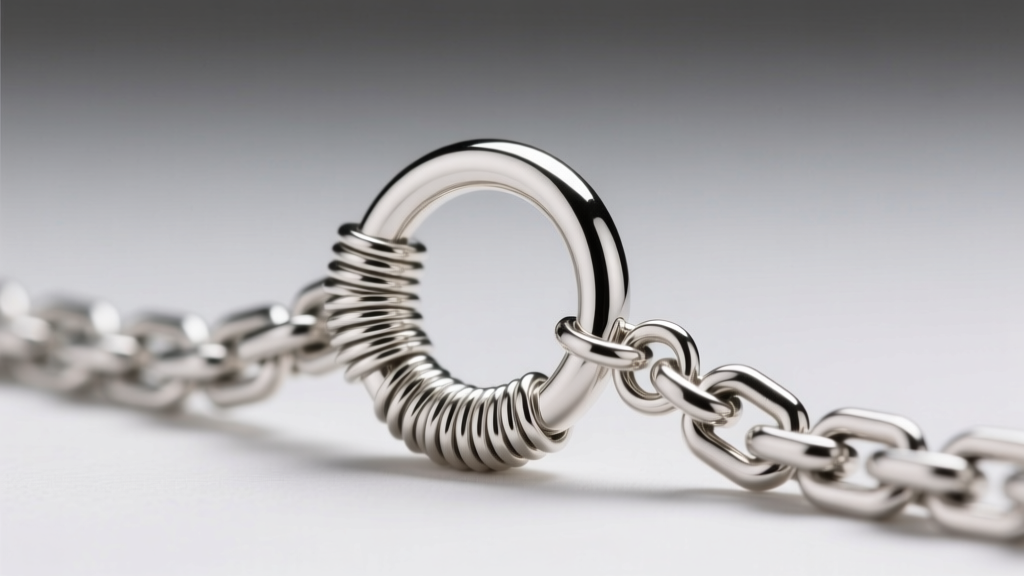
Chain Gauge and Style Matrix
Pairing the correct chain is both an aesthetic and engineering decision. The chain must support the pendant's weight without kinking or snapping. Below is a technical matrix for pairing chains with heavy organic pendants.
| Chain Style | Recommended Gauge / Width | Weight Capacity (Approx.) | Structural Notes |
|---|---|---|---|
| Cuban Link | 3.0mm - 5.0mm | 40g - 80g | Excellent weight distribution; flat links prevent twisting under heavy loads. |
| Rope Chain | 2.5mm - 4.0mm | 30g - 60g | Highly flexible, but tighter weaves can trap skin oils and require ultrasonic cleaning. |
| Wheat / Spiga | 2.0mm - 3.5mm | 25g - 50g | Woven links offer immense tensile strength; ideal for a more subdued, textured aesthetic. |
| Box Chain | 2.5mm - 4.5mm | 35g - 70g | Square links provide a modern look, but sharp inner edges can wear down soft wire-wrapped bails over time. |
Long-Term Maintenance and UV Degradation Prevention
Even after professional stabilization, a crocodile tooth necklace requires specific care protocols to maintain its structural integrity and visual appeal. The primary enemy of organic jewelry is ultraviolet (UV) radiation and extreme thermal cycling.
Prolonged exposure to direct sunlight will cause the underlying dentin to yellow and the stabilizing resin to become brittle over a period of years. When not being worn, the pendant should be stored in a UV-blocking jewelry box or a dark, climate-controlled environment. Furthermore, while the enameloid cap is highly resistant to chemicals, the stabilized root should never be submerged in chlorinated pool water or exposed to harsh ultrasonic jewelry cleaners. The high-frequency vibrations of an ultrasonic cleaner can shatter the microscopic resin bonds within the porous root structure. For routine cleaning, use a soft microfiber cloth and a mild, non-abrasive soap solution, gently wiping the surface to remove sebum and environmental dust.
By adhering to strict CITES sourcing guidelines, utilizing professional vacuum stabilization, and engineering the hardware to handle the pendant's specific mass, jewelers and collectors can ensure that a crocodile tooth necklace remains a striking, durable, and legally compliant piece of wearable natural history.


