The 1980s Necklaces Revival: 2026 Maximalist Trend Guide
Discover how 1980s necklaces are dominating 2026 fashion. Learn to style chunky gold ropes, Memphis resins, and crystal collars with modern flair.


The Return of Maximalism: Why 1980s Necklaces Are Back in 2026
For the past half-decade, the jewelry industry has been suffocated by the 'quiet luxury' movement—whisper-thin gold chains and barely-there pendants. But as we move deeper into 2026, the pendulum has violently swung back. The cultural fatigue of minimalism has birthed a neo-maximalist renaissance, and at the center of this aesthetic earthquake are 1980s necklaces. Driven by a nostalgic yearning for the unapologetic excess of the decade, high fashion runways and streetwear archives alike are resurrecting the boldest silhouettes of the 1980s. However, the 2026 approach to this revival is not about wearing a costume; it is about harnessing the structural weight and visual gravity of vintage 80s pieces and contrasting them against modern, architectural tailoring.
According to the Victoria and Albert Museum's jewelry archives, the 1980s marked a pivotal shift where jewelry transitioned from mere adornment to a primary vehicle for personal branding and subcultural signaling. Today, collectors and stylists are hunting for authentic 1980s necklaces not just for their aesthetic, but for their superior mid-century manufacturing techniques that are largely lost to modern fast-fashion casting.
3 Defining 1980s Necklace Styles Dominating Today
To navigate the 1980s necklace revival, you must understand the triumvirate of styles that defined the decade. Each requires a different approach to sourcing, authentication, and styling.
1. The Chunky Gold Rope Chain
Popularized by the golden era of hip-hop and Wall Street excess, the thick gold rope chain is the undisputed king of 80s necklaces. In the 1980s, these were rarely solid gold due to the sheer cost of the metal at the time. Instead, they were masterclasses in Heavy Gold Electroplate (HGE). Vintage pieces typically feature a solid brass or bronze core plated with a remarkably thick layer of 14k or 18k gold—often up to 10 times thicker than modern 'gold vermeil'. When sourcing an authentic 8mm to 12mm vintage rope chain, expect it to weigh between 45 and 80 grams. The weight gives it a liquid drape that modern, hollow-cast chains simply cannot replicate.
2. Memphis-Style Geometric Resin
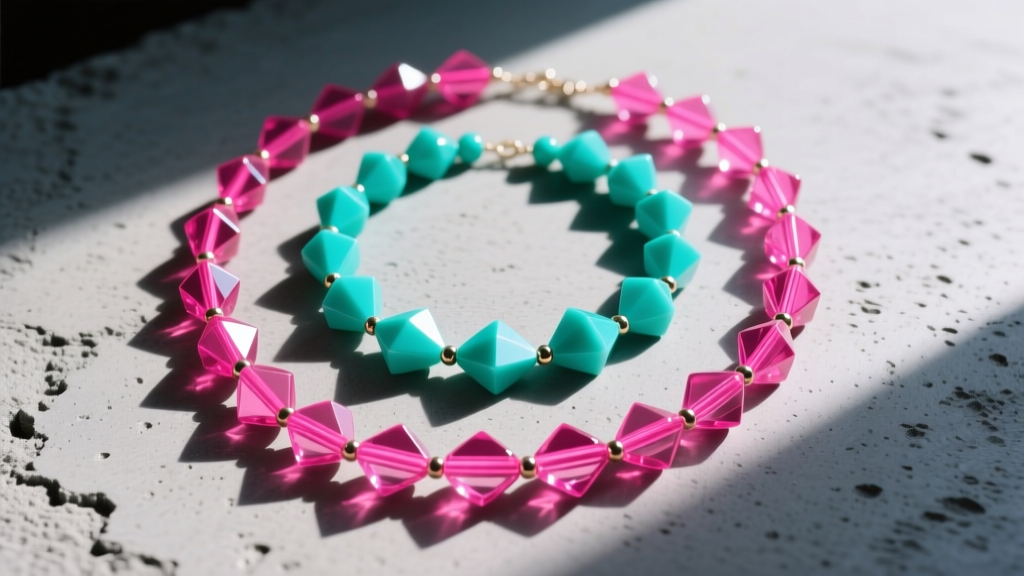
Inspired by the Memphis Group's radical design philosophy, 1980s resin necklaces feature clashing neon palettes, terrazzo patterns, and asymmetrical geometric beads. Brands like Kenzo and early Vivienne Westwood experimented heavily with cellulose acetate and early acrylics. Buyer beware: authentic 1980s PVC and resin pieces are prone to 'plasticizer migration.' If stored in high heat, the chemical compounds break down, leaving the beads feeling permanently tacky. Always inspect vintage resin for structural integrity and surface stickiness before purchasing.
3. The Crystal-Encrusted Collar
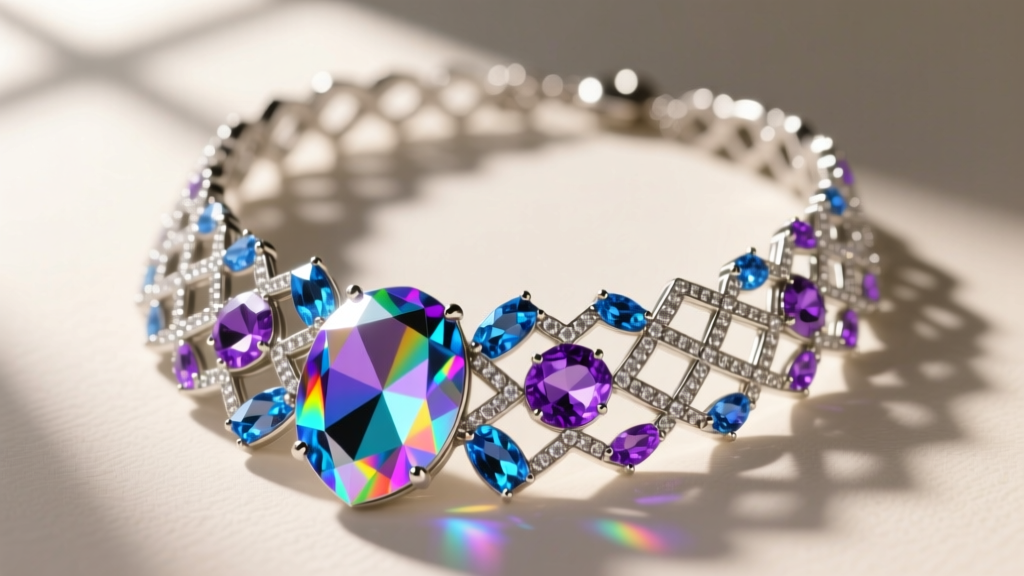
The 'Dynasty' effect made the rigid, crystal-encrusted collar necklace a staple of 80s power dressing. These pieces rely on hundreds of prong-set rhinestones, often featuring the Aurora Borealis (AB) finish that refracts light into rainbow spectrums. The critical failure point in vintage crystal collars is foil-back degradation. Moisture trapped beneath the glass over 40 years can oxidize the reflective silver foil, turning the stones black. When buying, hold the piece to the light; if the stones look cloudy or grey rather than brilliant, the foil is compromised.
Vintage vs. Modern Reinterpretations: A Buyer’s Matrix
As the trend peaks in 2026, the market is flooded with both authentic vintage 1980s necklaces and modern 'neo-80s' reissues. Use this matrix to understand the material and pricing differences before you invest.
| Style Category | Authentic 1980s Vintage (Material & Price) | 2026 Neo-80s Reissue (Material & Price) | Durability & Wear Notes |
|---|---|---|---|
| Gold Rope Chain (8mm) | Brass core, 14K HGE. $150 - $350 | Hollow 10K gold or PVD plated steel. $400 - $900 | Vintage plating lasts decades if kept dry; modern PVD can chip on impact. |
| Geometric Resin Collar | Cellulose acetate / early PVC. $80 - $250 | Modern bio-resin / 3D printed nylon. $120 - $300 | Vintage may suffer plasticizer migration; modern bio-resin is UV stable. |
| Crystal AB Collar | Lead glass rhinestones, brass base. $200 - $600 | Swarovski zirconia, sterling silver. $800 - $1,500+ | Vintage foil backs are fragile; modern silver settings prevent skin oxidation. |
How to Style 1980s Necklaces Without Looking Costumey
The biggest mistake enthusiasts make when wearing 1980s necklaces in 2026 is pairing them with 1980s clothing. To achieve a modern, editorial look, you must utilize the principle of temporal contrast.
- The Power Blazer Contrast: Pair a massive, glittering crystal collar necklace with a sharply tailored, oversized menswear blazer in matte charcoal wool. The matte fabric absorbs light, allowing the AB rhinestones to act as the sole focal point of the outfit.
- The Silk Slip Dress: A heavy, 60-gram vintage gold rope chain looks incredibly striking draped over a minimalist, bias-cut silk slip dress. The juxtaposition of the aggressive, masculine chain against delicate, fluid silk is a hallmark of 2026 styling.
- The Turtleneck Anchor: For Memphis-style resin beads, avoid busy patterns. Wear them over a tight, ribbed black or navy turtleneck. The dark, form-fitting base provides a gallery-like backdrop for the neon geometric shapes to pop without overwhelming the eye.
Furthermore, abandon the 80s instinct to layer multiple massive pieces. In 2026, the rule is one hero piece. Let the 1980s necklace command the entire neckline; keep earrings minimal (such as small diamond studs or simple gold hoops) to maintain visual balance.
Sourcing Authentic 80s Pieces: What to Look For
Authentication is paramount when investing in vintage 1980s necklaces. The secondary market is saturated with modern replicas disguised as 'new old stock.' Here is your expert checklist for verifying authenticity:
1. Inspect the Clasp Mechanism: Authentic 80s gold chains rarely used the modern lobster claw clasp. Look for vintage barrel clasps, fold-over safety clasps, or early, bulky spring-ring clasps. If a piece claiming to be from 1985 features a sleek, laser-etched lobster clasp, it has either been repaired or is a modern reproduction.
2. Decode the Hallmarks: The Gemological Institute of America (GIA) notes that electroplating markings changed significantly over the decades. Look for stamps like '1/20 14K HGE' (Heavy Gold Electroplate) or '18K GP' (Gold Plated). Modern pieces often use 'Vermeil' or micron-plating stamps. Additionally, look for maker's marks from defunct or heritage costume jewelry houses like Trifari, Monet, or Kramer.
3. The Magnet and Weight Test: Bring a rare-earth magnet when sourcing in person. Gold and brass are non-magnetic. If the chain jumps to the magnet, it contains a steel or iron core—a common shortcut in cheap 2020s replicas, but virtually unheard of in quality 1980s American or European costume jewelry. Furthermore, trust your wrist; genuine 80s brass-core chains have a distinct, heavy density that modern hollow aluminum or steel alloys lack.
Final Verdict on the Decade of Excess
The resurgence of 1980s necklaces is more than a fleeting micro-trend; it is a permanent correction to the sterile minimalism that dominated the early 2020s. By understanding the material science of vintage electroplating, the chemical quirks of 80s resins, and the structural vulnerabilities of vintage crystal foils, you can build a collection that is not only visually arresting but historically significant. In 2026, true style isn't about whispering—it's about knowing exactly how to make a statement that echoes across decades.


