The Complete Cross and Mary Necklace Buying Guide
Discover how to choose a cross and mary necklace. Learn about metal grades, chain styles, pendant proportions, and pricing in our expert buying guide.

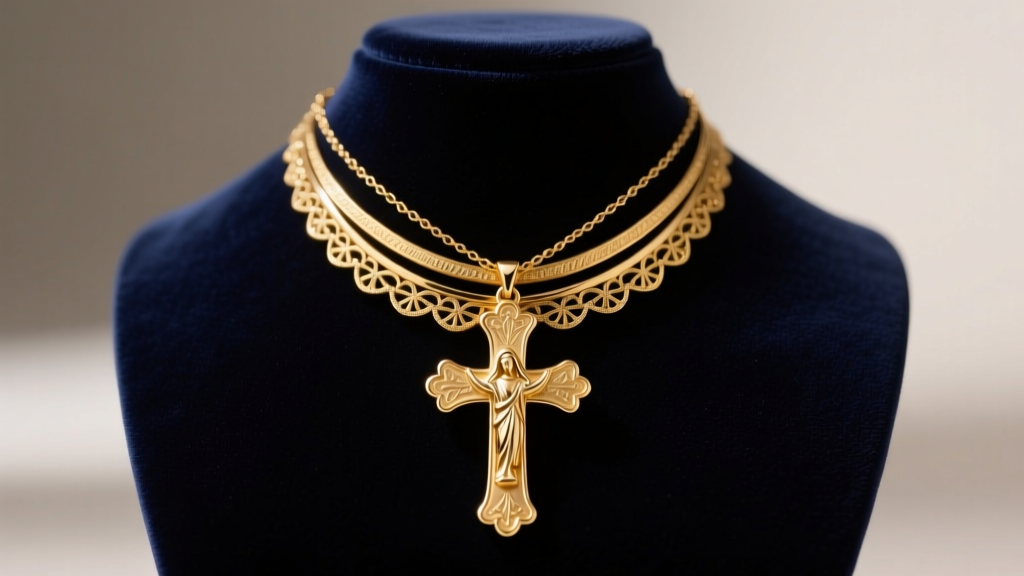
Understanding the Cross and Mary Necklace Configurations
The cross and mary necklace is a profound expression of faith and a striking piece of layered jewelry design. When shopping for this specific combination, buyers typically encounter three distinct structural configurations. Understanding these variations is critical, as they dictate how the piece drapes, tangles, and wears over time.
1. The Integrated Single Pendant: In this design, the Virgin Mary medal (often the Miraculous Medal or Our Lady of Guadalupe) is set directly into the center or the lower quadrant of the cross. This is the most durable option, as there are no secondary jump rings to catch on clothing. However, it requires a larger overall pendant size—usually exceeding 25mm in height—to ensure the iconography remains legible.
2. The Dual-Pendant Single Chain: This features both a crucifix and a Mary medal hanging from the same chain. Expert Buying Tip: If you choose this style, ensure the jeweler uses soldered jump rings or a fixed bail hierarchy. If the pendants share a single, unsoldered jump ring, they will constantly overlap, leading to severe metal-on-metal scratching and eventual wear-through of the bail holes.
3. The Layered Set: Two separate chains—one holding the cross, the other the Mary medal. This is currently the most popular styling method in 2026. To prevent the 'tangle trap,' ensure there is at least a 2-inch difference in chain length between the two necklaces (e.g., a 16-inch choker for the Mary medal and an 18-inch chain for the cross).
Metal Grades and Durability: What to Look For
Because religious jewelry is often worn daily and exposed to sweat, body oils, and environmental moisture, selecting the correct metal grade is non-negotiable. The Gemological Institute of America (GIA) outlines strict standards for precious metals that apply directly to your purchasing decision.
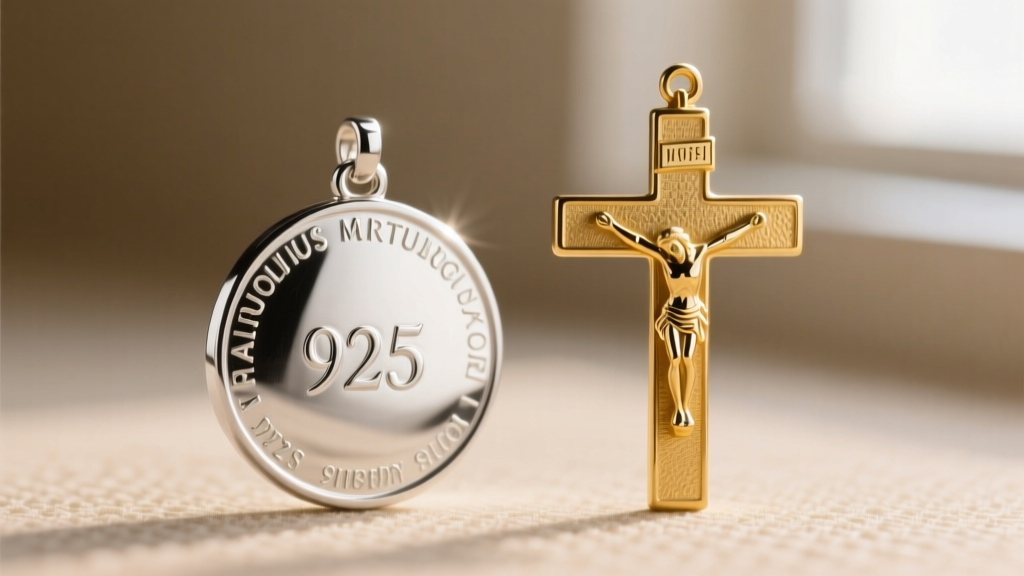
| Metal Type | Hallmark | Durability & Tarnish Resistance | Price Tier |
|---|---|---|---|
| Solid 14k Gold | 585 or 14k | Excellent. Highly resistant to tarnish. Ideal for lifelong daily wear. | High ($250 - $800+) |
| Sterling Silver | 925 | Good, but prone to sulfide tarnishing. Requires rhodium plating for low maintenance. | Medium ($60 - $150) |
| Gold Vermeil | 925 + Gold | Moderate. Must be at least 2.5 microns thick to survive daily friction. | Medium ($80 - $200) |
| Gold Plated (Brass) | None or GP | Poor. Flash plating (0.1 microns) will wear off in months, exposing base metals. | Low ($20 - $50) |
| 316L Stainless Steel | 316L | Exceptional. Hypoallergenic and waterproof, but cannot be resized or easily repaired. | Low ($30 - $80) |
The Vermeil Trap: Many online retailers market 'gold plated' necklaces as vermeil. True vermeil must have a sterling silver base and a gold layer of at least 2.5 microns. If the product description does not explicitly state the micron thickness or the 925 base, assume it is cheap brass plating that will turn your skin green.
Chain Styles, Gauge, and Clasp Mechanics
The chain is the structural backbone of your cross and mary necklace. Dual pendants introduce asymmetrical weight distribution, meaning the chain must possess high tensile strength.
- Box Chains (1.0mm - 1.5mm): The absolute best choice for dual pendants. The interlocking square links distribute weight evenly and will not pull fine body hair. A 1.2mm gauge is the sweet spot for durability without looking overly bulky.
- Rope Chains: Offer beautiful light refraction but are notorious for snagging on lace or knit fabrics. If you choose a rope chain, ensure it is at least 1.5mm thick; thinner rope chains are highly susceptible to kinking, which permanently weakens the links.
- Cable Chains: A classic choice, but standard oval cable chains under 1.0mm are prone to snapping at the solder points when subjected to the swinging weight of two pendants.
Clasp Selection: Never accept a spring-ring clasp for a dual-pendant necklace. The internal spring mechanism is too weak to support the dynamic weight of a cross and medal, leading to accidental drops. Always opt for a lobster clasp or a secure bolt ring with a heavy-duty jump ring.
Proportions, Enamel, and Gemstone Accents
Aesthetics in religious jewelry rely heavily on proportion and color contrast. When evaluating the pendants, consider the visual weight. If the cross is 20mm tall, the Mary medal should ideally be between 12mm and 15mm in diameter. A medal that is too large will compete with the cross, while one that is too small will look like an afterthought.
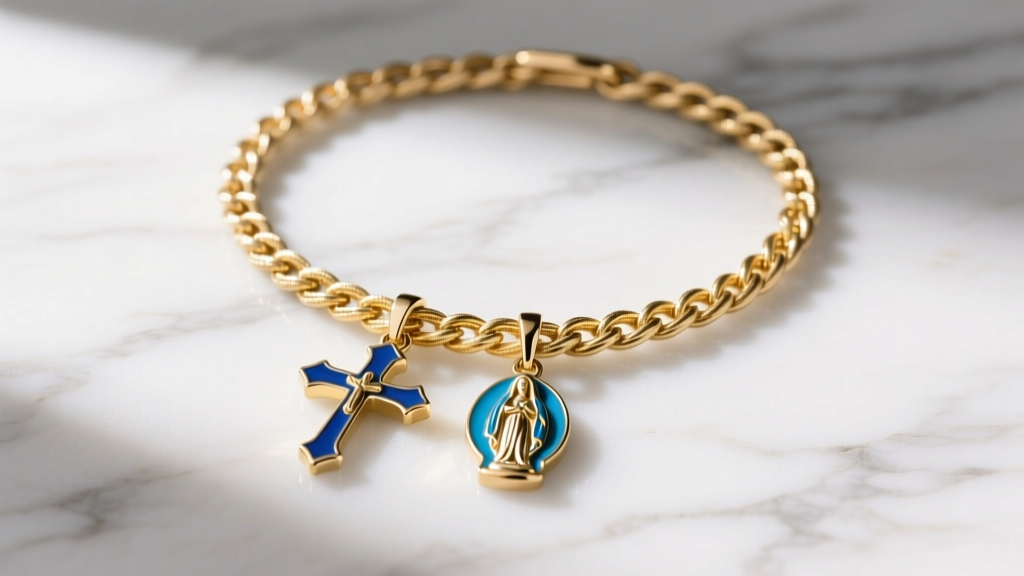
Enamel Filling: Many high-quality Mary medals feature enamel detailing, particularly in the halo or the background stars. Look for cold enamel (epoxy-based) or vitreous enamel (fired glass). Vitreous enamel is far superior as it will not yellow or chip over decades of wear, whereas cheap epoxy resins will degrade and peel when exposed to UV light and perfume chemicals.
Gemstone Integration: For a modern 2026 aesthetic, many jewelers are integrating lab-grown diamonds or moissanite into the cross. If purchasing a piece with inset stones, ensure they are prong-set rather than glued. Glued stones in religious jewelry frequently fall out due to the frequent handling and friction associated with daily devotion.
Pricing Tiers and Where to Buy
When budgeting for a cross and mary necklace, pricing is heavily dictated by metal weight (grammage) and manufacturing origin. Here is a realistic pricing framework for authentic, durable pieces:
- Entry-Level ($40 - $90): 316L Stainless steel or rhodium-plated 925 silver. Best for teenagers or those on a strict budget. Buy from specialized religious gift shops or reputable Etsy sellers who provide material guarantees.
- Mid-Tier ($120 - $350): Solid 925 sterling silver with heavy gold vermeil, or solid 10k/14k gold with a very low gram weight (under 2 grams). Ideal for confirmation gifts or everyday adult wear. Look for established online jewelers like Blue Nile or specialized Catholic artisans.
- Fine Jewelry ($400 - $1,500+): Solid 14k or 18k gold, weighing over 4 grams, potentially featuring VS-clarity lab-grown diamonds. These are heirloom-quality pieces meant to be passed down through generations. Purchase only from certified jewelers who provide a certificate of authenticity and metal weight.
Care and Maintenance for Religious Jewelry
Proper care ensures your necklace retains its spiritual and material value. According to jewelry conservation guidelines, you should remove your necklace before swimming in chlorinated pools, as chlorine rapidly degrades the structural integrity of 14k gold solder points and strips rhodium plating from silver.
Clean your cross and mary necklace monthly using a few drops of mild dish soap, warm water, and a soft-bristled baby toothbrush. Pay special attention to the crevices of the Mary medal, where skin oils and lotions accumulate, dulling the relief details. Dry thoroughly with a microfiber cloth before storing in an anti-tarnish pouch. By prioritizing structural integrity, precise metal grades, and thoughtful proportions, you will secure a piece of jewelry that beautifully honors your faith for a lifetime.


