Cross Necklace Gold Care: Troubleshooting Breaks & Wear
Is your cross necklace gold chain breaking or tarnishing? Discover expert troubleshooting tips, repair costs, and care routines to restore your pendant.

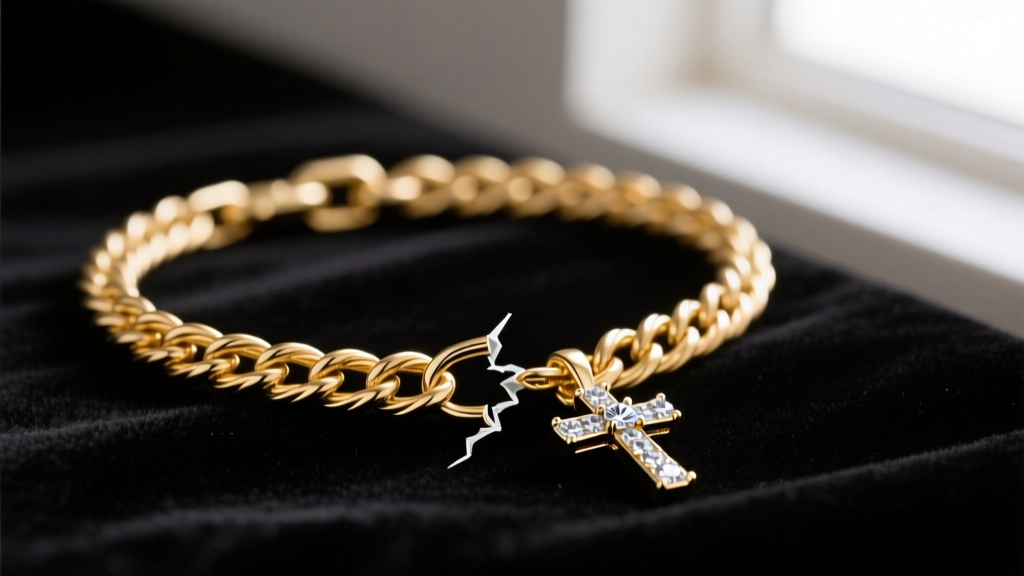
A gold cross necklace is more than just a fashion staple; it is often a deeply sentimental heirloom or a daily-wear anchor piece. However, because it rests against the collarbone and is subject to constant friction, tension, and environmental exposure, it is highly susceptible to structural failures. Whether you are dealing with a snapped cable chain, a tarnishing pendant, or a failing clasp, understanding the metallurgy and mechanics of your jewelry is the first step toward a permanent fix. In this comprehensive 2026 troubleshooting guide, we break down the exact failure modes of gold cross necklaces and provide actionable, expert-level solutions to restore them.
The Most Common Failures in Gold Cross Necklaces
Before attempting any repairs, it is crucial to diagnose why your necklace failed. According to the Jewelers of America, the majority of necklace repairs stem from three specific issues: jump ring separation, chain link fatigue, and clasp spring failure. The jump ring—the tiny circular link that connects the cross pendant to the chain—is the single most common point of failure. If the jump ring was never soldered shut during manufacturing, everyday pulling can cause the gap to widen, allowing the pendant to slip off and get lost.
Furthermore, the purity of the gold dictates its vulnerability. Pure 24k gold is far too soft for chains, which is why jewelers alloy it with metals like copper, zinc, and silver. While 18k gold (75% pure) offers a rich, buttery color, it is highly prone to stretching and kinking. Conversely, 14k gold (58.5% pure) provides the ideal tensile strength for daily-wear cross necklaces, resisting deformation while maintaining a warm luster.
Troubleshooting Chain Snaps and Weak Links
When your chain snaps, the repair method and cost depend entirely on the chain's architecture. Not all gold chains are created equal, and some are notoriously difficult to fix.
Cable and Figaro Chains
These chains feature simple, interlocking oval or round links. When they break, a jeweler can easily weave the links back together and use a traditional torch to solder the seam. Because the links are uniform, the repair is usually invisible to the naked eye. Expect to pay between $35 and $55 for a standard 14k gold cable chain solder.
Box and Wheat Chains
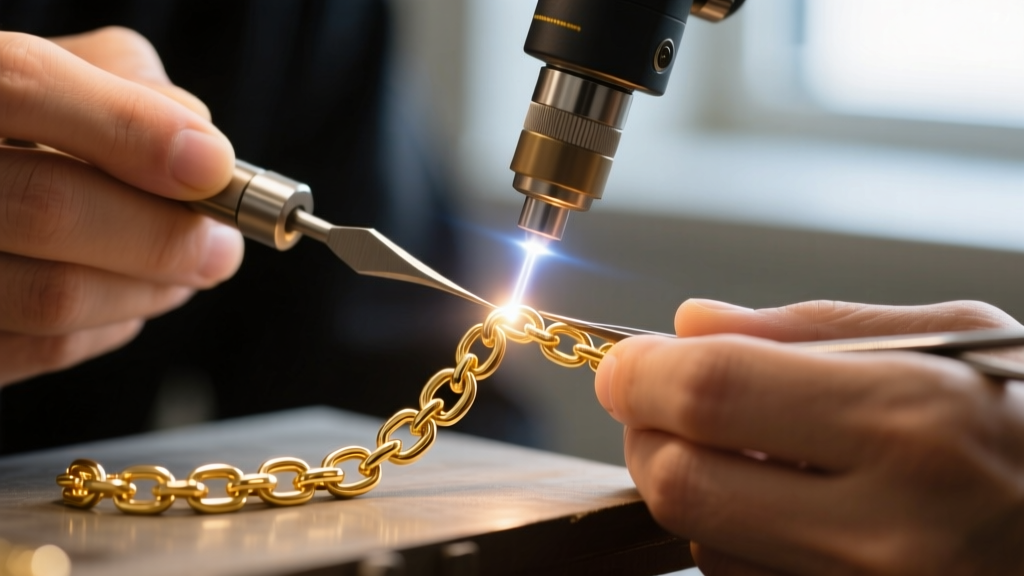
Box chains are notorious for kinking. Once a box chain folds in on itself, the structural integrity of the square links is compromised, leading to a snap. Traditional torch soldering often leaves a visible, stiff seam on a box chain. The modern solution is laser welding, which uses a highly concentrated beam to fuse the gold without heating the surrounding links. Laser repairs for box chains typically range from $65 to $95.
Rope Chains
Rope chains are twisted to mimic the look of a two-strand rope. When they break, the twisted links tend to unravel, making reassembly incredibly tedious. If your rope chain snaps, do not attempt to pull the unraveled ends tight; this will permanently distort the twist pattern. A professional jeweler must carefully re-weave the links before laser welding. Repairs often start at $80 due to the labor intensity.
Solving the Tarnish Myth: Solid Gold vs. Plated Crosses
One of the most frequent complaints we see is a gold cross necklace turning black, green, or revealing a silver/brass undertone. Solid gold (10k, 14k, 18k) does not tarnish or flake. If your necklace is changing color, it is not solid gold; it is plated, filled, or vermeil. Understanding the difference is critical for troubleshooting surface wear.
| Material Type | Composition & Thickness | Failure Mode | Troubleshooting Solution |
|---|---|---|---|
| Solid 14k/18k Gold | Solid alloy throughout (58.5% - 75% pure gold) | Surface scratches, oil buildup | Ultrasonic cleaning and professional polishing. |
| Gold Vermeil | Sterling silver base with minimum 2.5 microns of gold | Wears down to silver at high-friction edges | Replating by a jeweler ($40-$60). Do not polish aggressively. |
| Gold Plated (Brass) | Brass/Copper base with <0.5 microns of gold flash | Rapid flaking, green skin reaction (copper oxidation) | Unsalvageable for long-term wear. Replace with solid or vermeil. |
| Gold Filled | Brass base with a thick mechanically bonded gold layer (5%+) | End-caps and cut edges tarnish black | Clean edges with a soft brass brush; avoid harsh chemicals. |
If your vermeil cross pendant has worn down to the sterling silver base, do not attempt to use abrasive silver polish. Silver polish contains micro-abrasives that will strip away any remaining gold micron layers. Instead, take it to a jeweler for an electroplating bath to restore the original gold finish.
Upgrading Failing Clasps
If your cross necklace gold chain keeps unfastening itself, the issue is likely the clasp mechanism. The standard spring ring clasp relies on a tiny internal steel spring that frequently snaps or loses tension over time. Furthermore, the lever you pull back with your fingernail can easily bend outward, preventing the clasp from closing fully.
The Fix: Upgrade to a lobster claw clasp. Lobster clasps feature a solid cast body and a heavier internal spring, making them vastly superior for holding the weight of a solid gold cross pendant. When upgrading, ensure the jeweler solders the jump ring that connects the new lobster clasp to the chain. An unsoldered jump ring will eventually pull apart under the pendulum-like swinging motion of a heavy cross pendant.

Fixing Loose Gemstones in Diamond-Cut Crosses
Many modern gold cross necklaces feature pave-set diamonds or cubic zirconia. Because crosses are worn close to the body, they are subjected to body oils, lotions, and friction from clothing, all of which degrade the tiny prongs holding the stones in place.
Perform the "Tap Test" monthly: Hold the cross pendant close to your ear and gently tap it with your fingernail. If you hear a faint rattling sound, a gemstone is loose within its bezel or prong setting. Stop wearing the necklace immediately. A lost diamond in a pave cross is incredibly difficult to match in terms of carat, color, and clarity. A jeweler can perform a "prong tightening" and ultrasonic clean for roughly $25 to $40, a small price to pay to secure a valuable stone.
Preventative Maintenance: A 2026 Care Protocol
Preventing damage is always more cost-effective than laser welding or replating. Follow this strict maintenance protocol to extend the life of your gold cross necklace:
- Daily: Remove the necklace before showering. The sulfates and chlorides in municipal water and shampoos accelerate the dulling of gold alloys and degrade the rhodium plating on white gold crosses.
- Weekly: Wipe the pendant and chain with a lint-free microfiber cloth to remove sebum and dead skin cells, which accumulate in the crevices of diamond-cut crosses and cause a grayish buildup.
- Monthly: Wash the necklace in a bowl of warm water with three drops of mild, phosphate-free dish soap. Use a baby toothbrush to gently agitate the back of the cross pendant where it rests against the skin.
- Annually: Bring the piece to a certified jeweler for a microscopic inspection of the bail (the loop the chain passes through) and the jump rings to catch metal fatigue before a snap occurs.
When to Consult a Professional Jeweler
While minor tangles and surface dirt can be managed at home, structural issues require professional intervention. If your chain has stretched, if the bail is rubbing completely through the top of your cross pendant, or if your gold vermeil is flaking, consult a master jeweler. As noted by the Gemological Institute of America (GIA), understanding the exact karat and alloy composition of your gold is essential before applying any chemical cleaners or heat-based repairs. By diagnosing the specific failure mode of your necklace, you can apply the exact right fix, ensuring your cross necklace remains a pristine, enduring symbol for decades to come.


