Cross Necklace With Hidden Knife: Value & Safety Guide
Evaluate the true value of a cross necklace with hidden knife. We break down materials, pricing tiers, hinge mechanics, and legal risks.

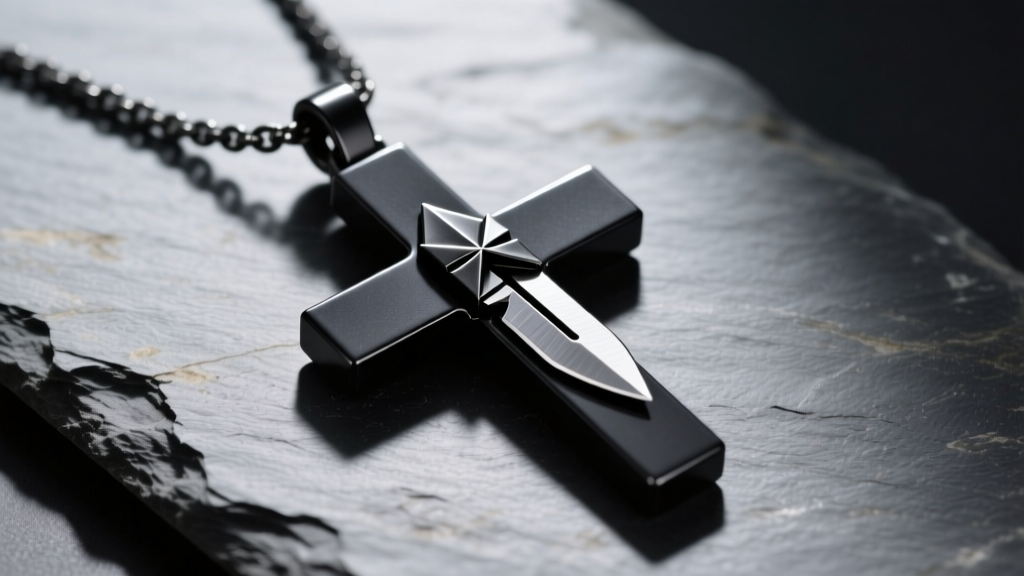
The Appeal and Reality of Tactical Novelty Jewelry
The intersection of religious iconography, personal expression, and tactical preparedness has spawned a highly specific niche in the jewelry market: the cross necklace with hidden knife. Often marketed as an everyday carry (EDC) self-defense tool or an edgy conversation starter, these pendants conceal a small folding or fixed blade within the vertical or horizontal beams of a cross. But beyond the novelty factor, how do these pieces hold up in terms of actual value, material integrity, and safety? As a buyer in 2026, navigating the flood of cheap imports versus premium tactical jewelers requires a critical eye. This comprehensive budget and value assessment breaks down exactly what you are paying for, the mechanical failure points to avoid, and the hidden legal costs associated with carrying concealed blades disguised as jewelry.
Material Breakdown: What You Are Actually Paying For
The most significant determinant of value in a cross necklace with hidden knife is the metallurgy. The pendant must serve two conflicting purposes: it must be aesthetically pleasing and skin-safe as jewelry, while simultaneously possessing the structural integrity and edge retention required of a blade. Cheap manufacturers often use the same metal for both the housing and the blade, leading to catastrophic failure modes.
| Material Grade | Blade Steel Equivalent | Price Range | Durability & Edge Retention | Best Use Case |
|---|---|---|---|---|
| Zinc Alloy (Zamak) | None (Cast metal) | $10 - $18 | Poor; hinges snap, edge is blunt | Display or costume wear only |
| 316L Surgical Steel | 316L Stainless | $25 - $45 | Moderate; highly rust-resistant but dulls quickly | Daily wear, sensitive skin |
| 440C Stainless Steel | 440C High Carbon | $65 - $120 | High; excellent edge retention and toughness | Actual utility and EDC |
| Sterling Silver (925) | 925 Silver | $150 - $300+ | Very Low; blade will bend under pressure | High-end ornamental novelty |
If your primary goal is actual utility, 440C stainless steel is the absolute minimum threshold for the blade component. 316L surgical steel is excellent for the outer cross housing because it will not tarnish or cause contact dermatitis, but it makes a terrible blade edge. Beware of listings that simply state "stainless steel" without a grade number; these are almost universally cheap 200-series alloys that will pit, rust against your chest sweat, and fail at the pivot point.
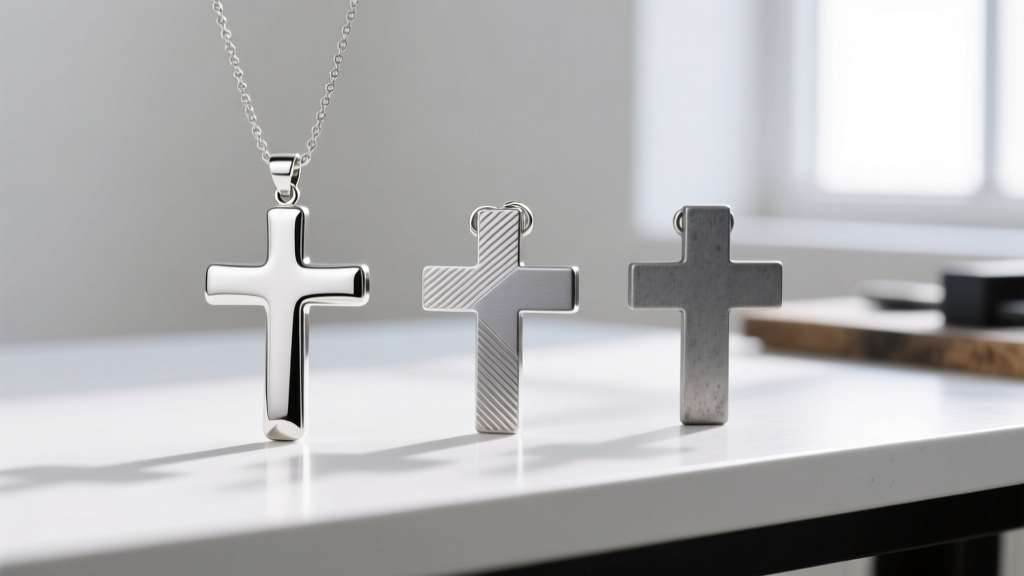
Budget Tiers: Where Does Your Money Go?
When assessing the budget for a cross necklace with hidden knife, it is vital to understand what separates a $15 novelty item from a $95 tactical pendant. The price discrepancy rarely comes from the raw cost of the steel; instead, you are paying for precision machining, locking mechanisms, and quality control.
The Sub-$20 Novelty Tier
At this price point, you are purchasing cast zinc alloy or low-grade stamped steel. The "blade" is often just a pointed piece of metal with no bevel, incapable of cutting anything tougher than a zip-tie. The hinges are simple friction pins that will loosen within a week of daily wear, causing the cross to hang crookedly and the blade to rattle. These offer negative value due to their high breakage rate.
The $40 - $80 Tactical Tier
This is the sweet spot for value. Pendants in this range feature CNC-machined 316L or 440C steel. The cross halves are milled from solid billets rather than cast, ensuring the pivot hole does not elongate over time. You will also find upgraded chains in this tier, which is a critical component of the overall value proposition.
The $150+ Artisan Tier
At the premium end, you are paying for custom engraving, Damascus steel blades, and precious metal inlays. While visually stunning, the value here is purely artistic. A Damascus steel blade concealed in a sterling silver cross is a collector’s item, not a functional tool.
Safety, Mechanics, and Chain Failure Modes
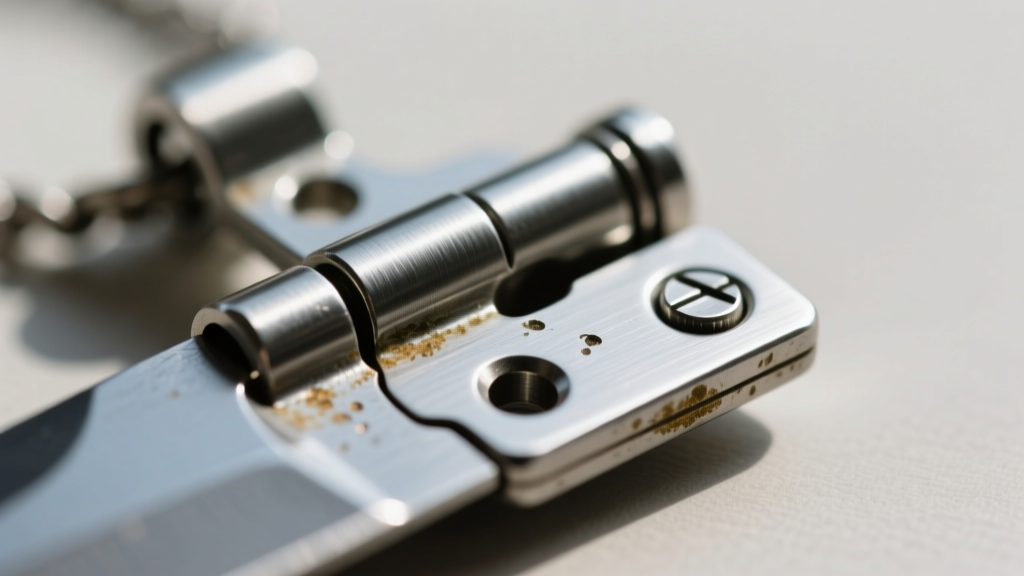
A hidden knife pendant introduces unique mechanical risks that standard necklaces do not possess. The most critical failure mode is accidental deployment. If the pendant swings upward and the blade deploys against your skin, it can cause severe lacerations. Therefore, the locking mechanism is a primary indicator of value.
- Magnetic Locks: Common in mid-tier pendants. Rare-earth neodymium magnets hold the cross halves together. While secure against gravity, a sharp impact or catching the pendant on a doorknob can break the magnetic seal, causing the blade to snap open.
- Friction Detents: A small ball bearing clicks into a divot when closed. This is the safest and most reliable mechanism for a necklace, as it requires intentional lateral force to deploy.
- Threaded Caps: The bottom of the cross unscrews to reveal a fixed spike or blade. While incredibly safe, it sacrifices the quick-deployment novelty that most buyers are seeking.
Equally important is the chain itself. A solid 440C steel cross pendant with a concealed blade typically weighs between 35 and 60 grams. Standard jewelry chains, such as 1.2mm cable chains, have a tensile breaking strength of roughly 3 to 4 pounds. If the heavy pendant catches on clothing or is yanked, a weak chain will snap instantly, resulting in the loss of an expensive item. For any tactical pendant over 30 grams, demand a 2.5mm to 3.0mm box chain or wheat chain with soldered links and a heavy-duty lobster clasp rated for at least 15 pounds of tensile strength.
Legal and Travel Considerations (The Hidden Costs)
The most overlooked aspect of valuing a cross necklace with hidden knife is the legal liability it introduces. Depending on your jurisdiction, a concealed blade disguised as another object can be classified as a prohibited weapon, regardless of its size or the wearer’s intent.
According to the American Knife & Tool Institute (AKTI), laws regarding "dirk knives," "dagger," and disguised blades vary wildly by state. In states like California or New York, carrying a concealed blade that does not immediately appear to be a knife can elevate a simple infraction to a felony charge for carrying a disguised weapon. Furthermore, if the pendant utilizes a spring-assisted or gravity-deployment mechanism, it may fall under federal switchblade regulations.
Traveling with these items is equally fraught with risk. The Transportation Security Administration (TSA) strictly prohibits any sharp objects in carry-on luggage. Because a cross necklace with a hidden knife looks like standard jewelry on an X-ray scanner until manually inspected, it will inevitably trigger a secondary bag search. If the TSA agent determines the item is a concealed weapon rather than a simple pocket knife, you may face confiscation, fines, or missed flights. When calculating your budget, factor in the potential cost of replacing the pendant if you accidentally wear it through airport security.
Final Verdict: Is a Cross Necklace With Hidden Knife Worth It?
From a strict budget and value assessment perspective, the cross necklace with hidden knife is a highly polarizing purchase. If you are buying a sub-$20 zinc alloy model, you are wasting your money on a brittle novelty item that will break and potentially injure you. However, if you invest in the $60 to $100 range, securing a CNC-machined 316L housing with a 440C friction-locked blade and a heavy-duty soldered box chain, you are acquiring a remarkably well-engineered piece of tactical jewelry. Ultimately, the true value of this accessory depends entirely on your local laws and your willingness to accept the logistical friction of traveling with disguised blades. For the right buyer, it is a brilliant fusion of faith, fashion, and function; for the unprepared, it is a legal and mechanical liability.


