Choosing the Right Metal for Your Cross and Anchor Necklace
Discover the best metals for a cross and anchor necklace. Compare 316L steel, Argentium silver, and 14k gold for durability, weight, and daily wear.

The Intersection of Symbolism and Metallurgy
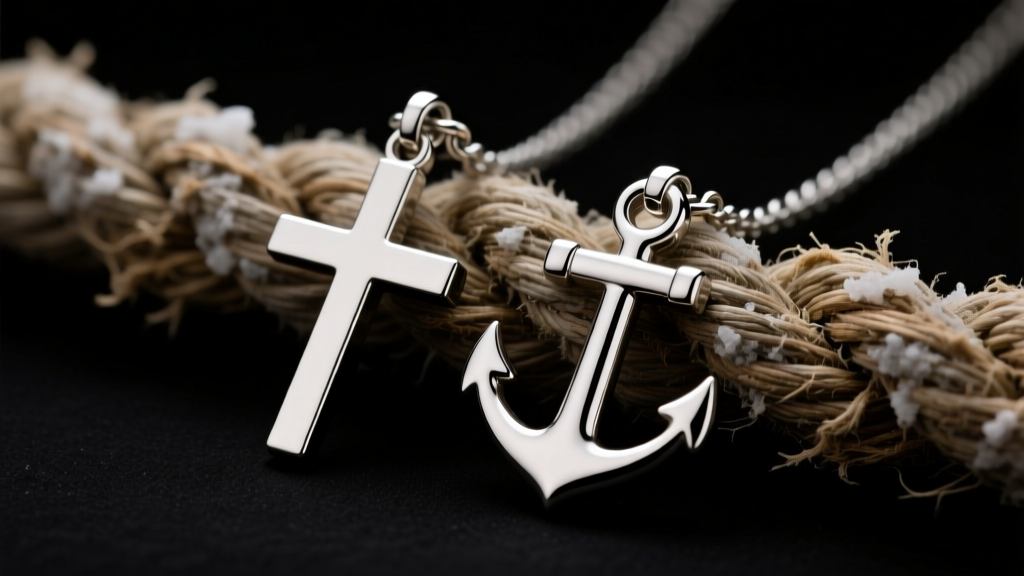
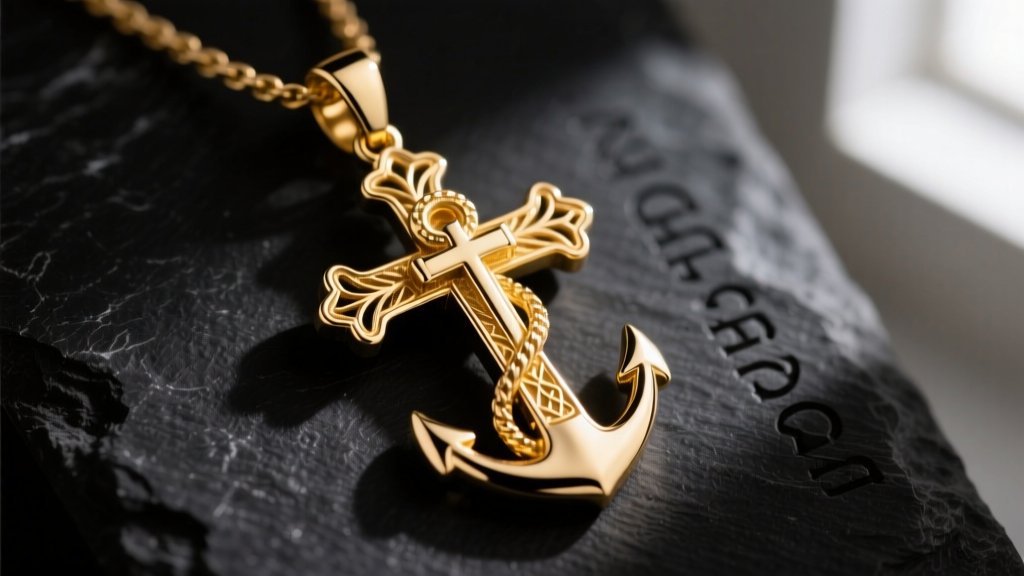
The cross and anchor necklace is more than a mere fashion accessory; it is a profound talisman representing faith, hope, and unwavering stability. Historically worn by sailors and coastal communities, this motif has transcended its nautical roots to become a staple of everyday jewelry. However, the intricate geometry of a cross intersecting with the curved flukes and stock of an anchor presents unique structural challenges. Thin protruding elements, such as the tips of the anchor flukes or the arms of the cross, are highly susceptible to bending, snagging, and environmental degradation.
As of 2026, jewelry manufacturers have access to a wider array of advanced alloys and PVD (Physical Vapor Deposition) coatings than ever before. Yet, the fundamental metallurgical properties of the base metal remain the primary determinant of a pendant's lifespan. Choosing the right material for your cross and anchor necklace requires balancing Vickers hardness, galvanic corrosion resistance, and specific gravity (weight). Below, we deconstruct the most prominent metals used for this specific motif, providing actionable data to help you select a piece that will survive both daily friction and harsh environments.
Metallurgical Breakdown: Which Alloy Survives Daily Wear?
316L Marine-Grade Stainless Steel: The Nautical Standard
When dealing with nautical motifs, 316L stainless steel is the most thematically and practically appropriate choice. Unlike standard 304 stainless steel, the 316L alloy includes a 2-3% addition of molybdenum. This specific elemental inclusion drastically increases the metal's resistance to chloride pitting—meaning it will not rust or degrade when exposed to saltwater, heavy perspiration, or chlorinated pools. With a Vickers hardness (HV) of approximately 150-200, it is rigid enough to prevent the delicate cross arms from bending under the weight of a heavy chain. The primary drawback is its high specific gravity (approx. 8.0 g/cm³), making large, solid-cast 316L cross and anchor pendants noticeably heavy on the cervical spine.
Argentium Silver vs. Traditional 925 Sterling
Traditional 925 sterling silver (92.5% silver, 7.5% copper) is notorious for tarnishing due to the copper content reacting with sulfur in the atmosphere. For a cross and anchor necklace, which features deep crevices and undercuts where polishing cloths cannot reach, tarnish is a significant maintenance burden. Enter Argentium silver. By replacing a portion of the copper with germanium, Argentium forms a transparent, self-healing germanium oxide layer on the surface. This makes it highly tarnish-resistant while maintaining the bright, white luster of pure silver. According to the Rio Grande metals guide, Argentium also possesses a higher fusion-welding capability, meaning the bail (the loop connecting the pendant to the chain) can be laser-welded without leaving a weak solder seam.
Solid 14K and 18K Gold: The Heirloom Investment
Gold remains the premier choice for luxury jewelry, but the karat weight dictates the structural integrity of a complex pendant. As detailed by the Gemological Institute of America (GIA), 24K pure gold is far too soft (approx. 25 HV) for daily wear. 18K gold (75% gold) offers a rich yellow hue but is still relatively prone to scratching and deformation. For a cross and anchor necklace, 14K gold (58.5% gold alloyed with silver, copper, and zinc) is the superior engineering choice. The higher alloy content increases the Vickers hardness to roughly 130-160 HV, ensuring that the sharp corners of the cross and the pointed tips of the anchor flukes resist blunting and bending over decades of wear.
Grade 23 Titanium (6AL-4V): The Hypoallergenic Lightweight
For individuals with severe nickel allergies or those who prefer ultra-lightweight jewelry, Grade 23 titanium (Ti-6Al-4V) is an exceptional, albeit expensive, option. Originally developed for aerospace applications, this alloy is completely biocompatible and immune to saltwater corrosion. It boasts an incredible strength-to-weight ratio, meaning a massive, solid-cast titanium cross and anchor pendant will weigh roughly 45% less than the exact same design cast in stainless steel. However, titanium's extreme hardness makes it difficult for jewelers to resize or repair, so the initial casting and bail sizing must be perfect.
Material Comparison Matrix
| Metal Alloy | Vickers Hardness (HV) | Corrosion Resistance | Weight (Specific Gravity) | Avg. Price Range (USD) |
|---|---|---|---|---|
| 316L Stainless Steel | 150 - 200 | Exceptional (Marine-grade) | Heavy (8.0 g/cm³) | $45 - $150 |
| Argentium Silver | 65 - 75 | High (Tarnish-resistant) | Medium (10.4 g/cm³) | $120 - $350 |
| Solid 14K Gold | 130 - 160 | Excellent | Heavy (13.0 g/cm³) | $450 - $1,200+ |
| Grade 23 Titanium | 330 - 360 | Absolute (Biocompatible) | Light (4.4 g/cm³) | $180 - $400 |
Chain Gauge and Clasp Mechanics for Heavy Pendants
The most common point of failure for a cross and anchor necklace is not the pendant itself, but the chain and clasp supporting it. Because this motif is inherently top-heavy and asymmetrical, it exerts uneven kinetic stress on the chain links. Selecting the correct chain gauge is non-negotiable.
- Avoid Cable and Box Chains under 2.5mm: Standard 1.5mm to 2.0mm cable chains feature small, thin links that will easily warp or snap under the pendulum-like swinging motion of a heavy anchor pendant.
- Opt for Rope or Cuban Link Chains (3.0mm - 4.0mm): These chains feature interlocking, multi-directional links that distribute tensile stress evenly. A 3.0mm solid rope chain provides the necessary tensile strength while complementing the nautical theme of the anchor.
- The Bail-to-Link Ratio: Ensure the pendant's bail (the top loop) is at least 1.5 times wider than the chain's thickness. A tight fit creates friction, leading to premature wear on both the bail and the chain links.
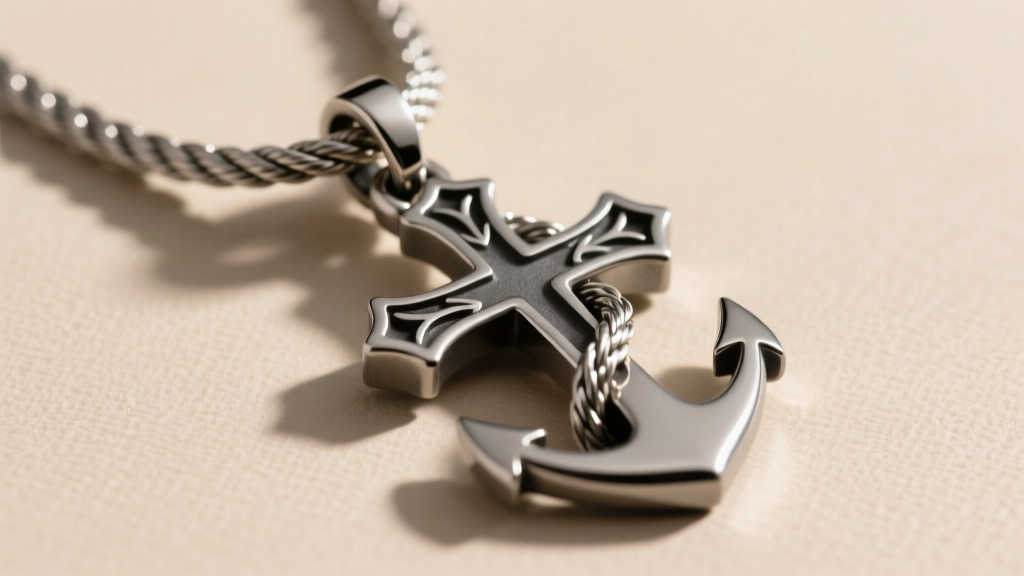
Furthermore, abandon spring-ring clasps entirely. The internal steel springs in cheap clasps are prone to rust and mechanical failure. Always insist on a solid-cast lobster clasp or a box clasp with a secondary figure-eight safety catch. According to industry standards highlighted by JCK Online, a clasp should always be the strongest structural component of the necklace assembly, ensuring that if a catastrophic snag occurs, the chain breaks at a repairable link rather than losing the pendant entirely.
Environmental Degradation: Sweat, Friction, and Galvanic Corrosion
A cross and anchor necklace is often worn close to the skin, subjected to the acidic pH of human sweat (typically between 4.5 and 7.0). While 316L steel and titanium are immune to this, silver and lower-karat gold alloys can experience surface oxidation. More critically, buyers must beware of galvanic corrosion. This occurs when two dissimilar metals are in direct contact in the presence of an electrolyte (like sweat). If you pair a solid sterling silver pendant with a gold-plated brass chain, the electrochemical reaction will rapidly degrade the brass, leaving green deposits on your skin and weakening the chain. Always ensure your pendant and chain are forged from the exact same base metal.
Final Verdict: Matching Metal to Lifestyle
Selecting the ideal metal for your cross and anchor necklace depends entirely on your daily environment and maintenance tolerance. If you are an active individual, a swimmer, or work in a high-friction environment, 316L Marine-Grade Stainless Steel or Grade 23 Titanium are your only logical choices, offering unparalleled structural rigidity and corrosion resistance. For those seeking a premium, low-maintenance precious metal, Argentium Silver provides the brilliance of white gold without the rhodium plating upkeep. Finally, for an heirloom piece meant to be passed down through generations, invest in a solid-cast 14K Gold pendant, paired with a robust 3.0mm rope chain and a heavy-duty lobster clasp. By prioritizing metallurgical science over fleeting aesthetics, you ensure your symbol of faith and stability remains unbroken.


