Cross Necklace Religious Meaning & 2026 Style Trends
Explore 2026 cross necklace religious trends. We analyze Latin, Orthodox, and crucifix pendants, chain pairings, and material shifts for modern styling.

The Intersection of Faith and Fashion in 2026
In the cross necklace religious category, 2026 marks a pivotal shift from purely devotional wear to what industry analysts call "devotional streetwear" and "quiet luxury" faith pieces. The modern wearer no longer views sacred jewelry as something to be hidden beneath a collar; instead, it is engineered to be a focal point of personal style. According to historical analyses by Britannica, the cross has been a primary symbol of Christian faith since the 4th century, but its translation into wearable, trend-forward metallurgy has never been more sophisticated than it is today.
This year's trend analysis reveals a departure from the high-polish, mass-produced yellow gold pendants of the early 2010s. Today's market demands architectural precision, mixed-metal inlays, and a deep respect for historical geometry. Whether you are curating a personal collection or designing for the modern consumer, understanding the nuances of cross proportions, chain mechanics, and material grades is essential.
Decoding the Geometry: Latin, Crucifix, and Orthodox
Not all crosses are created equal. The structural integrity and visual weight of a pendant depend entirely on its historical and theological geometry. Choosing the right silhouette is the first step in styling a religious necklace.
The Latin Cross (Crux Immissa)
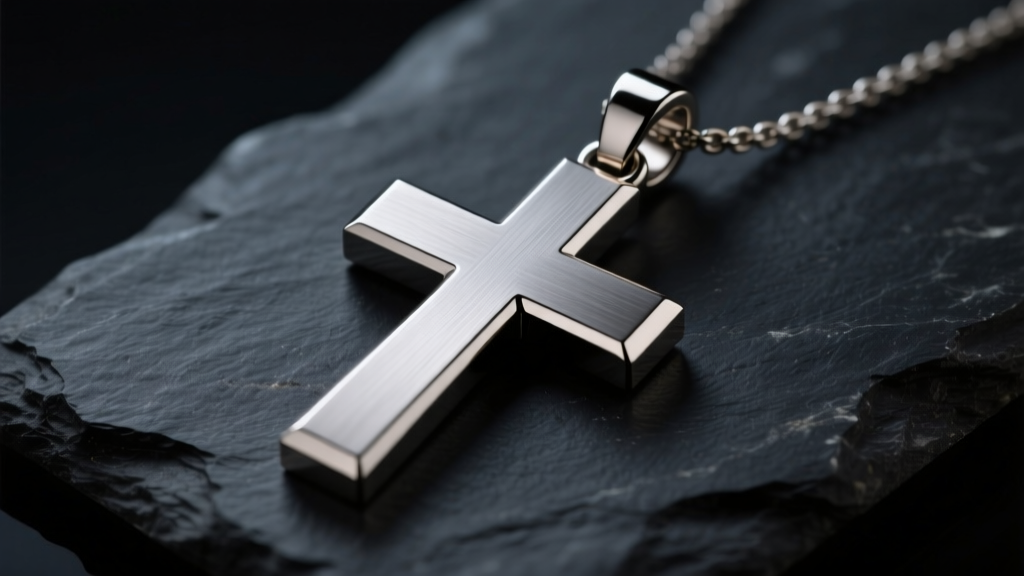
The Latin cross remains the most ubiquitous silhouette globally. Its defining characteristic is the lower vertical beam that extends significantly past the horizontal crossbar. In 2026, the trend favors a strict 1:1.618 (golden ratio) proportion between the horizontal and vertical axes. A standard men's Latin cross pendant typically measures 28mm x 17mm, while a proportional women's pendant sits around 18mm x 11mm. The edges are increasingly being CNC-milled with sharp, 45-degree bevels to catch the light without relying on gemstone pavé.
The Crucifix
A crucifix specifically includes the corpus (the figure of Christ). This requires a much higher degree of metallurgical skill. Cheap castings often result in a loss of detail in the hands and face. High-end 2026 crucifixes utilize lost-wax casting followed by hand-chasing to ensure the anatomy of the corpus remains distinct even on pendants as small as 22mm. Because of the added three-dimensional relief, a crucifix pendant is inherently heavier, often weighing between 6 to 12 grams in solid 14k gold, necessitating a sturdier chain.
The Eastern Orthodox Cross (Suppedaneum)
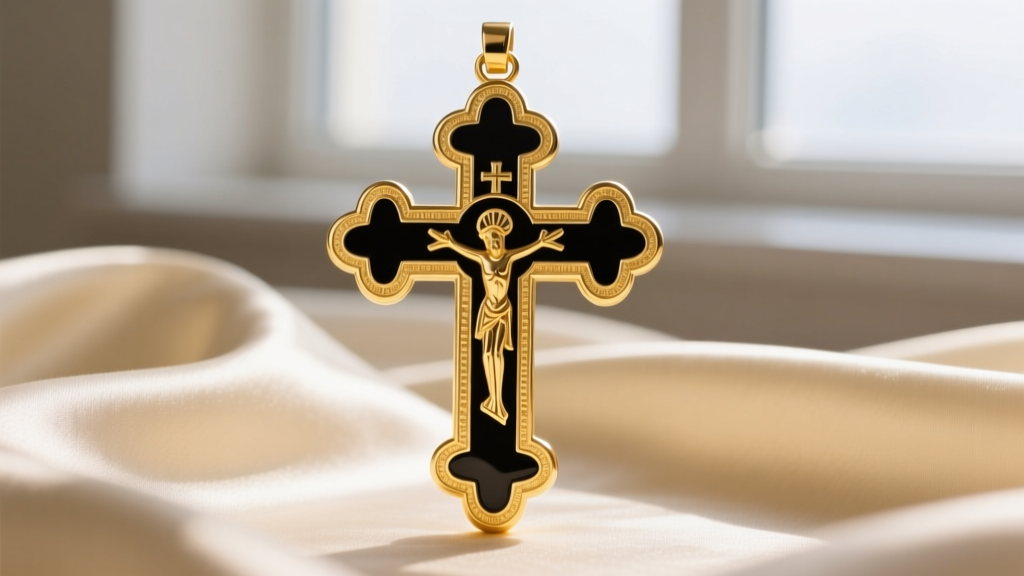
The Orthodox cross features three horizontal bars: the top bar represents the inscription (INRI), the middle is the main crossbar, and the bottom slanted bar represents the footrest. The slant traditionally points upward on Christ's right side. This intricate geometry demands a larger canvas; an Orthodox cross pendant should rarely be smaller than 30mm in height to maintain the legibility of the three bars. Black rhodium or vitreous enamel inlays are currently dominating the Orthodox segment, providing stark contrast against 14k or 18k yellow gold.
Material Trends: Beyond High-Polish Gold
While gold remains a staple, the Gemological Institute of America (GIA) notes that consumer preferences are heavily leaning toward alternative finishes and alloys that offer durability and a more subdued aesthetic.
- Oxidized Sterling Silver (925): By treating silver with liver of sulfur, artisans create a darkened, antiqued finish that settles into the crevices of the pendant. This highlights the relief work and gives the piece an instant heirloom quality. It is currently the top choice for vintage-inspired crucifixes.
- Grade 5 Titanium (Ti-6Al-4V): For the active wearer, aerospace-grade titanium offers a brushed, gunmetal-grey aesthetic. It is 45% lighter than steel, highly scratch-resistant, and completely hypoallergenic. Titanium crosses are often finished with a sandblasted matte texture.
- 14k Solid Gold over 18k: While 18k gold (75% purity) offers a richer yellow hue, 14k gold (58.5% purity) is the preferred choice for sharp-edged Latin crosses. The higher alloy content (usually copper and silver) increases the Vickers hardness, ensuring the sharp bevels do not dent or round off during daily wear.
The Layering Protocol: Reverence Meets Streetwear
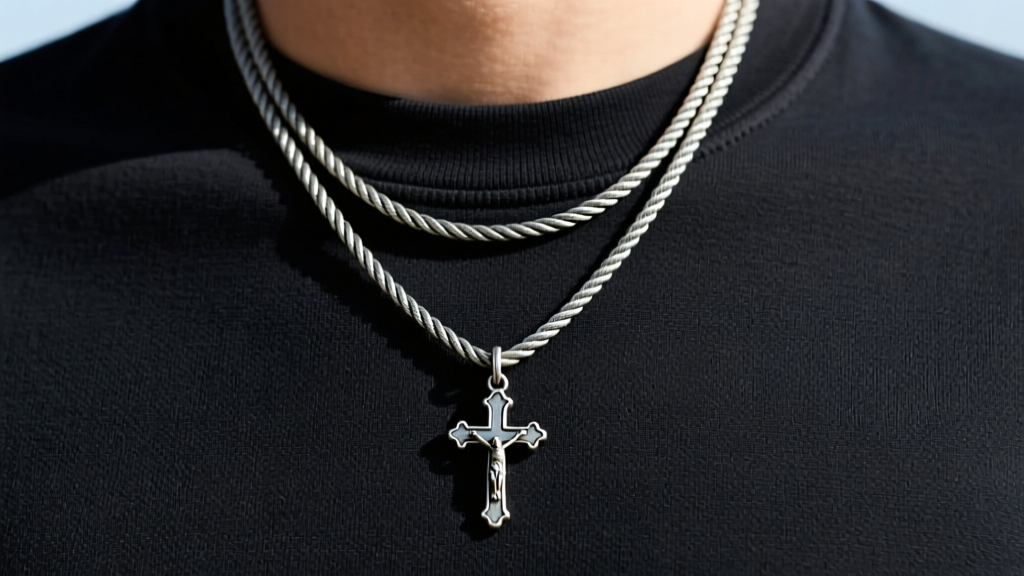
Layering a religious pendant requires a delicate balance. The goal is to integrate the sacred symbol into a broader sartorial narrative without diluting its significance or creating a cluttered neckline. The most successful 2026 layering frameworks utilize the "V-Formation" technique, varying both chain weave and thickness.
Chain Weave and Gauge Pairings
The chain is not merely a delivery system for the pendant; it is a structural component of the necklace. A mismatched chain can ruin the drape and visual weight of the cross.
| Cross Style | Ideal Chain Weave | Recommended Gauge (Thickness) | Optimal Length | Avg. Price Range (14k Gold) |
|---|---|---|---|---|
| Minimalist Latin | Box Chain or Cable | 1.0mm - 1.5mm | 18" - 20" | $350 - $600 |
| Heavy Crucifix | Franco or Rope Chain | 2.2mm - 3.5mm | 22" - 24" | $800 - $1,800 |
| Orthodox (Enamel) | Curb or Figaro | 1.8mm - 2.5mm | 20" - 22" | $650 - $1,200 |
Sizing and Bail Mechanics: The Hidden Details
A frequent point of failure in religious jewelry is the bail—the loop that connects the pendant to the chain. In 2026, the hidden bail (where the chain threads directly through a hollowed-out top section of the cross) is highly favored for Latin crosses, as it allows the pendant to sit flush against the chest and slide seamlessly along the chain.
However, for heavier crucifixes and Orthodox crosses, a traditional loop bail or a tapered tube bail is necessary. Critical Sizing Rule: The inner diameter of the bail must be at least 1.5 times the thickness of your chosen chain. For example, if you are threading a 2.5mm Franco chain, the bail's inner opening must measure a minimum of 3.75mm x 5.0mm to prevent excessive friction and premature wear on the gold. Furthermore, as highlighted by GIA's metallurgical guidelines, ensuring the bail is laser-welded rather than simply soldered provides superior tensile strength, preventing the pendant from snapping off under its own weight during sudden movements.
"The true mark of a master-crafted religious pendant lies not just in the front-facing relief, but in the structural integrity of the bail and the precision of the edge bevels. A cross should feel like an architectural anchor on the chest, not a flimsy afterthought."
Final Thoughts on Faith and Fashion
The cross necklace religious market in 2026 is defined by intentionality. Buyers are moving away from fast-fashion, hollow-stamped pendants and investing in solid, structurally sound pieces that honor both the theological weight of the symbol and the aesthetic demands of modern wardrobes. By understanding the geometry of the cross, selecting the appropriate metallurgical finish, and pairing it with a gauge-appropriate chain, you ensure that this timeless symbol of faith remains a powerful, stylish anchor in any jewelry collection.


