Expert Guide: Choosing the Perfect Cross Necklace With Nails
Discover expert tips for choosing a cross necklace with nails. Learn about metal grades, casting methods, chain pairings, and oxidation.

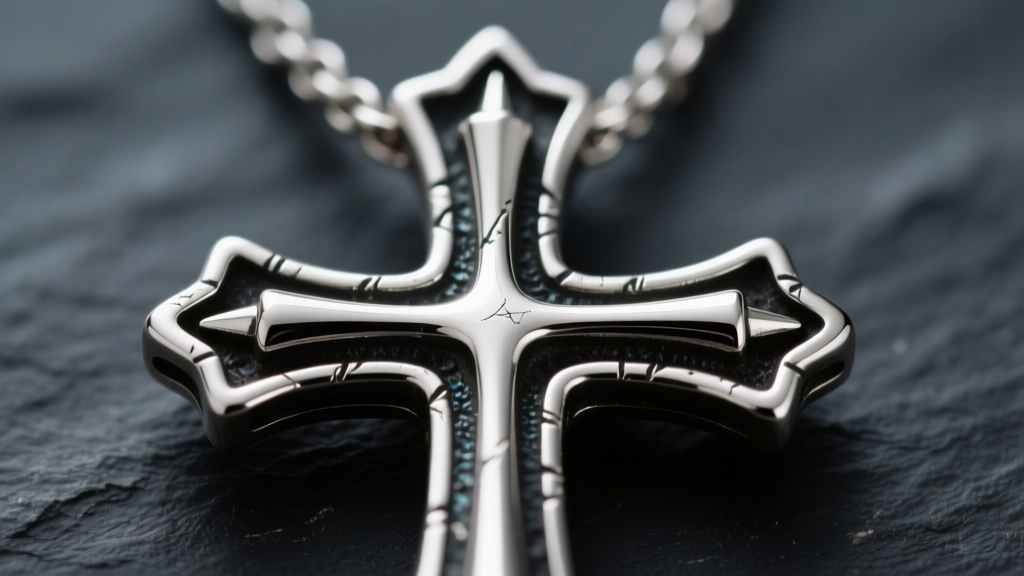
The search for the perfect cross necklace with nails goes far beyond picking a simple religious symbol. In the realm of fine jewelry, the three-nail crucifix represents a complex intersection of historical iconography, micro-sculpting, and advanced metallurgy. Whether you are looking for a heavy, gothic-inspired statement piece or a refined, traditional Catholic sacramental, understanding the technical nuances of how these pendants are constructed will ensure you invest in a piece that lasts a lifetime.
In this expert deep dive, we break down the anatomy, casting methods, metal grades, and chain mechanics required to select a high-quality cross pendant with nails.
The Anatomy and Iconography of the Three-Nail Cross
Historically, early Christian art depicted the crucifixion with four nails (one for each hand and foot). However, around the 12th century, Western iconography shifted to the three-nail motif, where the feet are crossed and secured with a single nail. According to historical analyses from Britannica, this shift was largely driven by Gothic art's emphasis on the physical suffering and anatomical realism of Christ.
In modern jewelry design, this translates into two distinct structural approaches:
- Bas-Relief Casting: The nails are cast as part of the cross itself, protruding slightly from the surface. This is common in mass-produced die-struck pieces.
- Wire-Wrapped or Soldered Nails: The cross is cast as a solid body, and the nails are fabricated separately from round wire stock (usually 14-gauge to 18-gauge) and soldered or wrapped around the corpus. This is the hallmark of bespoke, artisan-level jewelry.
Metallurgy: Choosing the Right Alloy
The metal you choose dramatically affects both the aesthetic contrast of the nails and the longevity of the piece. While gold is traditional, silver remains the undisputed king for this specific design due to its ability to take a dark patina.
| Metal Alloy | Density (g/cm³) | Patina Capability | Average Price Range (Solid) | Best For |
|---|---|---|---|---|
| 925 Sterling Silver | 10.36 | Excellent (High Contrast) | $85 - $350 | Everyday wear, gothic/oxidized styles |
| 14k Yellow Gold | 12.9 | Poor (Requires Plating) | $600 - $1,800 | Traditional, heirloom-quality pieces |
| 316L Stainless Steel | 8.0 | None (Cannot Oxidize) | $25 - $75 | Budget-friendly, high-tarnish environments |
For a cross necklace with nails, 925 Sterling Silver is highly recommended. The alloy's copper content allows jewelers to apply chemical oxidizers that turn the recessed areas black, making the polished silver nails pop in stark, three-dimensional relief.

The Art of Oxidation and Patina
The difference between a cheap, flat-looking pendant and a masterwork lies in the oxidation process. High-end jewelers use Liver of Sulfur (potassium sulfide) to accelerate tarnishing. As noted by the jewelry supply experts at Rio Grande, this chemical reaction creates a layer of silver sulfide on the surface.
The Two-Tone Polishing Technique
Once the pendant is fully blackened, the jeweler uses a magnetic tumbler or a polishing wheel with rouge compound to remove the oxidation only from the high points. The nails, the edges of the cross, and the corpus are brought to a high mirror shine, while the deep crevices remain pitch black. This technique, known as "antiquing," is essential for a cross necklace with nails, as it provides the visual depth required to distinguish the nails from the wooden beam of the cross.
Expert Tip: Avoid ultrasonic cleaners on oxidized silver crosses. The high-frequency vibrations and harsh chemical baths can strip the intentional patina from the recesses, leaving you with a flat, uniformly gray pendant.
Chain Pairing: Weight, Gauge, and Bail Mechanics
A common failure point in heavy religious jewelry is the chain snapping under the pendant's weight. A solid sterling silver cross with nails typically weighs between 15 and 35 grams. Pairing a 30-gram pendant with a delicate 1.2mm cable chain is a recipe for disaster.
Recommended Chain Specifications
- 3.0mm - 4.0mm Figaro Chain: Offers excellent tensile strength and a classic, masculine aesthetic that complements the ruggedness of the nail motif.
- 2.5mm - 3.5mm Rope Chain: The twisted links catch the light beautifully and provide a secure, interlocking structure that resists pulling apart.
- 2.0mm Box Chain: A good middle-ground for medium-weight pendants (15g-20g), offering a modern, geometric contrast to the organic shape of the cross.
Bail Dimensions
The bail (the loop connecting the pendant to the chain) must be proportionate. For a heavy cross, look for a soldered ring bail with an inner diameter of at least 5mm to 7mm. Avoid "pinch bails" or glued-on bails, as the shear force of a heavy pendant will eventually break the adhesive or bend the prongs.
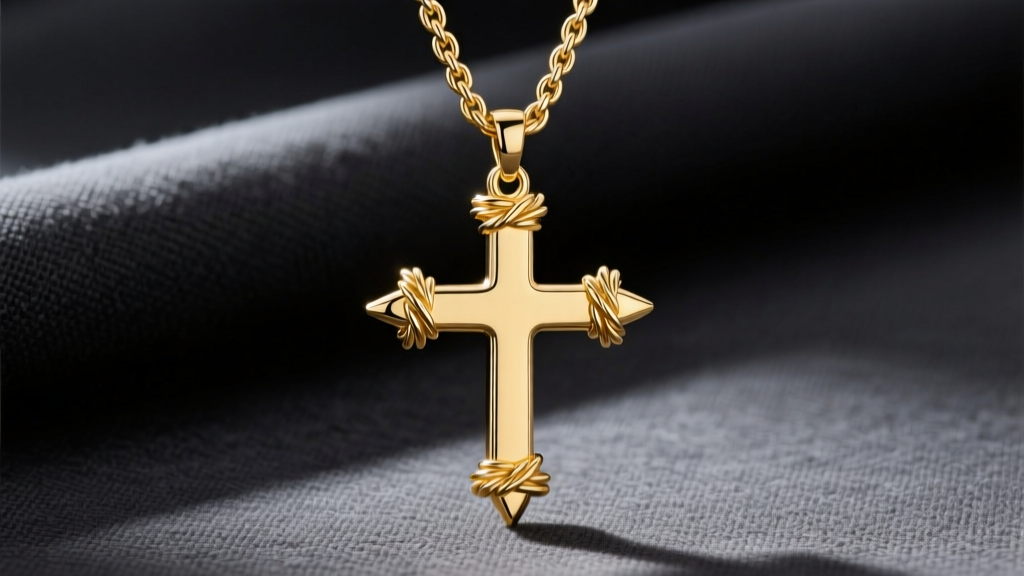
Sizing and Proportions
Getting the scale right is crucial for both comfort and visual impact. The dimensions of your cross necklace with nails should align with your body type and the neckline of your typical wardrobe.
- Small / Subtle (15mm x 22mm): Ideal for layering or wearing tucked under a dress shirt. Usually features cast-in-place nails rather than wrapped wire.
- Medium / Standard (25mm x 38mm): The most versatile size. Sits perfectly on the collarbone and works well with both casual and semi-formal wear.
- Large / Statement (40mm x 60mm+): Designed to be worn over clothing. These pieces often feature intricate, hand-soldered wire nails and weigh upwards of 40 grams.
Maintenance and Long-Term Care
To maintain the striking contrast of the nails against the cross body, proper storage and cleaning are required. The Gemological Institute of America (GIA) recommends storing oxidized silver in anti-tarnish cloth pouches to prevent ambient sulfur in the air from further darkening the polished high-points.
When cleaning, use a soft, dry microfiber cloth to gently buff the raised nails and the edges of the cross. Never use liquid silver dips, as they will instantly remove the dark silver sulfide from the crevices, ruining the three-dimensional illusion of the three nails. If the piece becomes heavily soiled, use a mild dish soap and a soft-bristled baby toothbrush, carefully avoiding aggressive scrubbing in the recessed areas.
By understanding the metallurgy, casting techniques, and structural requirements of a cross necklace with nails, you can confidently select a piece that is not only a profound symbol of faith but also a masterclass in jewelry engineering.


