Crucifix vs Cross Necklace: How to Choose the Right Faith Pendant
Learn the key differences in a crucifix vs cross necklace. Our step-by-step guide helps you choose the right material, size, and style for your faith.

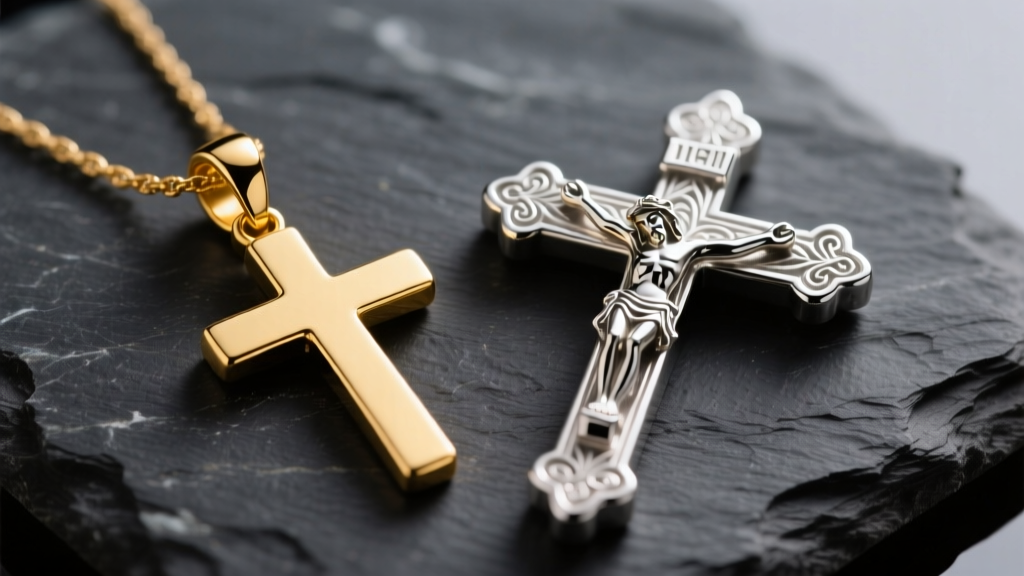
Navigating the jewelry market for faith-based pieces requires understanding both theological nuance and metallurgical quality. The decision between a crucifix vs cross necklace goes far beyond mere aesthetics; it is a deeply personal choice rooted in denominational tradition, historical symbolism, and individual style. Whether you are selecting a first communion gift, a confirmation present, or a daily reminder of your faith, choosing the right pendant involves evaluating precise dimensions, metal grades, and chain mechanics.
This step-by-step guide will walk you through the essential differences, helping you select a piece of sacred jewelry that aligns with your beliefs and withstands the rigors of daily wear.
The Core Distinction: Defining Cross and Crucifix Pendants
Before evaluating metals and chain lengths, it is vital to understand the historical and theological definitions of these two symbols. While often used interchangeably in casual conversation, they represent distinctly different concepts in Christian iconography.
- The Cross: An empty cross consists of two intersecting lines (typically a vertical and horizontal beam). It is the universal symbol of Christianity, emphasizing the Resurrection, triumph over death, and the living Christ. According to Britannica's archive on religious symbols, the empty cross became the dominant emblem in the early church, representing salvation and eternal life.
- The Crucifix: A crucifix is a cross that includes the corpus—the physical body of Jesus Christ. It emphasizes the Passion, the sacrifice, and the redemptive suffering of the crucifixion. As noted by historical records on the crucifix, this variant became highly prominent in Western Christianity during the Middle Ages as a focal point for devotion and meditation on Christ's sacrifice.
Step 1: Aligning Your Pendant With Your Denomination
Your theological background or the beliefs of the gift recipient should be the primary driver in the crucifix vs cross necklace debate. Different traditions have distinct preferences regarding sacred jewelry.
Catholic and High Church Traditions
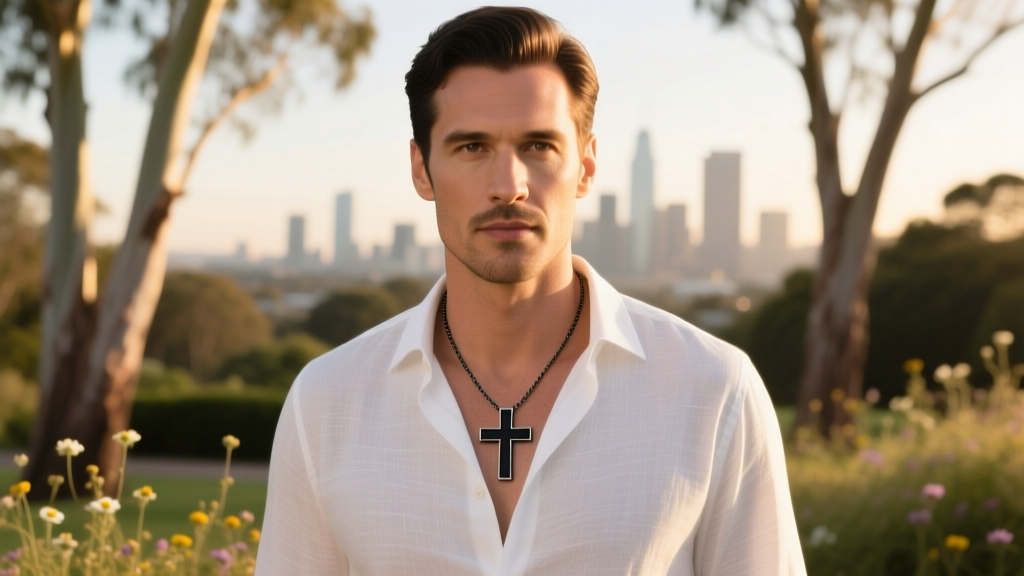
In Roman Catholicism, the crucifix is the standard. It is commonly found in churches, homes, and worn as personal jewelry to serve as a reminder of Christ's sacrifice. If you are purchasing for a Catholic baptism, first communion, or confirmation, a detailed crucifix pendant is the most appropriate and traditional choice.
Protestant and Evangelical Traditions
Most Protestant denominations (including Baptist, Methodist, and non-denominational churches) strongly prefer the empty cross. The absence of the corpus is a deliberate theological statement focusing on the Resurrection and the belief that Christ is no longer on the cross, but risen. For these traditions, an empty cross necklace is the definitive choice.
Eastern Orthodox Traditions
The Eastern Orthodox Church utilizes a highly specific crucifix design, often featuring three horizontal bars. The top bar represents the titulus (the inscription INRI), the middle bar is where the hands were nailed, and the slanted bottom bar (the suppedaneum) represents the footrest. When shopping for an Orthodox believer, ensure the pendant reflects this traditional three-bar architecture rather than a standard Western Latin crucifix.
Step 2: Selecting the Ideal Dimensions and Drop Length
A common mistake when buying faith pendants is ignoring the scale of the piece relative to the wearer's body type and the intended neckline. Pendants are measured by their vertical drop (height) excluding the bail (the loop that connects to the chain).
| Pendant Height | Chain Length | Best Use Case & Demographic |
|---|---|---|
| 10mm - 15mm | 14' - 16' | Infants, toddlers, and First Communion. Worn as a subtle, hidden layer under shirts for adults. |
| 18mm - 25mm | 18' - 20' | Standard adult daily wear. Rests perfectly at the collarbone, visible with crew necks and v-necks. |
| 30mm - 40mm | 22' - 24' | Statement pieces for men or outerwear layering. Ideal for wearing over t-shirts or light sweaters. |
| 45mm+ | 26' - 30' | Devotional statement pieces, often worn by clergy or as a bold, outward expression of faith over heavy clothing. |
Pro-Tip: When measuring for a child, always account for growth. A 16-inch chain with a 15mm pendant is standard for a 7-year-old, but consider purchasing an extender chain or a slightly longer 18-inch chain that they can grow into by their Confirmation.
Step 3: Choosing the Right Metal and Material Grade
Faith jewelry is often worn 24/7, meaning it is exposed to sweat, water, and friction. Selecting the correct metallurgical grade is critical for longevity and skin safety.
Precious Metals: Silver and Gold
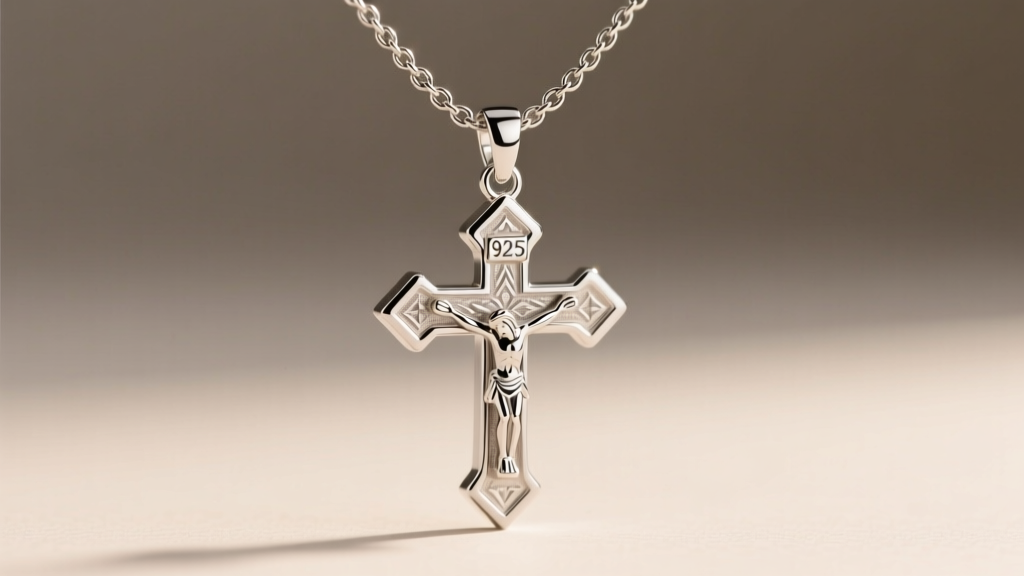
925 Sterling Silver: Composed of 92.5% pure silver and 7.5% copper. Because the copper content makes it prone to silver sulfide tarnish, always look for sterling silver pendants that feature a rhodium flash plating. Rhodium is a platinum-group metal that provides a brilliant white shine and acts as an impermeable barrier against oxidation.
14k Gold: Containing 58.5% pure gold, 14k is the gold standard for daily-wear pendants. According to the Gemological Institute of America (GIA), 14k gold offers the optimal balance between rich color and structural durability (a Vickers hardness of roughly 150), ensuring the delicate features of a crucifix's corpus do not bend or wear down over decades of use. 18k gold (75% pure) is softer and more prone to scratching, making it better suited for occasional wear.
Alternative and Budget Materials
316L Surgical Stainless Steel: An excellent hypoallergenic option for those with nickel sensitivities. It will not tarnish or rust, making it ideal for showering and swimming. However, it is significantly denser than silver, meaning a large 40mm steel crucifix will feel noticeably heavy on the neck.
Olive Wood: Sourced traditionally from Bethlehem or Jerusalem, olive wood pendants carry deep historical resonance. Because wood is highly porous, it must be treated with food-grade mineral oil every six months to prevent drying, cracking, and the absorption of skin oils.
Step 4: Matching the Chain to the Pendant Weight
The structural integrity of your necklace relies entirely on the relationship between the pendant's weight and the chain's tensile strength. A heavy solid gold crucifix will easily snap a delicate cable chain.
The 3:1 Weight Rule
As a general rule in jewelry mechanics, the chain must be rated to hold at least three times the weight of the pendant. If your solid 14k gold crucifix weighs 6 grams, your chain must have a break-strength of at least 18 grams.
Selecting the Chain Style
- Box Chains: Composed of square, interlocking links. These are exceptionally strong and resist kinking, making them the best choice for medium-to-heavy crucifix pendants.
- Cable Chains: The classic oval-link design. Best suited for lightweight, small empty crosses (under 3 grams).
- Snek (Snake) Chains: While they offer a sleek, modern look, snake chains are notorious for kinking and breaking under the localized stress of a heavy pendant bail. Avoid these for daily-wear faith jewelry.
Bail Sizing
Ensure the inner diameter of the pendant's bail is at least 0.5mm larger than the thickness of your chosen chain. A 3mm box chain requires a bail with an inner clearance of at least 3.5mm to allow the pendant to lay flat against the chest without binding.
Step 5: Daily Care and Maintenance
Proper maintenance ensures your sacred jewelry remains a lifelong heirloom.
Warning: Never place a crucifix or cross pendant in an ultrasonic jewelry cleaner if it features glued-in gemstones, enamel detailing, or is made of porous materials like olive wood or mother-of-pearl. The high-frequency vibrations will shatter the adhesive and the wood.
For plain metal crosses and crucifixes, use a treated jeweler's polishing cloth once a month to remove microscopic scratches and restore the luster. When showering, remove silver pendants to prevent the accelerated tarnishing caused by sulfur compounds found in some municipal water supplies and harsh body washes. Store your necklace flat in a sealed anti-tarnish bag with a silica gel packet to control ambient humidity.
By carefully considering the theological meaning, precise dimensions, and metallurgical quality, you can confidently navigate the crucifix vs cross necklace decision and select a piece that serves as a beautiful, enduring testament to your faith.


