Cuban Diamond Necklace Guide: Carat Weights, Clarity & Settings
Master the technical specs of a Cuban diamond necklace. Explore carat weights, melee clarity grades, setting styles, and structural durability.

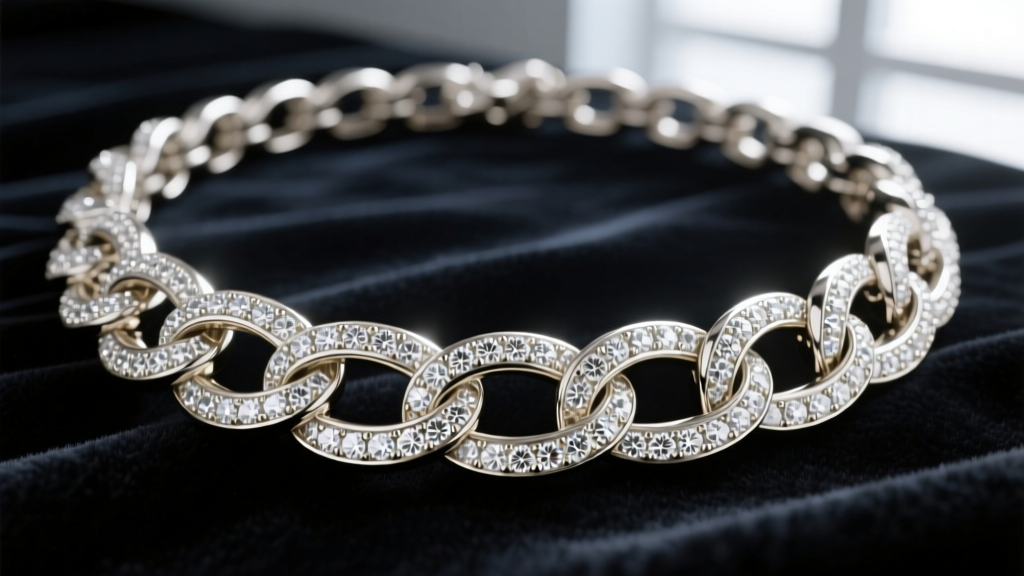
The Evolution and Anatomy of the Cuban Diamond Necklace
The Cuban diamond necklace represents the apex of heavy chain craftsmanship, merging the iconic interlocking geometry of the traditional Cuban link with the intricate precision of high jewelry diamond setting. While standard gold Cuban chains rely on their massive metal weight and mirror-polished surfaces for visual impact, introducing diamonds fundamentally alters the structural engineering required to produce the piece. In 2026, the market has bifurcated into ultra-premium natural diamond pieces and high-volume lab-grown melee alternatives, making it critical for buyers and collectors to understand the exact technical specifications that dictate a chain's value, drape, and longevity.
Unlike a simple pendant where the diamond is the focal point, a diamond-set Cuban chain requires hundreds, sometimes thousands, of individual stones to be set seamlessly across a flexible, moving matrix of metal. This introduces complex mechanical challenges. The links must remain perfectly articulated—meaning they lay flat against the collarbone without twisting or kinking—while supporting the immense weight of the total carat weight (TCW). Understanding the anatomy of these pieces requires looking past the surface brilliance and examining the metallurgical and gemological foundations beneath.
Link Manufacturing: CNC Milling vs. Traditional Casting
The foundation of any premium Cuban diamond necklace begins long before the first diamond is set. The method used to create the bare gold links dictates the chain's structural integrity. Mass-market chains are typically cast using the lost-wax method. While casting is cost-effective, it inherently introduces microscopic porosity into the gold. When a jeweler attempts to push prongs over diamonds on a cast link, the porous metal can crumble, leading to weak settings and lost stones over time.
Expert jewelers and high-end manufacturers utilize CNC (Computer Numerical Control) milling to carve the links from solid blocks of gold stock. CNC-milled links possess a uniform molecular density, ensuring that the metal is entirely non-porous. This density is absolutely vital for holding the tiny prongs used in diamond setting. According to manufacturing standards outlined by the Jewelers of America, solid-milled links also allow for tighter tolerances in the interlocking joints, which prevents the chain from stretching under the heavy load of paved diamonds. When evaluating a high-ticket Cuban diamond necklace, always request documentation or confirmation that the base chain was CNC-milled rather than cast.
Diamond Specifications: Melee Sizing and Grading Sweet Spots
The diamonds used in Cuban chains are classified as melee diamonds, typically ranging from 0.01 to 0.05 carats per stone (roughly 1.3mm to 2.5mm in diameter). Because these stones are so small, grading them individually for color and clarity is economically unfeasible and visually unnecessary. Instead, jewelers sort them into calibrated parcels based on strict millimeter sizing and visual uniformity.
As we navigate the 2026 jewelry market, lab-grown melee diamonds have completely disrupted the mid-tier pricing model. Buyers can now secure VS (Very Slightly Included) clarity and E-F (Colorless) grades for a fraction of the historical cost of natural melee. However, for natural diamond chains, the industry sweet spot remains G-H color and SI1-SI2 clarity. At the scale of 1.5mm stones, inclusions characteristic of SI1 clarity are entirely invisible to the naked eye, and the G-H color grade appears perfectly white when set against the reflective backdrop of polished gold prongs.
| Chain Width (mm) | Average Link Count (20-inch) | Estimated Total Carat Weight (TCW) | Melee Stone Size |
|---|---|---|---|
| 10mm | 45 - 50 | 8.50 - 12.00 ct | 1.5mm - 1.7mm |
| 14mm | 35 - 40 | 18.00 - 25.00 ct | 2.0mm - 2.2mm |
| 19mm | 28 - 32 | 35.00 - 48.00 ct | 2.5mm - 3.0mm |
| 25mm+ | 22 - 26 | 65.00 - 90.00+ ct | 3.0mm+ |
Note: TCW varies heavily based on whether the chain is 'top-set' (diamonds only on the visible face) or 'fully-paved' (diamonds wrapping the sides of the links).
Setting Techniques: Shared Prong vs. Micro-Pave
The setting technique is the most critical factor in determining both the brilliance and the durability of a Cuban diamond necklace. The two dominant methods are shared prong and micro-pave, each with distinct mechanical properties.
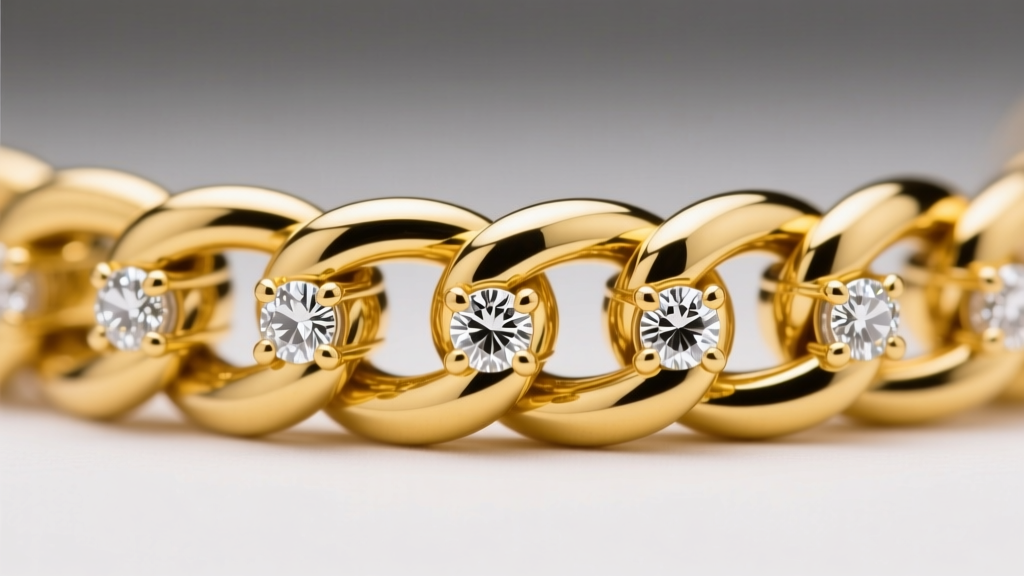
The Shared Prong Method
In a shared prong setting, a single metal prong is used to secure the edges of two adjacent diamonds. This technique is the gold standard for Cuban chains because it minimizes the amount of visible metal, allowing up to 85% of the diamond's surface area to be exposed to light. The Gemological Institute of America (GIA) notes that maximizing light return in melee diamonds is crucial, as smaller stones naturally suffer from reduced light dispersion compared to larger center stones. Furthermore, shared prongs are structurally robust; the thicker metal post resists bending when the chain is subjected to lateral tension.
Micro-Pave and Bezel Variations
Micro-pave uses tiny metal beads raised from the gold surface to hold the stones. While it creates a continuous 'sheet' of brilliance, the tiny beads are highly susceptible to shearing off if the chain is snagged on clothing. Bezel settings, where a rim of metal completely encircles the diamond, offer the highest security but drastically reduce the chain's brilliance and flexibility. For a heavy, daily-wear Cuban chain, the shared prong method remains the undisputed champion of balancing security with maximum scintillation.
The 'Link Stiffening' Phenomenon and Chain Drape
One of the most common failure modes in poorly manufactured diamond Cuban chains is 'link stiffening.' When diamonds are set into the interlocking joints of the links, or when the prongs are left too thick and unpolished, the natural articulation of the chain is compromised. Instead of draping fluidly like liquid metal over the chest, the chain behaves like a rigid collar.
"A master setter will spend as much time polishing the underside of the prongs and clearing metal burrs from the link joints as they do setting the stones themselves. If a 14mm diamond Cuban chain cannot fold back on itself in a continuous loop without gaps, the setting tolerances are too tight, and the chain will eventually warp under its own weight." — Master Jeweler Bench Notes, 2025.
To test the drape of a Cuban diamond necklace before purchasing, hold it by the clasp and let it hang freely. It should form a tight, teardrop-shaped loop without any rigid kinks or outward buckling. If the links bind against one another, friction will rapidly wear down the gold joints, leading to catastrophic link failure.
Clasp Mechanics and Metal Purity
A diamond-encrusted Cuban chain can easily weigh between 150 and 300 grams, placing immense sheer stress on the clasp. Standard lobster clasps are entirely inadequate and pose a severe risk of loss. The industry standard for these pieces is the diamond-set box clasp with dual safety catches.
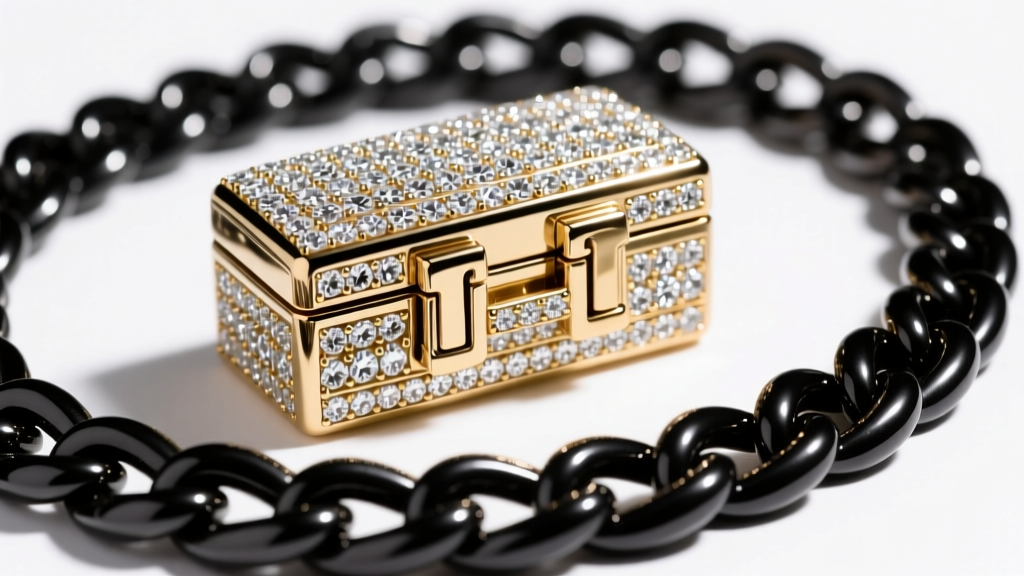
The box clasp features a V-shaped metal tongue that clicks securely into a square housing. However, the true security lies in the dual figure-8 safety wires that snap over the sides of the clasp housing. These safety catches must be forged from high-tensile wire (usually 14k or 18k white gold for springiness) and soldered with laser precision to avoid weakening the surrounding diamond settings. Regarding metal purity, while 18k gold offers a richer color, 14k gold is frequently preferred by expert jewelers for heavy diamond chains due to its higher zinc and copper alloy content, which provides superior tensile strength to support the massive weight of the paved links without stretching.
Pricing Tiers and Investment Value in 2026
The pricing of a Cuban diamond necklace is dictated by three primary variables: the spot price of gold, the TCW, and the origin of the diamonds (natural vs. lab-grown). In the current market, a 14mm, 20-inch top-set Cuban chain featuring 20 TCW of natural SI1/G-H melee diamonds will typically command between $35,000 and $55,000, depending on the exact gold weight and brand prestige. Conversely, the exact same specifications utilizing premium lab-grown melee diamonds have settled into the $8,000 to $14,000 range.
For collectors viewing these pieces as alternative investments, natural diamond chains from heritage manufacturers retain a higher percentage of their intrinsic value, primarily driven by the rarity of perfectly matched natural melee parcels. However, for pure aesthetic impact and daily wear, the technical advancements in lab-grown melee have made high-clarity, flawlessly white diamond Cuban chains more accessible and visually stunning than at any previous point in jewelry history.


