Avoiding the Curse of the Necklace: Material Properties
Discover how to avoid the curse of the necklace. Compare metal properties, prevent tarnish and allergies, and choose durable alloys for everyday wear.

The Real Curse of the Necklace: Metallurgical Failures
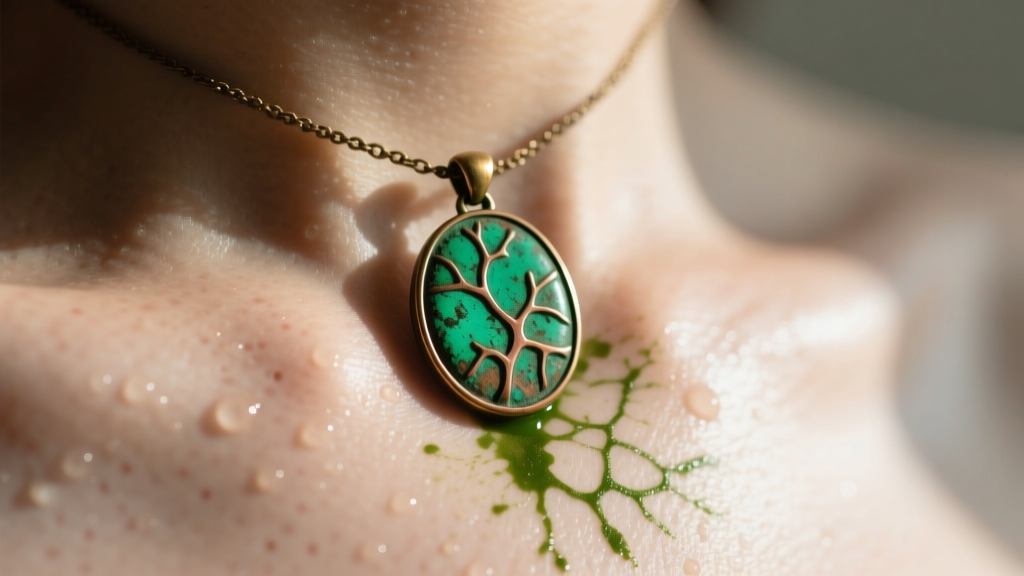
When historians speak of the curse of the necklace, they often reference the Hope Diamond or the La Peregrina pearl. But for modern jewelry wearers in 2026, the true curse is entirely metallurgical. It is the sudden snap of a delicate chain, the itchy red rash of contact dermatitis, or the stubborn green ring left around your collarbone after a long day. These are not supernatural phenomena; they are predictable material failures.
Understanding the material properties of your necklaces is the only way to break this curse. By examining alloy compositions, tensile strengths, and corrosion resistance, we can decode why certain pieces fail and how to select metals that will last a lifetime.
Decoding Metal Alloys: Why Your Jewelry Turns Skin Green
The most common manifestation of the necklace curse is skin discoloration. This is not a sign that your jewelry is fake, but rather a predictable chemical reaction. Sterling silver, for example, is an alloy of 92.5% silver and 7.5% copper. When the copper in sterling silver—or the higher copper content in brass and bronze—comes into contact with the lactic acid and salts in human sweat, it oxidizes to form copper chloride. This compound is green and easily transfers to the skin.
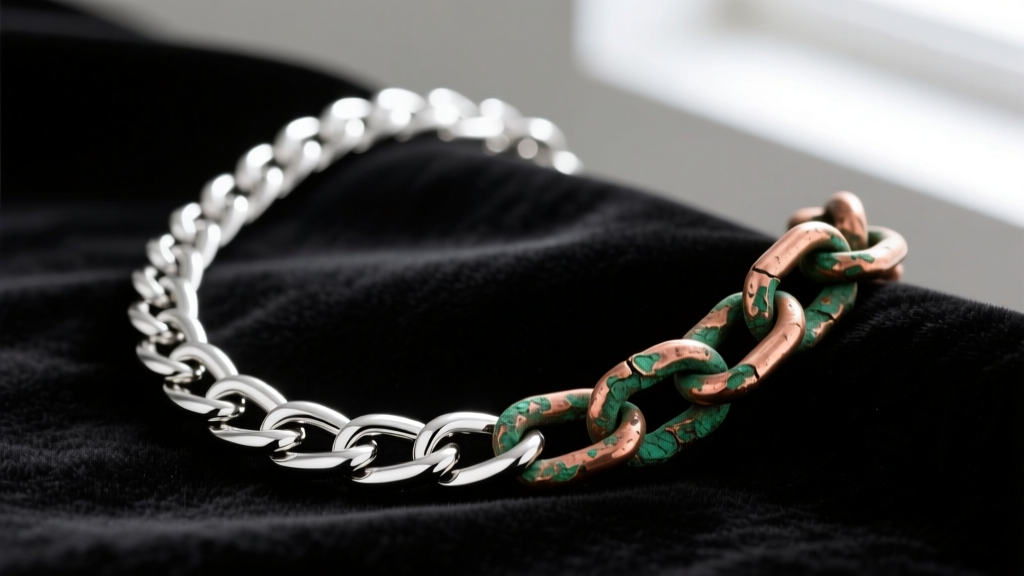
Similarly, white gold is often alloyed with nickel or palladium to achieve its silvery hue. If alloyed with nickel and not properly plated with rhodium, it can trigger allergic contact dermatitis. According to the American Academy of Dermatology, nickel allergy affects roughly 10% of the population, causing severe itching and blistering where the pendant rests against the sternum.
Material Comparison Matrix: Tensile Strength & Corrosion
To break the curse, you must match the metal to your lifestyle. The table below compares common necklace materials across critical durability metrics.
| Material / Alloy | Mohs Hardness | Tensile Strength (Approx.) | Tarnish / Corrosion Resistance | Ideal Use Case |
|---|---|---|---|---|
| Platinum (950) | 3.5 | 120-140 ksi | Exceptional (No tarnish) | Heavy pendants, heirloom pieces |
| 14k Solid Gold | 3.0 - 4.0 | 80-100 ksi | High (Resists sweat/water) | Everyday wear, shower-safe |
| Titanium (Grade 5) | 6.0 | 130-160 ksi | Exceptional (Hypoallergenic) | Active lifestyles, ultra-thin chains |
| 316L Stainless Steel | 5.5 - 6.0 | 70-90 ksi | High (Passive oxide layer) | Budget-friendly daily wear |
| Sterling Silver (925) | 2.5 - 3.0 | 40-50 ksi | Low (Requires polishing) | Occasional wear, low-sweat environments |
The Precious Metals Tier
Platinum (950 grade) is incredibly dense and durable, but its malleability means it will scratch and develop a patina over time. However, it will not lose mass, making it the ultimate choice for securing heavy diamond pendants. 14k solid gold offers a superior balance of tensile strength and corrosion resistance compared to 18k gold, which is softer and more prone to warping under stress.
The Alternative Metals Tier
For those seeking unbreakable chains, Titanium Grade 5 (Ti-6Al-4V) is the undisputed champion. Originally developed for aerospace applications, its tensile strength allows for ultra-thin, lightweight chains that can support surprisingly heavy pendants without snapping. Furthermore, the Gemological Institute of America (GIA) notes that pure titanium and its medical-grade alloys are entirely biocompatible, completely eliminating the risk of nickel-induced rashes.
The Vermeil and Plating Trap: A Temporary Illusion
Many consumers fall victim to the curse of the necklace by misunderstanding gold vermeil and gold plating. Standard flash plating involves a microscopic layer of gold (often less than 0.5 microns) over a base metal like brass. This will wear through in weeks, exposing the reactive brass core to your skin. Gold vermeil, regulated by the FTC, requires a base of sterling silver plated with at least 2.5 microns of gold. While superior to flash plating, the friction of a necklace rubbing against the collarbone will eventually breach this layer, leading to localized tarnishing and the dreaded green stain.
To put this in perspective, a standard human hair is roughly 70 microns thick. A 2.5-micron layer of gold is incredibly fragile when subjected to the daily friction of a necklace sliding against the skin and clothing. Once the barrier is breached, the underlying sterling silver or brass is exposed to the elements, accelerating the corrosion process exponentially.
Chain Link Mechanics: Where the Curse Breaks the Chain
The structural integrity of a necklace is not just about the metal; it is about the geometry of the links and the quality of the solder points.
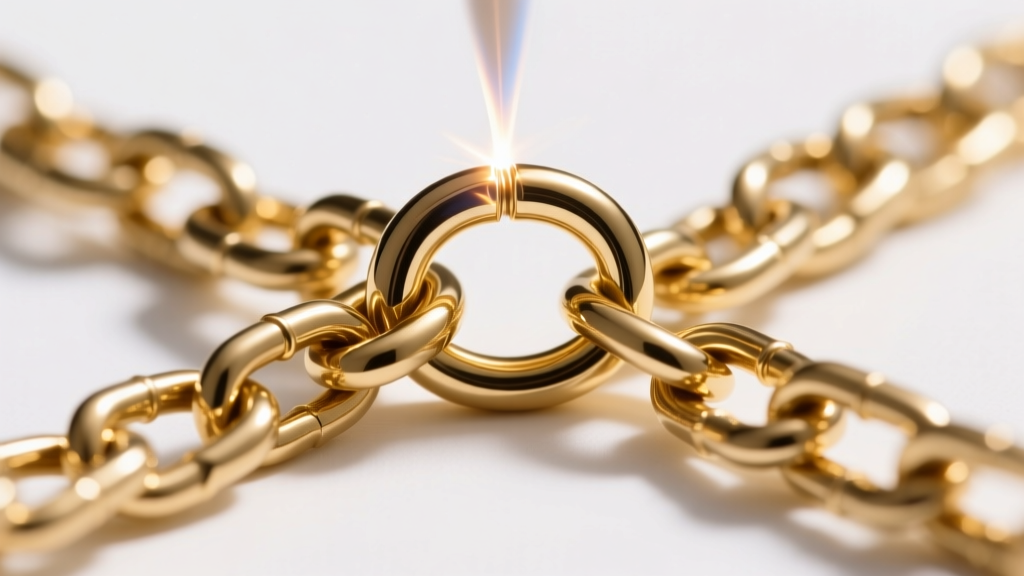
- Cable Chains: Rely on tiny, soldered oval links. If the jeweler uses a low-temperature solder or fails to properly flux the joint, the link will snap under minimal tension. Always inspect the solder points under a loupe before purchasing.
- Box Chains: Constructed from interlocking geometric squares that do not require soldered links. While highly resistant to tensile pulling, they are vulnerable to torque. If a box chain kinks, the structural integrity is permanently compromised, leading to sudden failure.
- Wheat (Spiga) Chains: Featuring woven, directional links, these offer excellent multi-directional strength and are highly resistant to kinking, making them ideal for heavy pendants.
Clasp Mechanics: The Weakest Link
A chain is only as strong as its clasp. Spring ring clasps rely on a tiny internal steel spring that is highly susceptible to fatigue and moisture corrosion, often failing within a year of daily wear. Lobster clasps offer a cast-metal body with a more robust internal mechanism, providing significantly higher security. For heavy pendants exceeding 20 grams, avoid magnetic clasps entirely; the sheer drop-force of a heavy pendant can easily overcome the magnetic field, resulting in a lost piece.
Furthermore, the jump ring connecting the clasp to the chain is a critical failure point. Mass-produced jewelry often uses open jump rings that are simply pinched shut. Under tension, these can easily pull apart. Always ensure your necklace features a fully soldered jump ring at the clasp connection point.
Actionable Framework: Choosing Your Armor
To ensure your necklace remains a blessing rather than a burden, follow this decision matrix based on your daily environment:
- For High-Sweat & Active Lifestyles: Avoid sterling silver and gold vermeil entirely. The friction and acidity will strip the plating and oxidize the copper core. Opt for solid 14k gold, Grade 5 titanium, or 316L stainless steel.
- For Sensitive Skin & Metal Allergies: Demand hypoallergenic guarantees. Look for ASTM F136 compliant titanium, 950 platinum, or nickel-free 14k white gold (alloyed with palladium instead of nickel).
- For Heavy Pendants (Over 15 grams): Skip delicate cable chains. Choose a 1.5mm to 2.0mm Wheat chain or a solid Rope chain, ensuring the clasp is a locking lobster or a spring ring with a reinforced soldered jump ring.
Conclusion
The curse of the necklace is merely a lack of material awareness. By understanding the specific metallurgical properties, alloy compositions, and structural mechanics of your jewelry, you can confidently select pieces that withstand the rigors of daily life. Invest in the right metal, respect the chain geometry, and your favorite necklaces will remain pristine for decades to come.


