How to Clean a Smok Necklace: PVD and Silicone Care
Learn how to properly clean and maintain your smok necklace. Expert tips for caring for black PVD coatings, silicone, and smoked resin.

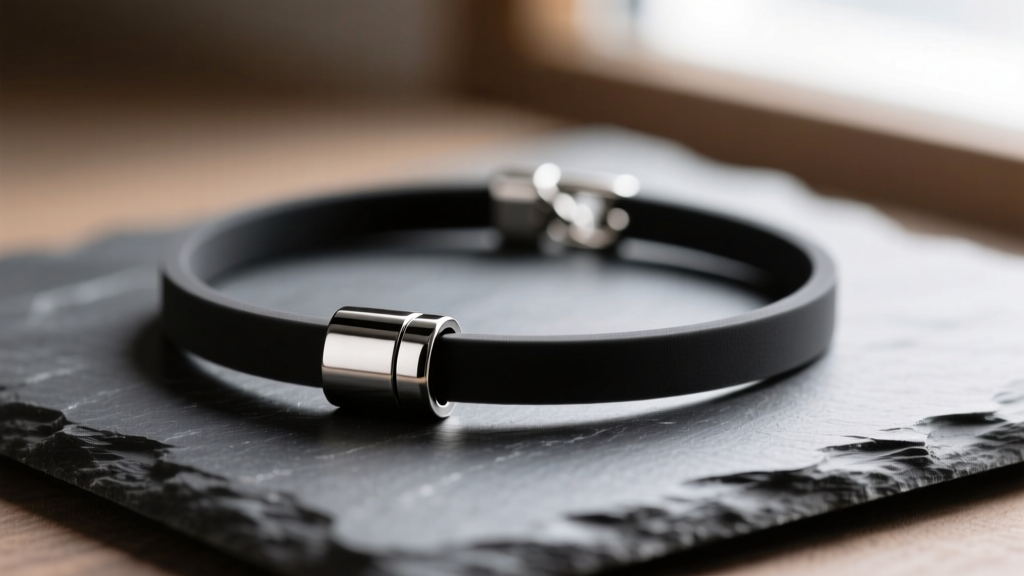
The alternative and industrial jewelry market has evolved significantly, with the smok necklace emerging as a staple for those who prefer a dark, edgy aesthetic. Unlike traditional gold or silver chains, a smok necklace typically combines blackened metals, matte silicone cords, and smoked resin or quartz elements. While these materials offer a striking, modern look, they require a highly specific maintenance routine. Standard jewelry cleaners can permanently strip dark coatings or cloud resin components. As of 2026, understanding the metallurgical and chemical properties of your alternative jewelry is essential for preserving its lifespan and matte finish.
Understanding the Anatomy of a Smok Necklace
To properly care for your jewelry, you must first understand the materials involved. A standard smok necklace is rarely made of a single substance. It is usually a composite of three distinct materials, each with its own vulnerabilities:
- 316L Stainless Steel with Black PVD: The base metal is typically 316L surgical steel, chosen for its nickel-free, hypoallergenic properties. The black finish is achieved through Physical Vapor Deposition (PVD), a process that vaporizes titanium or zirconium and bonds it to the steel. High-quality PVD layers measure between 1.0 and 2.5 microns thick. While harder than traditional electroplating, PVD can still suffer from micro-abrasions.
- Matte Silicone Cords: Many smok necklaces utilize heavy-duty silicone cords with a Shore A durometer rating of 40-60. Silicone is highly durable but porous at a microscopic level, meaning it readily absorbs sebum, lotions, and environmental dust.
- Smoked Resin or Acrylic Pendants: To achieve a translucent, dark aesthetic, designers often use smoked epoxy resin or acrylic. These polymers sit at a mere 2.5 to 3.5 on the Mohs hardness scale, making them exceptionally prone to scratching and chemical clouding.
Environmental Hazards and Daily Wear
Before diving into cleaning protocols, it is crucial to recognize what degrades a smok necklace. Human sweat has a pH ranging from 4.5 to 7.0. Over time, the mild acidity in sweat can degrade the clear protective top-coats often applied over PVD layers. Furthermore, exposure to chlorinated water (like swimming pools) is catastrophic. If chlorine breaches a micro-scratch in the PVD coating, it will cause rapid pitting and oxidation in the underlying 316L steel, leading to irreversible structural damage.
The PVD Coating Vulnerability
Many owners mistakenly believe that because PVD is incredibly hard (often exceeding 2,000 HV on the Vickers hardness scale), it is indestructible. However, PVD is brittle. Dropping your smok necklace on a hard surface like ceramic tile or concrete can cause the black coating to micro-fracture or chip away from the steel substrate. Once the steel is exposed, moisture will become trapped beneath the PVD layer, causing the black finish to peel.
The Step-by-Step Cleaning Protocol
When it is time to clean your smok necklace, abandon all commercial silver dips, ultrasonic cleaners, and ammonia-based solutions. According to guidelines from the Gemological Institute of America (GIA), porous and coated materials require the gentlest possible agitation and neutral pH solutions.
Step 1: Preparation
Fill a small glass bowl with distilled water. Avoid tap water, as the dissolved minerals (calcium and magnesium) will leave hard water spots on the dark PVD surface that are difficult to remove without aggressive rubbing.
Step 2: The Cleaning Solution
Add three drops of a pH-neutral, fragrance-free dish soap (such as original Dawn) to the water. Do not use soaps containing moisturizing creams or citrus degreasers, as these can break down the siloxane bonds in the silicone cord.
Step 3: Gentle Agitation
Submerge the necklace for no more than five minutes. Using an extra-soft baby toothbrush (bristles rated as 'ultra-soft'), gently sweep the bristles over the steel links and silicone cord. Never use a standard adult toothbrush, as the stiff nylon bristles will leave microscopic swirl marks on the smoked resin pendant.
Step 4: Drying
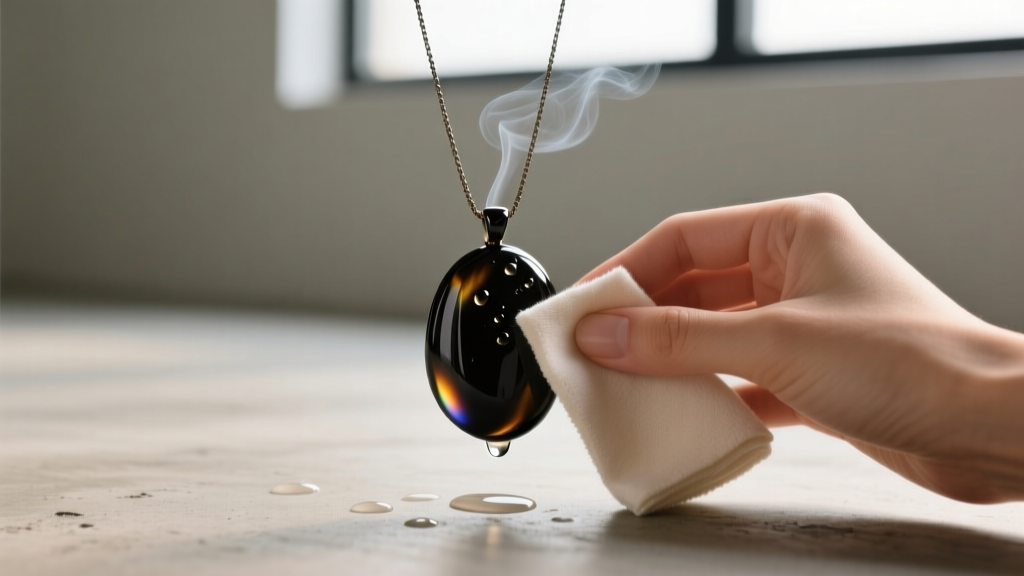
Rinse briefly under a slow stream of distilled water. Pat dry immediately with a lint-free, high-GSM microfiber cloth. Allow the silicone cord to air dry completely in a well-ventilated area before storage to prevent mildew.
Cleaning Agents: Safe vs. Unsafe
Choosing the wrong chemical agent is the fastest way to ruin the matte aesthetic of alternative jewelry. Refer to this compatibility chart before applying any substance to your smok necklace.
| Cleaning Agent | Effect on Black PVD | Effect on Silicone | Effect on Smoked Resin | Verdict |
|---|---|---|---|---|
| Distilled Water + Mild Soap | Safe | Safe | Safe | Highly Recommended |
| Isopropyl Alcohol (70%+) | Safe (Short-term) | Degrades/Chalks | Causes Crazing | Never Use |
| Ultrasonic Cleaners | Shatters Coating | Safe | Cracks Resin | Never Use |
| Jeweler's Rouge / Polishes | Strips PVD Layer | N/A | Clouds Surface | Never Use |
| Baking Soda Paste | Mildly Abrasive | Lifts Oil Stains | Scratches Heavily | Silicone Only |
Deep Cleaning Silicone and Resin Components
Over time, the matte silicone cord on a smok necklace will absorb body oils and environmental pollutants, turning dark and slightly sticky. To perform a deep clean on the silicone without using harsh alcohols, create a thick paste using baking soda and a few drops of distilled water. Apply the paste exclusively to the silicone cord (avoiding the resin and steel) and let it sit for 10 minutes. The baking soda acts as a microscopic absorbent, drawing oils out of the silicone pores. Wipe it away with a damp microfiber cloth.
For the smoked resin pendant, the Jewelers of America advises against using any abrasive compounds. If the resin becomes cloudy from minor surface scratches, you can restore its clarity using a specialized plastic polish (such as Novus No. 2 Fine Scratch Remover). Apply a tiny amount with a clean cotton swab, buffing in tight, circular circles until the optical clarity returns. Never use this plastic polish on the PVD steel, as it will dull the matte black finish.
Storage and Long-Term Maintenance
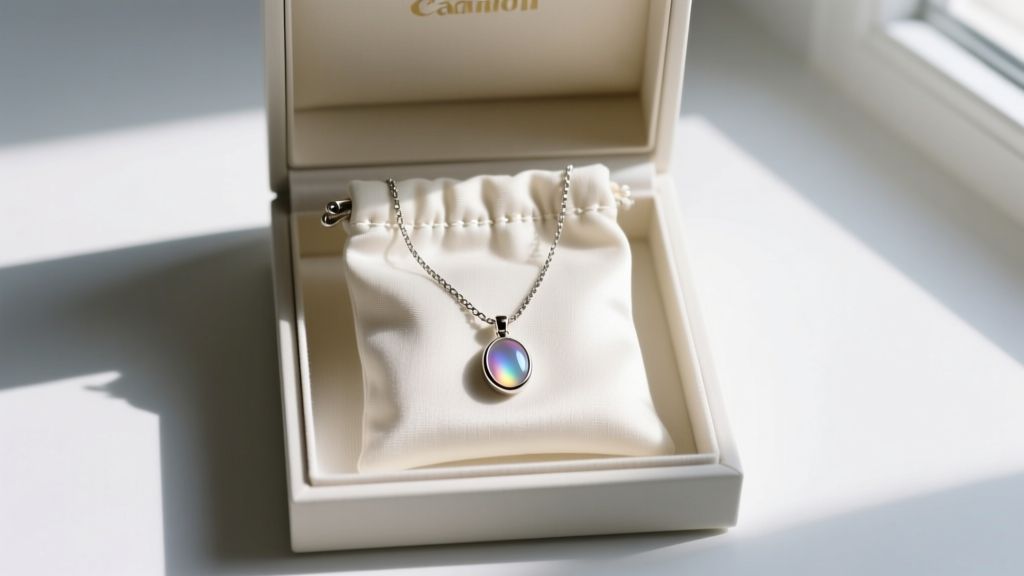
How you store your smok necklace is just as critical as how you clean it. Because the black PVD coating is harder than raw silver but softer than ceramic, storing it in a communal jewelry box will result in devastating friction scratches from harder gemstones or metal clasps.
- Individual Pouches: Always store your smok necklace in its own soft, non-abrasive flannel or polyethylene pouch.
- Anti-Tarnish Strips: While PVD steel does not tarnish in the traditional sense, placing a 3M anti-tarnish strip in the storage pouch will absorb ambient sulfur and moisture, protecting any exposed raw steel at the clasp joints.
- Climate Control: Avoid storing the necklace in high-humidity environments like bathroom hooks. The constant shift in humidity can cause the silicone cord to expand and contract, eventually weakening its structural integrity where it connects to the metal bail.
Troubleshooting Common Issues
My PVD Coating is Peeling or Chipping
Unfortunately, PVD cannot be spot-repaired or polished. If the black coating chips off to reveal the silver-colored 316L steel underneath, the only permanent solution is to send the piece to a specialized metallurgical lab to be chemically stripped and re-PVD coated. As a temporary cosmetic fix, some owners use a black permanent marker or specialized gun-bluing solution on the exposed steel, though this will require frequent reapplication.
The Silicone Cord Has Turned White or Chalky
This is a sign of chemical degradation, usually caused by exposure to hand sanitizers, perfumes, or alcohol-based lotions. Once the siloxane polymer chains are broken down, the silicone cannot be restored. You will need to carefully unspool the cord from the clasp and replace it with a new matte silicone or waxed cotton cord of the exact same millimeter thickness.
The Smoked Resin Pendant is Scratched
Because resin is incredibly soft, it will accumulate micro-scratches from daily wear. If the scratches are deep enough to catch on your fingernail, polishing will not remove them completely. In these cases, consider embracing the distressed, industrial look, or consult a custom jeweler who can cast a replacement pendant in a more durable material, such as black sapphire or dark spinel.


