Hoda Kotb Necklace Stack: 2026 Technical Layering Guide
Decode the Hoda Kotb necklace stack with our 2026 technical guide. Explore chain gauges, karat weights, and precise layering mathematics.

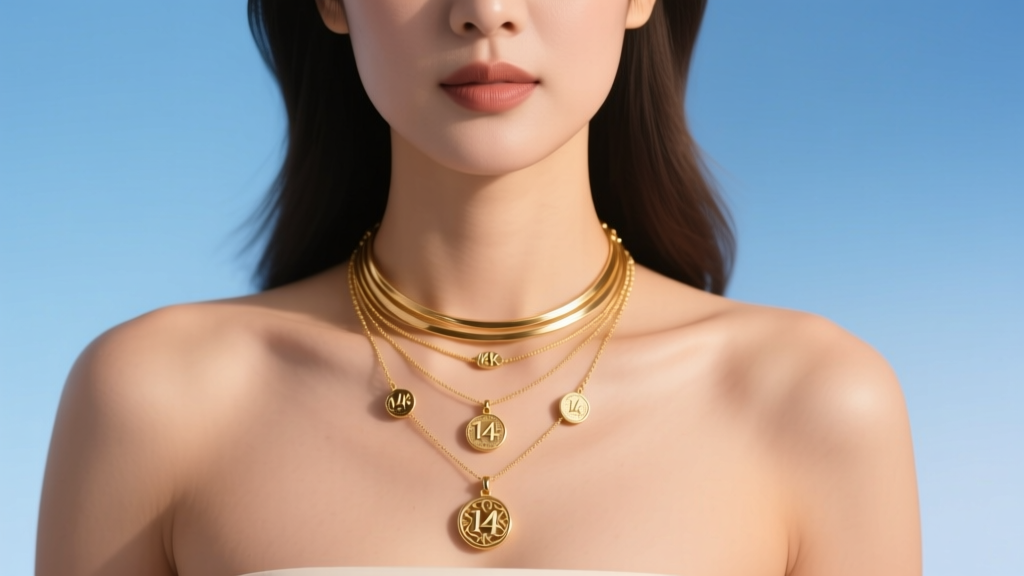
The Anatomy of the Hoda Kotb Necklace Stack
When analyzing broadcast jewelry trends, few figures have influenced everyday layering quite like Hoda Kotb. The iconic 'Hoda Kotb necklace' look is not merely a random assortment of chains; it is a meticulously engineered stack designed to withstand the rigors of high-definition studio lighting, constant movement, and the visual demands of morning television. As we move through 2026, the technical execution of this layered aesthetic has evolved, moving away from heavy, cumbersome pieces toward micro-engineered chains and precision-weighted pendants.
To truly replicate this aesthetic, one must understand the underlying mechanics of jewelry layering. The quintessential Hoda Kotb necklace stack relies on a three-tier architecture: a 14-inch choker or collar, a 16-inch princess-length chain featuring a focal pendant, and an 18-inch matinee chain that rests lower on the sternum. This specific configuration creates a visual triangle that draws the eye upward toward the face, a crucial technique in broadcast styling. However, achieving this without the chains tangling into a knotted mess requires a deep understanding of chain weaves, metal friction, and pendant physics.
Chain Weave Engineering and Tensile Strength
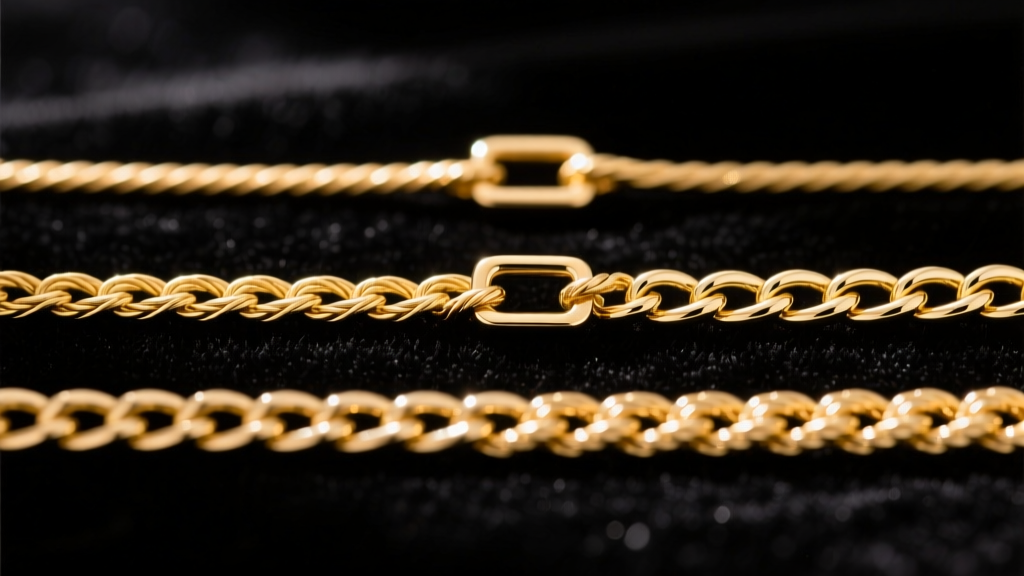
The secret to a tangle-free stack lies in varying the chain weaves. When identical chain links rub against one another, their uniform geometry allows them to interlock, causing severe tangling. By alternating the structural geometry of the chains, you disrupt this friction pattern.
- Tier 1 (14-inch): 0.8mm Cable Chain. The cable chain features simple, uniform oval links. At 0.8mm, it provides a delicate, glittering base layer that catches studio key lights without overpowering the neckline.
- Tier 2 (16-inch): 1.2mm Box Chain. Box chains are constructed from square links folded into a smooth, continuous tube. The flat surfaces of a 1.2mm box chain slide effortlessly against the round links of the cable chain, drastically reducing the coefficient of friction.
- Tier 3 (18-inch): 1.5mm Rope Chain. The twisted, helical structure of a rope chain offers maximum tensile strength and a high degree of light refraction. The 1.5mm gauge is substantial enough to support heavier gemstone pendants without risking structural failure.
Metallurgy: Karat Weights and Studio Lighting
The visual impact of a gold necklace on camera is heavily dependent on its metallurgical composition. According to the Gemological Institute of America (GIA), pure 24k gold is too soft for daily wear, possessing a Vickers hardness of merely 25. Therefore, alloying is required. For the Hoda Kotb necklace aesthetic, the choice between 14k and 18k gold is a balance of durability and color saturation.
14k Gold (58.5% Pure Gold): With a Vickers hardness of approximately 160, 14k gold is highly resistant to the micro-abrasions caused by layering. The higher copper and silver content gives it a slightly paler yellow hue, which can sometimes read as 'brassy' under the cool 5600K daylight-balanced LEDs used in modern television studios.
18k Gold (75% Pure Gold): This is the preferred choice for high-end broadcast jewelry. The richer, deeper yellow tone of 18k gold absorbs and reflects studio lighting with a warmer, more luxurious glow. While its Vickers hardness drops to around 130, making it slightly more prone to scratching, the use of harder alloy metals like zinc and palladium in modern 2026 casting formulas has significantly improved its durability. For the focal 16-inch chain, 18k gold is the superior choice for on-camera warmth.
The Mathematics of Layering: Lengths and Drop Ratios
The most common failure mode in layered necklaces is improper length grading. If the drop gap between chains is less than 1.5 inches, the pendants will collide, and the chains will twist. The following table outlines the precise mathematical grading required to maintain a pristine Hoda Kotb necklace stack.
| Tier | Base Length | Chain Gauge | Pendant Weight | Drop Gap |
|---|---|---|---|---|
| 1 (Choker) | 14.0 inches | 0.8mm | None / Micro-bead | N/A |
| 2 (Princess) | 16.0 inches | 1.2mm | 1.5 - 3.0 grams | 2.0 inches |
| 3 (Matinee) | 18.5 inches | 1.5mm | 3.0 - 5.5 grams | 2.5 inches |
Notice that the drop gap increases as the chains get longer. This is because the circumference of the neck and upper chest expands as you move downward. A 2-inch gap at the collarbone translates to a visually smaller gap than a 2.5-inch gap at the sternum. Adjusting the mathematics to the body's topography ensures the layers remain visually distinct.
Pendant Mechanics: Bails and Drape Physics
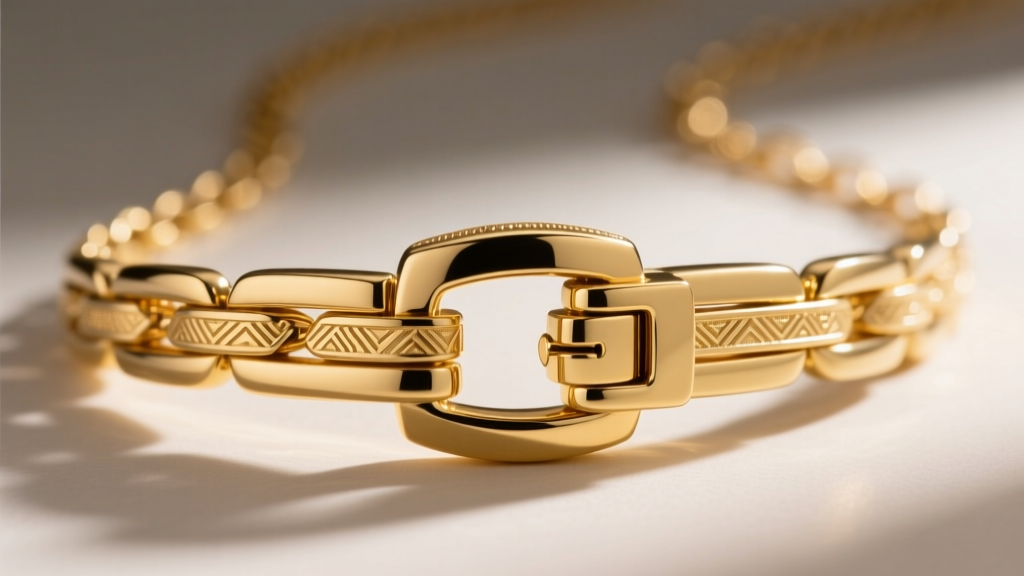
Hoda frequently wears sentimental pendants—maternal initials, evil eye motifs, and teardrop gemstones. The way these pendants hang is dictated by the bail (the loop that connects the pendant to the chain). Understanding bail mechanics is essential for achieving the perfect drape.
Standard vs. Hidden Bails
A standard bail is soldered to the top of the pendant and features a visible loop. While classic, standard bails can cause lightweight pendants (under 1.5 grams) to flip backward, hiding the design against the skin. To counter this, jewelers use a hidden bail, which is affixed to the back of the pendant, allowing the design to sit flush against the chest and remain perfectly forward-facing. For the 16-inch focal chain, a hidden bail is critical for maintaining on-camera visibility.
Jump Ring Sizing
If using a jump ring to attach a pendant, the inner diameter of the ring must be at least 1.5 times the width of the chain links. For a 1.2mm box chain, the jump ring should have an inner diameter of no less than 2.0mm. If the jump ring is too tight, the pendant loses its articulation, resulting in a stiff, unnatural drape that looks rigid on video.
Clasp Engineering: Solving the Multi-Strand Dilemma
Managing three separate lobster clasps at the nape of the neck is impractical for daily wear and broadcast quick-changes. The 2026 solution for the Hoda Kotb necklace stack is the multi-strand magnetic clasp. These clasps utilize neodymium magnets encased in 14k gold housings, allowing all three chains to snap together into a single, unified closure point.
According to the Jewelers of America, when utilizing magnetic clasps for layered stacks, it is imperative to ensure the clasp features a secondary mechanical safety latch or a figure-eight safety wire. Neodymium magnets can experience shear-force failure if the chains are pulled laterally, and a mechanical backup prevents catastrophic loss of the jewelry.
Sourcing and Replicating the Look in 2026
Replicating this highly technical stack requires moving beyond fast-fashion jewelry. To achieve the precise gauges, 18k color saturation, and hidden bail mechanics required for this look, consumers should seek out specialized chain manufacturers or custom bench jewelers. Expect to invest between $800 and $1,500 for a solid 14k/18k gold three-piece stack engineered to these exact specifications. By prioritizing chain geometry, metallurgical warmth, and precise drop mathematics, you can master the Hoda Kotb necklace aesthetic with professional-grade precision.


