How to Style and Layer a Minimalist Dart Necklace
Learn how to choose, style, and layer a minimalist dart necklace. Our step-by-step guide covers chain gauges, metal grades, and neckline pairings.

The Rise of Directional Luxury: Understanding the Dart Necklace
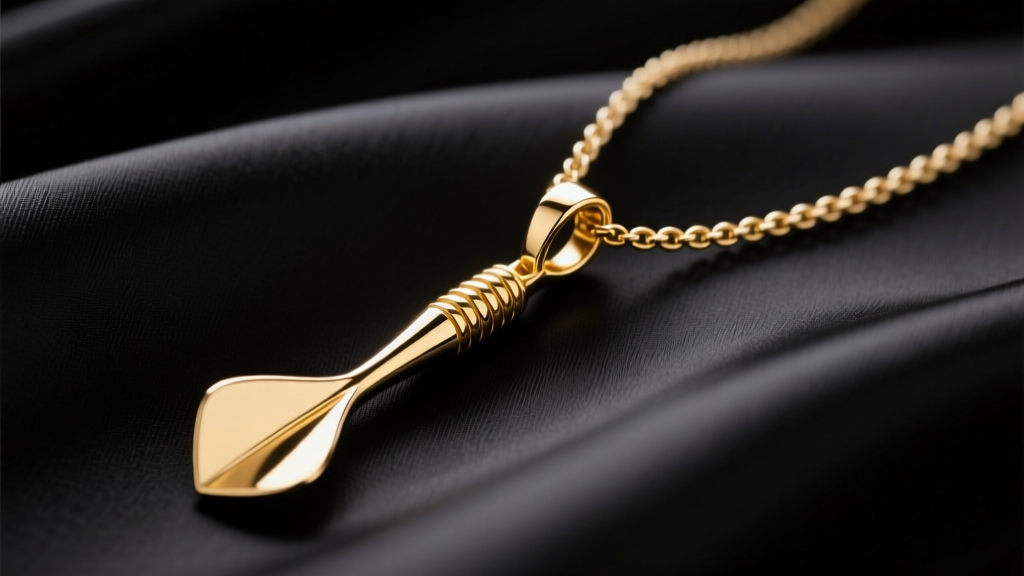
In the evolving landscape of 2026 jewelry trends, the minimalist dart necklace has emerged as a staple of what stylists call "directional luxury." Unlike traditional teardrop or geometric pendants, the dart silhouette—characterized by its sleek, aerodynamic taper and forward-pointing geometry—symbolizes momentum, focus, and precision. Whether crafted from high-polish 14k gold or matte-finished 316L stainless steel, the dart pendant offers a sharp, modern alternative to classic charms. However, styling this distinct shape requires an understanding of proportion, chain mechanics, and neckline geometry. This comprehensive guide will walk you through exactly how to select, layer, and maintain a dart necklace to elevate your everyday wardrobe.
Anatomy of a Dart Pendant: Bails, Tapers, and Dimensions
Before you can effectively style a dart necklace, you must understand its structural anatomy. The visual impact of the dart relies heavily on how it hangs against the sternum. There are two primary bail configurations you will encounter:
- The Hidden Bail (Horizontal Drill): The most premium and sought-after design. The chain threads directly through a horizontal channel drilled into the top third of the dart. This allows the pendant to lay perfectly flush against the skin, creating a seamless, floating effect that emphasizes the aerodynamic lines.
- The Soldered Loop Bail: A traditional jump ring or loop soldered to the top or back of the dart. While more affordable, this bail causes the dart to hang slightly forward, which can disrupt the sleek profile and cause the pendant to flip during movement.
For optimal everyday wear, look for a dart pendant measuring between 20mm and 30mm in length. Pendants exceeding 40mm cross into statement territory and require heavier chain gauges to prevent the necklace from looking top-heavy.
Selecting the Right Metal Grade and Finish
The material of your dart necklace dictates both its longevity and its styling versatility. According to the Gemological Institute of America (GIA), understanding gold alloys is crucial for jewelry that rests against the skin and is subject to daily friction.
Metal Options for 2026
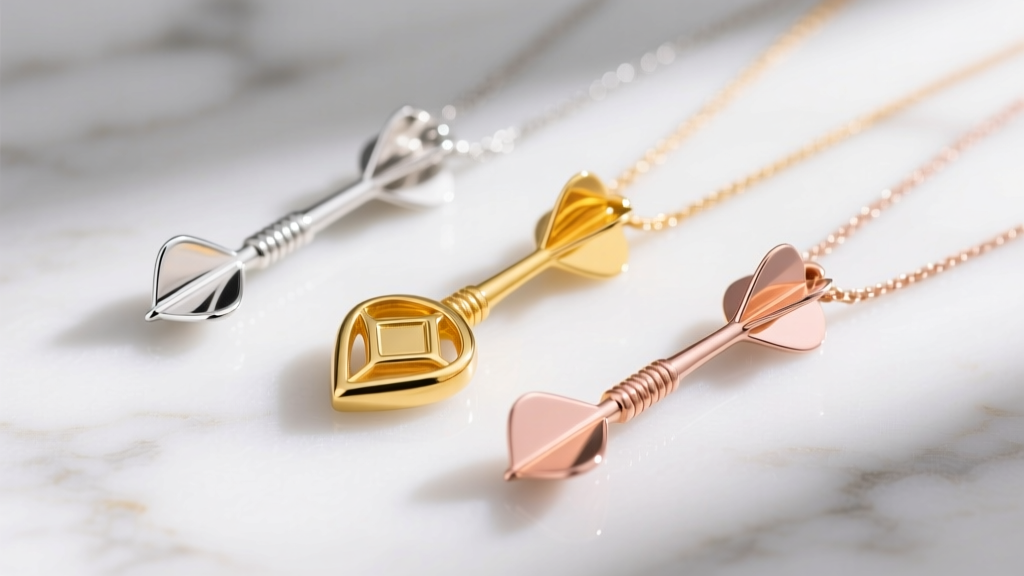
- 14k Solid Gold: The industry standard for fine everyday jewelry. It offers an excellent balance of durability and rich color. A solid 14k gold dart (weighing roughly 2.5 to 4 grams) typically retails between $180 and $350, depending on the brand.
- 18k Gold Vermeil: A thick layer of 18k gold over a sterling silver base. Ideal for those wanting a warmer, more luxurious tone on a budget ($40–$85). However, the high-polish facets of a dart pendant can wear down the gold layer over time if subjected to daily friction.
- 316L Surgical Stainless Steel: The ultimate choice for an industrial, ultra-modern aesthetic. Steel darts are often finished with a brushed or matte texture, which hides micro-scratches and costs between $25 and $50.
Chain Gauge and Length Matrix
Pairing the wrong chain with a dart pendant is the most common styling mistake. A chain that is too thick will visually swallow the delicate taper of the dart, while a chain that is too thin will tangle and fail to support the pendant's weight. The experts at Vogue consistently emphasize that proportion is the secret to successful jewelry layering. Use the matrix below to match your chain to your specific dart pendant.
| Dart Pendant Weight | Recommended Chain Gauge | Best Chain Style | Optimal Length |
|---|---|---|---|
| 1.5g – 2.5g (Delicate) | 0.9mm – 1.1mm | Cable or Snake Chain | 16" – 18" |
| 3.0g – 5.0g (Standard) | 1.2mm – 1.5mm | Box or Rolo Chain | 18" – 20" |
| 6.0g+ (Statement) | 1.8mm – 2.5mm | Wheat or Curb Chain | 20" – 24" |
Pro Tip: A 1.2mm Box chain is universally considered the best pairing for a standard 3-gram dart pendant. The square links of the box chain reflect light in a way that perfectly complements the geometric, faceted edges of the dart.
Step-by-Step Guide to Layering a Dart Necklace
The linear, vertical drop of a dart necklace makes it an exceptional anchor piece for layered stacks. Because it draws the eye downward, it naturally elongates the neck. Here is a foolproof, three-step method to build a balanced stack around your dart necklace.
Step 1: Establish the Upper Anchor (14" - 16")
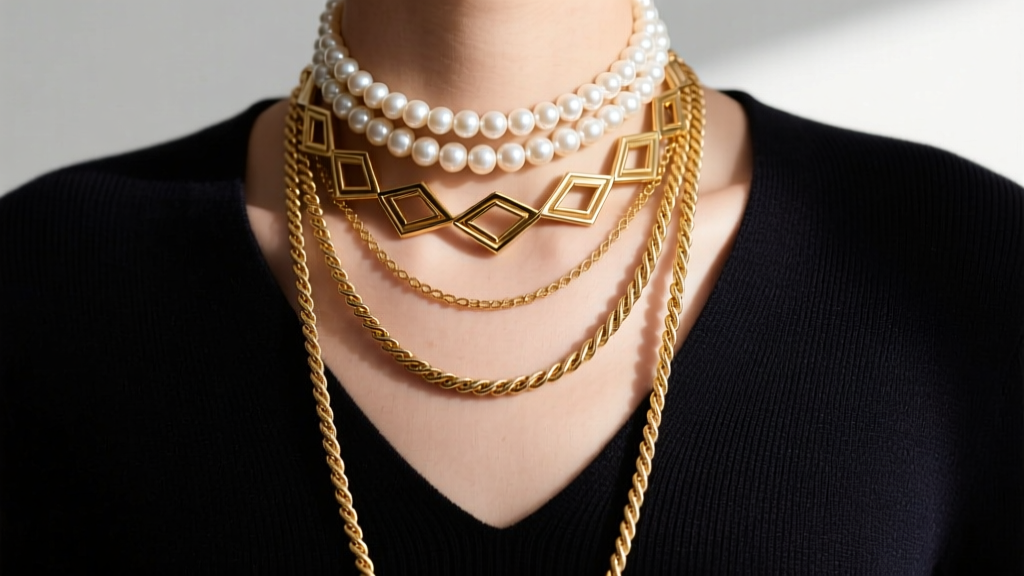
Start with a contrasting texture at the collarbone. If your dart necklace is a high-polish gold metal, pair it with a 14-inch freshwater pearl strand or a matte black onyx bead choker. This creates a visual boundary that frames the face and prevents the metallic layers from bleeding together.
Step 2: Position the Dart (18" - 20")
Your dart necklace should sit squarely in the middle of the stack. If you are using an 18-inch chain, the dart will rest just above the neckline of a standard crew-neck t-shirt, acting as a focal point. Ensure the clasp of this chain is slightly heavier than the others to counterbalance the weight of the pendant and prevent the chain from sliding around your neck.
Step 3: Add the Lower Sweep (22" - 24")
Finish the stack with a long, delicate chain that lacks a heavy pendant. A 22-inch 1.0mm rolo chain with a tiny, 3mm geometric charm (like a small diamond or a simple gold bead) provides a subtle finishing touch that echoes the minimalist ethos of the dart without competing for attention.
Neckline Pairings: Where the Dart Shines
The aerodynamic shape of a dart necklace interacts differently with various clothing necklines. Understanding these interactions will help you maximize the pendant's visual impact.
- The Deep V-Neck: This is the ultimate pairing. The V-shape of the neckline mirrors the downward trajectory of the dart pendant, creating a continuous, elongating line that is incredibly flattering. Opt for a 20-inch chain so the dart rests in the open space of the V.
- The Crisp Button-Down: For a sophisticated office look, wear an 18-inch dart necklace over a fully buttoned white or black silk blouse. The rigid, geometric lines of the dart contrast beautifully with the soft drape of silk or the structured collar of cotton.
- The Crew Neck: Avoid wearing a short dart necklace (16 inches) tightly against a thick crew-neck sweater, as the pendant will get lost in the fabric folds. Instead, opt for a 22-inch chain worn over the sweater for a modern, utilitarian aesthetic.
"The dart pendant is the sartorial equivalent of a tailored blazer lapel—it provides structure, direction, and an undeniable sense of purpose to an outfit."
Troubleshooting Common Dart Necklace Issues
Even the most well-crafted dart necklace can present minor annoyances. Here is how to solve the most common issues:
- The Pendant Flipping: If your dart constantly flips backward, showing the flat back instead of the faceted front, your chain is likely too lightweight. Upgrade to a chain with a slightly higher gram weight, or use a tiny drop of clear jewelry wax on the back of the bail to create temporary friction against the chain.
- Chain Tangling in the Bail: Hidden bails (horizontal drills) can sometimes trap the chain link, causing the pendant to sit at an awkward angle. To fix this, ensure the inner diameter of the drill channel is at least 0.5mm wider than the thickness of your chain links.
Maintenance and Care for Aerodynamic Facets
The sharp, polished facets of a metal dart pendant are prone to showing fingerprints and micro-scratches. To maintain the aerodynamic gleam, avoid ultrasonic cleaners, especially if your 2026 dart design features mixed-media inlays like carbon fiber or matte ceramic accents, which can be damaged by high-frequency vibrations. Instead, use a specialized jewelry polishing cloth infused with mild rouge. Wipe the pendant in the direction of the taper—from the wide base to the narrow point—to ensure you are cleaning along the grain of the metal's polish, preserving its sharp, directional finish for years to come.


