Cursive J Necklace Materials: Gold vs Silver Guide
Discover the best metals for your cursive J necklace. We compare 14k gold, sterling silver, and steel for durability, detail retention, and price.

The Structural Anatomy of a Script Letter Pendant
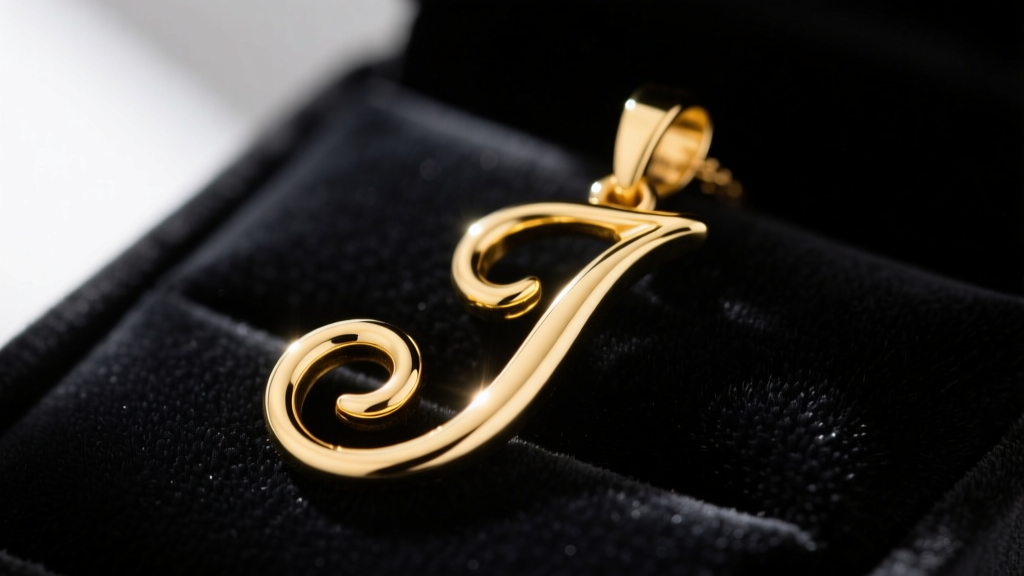
When selecting a personalized initial piece, the typography dictates the structural integrity of the jewelry. A cursive J necklace presents unique engineering challenges compared to standard block letters or minimalist sans-serif pendants. The cursive 'J' is structurally complex: it typically features a sweeping top serif or loop, a long descending vertical stroke, and a delicate bottom hook that curls back upward or loops into the next hypothetical letter.
From a metallurgical perspective, this bottom hook is a high-stress catch point. It protrudes outward, making it highly susceptible to snagging on knitwear, lace, or towels. If the metal is too soft, the hook will bend out of shape. If the metal is too brittle or the casting is porous, the thin extremities of the script can snap under tension. Furthermore, the method of manufacturing—whether the pendant is die-striking from a flat sheet or cast via the lost-wax method—heavily influences how well the metal holds the sharp, intricate curves of a cursive font. Understanding these material properties is essential before investing in a piece meant for daily wear.
Material Breakdown: Which Metal Holds the Curve?
The longevity and visual crispness of your script pendant depend entirely on the alloy composition. Below, we analyze the three most common metals used for initial necklaces, evaluating their hardness, detail retention, and long-term wearability.
14k and 18k Solid Gold: The Premium Standard
Solid gold remains the benchmark for fine jewelry, but not all karats are created equal when it comes to delicate script letters. According to the Gemological Institute of America (GIA), the purity of gold directly impacts its malleability.
- 14k Gold (58.5% pure gold): Alloyed with copper, silver, and zinc, 14k gold boasts a Vickers Hardness (HV) of roughly 140-160. This makes it exceptionally rigid, allowing it to hold the thin bottom hook and sharp serifs of a cursive J without warping. It is the optimal choice for a daily-wear script pendant.
- 18k Gold (75%% pure gold): With an HV of 120-130, 18k gold offers a richer, deeper yellow hue but is noticeably softer. A thin 18k cursive J can easily bend if caught on a heavy sweater. If you choose 18k, ensure the pendant is cast with a slightly thicker gauge (at least 1.5mm at the base) to compensate for the softer alloy.
Pricing Range: $180 - $450, depending on the weight and whether it includes diamond accents.
925 Sterling Silver: Affordable Elegance with Caveats
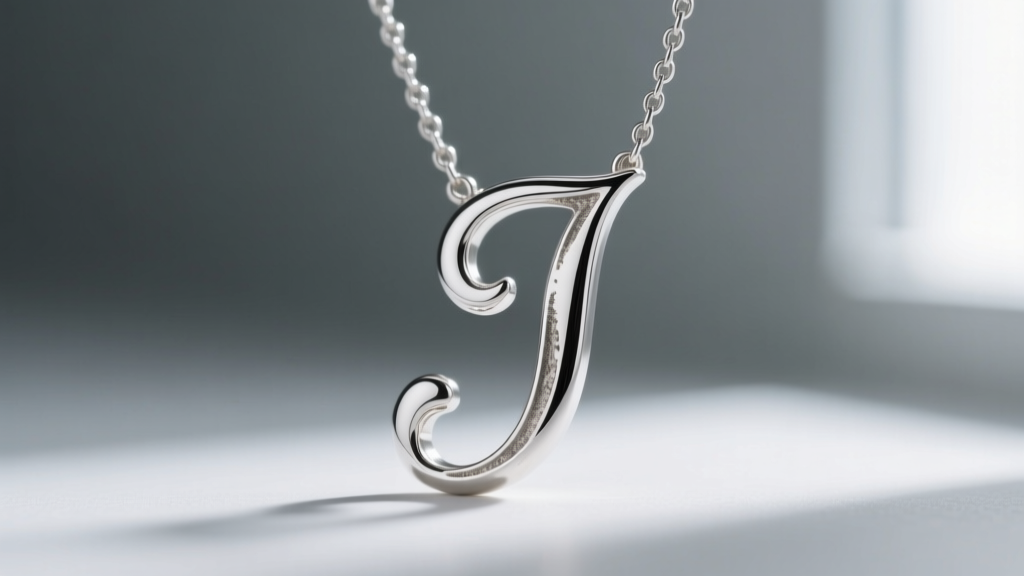
Sterling silver is an alloy of 92.5% pure silver and 7.5% copper. As noted by The Silver Institute, the addition of copper provides necessary strength, but silver remains inherently soft with a Vickers Hardness of only 60-70.
For a cursive J necklace, this softness is a double-edged sword. On the positive side, silver is highly malleable, allowing jewelers to achieve beautiful, fluid curves during the polishing process. On the negative side, the long descending stroke of the 'J' can act as a lever; if pulled, the metal will bend rather than snap. Additionally, the copper content makes sterling silver prone to oxidation (tarnish), which tends to accumulate in the deep, hard-to-reach crevices of a cursive font, requiring regular maintenance to keep the letter looking crisp.
Pricing Range: $45 - $120.
316L Stainless Steel & PVD Coating: The Modern Alternative
For those seeking maximum durability on a budget, 316L surgical stainless steel is a formidable contender. With a Vickers Hardness exceeding 200, steel is virtually impervious to the bending and warping that plagues softer metals. The sharp edges of a cursive J will remain perfectly intact for decades. The British Stainless Steel Association highlights 316L's superior resistance to corrosion and environmental degradation.
However, steel has a critical failure mode: repairability. If the jump ring connecting the cursive J to the chain breaks or wears through, standard jewelers cannot easily solder steel with a traditional torch. It requires specialized laser welding. Furthermore, steel pendants are often coated with PVD (Physical Vapor Deposition) gold or rose gold. While PVD is highly scratch-resistant, it cannot be re-plated by a local jeweler once it eventually wears off.
Pricing Range: $25 - $75.
Comparative Data: Hardness, Pricing, and Detail Retention
To make an informed decision, review the empirical data comparing these metals specifically for intricate script pendants.
| Material | Vickers Hardness (HV) | Tarnish Resistance | Detail Retention | Repairability | Avg. Price Range |
|---|---|---|---|---|---|
| 14k Solid Gold | 140 - 160 | Excellent | High | Easy (Torch Solder) | $180 - $450 |
| 18k Solid Gold | 120 - 130 | Excellent | Medium-High | Easy (Torch Solder) | $250 - $600 |
| 925 Sterling Silver | 60 - 70 | Poor (Oxidizes) | Medium (Prone to bending) | Easy (Torch Solder) | $45 - $120 |
| 316L Stainless Steel | 200+ | Excellent | Exceptional | Difficult (Laser Weld) | $25 - $75 |
Chain Pairing: Matching the Pendant's Weight and Vibe
A cursive J pendant is visually intricate but physically lightweight. Pairing it with the wrong chain can either overpower the delicate typography or cause premature wear on the pendant's bail (the loop that holds the chain).
- The Ideal Gauge: Opt for a chain thickness between 1.0mm and 1.5mm. Anything thicker will visually clash with the elegant, sweeping lines of the cursive font.
- Chain Styles: A Box Chain or a standard Cable Chain provides a clean, geometric backdrop that allows the complex curves of the 'J' to stand out. Avoid Figaro, Cuban, or Rope chains, as their heavy, textured links distract from the script and can act like a file, slowly grinding away the metal of the pendant's bail due to friction.
- Bail Considerations: Ensure the inner diameter of the pendant's bail is at least 2.0mm to accommodate a 1.5mm chain comfortably without forcing it, which can cause the bail to stretch and thin out over time.
Maintenance and Failure Modes of Script Pendants
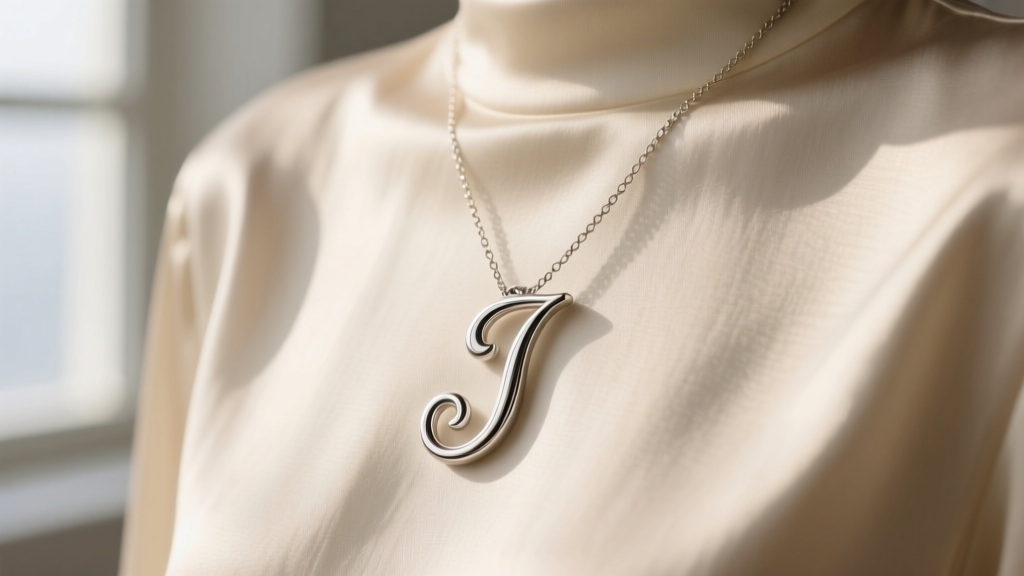
Owning a script initial necklace requires specific care protocols to maintain the legibility and structural integrity of the letter.
Cleaning Crevices Without Scratching
The overlapping loops and tight curves of a cursive J trap skin oils, lotions, and environmental dust. For sterling silver, avoid aggressive polishing cloths on the flat surfaces, as they will remove the intentional antiquing (oxidation) often applied to the recessed areas to make the letter pop. Instead, use a soft-bristled baby toothbrush with a drop of mild dish soap and warm water to gently agitate the dirt out of the lower hook and top serif. Rinse thoroughly and dry with a microfiber cloth.
Common Failure Modes to Monitor
Expert Tip: Inspect the jump ring (the small circle connecting the pendant to the chain) every six months. Because script pendants swing freely, they cause micro-abrasions on the inside of the jump ring. If you see a deep groove forming, have a jeweler replace the ring before it snaps and you lose your pendant.
Another common issue is 'hook deformation.' If your cursive J catches on a garment, do not pull it forcefully. Stop, untangle the fabric from the metal, and gently massage the hook back into its original curve using your thumbs. If the metal is work-hardened (like steel or 14k gold) and resists bending, take it to a professional to avoid snapping the piece.
Final Verdict: Choosing Your Cursive J
If you are purchasing a cursive J necklace as an heirloom piece or for continuous, never-take-it-off daily wear, 14k solid gold is the undisputed champion. It offers the perfect equilibrium of tensile strength to protect the delicate bottom hook and the inherent value of fine jewelry. If you are buying a trendy, seasonal piece or are on a strict budget, 316L stainless steel with PVD plating will give you the sharpest, most durable script lines available, provided you accept that it cannot be easily resized or repaired in the future. Sterling silver remains a beautiful middle ground, provided you are diligent about storing it in an anti-tarnish pouch and handling the delicate curves with care.


