The Anatomy of a Custom Charm Necklace: Metals, Gauges & Clasps
Master the technical specs of a custom charm necklace. Explore metal alloys, chain gauges, jump ring failure modes, and clasp mechanics for lasting wear.

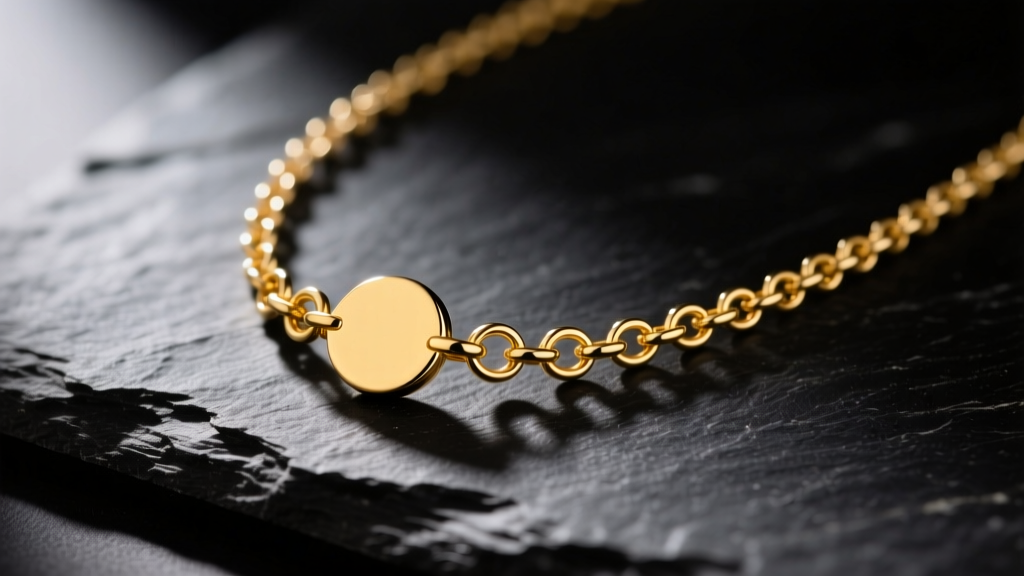
The Engineering Behind the Aesthetic
In 2026, the jewelry market has seen a massive pivot toward modular, personalized pieces. A custom charm necklace is no longer just a sentimental trinket; it is a complex, load-bearing mechanical system. When collectors and designers commission bespoke pieces, the focus often lands entirely on the aesthetic of the charms—enamel work, gemstone settings, and engraving. However, as a structural system, a necklace is only as resilient as its weakest mechanical link. Understanding the metallurgy, gauge tolerances, and tension dynamics of your chain is the difference between an heirloom that survives decades of daily wear and a piece that snaps within a month. This deep dive explores the exact technical specifications required to build a flawless custom charm necklace.
Metallurgy & Material Grades: Hardness vs. Malleability
The base metal dictates the tensile strength and fatigue resistance of the necklace. According to the Gemological Institute of America (GIA), gold alloys are engineered by mixing pure 24k gold with base metals like copper, silver, and zinc. For a custom charm necklace chain, 14k gold (58.5% pure gold) is the undisputed champion of durability. With a Vickers hardness (HV) of roughly 130-150, 14k gold resists the micro-abrasions and work-hardening that cause chain links to become brittle and snap over time.
Conversely, 18k gold (75% pure gold) sits at a softer 90-110 HV. While 18k is superior for the charms themselves—as its malleability allows it to absorb sudden impacts without fracturing—it is a poor choice for fine, load-bearing chains. If you are attaching heavy, solid-cast custom charms, opt for an 18k chain only if the gauge is substantial (over 2.0mm). For everyday wear with multiple lightweight charms, a 14k or 18k white gold chain (alloyed with nickel or palladium for added stiffness) provides the necessary structural rigidity.
For silver enthusiasts, standard Sterling (.925) is prone to sulfide tarnishing and structural fatigue. The modern expert standard is Argentium Silver (.935 or .960), which replaces some copper with germanium. This creates a transparent germanium dioxide layer on the surface, virtually eliminating tarnish while offering superior tensile strength for jump rings and clasp components.
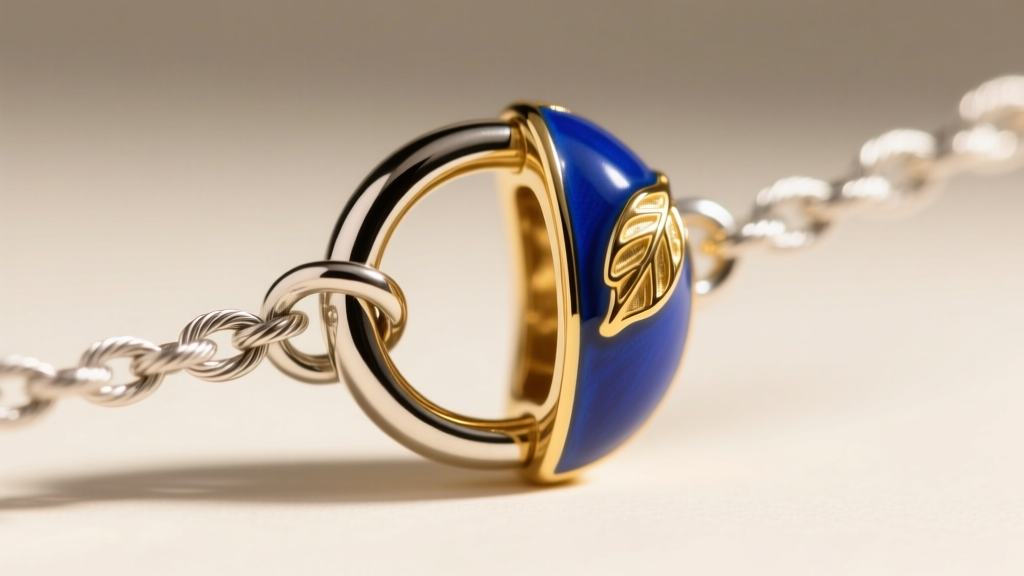
Chain Architecture & Weight Capacities
The architecture of the chain links determines how lateral force and vertical weight are distributed. A delicate custom charm necklace requires a chain that can handle dynamic loads—the sudden tugs and snags of daily life. Many commercial chains are manufactured using hollow tubing to reduce gold weight and cost. While visually identical to solid wire links, hollow chains possess virtually no crush resistance. If a heavy custom charm is attached to a hollow rope chain, the dynamic load of the charm bouncing against the chest will eventually crush the links from the inside out, leading to catastrophic kinking. Always specify solid link or die-struck solid when sourcing chains for bespoke charm configurations.
| Chain Style | Link Architecture | Recommended Gauge (AWG) | Max Safe Pendant Weight |
|---|---|---|---|
| Cable | Uniform oval links, alternating planes | 16-18 AWG (1.0-1.3mm) | 10-15 grams |
| Cuban / Curb | Interlocking flat links, high surface contact | 12-14 AWG (1.6-2.0mm) | 30-50 grams |
| Figaro | Patterned long and short links | 14-16 AWG (1.3-1.6mm) | 20-25 grams |
| Box | Square links interlocked at 90 degrees | 18-20 AWG (0.8-1.0mm) | 5-8 grams |
| Rope | Twisted helical links, multi-directional flex | 14-16 AWG (1.3-1.6mm) | 25-40 grams |
Box chains, while visually striking, are notorious for structural failure under heavy custom charms. The 90-degree interlocking joints create severe stress concentration points. If a heavy charm is attached, a sudden tug will easily distort the square links, leading to irreversible kinking. Cable and Curb chains distribute tension evenly across the curvature of the wire, making them vastly superior for modular charm setups.
The Weakest Link: Jump Ring Mechanics & Soldering
The most catastrophic failures in a custom charm necklace do not occur in the chain links or the clasp; they occur at the jump ring connecting the charm to the chain. An open jump ring is essentially a split in the metal. When lateral force is applied, the ring can pull apart, losing the charm forever. To mitigate this, master jewelers rely on specific American Wire Gauge (AWG) thicknesses and hardening techniques. For standard enamel or hollow-cast charms weighing under 5 grams, a 20 AWG (0.81mm) half-hard jump ring is sufficient. However, for solid gold, gemstone-set, or oversized custom charms, you must upgrade to an 18 AWG (1.02mm) or even 16 AWG (1.29mm) jump ring.
According to technical fabrication guides from Rio Grande, the aspect ratio (AR) of a jump ring—the ratio of the inner diameter to the wire thickness—also dictates its structural integrity. An AR that is too high (a large ring made of thin wire) will easily distort into an oval under the weight of a custom charm, eventually slipping through the chain links. Maintaining an AR between 3.5 and 4.5 ensures the ring remains perfectly circular under load.
Furthermore, the cut of the jump ring matters. Saw-cut jump rings provide a perfectly flush seam that can be cleanly soldered shut using hard silver or gold solder. Laser-welded jump rings offer an even cleaner finish without the heat-affected zones of traditional torch soldering, preserving the temper of the surrounding chain links. If soldering is not an option, utilizing a double-loop split ring (functioning like a miniature keyring) provides redundant mechanical security that an open jump ring simply cannot match.
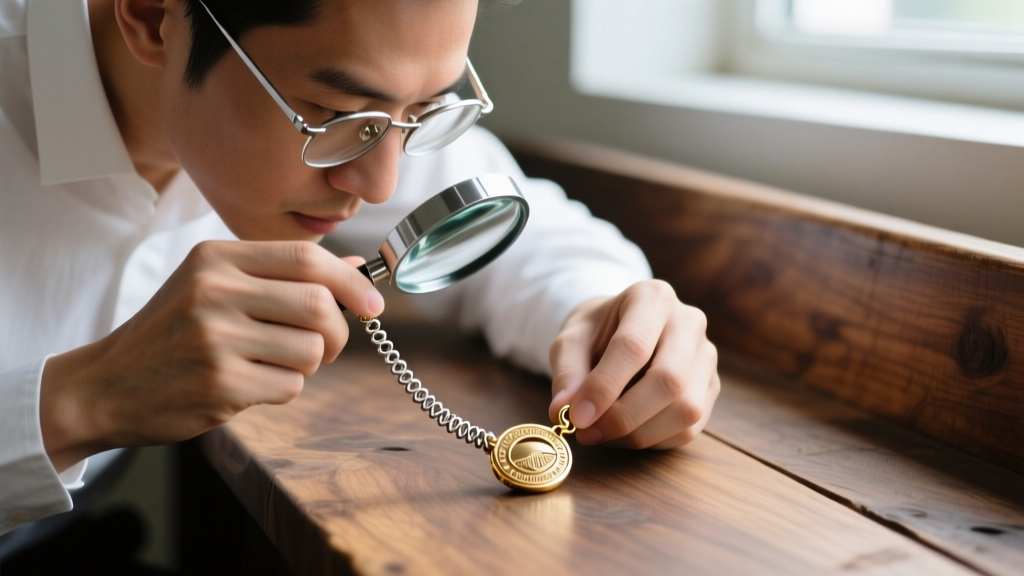
Clasp Mechanics & Tension Failures
The clasp is the primary tension point of the entire necklace. A poorly chosen clasp will either fatigue and snap, or inadvertently open, dropping the entire piece.
- Lobster Clasps: The industry standard. Cast lobsters are thicker and more durable than stamped sheet-metal lobsters. Ensure the internal spring mechanism is stainless steel to prevent rust and tension loss over time.
- Spring Rings: Adequate for ultra-fine chains (under 1.0mm), but the tiny internal coil spring is highly susceptible to work-hardening and snapping. Avoid for heavy charm configurations.
- Toggle (OT) Clasps: Rely on gravity and tension to stay closed. For a custom charm necklace, the weight of the charms actually helps keep a toggle secure, provided the bar is at least 2mm longer than the inner diameter of the O-ring.
- Magnetic Clasps: Utilize rare-earth neodymium magnets. While convenient, they pose a severe risk of lateral shearing if the necklace is snagged. Only use magnetic clasps with integrated mechanical locking sleeves.
Expert Troubleshooting: Tangling & Center of Gravity
A common complaint with multi-charm necklaces is chronic tangling. This is rarely a chain defect; it is a physics issue related to the center of gravity. When multiple custom charms are clustered in the center of a flexible cable chain, they collide and wrap around the links during movement. The expert solution is twofold. First, use a chain with high torsional rigidity, such as a wheat or rope chain, which resists twisting. Second, employ strategic spacing. Solder the charms to the chain at least 1.5 inches apart, or use rigid spacing tubes between jump rings. Additionally, adding a small, dense counter-weight charm near the clasp at the back of the neck prevents the main pendant cluster from sliding forward and bunching up at the collarbone.
Final Thoughts on Bespoke Engineering
Designing a custom charm necklace is an exercise in balancing delicate aesthetics with unforgiving physics. By selecting the correct alloy hardness, respecting the load limits of specific chain architectures, and over-engineering the jump rings and clasps, you ensure that your personalized piece survives the rigors of daily wear. True luxury in 2026 is not just about the karat weight or the brand name; it is about the invisible, masterful engineering that keeps your most sentimental pieces securely around your neck.


