Custom Monogram Necklace Guide: Metal Gauges & Engraving Tech
Discover the technical specs behind a custom monogram necklace. Compare metal gauges, cutting methods, and chain tensile strengths.

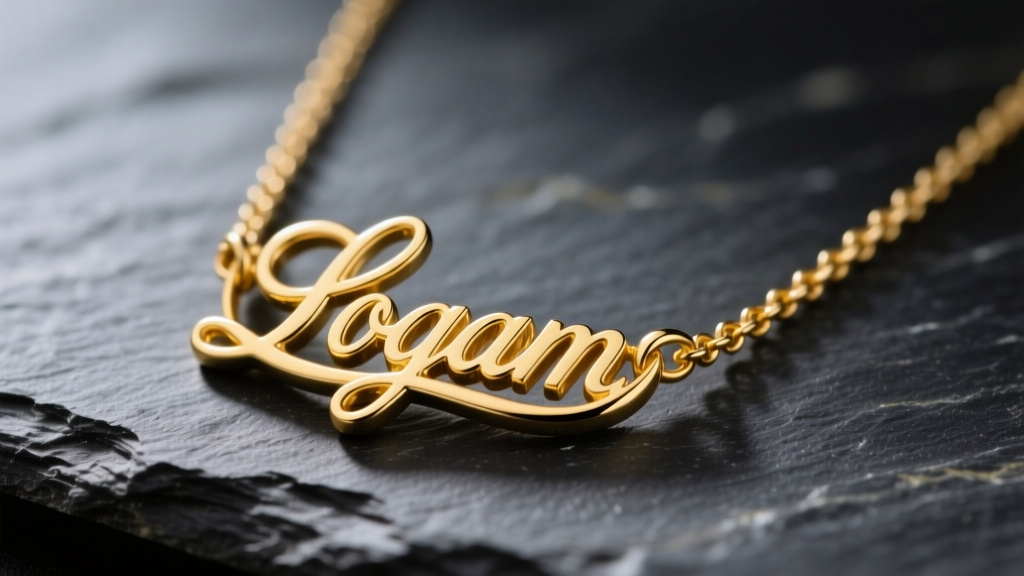
The Engineering Behind a Custom Monogram Necklace
When consumers shop for a custom monogram necklace, the focus is almost exclusively on typography—whether to choose a classic serif, a flowing script, or a modern minimalist sans-serif. However, from a metallurgical and structural engineering perspective, a monogram pendant is a complex network of load-bearing struts, cantilevered joints, and shear-stress points. Unlike a solid geometric pendant, the negative space and connecting ligatures in a monogram dictate its long-term durability. In 2026, advancements in fiber laser cutting and CAD-driven casting have revolutionized how these pieces are manufactured, but the fundamental physics of jewelry wear remain unchanged. This guide dives deep into the technical specifications, metal gauges, and fabrication methods that separate a fragile fashion accessory from an heirloom-grade piece.
Fabrication Methods: Laser Cutting vs. Lost-Wax Casting
The structural integrity of your necklace begins on the factory floor. There are two primary methods for producing custom monogram pendants, each with distinct tolerances and edge profiles.
1. Fiber Laser Cutting (Sheet Metal Fabrication)
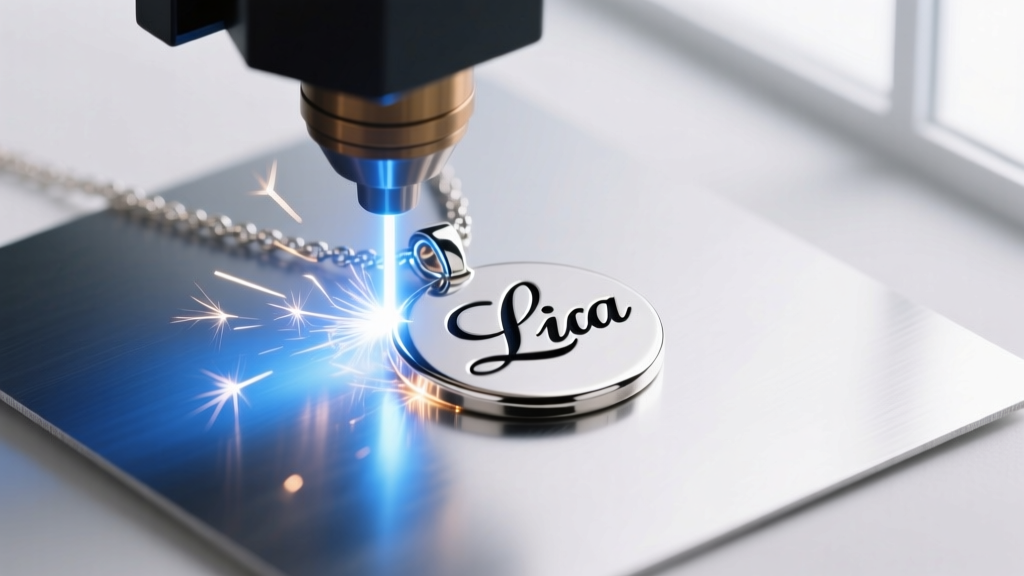
Fiber lasers utilize a high-powered, focused beam to vaporize metal sheet stock. This method is exceptionally precise, offering a kerf (cut width) as narrow as 0.05mm. Laser cutting is ideal for 2D, flat-profile monograms. However, the intense heat leaves a microscopic burr and sharp edge that must be removed through mechanical tumbling. If a manufacturer skips the tumbling process, the sharp edges will aggressively wear through the connecting chain over time.
2. Lost-Wax Casting (3D Contour Fabrication)
For monograms with domed profiles, beveled edges, or intricate 3D overlapping letters, lost-wax casting is required. A CAD model is 3D printed in jeweler's wax, encased in investment plaster, and burned out in a kiln before molten metal is injected via centrifugal force or vacuum. According to the Gemological Institute of America (GIA), casting allows for complex alloy mixing, but it introduces the risk of microscopic porosity if the metal cooling curve is not strictly controlled. Porosity weakens the ligatures connecting the letters, making them prone to snapping under tension.
| Fabrication Method | Tolerance | Edge Profile | Structural Best Use | Relative Cost |
|---|---|---|---|---|
| Fiber Laser Cutting | ± 0.05mm | Flat, requires tumbling | 2D scripts, uniform thickness | Low to Medium |
| Lost-Wax Casting | ± 0.15mm | Rounded, organic, beveled | 3D overlaps, heavy signet styles | Medium to High |
| CNC Milling | ± 0.02mm | Sharp, precise bevels | Thick plates, geometric fonts | High |
Metal Gauges and Structural Integrity
The most common point of failure in a custom monogram necklace is the connecting strut (the ligature) between two letters. When the pendant is pulled or caught on clothing, these struts experience severe shear stress. The thickness of the metal, measured in gauges or millimeters, is the primary defense against warping and snapping.
The 14-Gauge Standard for Heirloom Pieces
Many fast-fashion retailers produce monograms in 20-gauge (0.81mm) or 18-gauge (1.02mm) sheet metal. While this keeps costs down, an 18-gauge cursive connection point will easily bend or snap if subjected to just a few pounds of tensile force. For a durable, everyday-wear custom monogram necklace, 16-gauge (1.29mm) is the absolute minimum recommended thickness. For premium, heirloom-quality pieces, 14-gauge (1.63mm) is the industry gold standard. A 14-gauge 14k yellow gold monogram possesses a Vickers Hardness (HV) of approximately 120-140 HV (depending on work-hardening), providing enough rigidity to resist bending while maintaining enough malleability to avoid brittle fracturing.
Expert Troubleshooting Tip: If you are designing a custom monogram with three or more letters in a sweeping script, instruct the jeweler to add "hidden gussets" or slightly thicken the base of the ascenders and descenders (the tall and low parts of letters like 'l' and 'y'). These areas act as structural pillars and are highly susceptible to fatigue cracking.
Chain Selection: Tensile Strength and Clasp Mechanics
A heavy 14-gauge monogram pendant requires a chain with commensurate tensile strength. The pendant-to-chain weight ratio should ideally be 1:3 or 1:4; the chain should be significantly heavier than the pendant to prevent bail wear and chain elongation.
Box Chain vs. Cable Chain
While the classic cable chain is ubiquitous, its round, single-loop links are prone to stretching and kinking under the concentrated weight of a solid metal monogram. A woven box chain (minimum 1.2mm width) is vastly superior for monogram pendants. The interlocking square links distribute the pendant's kinetic energy across multiple planes, resisting the twisting forces that cause cable chains to snap.
Clasp Failure Modes
Never pair a heavy custom monogram necklace with a spring-ring clasp. The internal coil spring in a spring-ring is the weakest mechanical link in the entire assembly and will inevitably fail or seize due to sweat and debris ingress. Always opt for a cast lobster clasp. Note the distinction: stamped lobster clasps (made from folded sheet metal) can pry open under load, whereas cast lobster clasps are solid and feature a robust internal tension spring.
Plating Thickness and Tarnish Resistance
If your custom monogram necklace is crafted from sterling silver or brass and features gold plating, the thickness of that plating is measured in microns (µm). Understanding these metrics is crucial for predicting the lifespan of the finish.
- Flash Plating (0.1 to 0.3 microns): Common in budget jewelry. This electrochemical layer is thinner than a human hair and will wear through to the base metal within weeks of daily friction.
- Standard Gold Plated (0.5 to 1.0 microns): Offers moderate durability for occasional wear, but will eventually require re-plating.
- Heavy Gold Vermeil (2.5+ microns): According to the Federal Trade Commission (FTC) Jewelry Guides, for a piece to be legally marketed as "vermeil" in the United States, it must consist of a sterling silver base coated with gold of at least 10-karat fineness, with a minimum thickness of 2.5 microns. This is the minimum standard you should accept for a premium plated monogram.
Expert Pricing Tiers (2026 Market Analysis)
When commissioning or purchasing a custom monogram necklace, pricing is directly correlated to the material volume (gauge), alloy purity, and fabrication technique. Here is what you should expect to pay for genuine quality:
Tier 1: Entry-Level Fashion ($35 - $75)
Typically 20-gauge or 18-gauge brass or stainless steel, laser-cut with flash plating. Features stamped spring-ring clasps and lightweight cable chains. Suitable for occasional, short-term wear.
Tier 2: Mid-Range Artisan ($120 - $280)
Solid 925 sterling silver or solid 10k/14k gold (hollow or lightweight cast). Usually 16-gauge thickness, finished with mechanical tumbling. Paired with a 1.0mm box chain and a standard lobster clasp.
Tier 3: Heirloom & Fine Jewelry ($450 - $1,200+)
Solid 14k or 18k gold, or platinum. Cut from 14-gauge sheet stock or heavily cast. Features hand-polished beveled edges, hidden structural gussets, and a heavy 1.5mm+ box chain with a cast, double-spring lobster clasp. Designed to withstand decades of daily wear without structural fatigue.
Final Thoughts on Commissioning Your Piece
A custom monogram necklace is more than just a personalized initial; it is an exercise in structural jewelry design. By prioritizing 16-gauge or 14-gauge metal thickness, demanding cast lobster clasps, and verifying the fabrication method, you ensure that your personalized piece will survive the rigors of daily life. Always request the exact millimeter thickness and plating micron count from your jeweler before finalizing your order—true craftsmanship thrives in the technical details.


