How to Design a Custom Necklace in Arabic: Step-by-Step Guide
Learn how to design a custom necklace in Arabic with our step-by-step guide. Discover calligraphy styles, metal gauges, and structural jewelry tips.

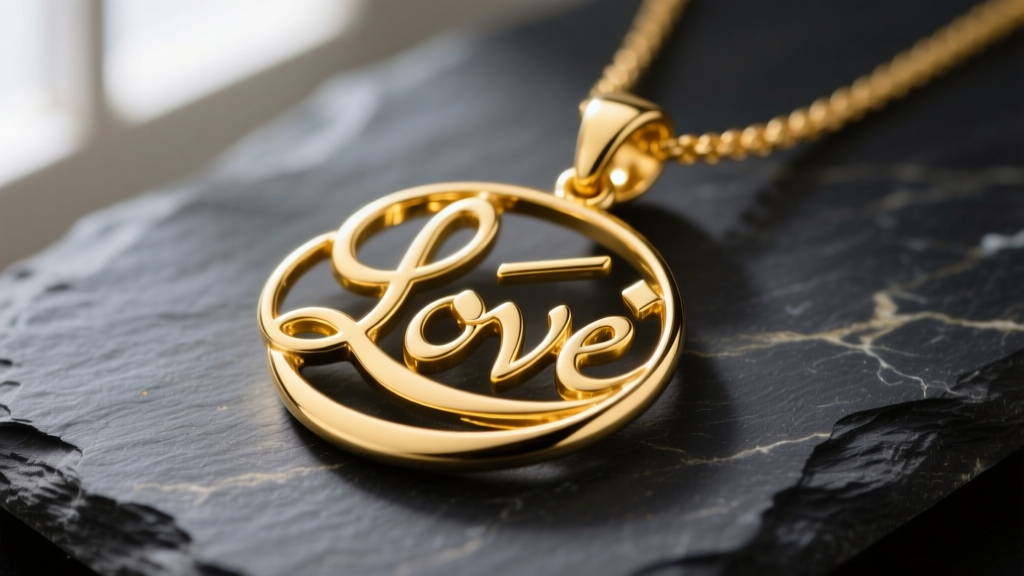
Personalized jewelry has transcended simple initial pendants, with collectors and gift-givers increasingly seeking profound cultural and linguistic meaning in their accessories. Designing a custom necklace in Arabic offers a unique opportunity to wear a piece of living art. Arabic calligraphy is not merely a method of writing; it is a highly disciplined geometric and fluid art form that dates back centuries. However, translating a two-dimensional script into a three-dimensional, wearable metal object requires a deep understanding of both linguistics and metallurgical engineering.
Unlike standard Latin-script nameplates, Arabic script features sweeping baselines, overlapping loops, and detached diacritical marks (dots) that present unique structural challenges for jewelers. This comprehensive, step-by-step guide will walk you through the exact process of designing, engineering, and styling a custom Arabic calligraphy pendant, ensuring your piece is both culturally accurate and built to last a lifetime.
Understanding Arabic Calligraphy Styles for Jewelry
Before selecting a metal or chain, you must choose the correct calligraphic style. According to the Metropolitan Museum of Art's Heilbrunn Timeline of Art History, Islamic calligraphy encompasses several distinct scripts, each carrying a different visual weight and emotional resonance. Choosing the wrong script for your chosen word can result in a pendant that looks unbalanced or illegible.
Diwani: The Romantic and Flowing Choice
Originally developed during the Ottoman Empire for court documents, Diwani is characterized by its dramatic, sweeping curves and dense, overlapping letters. It is highly romantic and ideal for words like "Love" (حب) or "Eternity" (أبد). Because the letters intertwine, Diwani creates a naturally reinforced metal structure, making it an excellent choice for delicate 18k gold pendants where structural integrity is a concern.
Kufic: The Modern and Geometric Choice
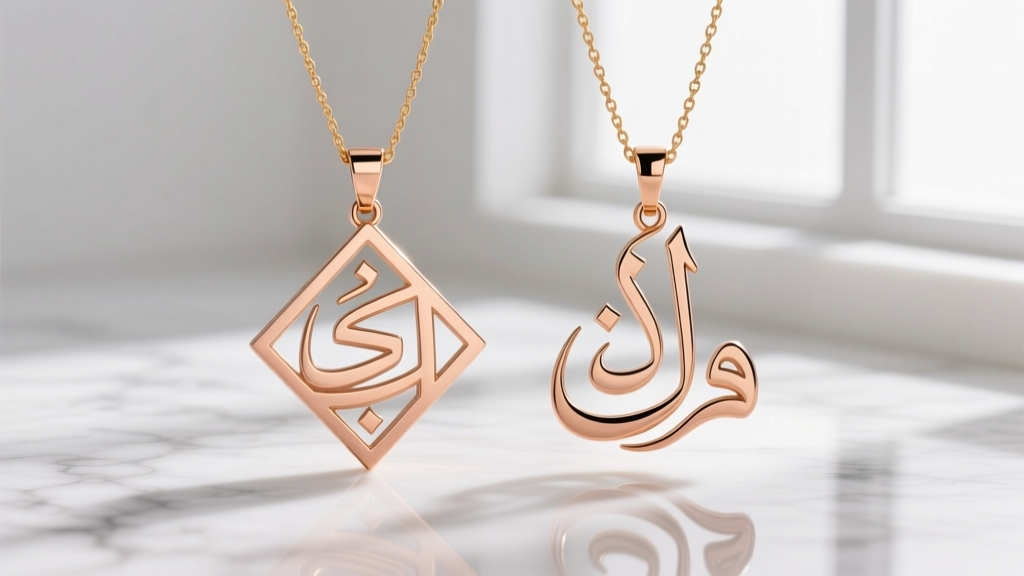
Kufic is the oldest calligraphic style, defined by its rigid, angular, and geometric lines. It lacks the sweeping curves of Diwani, resembling modern architectural blueprints. Kufic is perfect for minimalist, contemporary jewelry designs and pairs exceptionally well with mixed metals or diamond-pave accents. However, its sharp corners require precise casting to avoid weak fracture points.
Thuluth: The Classic and Monumental Choice
Thuluth is the most majestic and complex of the scripts, often used in mosque architecture and Quranic headings. It features elongated vertical strokes and deep, sweeping bowls. While breathtaking, Thuluth requires a larger pendant footprint (typically 45mm or wider) to maintain legibility and proportion.
Step-by-Step Guide to Engineering Your Pendant
Step 1: Secure a Professional Calligraphic Draft
The most critical failure point in custom Arabic jewelry is the reliance on automated digital translation tools. Standard computer fonts often render Arabic letters disconnected or left-to-right, which is a severe cultural and aesthetic error. You must commission a native Arabic calligrapher or use a specialized jewelry design service that employs native typographers. The artist will provide a vector-based line art draft, ensuring the letters flow right-to-left and connect at the correct ligatures.
Step 2: Address the "Floating Dots" (Nuqat) Challenge
Many Arabic letters (such as ب, ت, ن, and ي) rely on dots (nuqat) placed above or below the main baseline. In a physical metal cutout, these dots cannot float in mid-air. A novice jeweler might use a transparent acrylic backing to hold the dots in place, which yellows and degrades over time. A master jeweler will employ one of two techniques:
- Micro-Welding: Using a precision laser welder to fuse the floating dot to an invisible, ultra-thin 0.5mm structural bridge behind the main letter.
- Stylized Anchoring: Working with the calligrapher to subtly extend a decorative sweep of the main letter to physically anchor the dot to the baseline without altering the readability of the word.
Step 3: Select the Metal Alloy and Gauge Thickness
The Gemological Institute of America (GIA) notes that the purity of gold directly impacts its tensile strength and malleability. This is vital for the intricate cuts required in Arabic script.
- 14k Gold (58.5% pure): Offers superior rigidity. Recommended for highly intricate scripts with thin loops. Minimum recommended thickness is 1.2mm.
- 18k Gold (75% pure): Provides a richer, deeper yellow hue but is significantly softer. To prevent the sweeping tails of the calligraphy from bending during daily wear, the pendant must be cast at a minimum thickness of 1.5mm to 1.8mm.
- Sterling Silver (925): A cost-effective alternative, but prone to tarnishing in the deep crevices of overlapping calligraphic strokes. Requires frequent polishing with a specialized silver cloth.
Step 4: Choose the Right Bail and Jump Ring
Arabic nameplates are often horizontally oriented and wider than they are tall. Attaching the chain to the top center of a wide pendant causes it to flip and tangle. Instead, opt for a hidden bail soldered to the upper-back center of the pendant, or use dual jump rings attached to the outermost edges of the calligraphic baseline to keep the piece perfectly weighted and flat against the collarbone.
Calligraphy Style & Metal Gauge Matrix
Use this reference table to match your chosen script with the correct metallurgical specifications to ensure durability.
| Calligraphy Style | Visual Profile | Recommended Metal | Minimum Gauge (Thickness) | Best Pendant Width |
|---|---|---|---|---|
| Diwani | Flowing, overlapping, romantic | 18k Yellow Gold | 1.4mm | 35mm - 45mm |
| Kufic | Angular, geometric, modern | 14k Rose or White Gold | 1.2mm | 25mm - 35mm |
| Thuluth | Elongated, monumental, classic | 18k Yellow Gold | 1.6mm | 45mm - 60mm |
| Ruq'ah | Everyday, simple, highly legible | Sterling Silver or 10k Gold | 1.1mm | 30mm - 40mm |
Sizing, Proportions, and Chain Pairing
The visual impact of your necklace in Arabic relies heavily on the chain you select to support it. Because calligraphic pendants are visually "heavy" due to their intricate negative space, pairing them with the wrong chain will ruin the aesthetic balance.
Chain Selection Guidelines
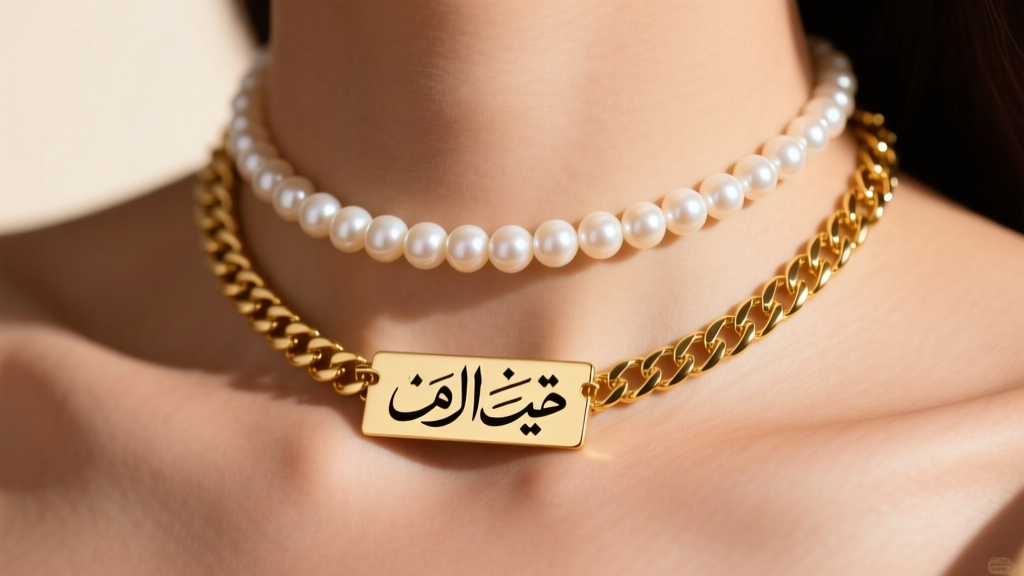
Avoid delicate cable chains (0.8mm or thinner), as they will visually disappear behind the complex geometry of the pendant and are prone to snapping under the weight of a solid 18k gold script. Instead, opt for a 1.2mm to 1.5mm Box Chain or a Wheat (Spiga) Chain. These chains feature geometric, interlocking links that complement the structured nature of Arabic calligraphy while providing the necessary tensile strength to support a 4-gram to 8-gram pendant.
Length and Layering
For a single, striking Arabic nameplate, a 40cm (16-inch) or 45cm (18-inch) chain is ideal, allowing the pendant to rest precisely on the sternum. If you are layering, anchor the Arabic pendant on a 50cm (20-inch) chain and pair it with a simple, 35cm (14-inch) plain gold choker or a delicate pearl strand. This creates a tiered effect that prevents the intricate calligraphy from tangling with other jewelry pieces.
Maintenance and Care for Intricate Scripts
The overlapping strokes and deep undercuts of scripts like Diwani and Thuluth act as magnets for skin oils, lotions, and environmental dust. Over time, this buildup will dull the brilliance of the gold and obscure the sharp edges of the calligraphy.
- Ultrasonic Cleaners: While effective for plain gold, use extreme caution with ultrasonic cleaners on laser-welded floating dots. The high-frequency vibrations can occasionally weaken micro-welds over time.
- The Soft Brush Method: The safest and most effective cleaning method is to soak the pendant in a solution of warm water and a few drops of mild, phosphate-free dish soap for 10 minutes. Gently agitate the water, then use an extra-soft baby toothbrush to carefully sweep through the negative spaces and under the calligraphic loops.
- Polishing Cloths: Use a treated jeweler's cloth (such as a Sunshine cloth) to buff the high-polish surfaces, but avoid pressing the cloth into the deep crevices, as the micro-abrasives can accumulate and cause a hazy film.
Designing a custom necklace in Arabic is a profound way to merge linguistic heritage with modern luxury. By respecting the structural nuances of the calligraphy, selecting the appropriate gold alloy and gauge, and avoiding automated translation pitfalls, you ensure that your personalized pendant is not just a piece of jewelry, but a wearable masterpiece of cultural art.


