Dainty Butterfly Necklace Trends: 2026 Style & Layering Guide
Discover how the dainty butterfly necklace evolved in 2026. Explore chain gauges, metal grades, and expert layering techniques for modern necklines.

The Metamorphosis of the Dainty Butterfly Necklace
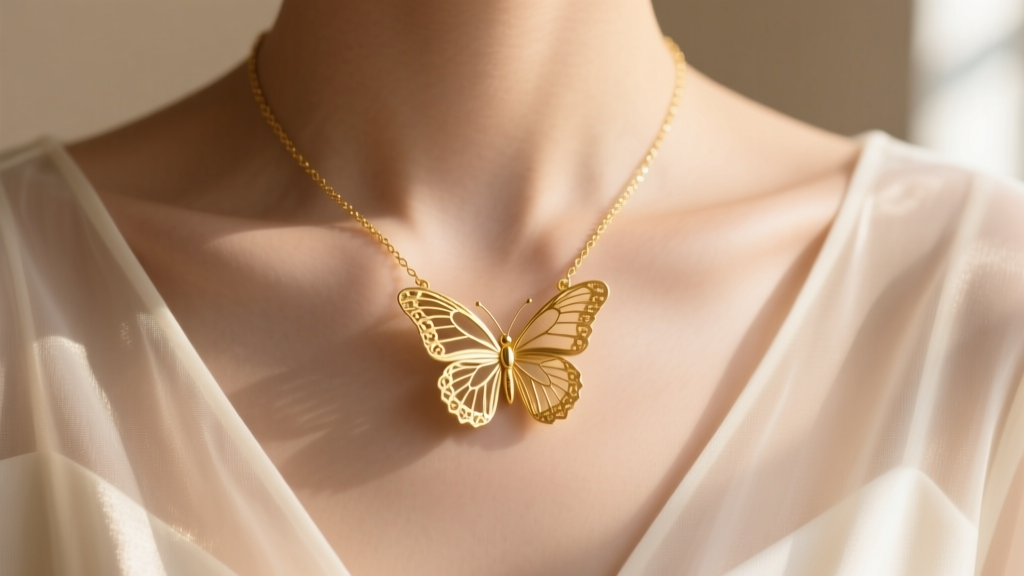
The butterfly motif has long been a staple in jewelry design, symbolizing transformation and elegance. However, the dainty butterfly necklace has undergone a significant metamorphosis as we navigate 2026. Moving away from the chunky, rhinestone-encrusted Y2K revival pieces that dominated the early 2020s, today's aesthetic leans heavily into 'quiet luxury' and elevated minimalism. The modern dainty butterfly necklace is characterized by micro-pave settings, ultra-fine chain gauges, and anatomically inspired 3D silhouettes that catch the light without overwhelming the wearer's neckline.
According to trend forecasts analyzed by Vogue, the shift toward hyper-delicate nature motifs reflects a broader consumer desire for grounding, organic elements in an increasingly digital world. But achieving this delicate look requires precise metallurgical choices. A chain that is too thick ruins the dainty aesthetic, while one that is too thin compromises the structural integrity of the piece. In this guide, we break down the exact specifications, material grades, and layering frameworks you need to master the 2026 dainty butterfly trend.
Anatomy of a High-Quality Dainty Butterfly Pendant
When evaluating a dainty butterfly necklace, the manufacturing technique of the pendant dictates its longevity and visual depth. There are two primary methods used in today's market: 2D die-striking and 3D casting.
- 2D Die-Struck Pendants: These are stamped from flat sheets of metal. While they are lightweight and affordable, they lack dimensional depth. If bent, they are nearly impossible to reshape without visible creasing.
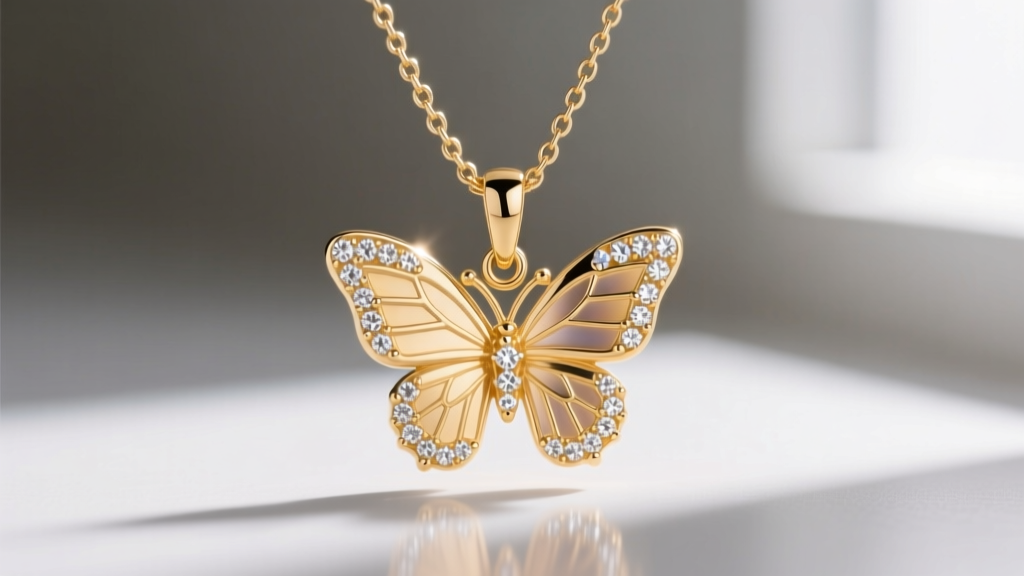
- 3D Cast Pendants: High-end dainty butterflies are cast using the lost-wax method. This allows for intricate details like segmented wings, micro-prong settings for diamonds, and curved silhouettes that mimic a butterfly in mid-flight. A 14k solid gold 3D cast pendant will retain its structural integrity for decades.
Enamel vs. Gemstone Accents
Color is often introduced to dainty butterfly necklaces through either gemstones or enamel. If you opt for enamel, it is critical to understand the difference between cold enamel and vitreous enamel. Cold enamel is essentially a colored epoxy resin. It is cheaper to apply but highly susceptible to chipping and yellowing when exposed to UV light and heat. Vitreous enamel, on the other hand, is powdered glass fused to the metal at high temperatures. It offers a glass-like finish that will not degrade over time. For gemstone accents, the Gemological Institute of America (GIA) notes that micro-pave settings require precise laser welding to ensure the tiny melee diamonds do not loosen in delicate, low-profile settings.
Chain Gauge and Clasp Mechanics
The most common failure mode of a dainty butterfly necklace is not the pendant itself, but the chain snapping or the clasp failing. To maintain the 'dainty' profile while ensuring durability, you must pay strict attention to gauge sizes and clasp types.
Optimal Chain Gauges
For a pendant measuring between 10mm and 15mm in width, the ideal chain gauge falls between 0.8mm and 1.1mm.
- 0.8mm - 0.9mm Cable Chain: Offers the most delicate, barely-there look. However, cable chains are prone to kinking if pulled or snagged.
- 1.0mm Box Chain: The superior choice for dainty pendants. The interlocking square links provide excellent tensile strength and resist kinking, all while maintaining a fine, minimalist profile.
Clasp Selection
Never purchase a dainty necklace with a 4mm spring ring clasp. The internal tension spring in these micro-clasps fails frequently, and they are incredibly difficult to fasten without long fingernails. Always look for a 5mm lobster clasp. The lever mechanism provides a secure lock, and the slightly larger size makes it manageable to fasten while still remaining discreet at the nape of the neck.
2026 Trend Matrix: Butterfly Styles by Occasion
To help you select the right piece, we have mapped the current dainty butterfly necklace variations against their ideal use cases, material grades, and pricing expectations for 2026.
| Style Variant | Ideal Metal Grade | Chain Type & Gauge | Price Range (2026) | Best Neckline Pairing |
|---|---|---|---|---|
| Micro-Pave Diamond Butterfly | 14k Solid Gold (Yellow or White) | 1.0mm Box Chain | $450 - $850 | Deep V-Neck or Silk Slip Dress |
| Outlined Silhouette Butterfly | Vermeil (2.5-micron gold over 925 silver) | 0.9mm Cable Chain | $85 - $140 | Square Neck or Crew Neck Tee |
| Vitreous Enamel Wing Butterfly | 18k Solid Gold | 1.1mm Rolo Chain | $600 - $1,200 | Off-the-Shoulder or Strapless |
| Mother of Pearl Inlay Butterfly | 14k Solid Rose Gold | 0.8mm Rope Chain | $300 - $550 | Collared Button-Down (unbuttoned) |
Expert Note on Vermeil: According to the Federal Trade Commission (FTC) Jewelry Guides, a piece can only be legally marketed as 'vermeil' if it consists of a base of 925 sterling silver plated with gold of at least 10k fineness, and the gold plating must be at least 2.5 microns thick. Anything less is considered standard gold-plated jewelry and will wear through to the silver base within months of daily wear.
Advanced Layering Frameworks
The dainty butterfly necklace rarely lives in isolation. In 2026, the curated 'neck mess' has evolved into a highly calculated layering framework designed to prevent tangling while creating a cascading visual effect. The secret to successful layering lies in the Two-Inch Rule and varying the chain textures.
The 14-16-18 Cascade
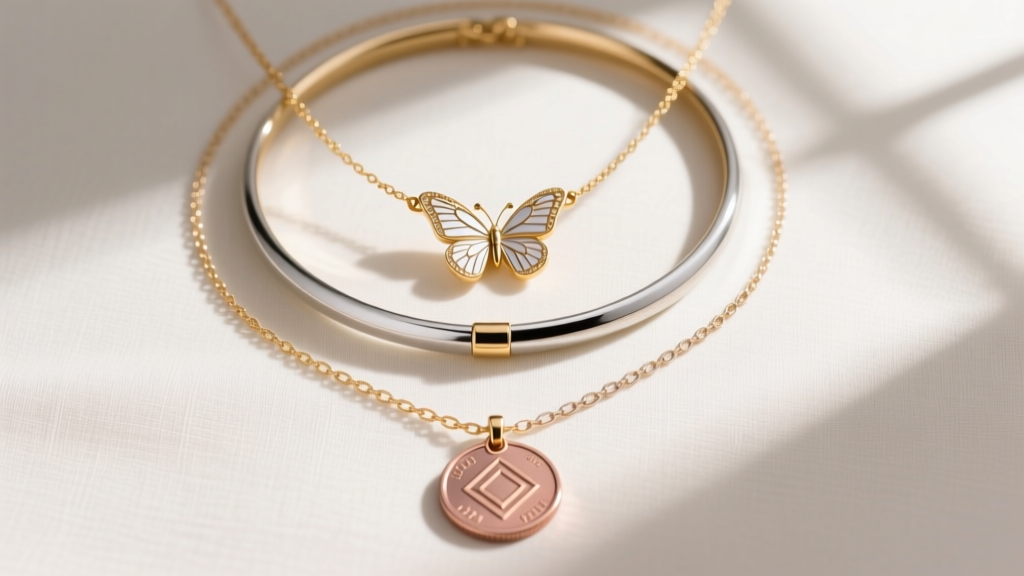
To layer a dainty butterfly necklace without it getting hopelessly tangled with your other chains, follow this exact length progression:
- The Anchor (14 inches): Start with a simple, lightweight 14-inch choker. A 1.2mm herringbone or a simple 14k gold snake chain works best here. This sits flush against the collarbone.
- The Focal Point (16 inches): This is where your dainty butterfly necklace sits. The 16-inch length allows the butterfly pendant to rest perfectly in the hollow of the throat or just above the bust line, depending on your anatomy. Ensure the bail (the loop connecting the pendant to the chain) is large enough to slide freely, preventing the pendant from flipping backward.
- The Elongator (18 inches): Finish with an 18-inch chain featuring a heavier, non-snagging pendant, such as a smooth coin or a simple solitaire diamond. The weight of the 18-inch pendant pulls the chain downward, creating a physical barrier that stops the 16-inch butterfly chain from wrapping around it.
Preventing the Tangle Factor
If you are layering chains of similar textures (e.g., three cable chains), they will act like gears and twist together. Always mix chain textures. Pair a box chain butterfly necklace with a smooth snake chain and a rolo chain. The differing friction coefficients will keep them separated. For active days, consider using a discrete silicone necklace spacer clasp at the nape of the neck to lock the lengths in place.
Care and Tarnish Prevention for Delicate Chains
Because dainty butterfly necklaces utilize ultra-fine chains and micro-settings, they require specific maintenance protocols to avoid catastrophic failure.
- Avoid Ultrasonic Cleaners: Never put a dainty butterfly necklace with cold enamel, opals, or micro-pave diamonds into an ultrasonic cleaner. The high-frequency vibrations will shatter the enamel and shake the melee diamonds loose from their microscopic prongs.
- The Baby Toothbrush Method: To clean diamond accents and remove sebum buildup from the chain links, use a few drops of mild, phosphate-free dish soap and a soft-bristled baby toothbrush. Gently brush the back of the butterfly pendant where skin oils accumulate, rinse with distilled water, and pat dry with a microfiber cloth.
- Chemical Exposure: Chlorine in swimming pools and hot tubs is the enemy of 14k and 18k gold. Chlorine reacts with the copper and silver alloys in karat gold, causing a phenomenon known as 'stress corrosion cracking.' This will cause the delicate solder points on your butterfly's bail and the chain links to become brittle and snap without warning.
Final Verdict
The dainty butterfly necklace in 2026 is a masterclass in subtle elegance. By prioritizing 3D cast silhouettes, opting for structurally sound 1.0mm box chains with 5mm lobster clasps, and adhering to strict layering mathematics, you can elevate this nostalgic motif into a sophisticated, everyday staple. Whether you choose a micro-pave diamond iteration for evening wear or a simple gold outline for daily use, understanding the metallurgy and mechanics behind the piece ensures your delicate jewelry will withstand the test of time.


