How to Style, Clean, and Preserve a Coral Branch Necklace
Master the art of wearing organic gems. Learn step-by-step how to style, safely clean, and preserve your coral branch necklace for lifelong elegance.

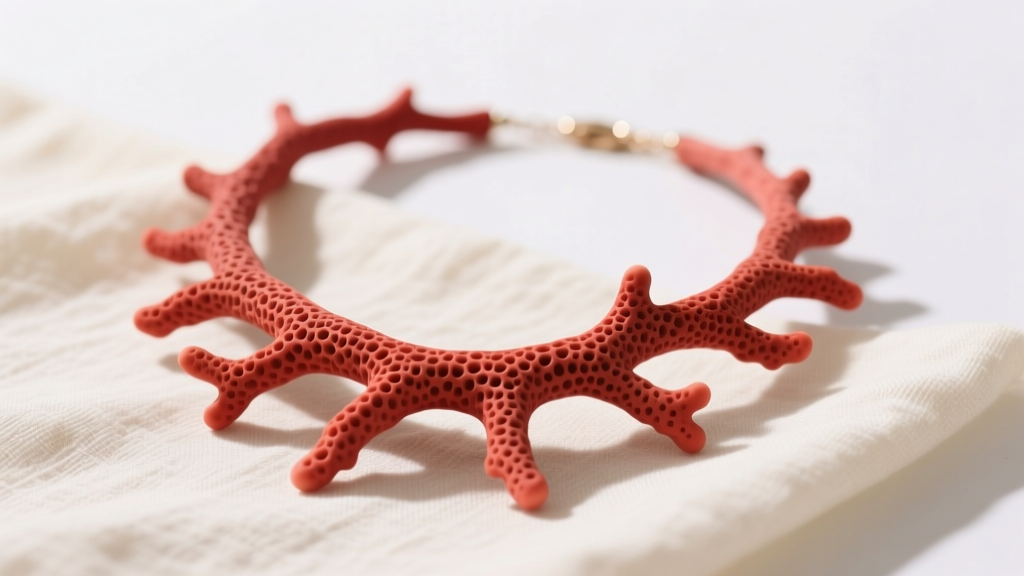
Organic gemstones possess a raw, untamed elegance that faceted minerals simply cannot replicate. Among these, the coral branch necklace stands out as a wearable piece of marine history. However, because coral is an organic material secreted by living polyps rather than a crystallized mineral, it requires a highly specific approach to styling, cleaning, and preservation. In the 2026 jewelry market, where provenance and material longevity are paramount, understanding the science of your coral jewelry is no longer optional—it is essential for protecting your investment.
The Material Science of Organic Coral
Before applying any cleaning solution or styling technique, you must understand what coral actually is. Unlike diamonds or sapphires, coral is primarily composed of calcium carbonate (CaCO3). This gives it a Mohs hardness rating of just 3.5 to 4.0, making it incredibly susceptible to scratching from everyday dust (which often contains quartz particles at a 7.0 hardness).
Furthermore, coral is highly porous. According to the Gemological Institute of America (GIA), this porosity means coral acts like a microscopic sponge, readily absorbing oils, acids, and chemicals from its environment. The natural matte or polished finish of a coral branch necklace can easily be degraded by the natural pH of human sweat, perfumes, and hairsprays, leading to a dull, chalky appearance over time if not properly managed.
Step-by-Step Cleaning Protocol
Never use ultrasonic cleaners, steam cleaners, or commercial jewelry dips on a coral branch necklace. The high-frequency vibrations of an ultrasonic cleaner will cause micro-fractures in the organic structure, while the harsh acids in commercial dips will literally dissolve the calcium carbonate surface. Follow this safe, four-step manual cleaning process instead:
Step 1: Dry Dusting
Use a clean, ultra-soft makeup brush (like a goat-hair powder brush) to gently sweep away surface dust and skin cells. Do not use a toothbrush, as even soft bristles can trap abrasive grit and scratch the coral.
Step 2: The Damp Wipe
Dampen a lint-free microfiber cloth with distilled water. Tap water contains chlorine and trace minerals that can leave deposits. Gently wipe each branch of the coral, avoiding the silk cord or stringing material. Do not submerge the necklace in water, as this will weaken the internal stringing fibers and cause the coral to absorb excess moisture.
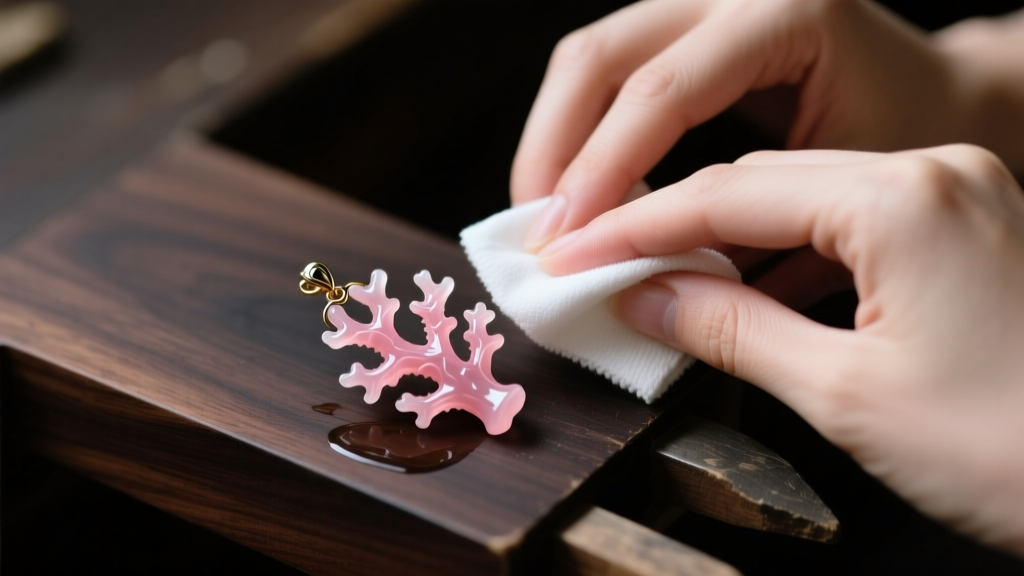
Step 3: Air Drying
Lay the necklace flat on a dry towel in a well-ventilated area away from direct sunlight or heat sources. Heat can cause the moisture trapped inside the coral to expand, leading to structural cracking.
Step 4: Hydration and Oiling
Once completely dry, apply a single drop of food-grade mineral oil to a soft cloth and buff the coral branches. This restores the natural luster and prevents the organic material from drying out and cracking. Wipe away any excess oil immediately so it does not stain the necklace's cord.
How to Style a Coral Branch Necklace
Styling a coral branch necklace requires balancing its organic, asymmetrical silhouette with your wardrobe. Because raw branch coral has a bold, sculptural presence, it should serve as the focal point of your outfit.
Neckline Pairings
- V-Neck and Scoop Necklines: These provide the perfect geometric frame for the sprawling, asymmetrical shape of a branch necklace, allowing the coral to rest against the skin without competing with fabric collars.
- Boat Neck and Turtlenecks: A longer, dramatic coral branch pendant layered over a solid black or navy turtleneck creates a striking, high-contrast modern look.
- Avoid: Highly patterned blouses or ruffled collars, which will visually clash with the intricate, branching texture of the coral.

Color Theory and Skin Undertones
Coral naturally occurs in shades ranging from deep 'ox-blood' red to soft 'angel skin' pink. If you have warm skin undertones, lean towards orange-red or salmon coral branches paired with olive green, mustard, or cream fabrics. For cool undertones, the stark contrast of deep red coral against navy blue, charcoal, or stark white silk is visually breathtaking.
Restringing and Hardware Maintenance
A common failure mode for vintage and heirloom coral branch necklaces is the degradation of the stringing material. Coral branches are often drilled with rough, unpolished holes that act like tiny saws against standard cotton or nylon threads.
When having your necklace restrung, insist on Size F or G silk cord paired with French wire (a microscopic coiled wire that protects the silk where it rubs against the metal clasp). Silk is preferred over synthetic threads because it has a natural stretch that absorbs shock if the necklace is snagged, preventing the rigid coral branches from snapping. Plan to have the necklace professionally restrung every 3 to 5 years if worn frequently.
Storage and Preservation Matrix
Proper storage is critical. Coral must be protected from both extreme dryness (which causes cracking) and extreme humidity (which can promote mold on the silk cord). Use the following matrix to guide your storage decisions:
| Storage Method | Suitability | Risk Factors |
|---|---|---|
| Sealed Plastic Bag | Poor | Traps humidity, promotes mold on silk cord, off-gassing can stain coral. |
| Open Jewelry Box Tray | Fair | Exposes coral to dust and airborne sulfur, risking surface dullness. |
| Untreated Silk Pouch | Excellent | Allows the coral to 'breathe' while protecting it from abrasive scratches. |
| Cedar Wood Box | Poor | Natural wood acids and aromatic oils can transfer to the porous coral. |
Ethical Sourcing and Authenticity Verification
As environmental awareness shapes the 2026 jewelry landscape, verifying the source of your coral is crucial. Precious coral (Corallium rubrum) is heavily regulated. The NOAA Fisheries and CITES strictly monitor the harvesting of deep-sea corals to prevent reef destruction.
Be wary of 'bamboo coral' dyed red to mimic precious coral. Authentic branch coral will exhibit natural color variations, subtle striations, and tiny surface pits. Dyed bamboo coral often shows concentrated dye pooling in the cracks and a uniform, unnatural color saturation. When purchasing, always request a certificate of authenticity that specifies the coral species and confirms compliance with international CITES regulations.
Troubleshooting Common Damage
Perfume or Hairspray Exposure: If you accidentally spray cosmetics directly onto your coral branch necklace, wipe it immediately with a damp cloth. The alcohol and acids will etch the surface within minutes if left unattended.
Chlorine Exposure: Never wear coral in a swimming pool. Chlorine causes a rapid chemical reaction with calcium carbonate, resulting in irreversible white pitting. If exposed, rinse gently with distilled water and consult a professional lapidary for repolishing.
By treating your coral branch necklace not just as jewelry, but as a delicate organic artifact, you ensure its vibrant color and structural integrity will endure for generations.


