Dainty Diamond Cross Necklace: 2026 Value & Pricing Guide
Discover how to evaluate a dainty diamond cross necklace in 2026. We break down pricing tiers, diamond grades, and metal values to ensure you don't overpay.

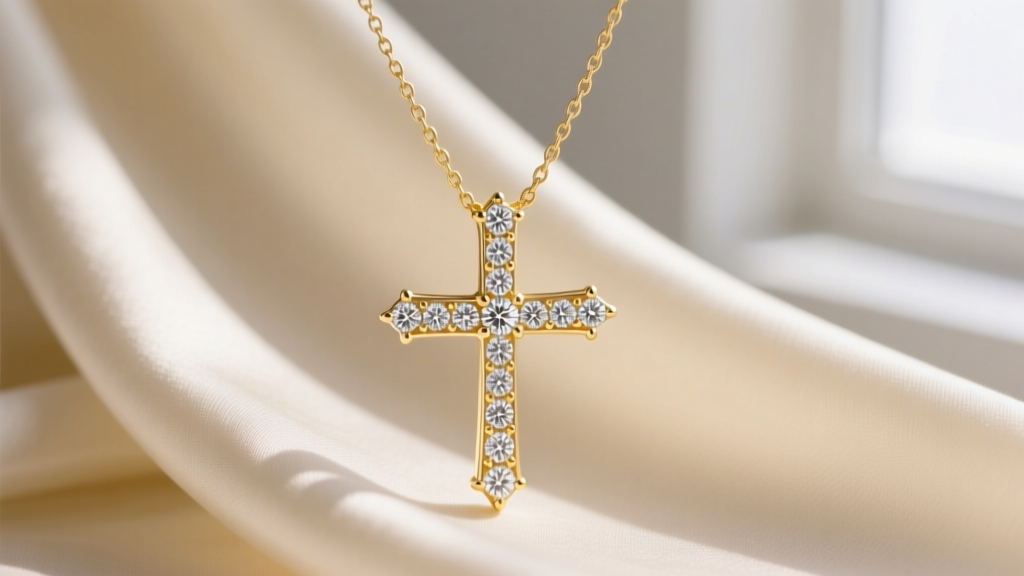
When shopping for a dainty diamond cross necklace, buyers frequently fall into a common retail trap: paying premium prices for microscopic diamonds and ultra-thin metals that lack long-term structural integrity. The word "dainty" is often used as a marketing shield to justify high markups on low-carat-weight jewelry. In 2026, with the stabilization of lab-grown diamond markets and fluctuating precious metal indices, understanding the true material value of your jewelry is more critical than ever. This comprehensive value assessment breaks down the anatomy, metallurgy, and pricing tiers of dainty cross pendants, ensuring your budget is allocated toward genuine quality rather than brand inflation.
The Anatomy of Value: Carat Weight and Melee Diamonds
The defining characteristic of a dainty cross pendant is its use of "melee" diamonds. According to the Gemological Institute of America (GIA), melee diamonds are small stones typically weighing less than 0.18 carats each, often used to accent jewelry or create pavé and cluster designs. In a standard dainty diamond cross necklace, the Total Carat Weight (TCW) usually ranges from 0.10 to 0.50 carats, distributed across 5 to 15 individual stones.
Here is the most crucial value assessment rule for melee diamonds: do not pay for VVS clarity or D-color grades in stones under 0.05 carats. The human eye cannot resolve inclusions or subtle color variations in diamonds this small without 10x magnification. Retailers who market "flawless melee" are selling a certificate, not a visual benefit. The optimal value matrix for a dainty cross is SI1-SI2 clarity and G-H color. These grades guarantee eye-clean stones that face up bright white against both white and yellow gold, without the 30-40% price premium associated with top-tier grading.
2026 Pricing Tiers: What Your Budget Actually Buys
To accurately assess value, we must segment the market by material costs and retail markup. Below is a realistic breakdown of what your budget should secure in the current market, assuming a standard 16-to-18-inch chain and a 1-inch pendant drop.
| Budget Tier | Total Carat Weight (TCW) | Metal & Chain | Diamond Grade | Estimated 2026 Price |
|---|---|---|---|---|
| Entry-Level | 0.05 - 0.15 ct | 10k/14k Gold, 0.8mm Cable | I1-I2, J-K (or Lab) | $150 - $280 |
| Mid-Range (Sweet Spot) | 0.20 - 0.35 ct | 14k Gold, 1.0mm Box Chain | SI1-SI2, G-H | $350 - $650 |
| Premium | 0.40 - 0.75 ct | 18k Gold / Platinum, 1.2mm Rolo | VS1-VS2, D-F | $800 - $1,600+ |
The "Mid-Range" tier represents the highest value proposition. At this level, you are paying for adequate gold weight to prevent chain snapping, and diamonds that possess genuine brilliance. Entry-level pieces often sacrifice chain durability to keep costs down, while Premium tiers incur heavy markups for diamond grades that offer diminishing visual returns in a dainty setting.
Lab-Grown vs. Natural: The Value Proposition for Melee
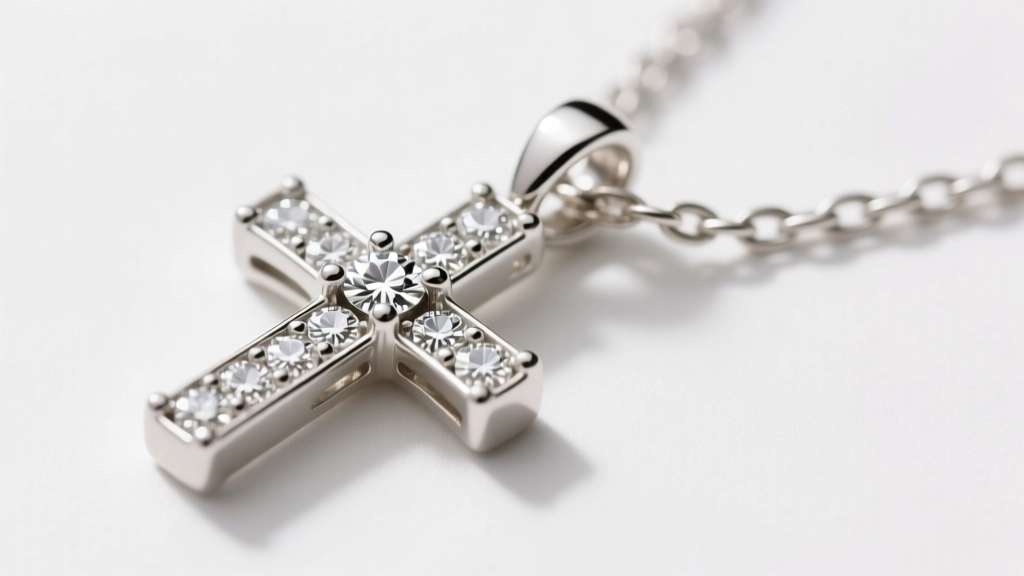
The advent of Chemical Vapor Deposition (CVD) and High Pressure High Temperature (HPHT) manufacturing has completely disrupted the melee diamond market. Because lab-grown melee diamonds are incredibly inexpensive to produce in bulk, the price gap between natural and lab-grown stones at the 0.02-carat level is negligible compared to larger center stones.
If you are buying a dainty diamond cross necklace with lab-grown melee, the vast majority of your budget should be going toward the precious metal and the craftsmanship of the setting, not the stones themselves. A 0.25 TCW lab-grown diamond cross in 14k gold should cost nearly the same as a natural version, because the raw material cost of the melee diamonds represents less than 10% of the total manufacturing cost. If a retailer is charging a massive premium for "natural melee" in a dainty pendant, they are leveraging outdated pricing models. For pure aesthetic value, lab-grown melee offers identical optical properties at a fraction of the wholesale cost.
Chain Gauge and Hardware: Hidden Cost Factors
The pendant is only half the equation; the chain is where dainty necklaces frequently fail. A common complaint with budget-friendly dainty jewelry is chain breakage. This is a direct result of manufacturers using ultra-thin 0.5mm or 0.6mm chains to save on gold weight.
For a dainty diamond cross pendant—which typically weighs between 1.5 and 3.5 grams—you need a chain with adequate tensile strength. A 0.9mm to 1.1mm box chain or rolo chain is the industry standard for durability. Box chains, with their interlocking square links, distribute tension evenly and resist kinking. Furthermore, pay close attention to the clasp. A standard spring-ring clasp is notoriously difficult to operate and prone to snapping. Insist on a small lobster clasp, which features a stronger internal spring mechanism and a more secure closure.
Additionally, consider the metallurgy. 14k gold (58.5% pure gold) is alloyed with metals like copper, zinc, and silver, giving it superior tensile strength compared to 18k gold (75% pure gold). For a dainty chain meant to hold a pendant, 14k gold is structurally superior and less likely to stretch or deform over time.
Red Flags: Overpaying for "Dainty" Jewelry
The Federal Trade Commission (FTC) Jewelry Guides strictly regulate how diamonds and precious metals are marketed, yet deceptive terminology still plagues the dainty jewelry sector. Watch out for these common red flags:
- "Diamond Dust" or "Diamond Chips": These are uncut or poorly polished diamond fragments. They lack the faceting required to reflect light and will look like dull glass. Always ensure the listing specifies "single-cut" or "full-cut" melee diamonds.
- Illusion Settings: Some manufacturers use intricately carved white gold or rhodium-plated settings designed to mimic the look of a larger diamond. While this makes the cross look bigger, it is a visual trick. You are paying for metal carved to look like stone.
- Inflated TCW Estimates: Unscrupulous sellers will list a TCW range (e.g., "0.50 - 0.75 ct") but ship the lower end of the spectrum. Reputable jewelers will provide the exact TCW of the specific piece you are purchasing, usually verified by a third-party grading lab like the American Gem Society (AGS) or IGI.
Prong vs. Bezel: Setting Styles and Longevity
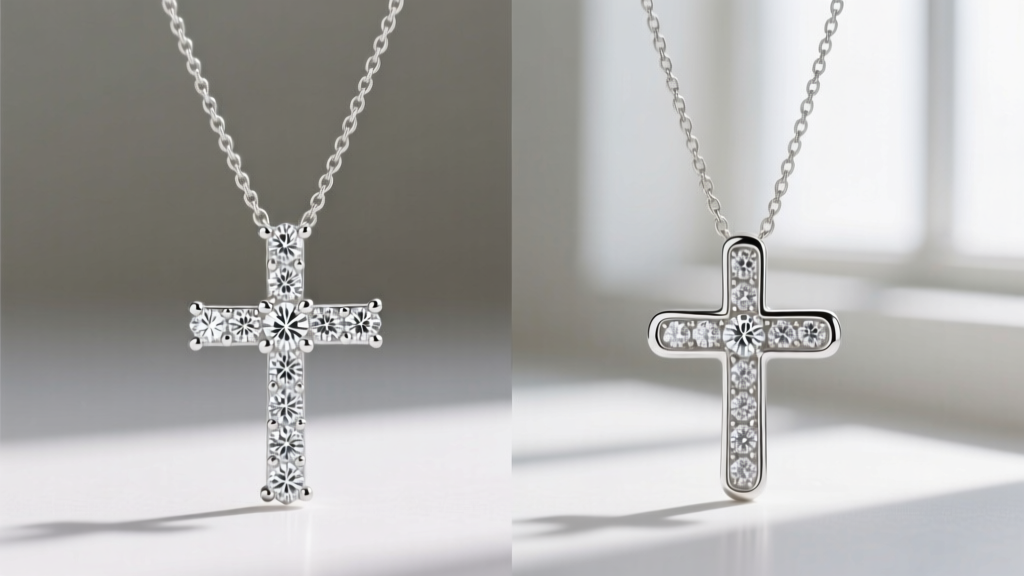
The setting style dramatically impacts both the visual spread of the diamonds and the long-term maintenance costs of your necklace. Prong settings use minimal metal, allowing maximum light to enter the melee stones from all angles. This creates superior brilliance and makes the diamonds appear larger. However, prongs can catch on silk or knitwear, and they require periodic "retipping" by a jeweler to ensure the stones remain secure.
Bezel settings, where a thin rim of metal surrounds the diamond's girdle, offer ultimate protection. A bezel-set dainty cross is ideal for daily wear, as it will not snag on clothing. The trade-off is that the metal rim covers the edges of the diamonds, slightly reducing their perceived size and light return. Bezel settings also require more gold, which can increase the base price of the pendant.
Final Verdict: Maximizing Your Investment
A dainty diamond cross necklace is a timeless staple, but its value lies in the balance of structural integrity and optical performance. To maximize your budget in 2026, target a 14k gold piece featuring 0.20 to 0.35 TCW of G-H, SI1-SI2 melee diamonds, suspended on a 1.0mm box chain with a lobster clasp. Avoid paying premiums for flawless grades in microscopic stones, and be highly skeptical of ultra-thin chains that compromise the safety of your pendant. By focusing on precise material specifications rather than vague marketing terms, you can secure a beautiful, durable piece of fine jewelry that truly reflects its price tag.


