Dainty Rosary Necklace Trends: 2026 Layering Guide
Discover 2026 dainty rosary necklace trends. Learn how to layer delicate beaded chains, choose the right gauge, and style them with modern necklines.

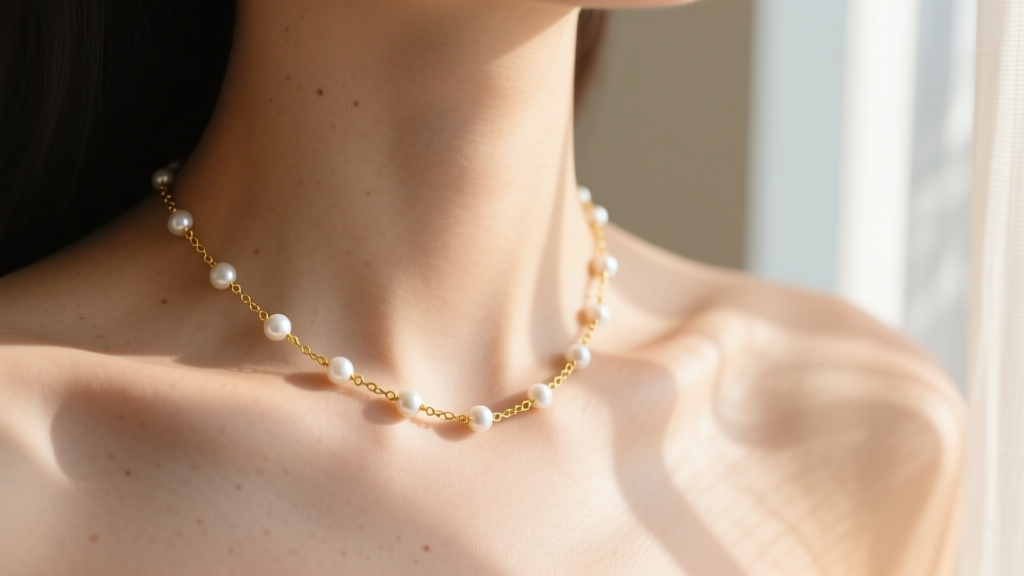
The jewelry landscape in 2026 has firmly pivoted toward quiet luxury and hyper-personalized layering, pushing the dainty rosary necklace to the forefront of everyday styling. Moving far beyond the heavy, ornate, and overtly traditional religious designs of the past decade, today's rosary chains are exercises in minimalist engineering. Characterized by delicate wire-linked chains punctuated by micro-bead stations—ranging from freshwater pearls to faceted gemstones and metallic spheres—these necklaces offer a rhythmic visual texture that standard cable chains simply cannot achieve. Whether you are building a curated neckline stack or looking for a subtle standalone piece, understanding the anatomy, material grades, and layering physics of the dainty rosary chain is essential for the modern collector.
The Evolution of the Beaded Station Chain
Historically, rosary necklaces were defined by their devotional function, featuring robust links and large, uniform beads designed for tactile counting. The fashion adaptation in the early 2020s saw a surge in chunky, gothic-inspired silver rosaries. However, as the 2026 aesthetic demands lighter, more fluid silhouettes, the dainty rosary necklace has emerged as the ultimate transitional accessory. Designers are now utilizing micro-tension settings and seamless wire-wrapping techniques to integrate stones without the bulk of traditional bezels. This evolution allows the beads to sit flush against the collarbone, catching the light without weighing down the wearer or snagging on delicate knitwear.
Anatomy of a Dainty Rosary Chain
The term "dainty" in fine jewelry is not merely a marketing buzzword; it refers to specific metric measurements regarding wire thickness and bead volume. A true dainty rosary necklace relies on a precise ratio between the chain's gauge and the bead station's millimeter width to prevent the chain from looking overburdened or fragile.
| Component | Ultra-Delicate (Micro) | Standard Dainty | Statement Dainty |
|---|---|---|---|
| Chain Gauge | 22-24g (0.5-0.6mm) | 20g (0.8mm) | 18g (1.0mm) |
| Bead Size | 1.5mm - 2mm | 3mm - 4mm | 5mm - 6mm |
| Station Spacing | Every 0.75 - 1 inch | Every 1.5 inches | Every 2 - 2.5 inches |
| Best Use Case | First-layer micro-layering | Everyday solo or mid-stack | Solo V-neck styling |
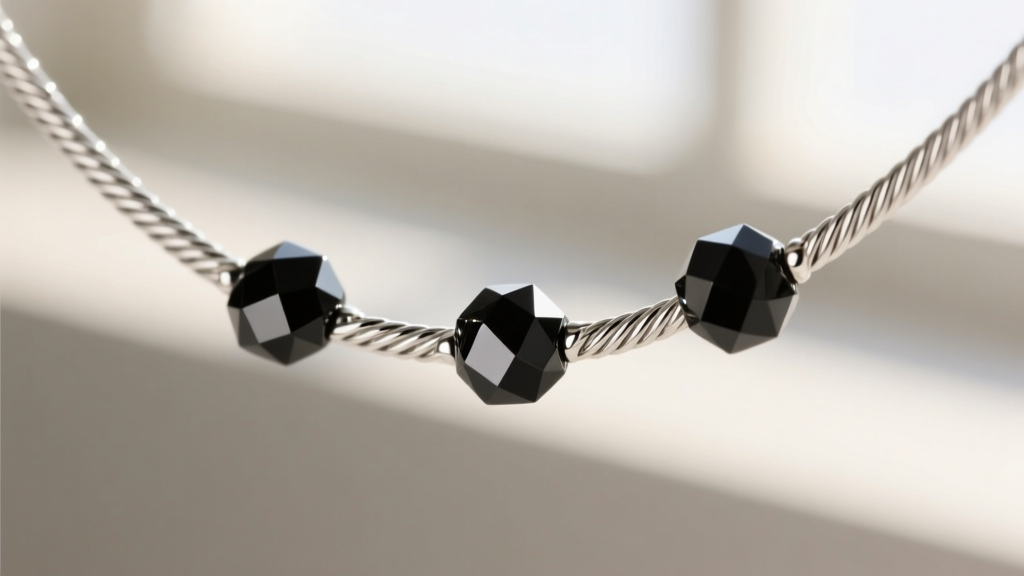
The Importance of Station Spacing
Spacing is the secret variable that dictates how a rosary necklace drapes. If 3mm beads are placed too closely together (e.g., every half-inch) on a 20-gauge chain, the necklace loses its fluidity and behaves like a stiff, segmented collar. Conversely, spacing beads too far apart (every 4 inches) dilutes the "rosary" effect, making it look like a standard pendant chain with accidental beads. The 2026 industry standard for a standard dainty rosary necklace places a 3mm station every 1.5 inches, ensuring that at least two beads are visible at any given angle of the neckline.
Material Grades and Pricing Tiers
Because dainty chains use less metal by volume, the cost disparity between base metals and solid gold is more accessible than with heavy chains. However, structural integrity is a major concern at lower gauges. Here is a breakdown of what to expect when shopping for these pieces.
- Sterling Silver (925): While affordable ($30–$75), 22-gauge sterling silver is highly susceptible to kinking and permanent stretching if pulled. Look for rhodium-plated options to delay tarnish, especially if the bead stations are porous stones like turquoise or pearls.
- Gold Vermeil (2.5 Microns over 925): A massive step up from standard flash plating. Vermeil dainty rosary necklaces ($65–$150) offer the warm aesthetic of gold but retain the slight stiffness of a silver core, which actually helps ultra-thin 22-gauge chains resist tangling.
- Solid 14k Gold: The optimal choice for longevity ($250–$600). According to Blue Nile's metallurgy guides, 14k gold contains a higher percentage of alloy metals (like copper and zinc) compared to 18k, making it significantly more resistant to the micro-abrasions and snapping hazards inherent to 20-gauge chains.
- Solid 18k Gold: Priced at a premium ($500–$1,200+), 18k gold offers a richer, deeper yellow hue but is inherently softer. An 18k dainty rosary chain requires careful handling and should never be worn during sleep or exercise.
The 2026 Layering Matrix: Preventing Tangles
The most common complaint regarding dainty rosary necklaces is tangling. The bead stations act as microscopic anchors; when layered with other chains, they can catch on individual links, creating frustrating knots. Mastering the 2026 layering matrix requires an understanding of chain texture and length differentials.
"When layering a dainty rosary necklace, the bead stations act as natural friction points. If paired with a smooth, high-polish cable chain of the exact same gauge, the chains will grip and tangle. Always mix chain textures—pair a beaded rosary with a smooth box or rope chain to maintain independent movement."
The Tangle-Free Triangle Rule
To successfully layer a dainty rosary necklace without constant maintenance, apply the Tangle-Free Triangle Rule:
- Length Variance: Maintain a strict minimum of 2 inches between each layer. If your rosary choker is 14 inches, your mid-layer must be at least 16 inches.
- Texture Contrast: Never layer a beaded rosary chain with another beaded chain. Pair it with a flat snake chain, a smooth box chain, or a herringbone to eliminate friction points.
- Weight Anchoring: Ensure the lowest layer in your stack is slightly heavier (e.g., an 18-gauge chain with a 5-gram pendant). This weight pulls the lower chain taut, preventing it from floating up and wrapping around the lighter, 22-gauge rosary chain above it.

Neckline Pairings for Dainty Beaded Chains
The visual rhythm of a dainty rosary necklace interacts differently with various fabrics and cuts. Styling these pieces requires treating the beads as a secondary neckline.
V-Necks and Deep Scoops
For V-necks, a 16-inch or 18-inch dainty rosary necklace with 4mm bead stations perfectly echoes the geometric plunge of the garment. The beads draw the eye downward, elongating the neck. Opt for metallic beads (like tiny 14k gold spheres) rather than gemstones here, as they blend seamlessly into a minimalist, monochromatic aesthetic.
High Crewnecks and Turtlenecks
When wearing high, restrictive necklines, the dainty rosary necklace must act as a collar substitute. Choose a 14-inch choker length with ultra-delicate 2mm pearl or moonstone stations. The light-reflecting properties of these specific stones brighten the face, counteracting the visual heaviness of a thick winter knit or structured cotton crewneck.
Care and Maintenance for Delicate Stations
The intersection of thin wire and delicate bead stations creates unique maintenance challenges. The loops connecting the beads to the chain are often the weakest structural points, requiring specific cleaning protocols to avoid accidental damage.
Avoid ultrasonic cleaners at all costs. The high-frequency vibrations can easily shatter soft, organic bead stations commonly used in dainty rosary designs, such as freshwater pearls, opals, and emeralds. Furthermore, the vibrations can slowly unspool the microscopic wire wraps securing the stones. Instead, follow the Gemological Institute of America (GIA) guidelines for delicate gemstones: use a lukewarm solution of distilled water and a drop of phosphate-free dish soap. Gently agitate the chain using a soft-bristled baby toothbrush, paying special attention to the backs of the bead stations where skin oils and cosmetic residues accumulate. Always lay the necklace flat on a microfiber cloth to dry; hanging a wet, 22-gauge chain adds water-weight tension to the links, which can lead to premature stretching.
By respecting the structural nuances and styling physics of the dainty rosary necklace, you can elevate your 2026 jewelry rotation with a piece that is as technically fascinating as it is visually captivating.


