Decoding the Mood Necklace Mood Chart: Thermochromic Science
Discover the thermochromic science behind the mood necklace mood chart. Learn how liquid crystals react to body heat and choose quality pieces.

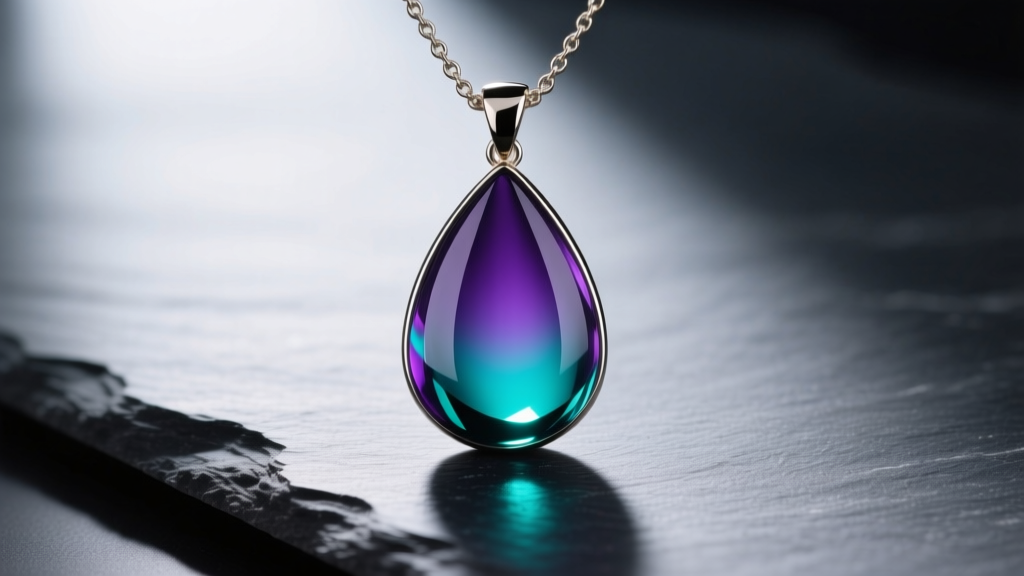
While often dismissed as a nostalgic novelty from the 1970s and a Y2K fashion staple, the modern mood necklace has evolved into a fascinating intersection of metallurgy, physiology, and materials science. As we navigate the jewelry market in 2026, consumers are increasingly demanding higher-quality, hypoallergenic pieces that actually function as intended. To truly understand how these pendants work, we must look past the marketing and examine the actual science behind the mood necklace mood chart.
This expert deep dive explores the thermochromic mechanisms, the physiological realities of skin temperature, and the structural anatomy required to keep your color-shifting jewelry alive.
The Anatomy of a Thermochromic Pendant
A functional mood pendant is not a single 'stone' but a meticulously layered sandwich of materials designed to manipulate light and heat. If you were to slice a high-quality mood pendant in half, you would find four distinct layers:
- The Metal Base Plate: Acts as the heat sink and structural foundation.
- The Black Backing Layer: A crucial coat of dark pigment. Thermochromic materials are naturally translucent; without a black background to absorb unreflected light, the stone would appear milky and colorless.
- The Thermochromic Matrix: The active layer containing either leuco dyes or cholesteric liquid crystals.
- The Protective Dome: A cabochon made of quartz glass, acrylic, or epoxy resin that shields the active layer from moisture and UV degradation.
The quality of the protective dome dictates the lifespan of the necklace. Quartz glass transmits body heat rapidly and blocks UV rays effectively, whereas cheap acrylic domes insulate the stone (delaying color shifts) and yellow over time.
Decoding the Mood Necklace Mood Chart: Temperature Thresholds
The classic mood necklace mood chart maps specific colors to emotional states. However, from a scientific perspective, these colors map strictly to surface skin temperature at the suprasternal notch (the base of the neck where the pendant rests). The physiological premise is based on peripheral vasoconstriction and vasodilation: when you are stressed, blood flow is redirected to vital organs, cooling the skin; when relaxed or excited, capillaries dilate, warming the skin.
The Standard Color-Temperature Matrix
| Color Display | Temperature Range | Physiological State | 'Mood' Translation |
|---|---|---|---|
| Black / Gray | < 22°C (71°F) | Severe Vasoconstriction / Cold | Stressed, Anxious, or Cold |
| Deep Blue | 22°C - 24°C (71°F - 75°F) | Baseline Resting | Calm, Neutral |
| Violet / Teal | 24°C - 28°C (75°F - 82°F) | Mild Vasodilation | Relaxed, Happy |
| Amber / Orange | 28°C - 32°C (82°F - 89°F) | Active Vasodilation | Excited, Passionate |
| Red | > 32°C (89°F) | High Blood Flow / Fever | Overheated, Intense |
According to materials science resources like Explain That Stuff, the twisting of the molecular helix in these crystals changes the wavelength of reflected light as the temperature fluctuates, creating this precise spectrum.
Leuco Dyes vs. Cholesteric Liquid Crystals
Not all mood necklaces are created equal. The market is currently split between two distinct thermochromic technologies, which drastically affects the accuracy of your mood necklace mood chart.
1. Leuco Dyes (The Budget Option)
Most mass-produced, inexpensive mood jewelry utilizes leuco dyes embedded in a polymer matrix. These molecules change shape when exposed to heat, revealing or hiding a color. The drawback: Leuco dyes typically only support two or three distinct color states (e.g., clear to blue). They lack the nuanced gradient required for a full spectrum mood chart and degrade rapidly under UV light.
2. Cholesteric Liquid Crystals (The Premium Option)
High-end thermochromic pendants use cholesteric (chiral nematic) liquid crystals. These molecules arrange themselves in a helical structure. As temperature changes, the pitch of the helix expands or contracts, selectively reflecting different wavelengths of light. This results in a smooth, continuous rainbow transition that accurately reflects micro-fluctuations in your body temperature. If your necklace shifts smoothly through violet, blue, and green, it is utilizing liquid crystals.
Material Degradation: Why Mood Stones Turn Black and Die
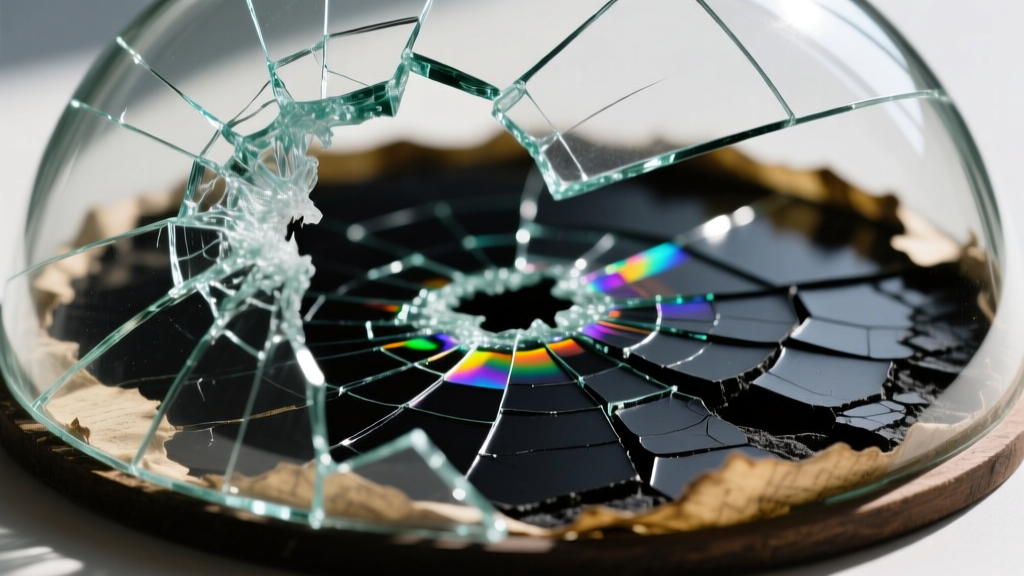
The most common complaint among collectors is a pendant permanently stuck on black. This is rarely a 'bad mood' and almost always a structural failure. Thermochromic layers are highly sensitive to two environmental enemies:
- Moisture Intrusion: If the epoxy seal or glass dome is compromised, humidity enters the matrix. Water molecules disrupt the chiral nematic phase of liquid crystals, causing them to lose their ability to twist and reflect light. The result is a permanent, dead black stone.
- UV Photodegradation: Prolonged exposure to direct sunlight breaks down the chemical bonds in both leuco dyes and liquid crystals. Leaving your necklace on a sunny dashboard will permanently bleach the thermochromic layer.
To maximize longevity, store your pendant in a dark, dry jewelry box when not in use, and never wear it in the shower or pool.
Chain Metallurgy and Heat Transfer Dynamics
The chain and the bezel setting do more than hold the stone; they act as a thermal bridge. If the metal setting is too thick or highly conductive in the wrong ways, it will act as a heat sink, pulling warmth away from the pendant and keeping it stuck on blue or black regardless of your actual skin temperature.
Evaluating Setting Alloys
- Zamak (Zinc Alloy): Common in fast-fashion jewelry. It is highly porous, reacts poorly to human sweat, and corrodes quickly. As it corrodes, it creates a thermal barrier that ruins the stone's responsiveness. Furthermore, the nickel content often causes contact dermatitis, a well-documented issue by the National Center for Biotechnology Information (NCBI).
- 316L Surgical Stainless Steel: The optimal choice for 2026. It is hypoallergenic, highly resistant to sweat corrosion, and possesses the exact thermal conductivity required to allow body heat to reach the stone without dissipating it too rapidly.
- 925 Sterling Silver: Excellent for luxury pieces, but silver is highly thermally conductive. Bezels must be engineered with a slight thermal break (like a resin backing) to prevent the silver chain from cooling the stone too fast.
Troubleshooting & Calibration: Fixing a 'Stuck' Stone
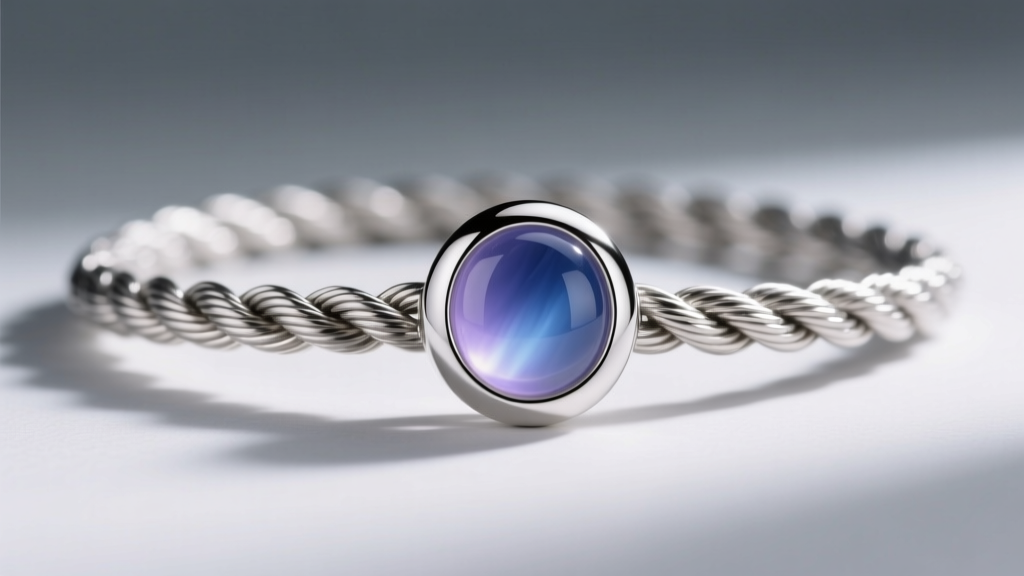
Before declaring your mood necklace dead, run through this technical troubleshooting checklist to determine if the stone is broken or simply miscalibrated to your environment.
- The Ambient Override Test: If your room is very cold (below 68°F/20°C), the ambient air will cool the metal bezel faster than your skin can heat it. Cup the pendant in your warm hands for 60 seconds. If it flashes red or orange, the stone is alive; your environment is just too cold.
- The Hot Water Calibration: Place the pendant in a sealed plastic bag, then submerge it in warm (not boiling) tap water (around 95°F/35°C). If it turns a vibrant amber or red, the thermochromic matrix is intact. If it remains black, moisture intrusion has likely destroyed the liquid crystals.
- Check the Dome Seal: Inspect the edge where the glass meets the metal bezel under a magnifying glass. If you see microscopic bubbling in the adhesive or a cloudy condensation inside the dome, the hermetic seal is broken.
Sourcing Authentic Thermochromic Jewelry
When shopping for a piece that accurately reflects the mood necklace mood chart, prioritize vendors who disclose their materials. Look for pendants featuring a quartz glass cabochon over a cholesteric liquid crystal layer, suspended on a 316L stainless steel or solid 925 silver chain. By understanding the complex chemistry and metallurgy at play, you can elevate your jewelry collection from a fleeting novelty to a sophisticated, functional piece of wearable science.


