Definition Necklace Value Guide: Metals, Pricing & Worth
Evaluate the true cost of a definition necklace. Compare stainless steel, vermeil, and solid gold pricing, engraving methods, and long-term value.

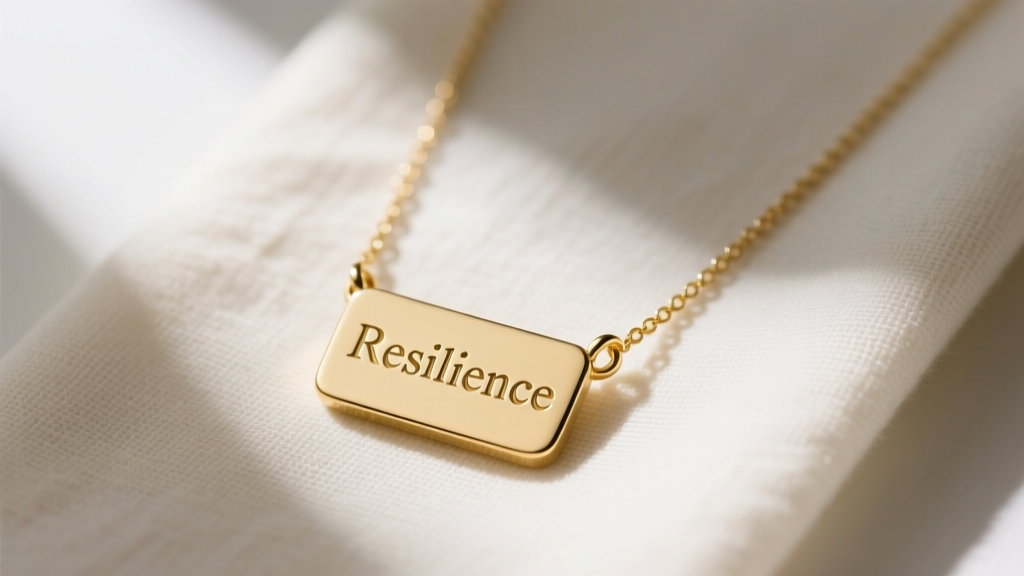
The True Cost of Sentiment: Assessing Definition Necklaces
A definition necklace—featuring a dictionary-style breakdown of a meaningful word like 'Serendipity,' 'Mama,' or 'Courage'—is one of the most popular personalized jewelry trends of the decade. But because the design relies heavily on typography and text, the value of these pieces is entirely dictated by the metal's durability and the engraving technique used. When shopping for a definition necklace, you are not just paying for the metal; you are paying for the legibility of the text over time.
As a senior jewelry analyst, I see consumers routinely overpay for dropshipped stainless steel pieces disguised as 'custom luxury,' or underpay for solid gold, only to find the delicate text has warped. This guide breaks down the exact metallurgy, engraving physics, and pricing tiers you need to know to assess the true value of a definition necklace.
Material Tiers: What You Actually Pay For
The base metal dictates both the upfront cost and the lifespan of the engraved text. Because definition pendants are typically flat rectangles (usually 15mm x 20mm or 20mm x 30mm), they experience high friction against the skin and clothing, making tarnish and plating wear the primary failure modes.
Tier 1: PVD-Coated 316L Stainless Steel (The Budget Pick)
Price Range: $18 – $35
Best For: Occasional wear, strict budgets, and water exposure.
Stainless steel is highly durable and hypoallergenic. However, raw steel is silver-colored. To get a gold definition necklace at this price point, manufacturers use PVD (Physical Vapor Deposition) coating. Value Warning: Cheap manufacturers use a 0.1-micron flash plating that will rub off the raised edges of the pendant within three months. Look for brands that explicitly state they use a 0.5 to 1.0-micron PVD layer, which can withstand daily wear for 2 to 3 years before the silver-toned steel shows through.
Tier 2: 925 Sterling Silver & Gold Vermeil (The Mid-Range Sweet Spot)
Price Range: $45 – $95
Best For: Daily wear, sensitive skin, and high-contrast engraving.
Sterling silver offers excellent value, but it requires occasional polishing. If you prefer gold, you must understand the legal definition of 'vermeil.' According to the Federal Trade Commission (FTC) Jewelry Guides, gold vermeil must consist of a 925 sterling silver base coated with at least 2.5 microns of 10k gold or higher. Many online marketplaces illegally label 0.5-micron gold-plated brass as 'vermeil.' Always verify the micron thickness and base metal before purchasing a mid-tier definition necklace.
Tier 3: Solid 14k and 18k Gold (The Heirloom Investment)
Price Range: $180 – $400+
Best For: Lifetime wear, heirlooms, and shower/sleep-proof jewelry.
When investing in solid gold for a text-heavy pendant, 14k gold (58.5% pure gold) is actually superior to 18k gold. The Gemological Institute of America (GIA) notes that higher karat gold is softer. Because definition necklaces feature thin, intricate lettering, a softer 18k or 24k pendant is prone to warping or bending at the edges if snagged on clothing, which will distort the typography. 14k gold provides the necessary structural rigidity to keep the text perfectly legible for decades.
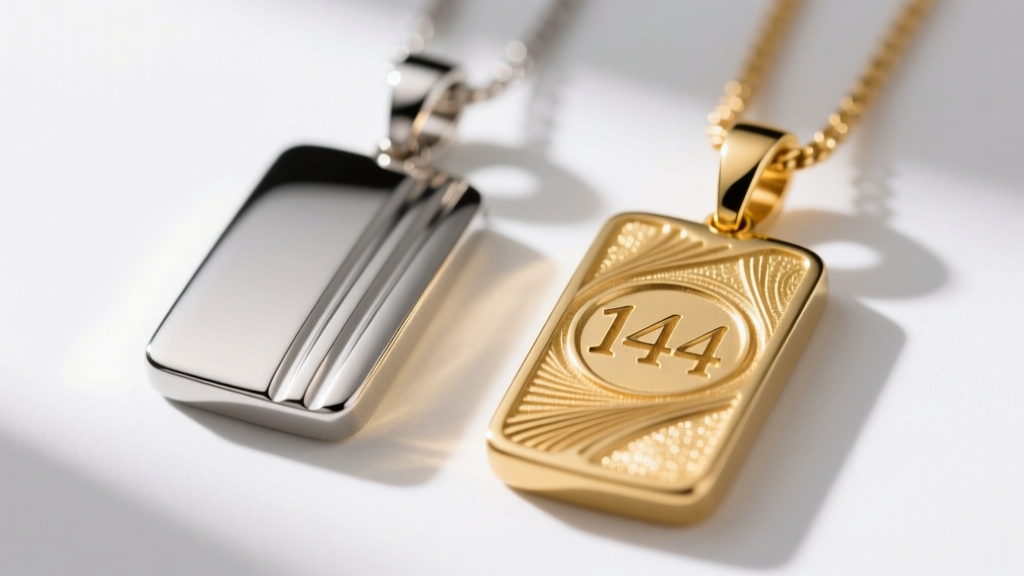
Engraving Techniques: Laser vs. Diamond Drag
The method used to etch the dictionary definition into the metal drastically affects the price and the visual contrast of the text.
- Fiber Laser Engraving: Uses a concentrated light beam to vaporize the metal, leaving a deep, dark, high-contrast mark. This is the industry standard for stainless steel and sterling silver definition necklaces because the dark oxidation makes small serif fonts highly readable. It is relatively inexpensive to produce.
- Diamond Drag / Rotary Engraving: Uses a physical diamond-tipped tool to carve into the metal. This removes actual material and is traditionally used for solid gold to avoid the heat damage that lasers can cause to high-karat alloys. The text appears as a shiny, shallow groove rather than a dark mark. It requires more manual labor, adding $20–$50 to the custom upcharge.
Price vs. Longevity Matrix
| Metal / Finish | Avg. Price | Engraving Method | Tarnish Risk | Expected Lifespan (Daily Wear) |
|---|---|---|---|---|
| 316L Steel (Raw Silver) | $15 - $25 | Fiber Laser (Black) | None | Lifetime (Text may fade slightly) |
| Steel with PVD Gold | $25 - $40 | Fiber Laser (Dark) | Low (Plating wears) | 1 - 3 Years (Before gold rubs off) |
| 925 Sterling Silver | $40 - $65 | Fiber Laser (Black) | High (Needs polishing) | Lifetime (With maintenance) |
| Gold Vermeil (2.5μm+) | $60 - $95 | Fiber Laser (Dark) | Medium (Silver base) | 3 - 5 Years (Before silver shows) |
| Solid 14k Gold | $180 - $350+ | Diamond Drag / Laser | None | Lifetime (Heirloom quality) |
How to Spot Overpriced 'Custom' Jewelry
The 'customization tax' is where jewelry brands inflate their margins. A brand might charge $85 for a 'custom definition necklace,' implying it was crafted from scratch for you. In reality, many mid-tier brands utilize dropshipping models where blank pendants are imported in bulk, and a local fiber laser operator spends exactly 45 seconds etching your chosen word.
The Value Test: If a brand charges over $70 for a gold-plated or vermeil definition necklace, they are overcharging for the 'custom' label. True value in the mid-range tier caps out around $65 for vermeil. If you are paying over $100, you should expect solid 14k gold, a heavy box chain (at least 1.2mm thick), and hand-finished diamond drag engraving. Anything less is a failure of value.
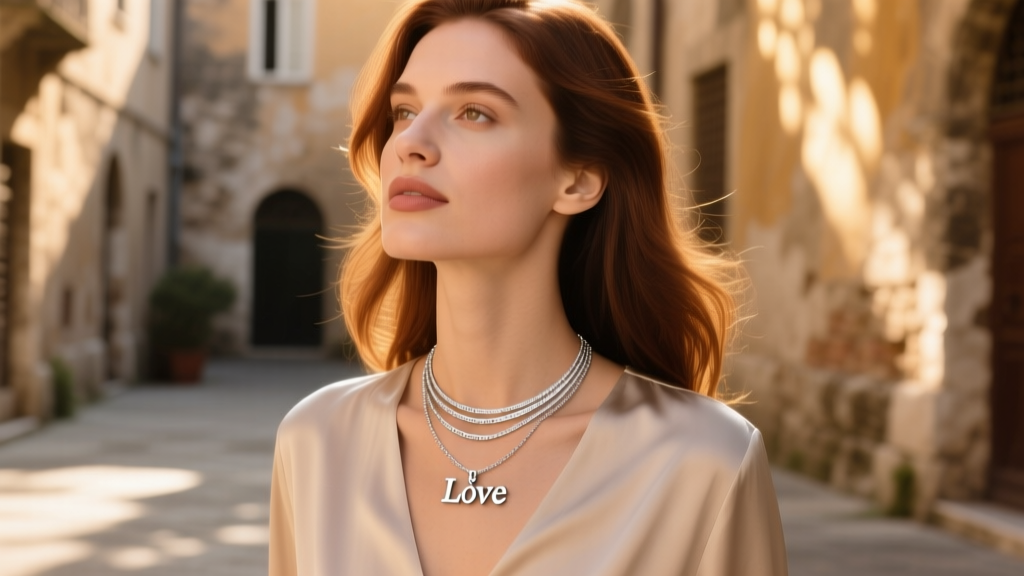
Chain Selection: The Hidden Cost Factor
A definition pendant is only as good as the chain holding it. Because these pendants are flat and relatively heavy (often 3 to 5 grams), they require a chain that resists kinking. Avoid snake chains entirely; they trap skin oils, tarnish rapidly, and kink permanently if bent.
For maximum value, look for a 1.0mm to 1.5mm Cable Chain or a 1.2mm Box Chain. Box chains are exceptionally strong and distribute the weight of a rectangular definition pendant evenly, preventing the bail (the loop connecting pendant to chain) from wearing down the metal over time.
Final Verdict: Calculating Cost-Per-Wear
When assessing the budget and value of a definition necklace, shift your mindset from 'upfront cost' to 'cost-per-wear.' A $25 PVD stainless steel necklace that loses its gold finish in six months costs you roughly $0.14 per day, but results in a degraded, two-toned piece of jewelry that you will likely throw away.
Conversely, a $220 solid 14k gold definition necklace worn daily for 10 years costs just $0.06 per day, retains its structural integrity, and can eventually be passed down as an heirloom. If your budget is strictly under $50, opt for raw, un-plated 316L stainless steel or solid 925 sterling silver. You will sacrifice the gold color, but you will secure a piece with permanent legibility and zero risk of peeling plating, ensuring your sentimental definition stands the test of time.


