The Definitive Necklace Measurement Chart & Fit Guide
Master the necklace measurement chart with our expert technical guide. Learn drop math, hardware variables, and chain geometry for perfect sizing.

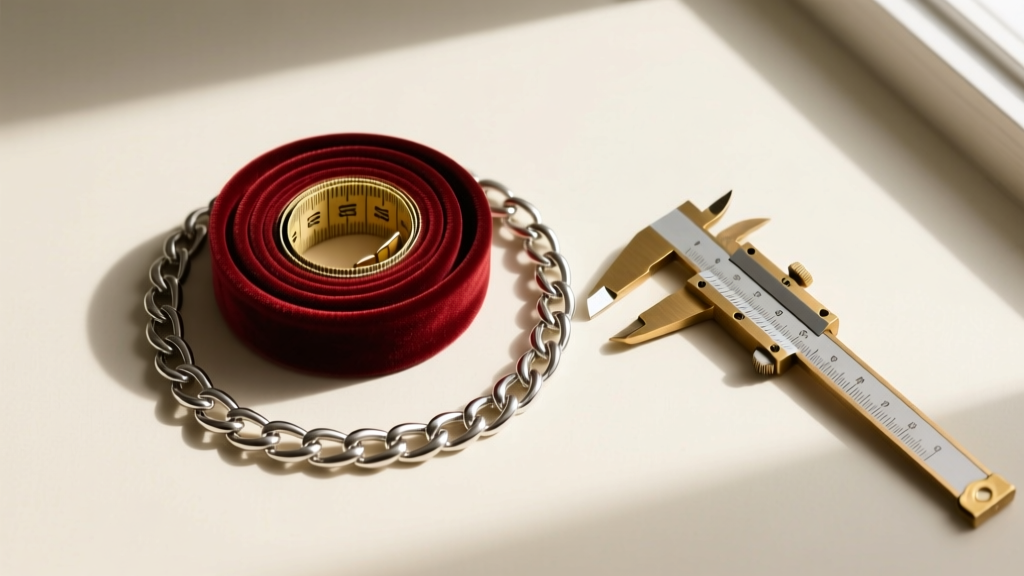
Most consumers and even many retail jewelers treat necklace sizing as a simple linear equation: a 16-inch chain is exactly 16 inches long. However, from a technical jewelry design perspective, a necklace is a parabolic curve subject to gravity, hardware offsets, and the unique topography of the human neck. Relying on a basic necklace measurement chart without understanding the physics of drape, chain weave geometry, and clasp tolerances often results in poor fit, pendant flipping, and collarbone misalignment. As of 2026, advanced CAD modeling and precision bench jewelry have elevated the science of necklace sizing, demanding a more rigorous approach to how we measure, specify, and wear chains and pendants.
The Geometry of Drape: Beyond Standard Lengths
The fundamental flaw in standard sizing is the assumption that the neck is a perfect cylinder. In reality, the human neck is an ovaloid structure with a sloping anterior base. When a chain wraps around the neck, the functional metric that matters is not the total circumference, but the anterior drop—the vertical distance from the base of the throat to the lowest point of the chain.
To calculate the true anterior drop, master jewelers use a modified parabolic formula that accounts for the neck's base circumference and the hardware offset. If a client has a 14-inch neck circumference and wears a standard 16-inch chain, the remaining 2 inches are distributed across the anterior and posterior drape. However, because the posterior neck is relatively flat and the anterior neck slopes downward toward the sternum, the chain naturally pools forward. This means a 16-inch chain on a 14-inch neck will yield an anterior drop of approximately 1.1 to 1.25 inches below the collarbone, depending on the chain's rigidity.
"A necklace is not a static circle; it is a dynamic tension structure. The weight of the clasp, the stiffness of the alloy, and the slope of the clavicle all conspire to alter the effective length by up to half an inch once worn." — Master Bench Jeweler Technical Standards, JCK Industry Manufacturing Guidelines.
The Master Necklace Measurement Chart
The following necklace measurement chart goes beyond generic industry terms, integrating technical specifications for pendant weights and ideal anatomical placements. This data is calibrated for an average adult neck circumference of 14.5 inches.
| Standard Length | Industry Term | Anterior Drop (from collarbone) | Ideal Pendant Weight (14k Gold) | Optimal Neckline Pairing |
|---|---|---|---|---|
| 14" - 15" | Collar / Choker | -0.5" (Sits above collarbone) | < 3 grams | Boatneck, Off-shoulder |
| 16" | Princess (Short) | 0.5" (Rests on collarbone) | 3 - 6 grams | Crew neck, Scoop |
| 18" | Princess (Standard) | 1.5" - 2" (Below collarbone) | 5 - 12 grams | V-neck, Button-down |
| 20" - 22" | Matinee | 3" - 5" (Upper sternum) | 10 - 20 grams | High halter, Turtleneck |
| 24" - 30" | Opera | 6" - 10" (Sternum to solar plexus) | 15 - 35 grams | Deep plunge, Evening wear |
According to Blue Nile's educational guidelines on necklace proportions, the 18-inch length remains the most universally forgiving metric for standard pendants, as it clears the clavicle notch and allows the pendant to rest on the flat plane of the upper chest, preventing it from catching on garment seams.

Hardware Tolerances and Clasp Offsets
A critical, often overlooked variable in the necklace measurement chart is hardware tolerance. The stated length of a necklace usually includes the clasp, but the functional length is dictated by the hardware's physical footprint.
- Spring Ring Clasps (9mm - 12mm): These add approximately 0.35 to 0.47 inches to the continuous chain loop. They are lightweight but prone to tension-spring failure if the chain gauge exceeds 18-gauge (1.02mm).
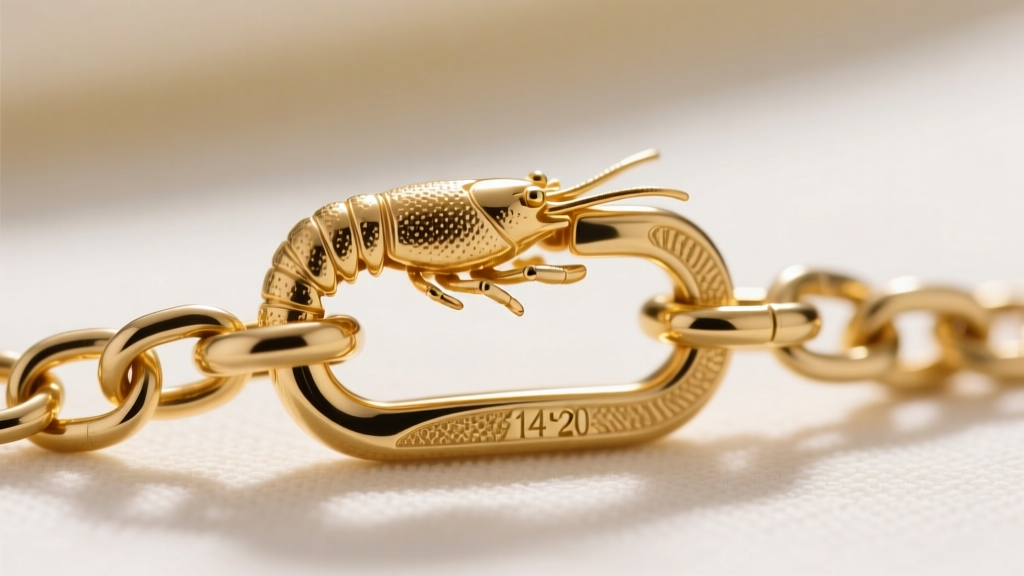
- Lobster Clasps (12mm - 17mm): The industry standard for medium-weight chains. A standard 12mm lobster clasp combined with a 5mm jump ring adds exactly 0.66 inches of rigid, non-draping length to the posterior neck.
- Toggle Clasps: A 15mm toggle bar requires a minimum 20mm ring to secure properly. This hardware cluster can add up to 1.25 inches of functional length, effectively converting a 16-inch chain into a 17.25-inch drape.
When sizing a custom piece, bench jewelers must subtract the hardware offset from the total desired length to ensure the anterior drop aligns perfectly with the client's anatomy.
Chain Weave Topography and Effective Length
Not all 18-inch chains measure 18 inches when subjected to the 15-gram downward force of a heavy pendant. The 3D geometry of the chain weave dictates its structural rigidity and susceptibility to elongation.
Tension and Elongation by Weave Type
Rope Chains: Constructed from twisted, helical links, rope chains possess a natural "spring" tension. When a heavy pendant is attached, the helix compresses slightly, effectively shortening the chain by 1% to 1.5%. A 20-inch rope chain may functionally drape like a 19.7-inch chain under a 25-gram load.
Franco and Wheat Chains: These V-shaped, interlocking weaves are highly rigid. They do not compress under tension, making them the ideal choice for heavy gemstone pendants where precise placement on the sternum is required. However, their rigidity means they do not conform to the posterior neck as smoothly as cable chains, often creating a slightly wider, more angular silhouette at the base of the neck.
Cable and Curb Chains: The most common weaves, featuring flat or oval links. According to the GIA Gem Encyclopedia and metallurgical standards, sterling silver (925) cable chains below 20-gauge are susceptible to permanent work-hardening and elongation. Over 12 to 18 months of daily wear, a delicate 22-gauge silver cable chain can permanently stretch by up to 2%, altering its position on the chest and requiring periodic re-sizing.
Troubleshooting Sizing Anomalies
Even when utilizing a precise necklace measurement chart, physical anomalies can disrupt the intended drape. Here is how domain experts troubleshoot the most common sizing failures:
The Pendant Flip (Center of Gravity Failure)
If a pendant continuously flips backward, hiding the gemstone or design against the wearer's chest, the issue is rarely the chain length. The failure lies in the bail-to-chain clearance ratio. For a pendant to hang flush, the internal diameter of the bail must be at least 1.5 times the thickness of the chain. If a 4mm wide chain is threaded through a bail with a 4.5mm internal diameter, the pendant locks at a 45-degree angle, causing the center of gravity to shift and the piece to invert. The technical solution is to ream the bail or switch to a lower-profile, high-gauge chain.
The Choker Gap
When a 14-inch or 15-inch collar sits too high on the throat, creating an uncomfortable gap at the front, it is usually due to a lack of posterior articulation. Rigid chains like box or herringbone weaves cannot bend tightly enough to navigate the cervical spine's curve. For tight collars, highly articulated weaves like snake or omega chains (specifically those with a 2mm or 3mm width) are mandatory to ensure the metal hugs the anatomical contour of the neck without buckling.
Extender Chain Dynamics
Many mass-market necklaces include a 2-inch extender chain to bypass precise sizing. However, from a technical standpoint, extenders introduce a structural weak point. If the extender is made of 22-gauge wire while the main chain is 18-gauge, the repetitive friction of the lobster clasp sliding against the thin extender links will eventually cause shear failure. When specifying custom jewelry, always ensure the extender chain gauge matches or exceeds the primary chain gauge to maintain structural integrity.
Final Calibration
Mastering the necklace measurement chart requires moving beyond simple tape measurements and embracing the physics of jewelry design. By calculating hardware offsets, understanding chain weave compression, and respecting the anatomical slope of the clavicle, you can achieve a flawless, engineered drape that elevates both the comfort and the visual impact of the piece. Whether you are sourcing a delicate 16-gauge gold chain or a heavy 30-inch sterling silver rope, precise technical sizing is the hallmark of true jewelry expertise.


