Design Your Own Necklace: A Technical CAD & Metal Guide
Learn how to design your own necklace with expert technical insights on CAD tolerances, metal alloys, chain tensile strength, and casting.


When you set out to design your own necklace, most commercial online builders limit you to selecting pre-cast charms and standard cable chains. However, true bespoke jewelry creation is an exercise in structural engineering, metallurgy, and spatial geometry. As of 2026, the democratization of 3D printing and AI-assisted CAD topology optimization has allowed independent jewelers and informed consumers to push the boundaries of custom neckwear. To create a piece that is not only visually striking but mechanically enduring, one must understand the technical parameters that govern custom jewelry fabrication.
The Architecture of Custom Chains: Weave and Tensile Strength
The chain is the structural spine of any necklace. When engineering a custom chain, the choice of weave dictates both the drape and the tensile strength. A common mistake in custom design is pairing a heavy, solid-gold pendant with a delicate, low-gauge chain, leading to inevitable structural failure.
Gauge Thickness and Breaking Points
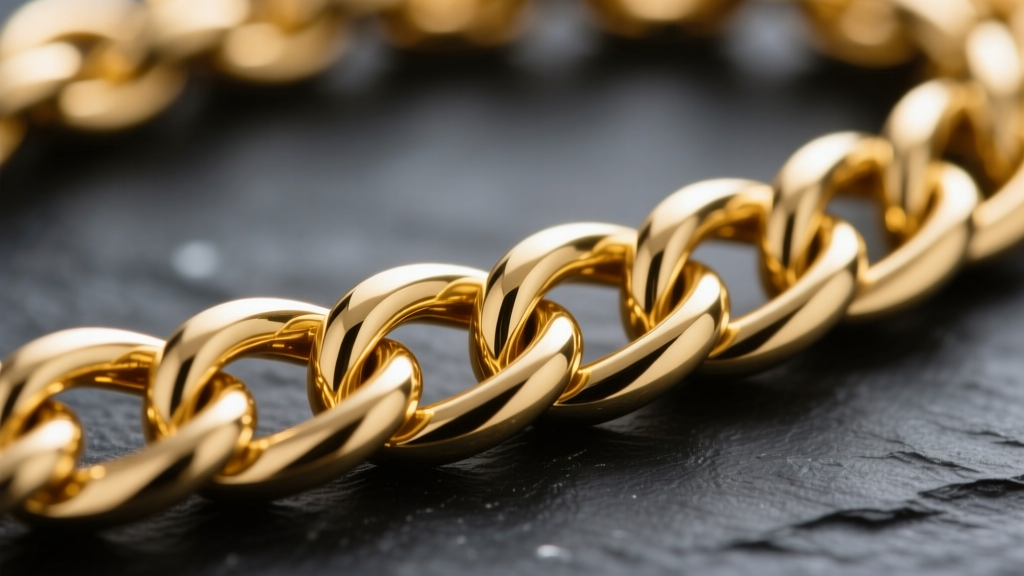
Chain gauge refers to the thickness of the wire used to form the links. For custom pendants weighing between 15 and 30 grams, a minimum wire thickness of 1.5mm to 2.2mm is required. Below is a technical breakdown of common chain weaves and their approximate tensile limits when crafted in 14k yellow gold:
- Cable Chain (1.5mm): Breaking point of roughly 15 lbs. Excellent for lightweight pendants under 10 grams. Prone to kinking if subjected to torsional stress.
- Wheat Chain (2.0mm): Breaking point exceeding 45 lbs. The woven, multi-directional link structure distributes weight evenly, making it the superior choice for heavy, solid-metal custom pendants.
- Figaro Chain (2.5mm): Breaking point around 35 lbs. The alternating link pattern offers a distinct aesthetic but introduces weak points at the solder joints of the smaller links.
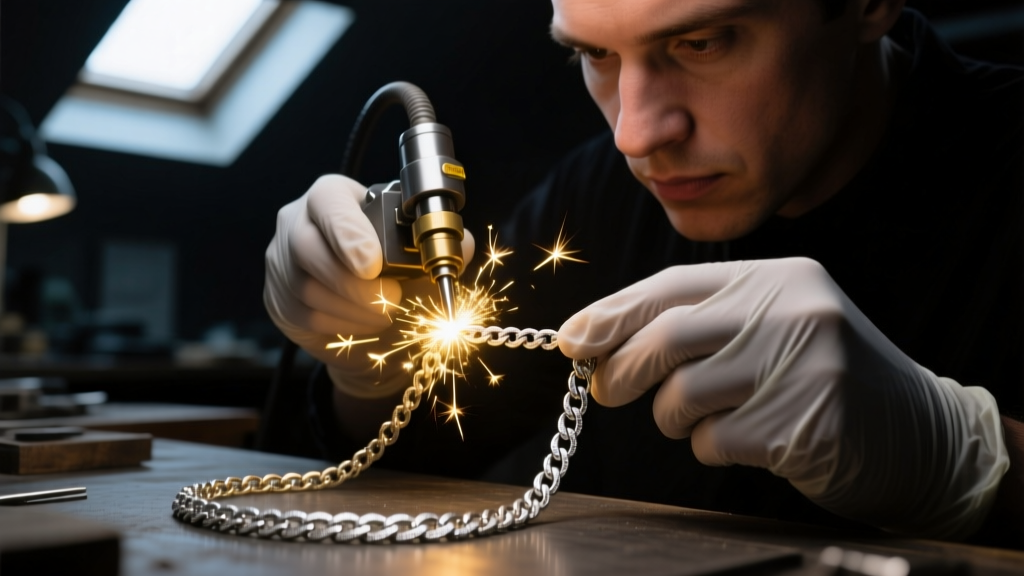
- Rope Chain (3.0mm): Breaking point upwards of 60 lbs. The twisted links provide immense strength, though laser welding is required for repairs due to the complex geometry of the twists.
Metallurgy 101: Selecting Alloys for Bespoke Pendants
The decision to design your own necklace requires a deep understanding of precious metal alloys. Pure gold (24k) and pure platinum are far too malleable for daily wear. Therefore, master jewelers rely on specific alloying metals to manipulate hardness, color, and casting behavior.
White Gold: Nickel vs. Palladium Alloys
Standard white gold is typically alloyed with nickel to achieve a silvery hue. However, nickel white gold requires rhodium plating to mask its underlying yellowish-gray tint and is a primary culprit for contact dermatitis. For high-end custom pieces, expert jewelers utilize palladium white gold. By alloying 14k or 18k gold with palladium, the resulting metal possesses a naturally bright, white luster that never requires rhodium plating and is entirely hypoallergenic.
Platinum: Ruthenium vs. Iridium
When working with 950 Platinum, the 5% alloying metal drastically alters the casting process. According to technical guidelines published by the Manufacturing Jewelers and Suppliers of America (MJSA), Platinum-Ruthenium (950 Pt/Ru) offers a higher Vickers hardness and superior grain structure for casting intricate, thin-walled pendant designs. Conversely, Platinum-Iridium (950 Pt/Ir) is softer, making it the preferred choice for complex stone-setting operations where the metal must be pushed and burnished over gemstone girdles.
| Alloy Composition | Vickers Hardness (HV) | Melting Point (°C) | Casting Shrinkage Rate | Best Application |
|---|---|---|---|---|
| 14k Yellow Gold (Cu/Ag/Zn) | ~130 HV | 850°C | 1.30% | Durable everyday chains |
| 18k Yellow Gold (Cu/Ag) | ~110 HV | 900°C | 1.50% | High-end pendants, rich color |
| 14k Palladium White Gold | ~115 HV | 950°C | 1.40% | Hypoallergenic custom bands |
| 950 Platinum (Ruthenium) | ~135 HV | 1750°C | 1.55% | Intricate, thin-walled CAD casts |
CAD Modeling and Lost-Wax Casting Tolerances
Modern bespoke jewelry begins in CAD software like MatrixGold or Rhino 3D. However, designing for the digital space is vastly different from designing for physical casting. When you design your own necklace using 3D modeling, you must account for the physical realities of the lost-wax casting process.
Wall Thickness and Spruing
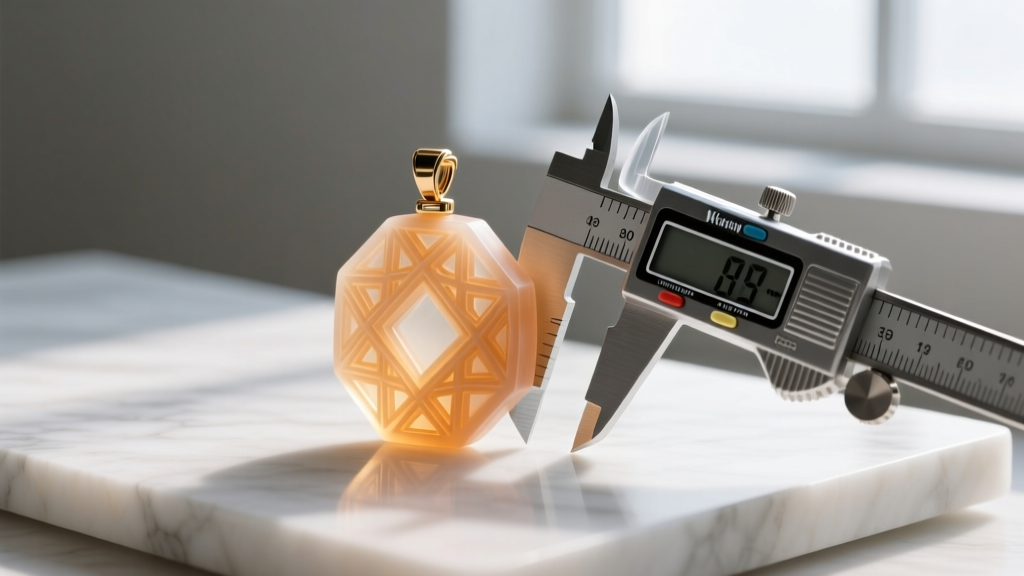
A critical failure mode in custom casting is warping or incomplete fills caused by walls that are too thin. For 14k and 18k gold, the absolute minimum wall thickness in a CAD model should be 0.8mm. For platinum, due to its higher melting point and rapid cooling rate, the minimum wall thickness must be increased to 1.0mm to ensure the molten metal flows completely into the mold cavity before freezing.
Compensating for Shrinkage in Stone Settings
All cast metals shrink as they cool. Gold alloys typically shrink by 1.3% to 1.5%, while platinum shrinks by up to 1.55%. If a CAD designer models a bezel setting with an exact internal diameter of 6.00mm to hold a 6.00mm round brilliant diamond, the final cast metal will shrink to approximately 5.91mm, rendering the stone unable to fit. Expert CAD modelers intentionally overcut the bearing and seat dimensions by 0.05mm to 0.10mm to compensate for this thermal contraction, allowing the jeweler to cleanly seat the stone and burnish the metal over the girdle.
Bail Engineering and Clasp Mechanics
The bail—the component that connects the pendant to the chain—is often an afterthought in amateur designs, leading to excessive wear and tear. The internal diameter of a custom bail must be engineered specifically for the chosen chain.
The 1.5x Rule for Bails
To prevent the chain from acting as a abrasive saw against the inside of the bail, the inner width of the bail should be at least 1.5 times the thickness of the chain wire. Furthermore, the bail should feature a hardened steel or platinum insert sleeve if the pendant is heavy, as gold-on-gold friction will eventually wear through the bail, resulting in the loss of the pendant.
Clasp Selection Based on Load
Standard spring-ring clasps are entirely unsuitable for custom necklaces weighing over 20 grams. The internal spring mechanism is prone to fatigue and failure under heavy loads. For bespoke pieces, a custom box clasp with a double figure-eight safety catch is mandatory. The box clasp distributes the tensile load across a wider surface area, while the safety catches provide redundant fail-safes in the event the primary tongue disengages.
"The longevity of a custom necklace is rarely determined by the beauty of the central gemstone, but rather by the microscopic tolerances of the clasp tongue and the structural integrity of the chain links." — Technical fabrication guidelines, Gemological Institute of America (GIA).
Conclusion: The Intersection of Art and Engineering
Choosing to design your own necklace is a commitment to creating an heirloom that defies the compromises of mass production. By respecting the tensile limits of chain weaves, selecting the correct hypoallergenic alloys, and adhering to strict CAD casting tolerances, you ensure that your custom piece will not only capture the light but withstand the physical demands of daily wear for generations.


