How to Design the Perfect Custom Grandmother Necklace
Learn how to design a custom grandmother necklace with our step-by-step guide covering chain durability, birthstone hardness, and engraving.

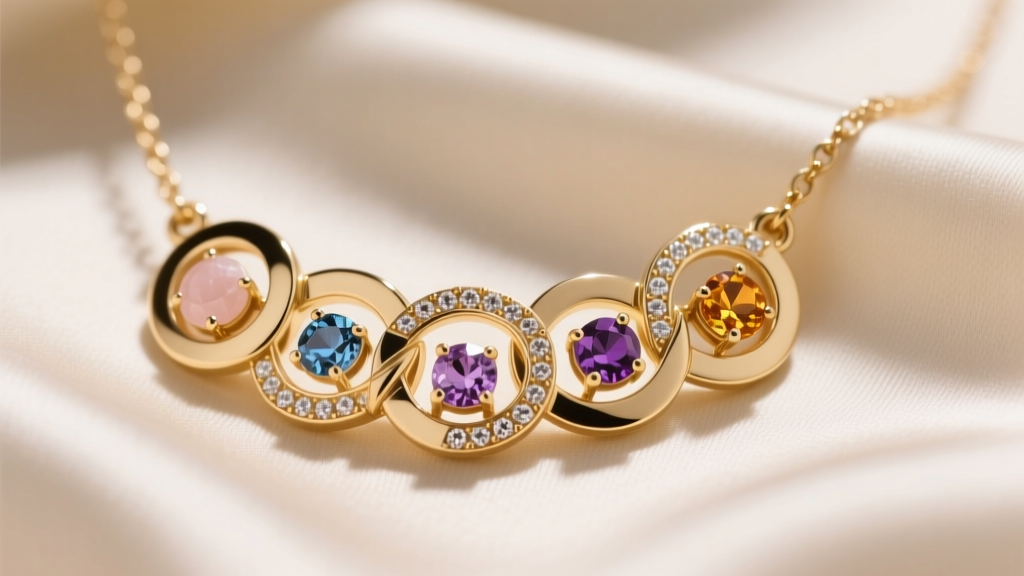
The Anatomy of a Timeless Grandmother Necklace
The traditional grandmother necklace has evolved far beyond the fragile, mass-produced charm bracelets and thin chains of the past. Today, a well-crafted grandmother necklace serves as a multi-generational heirloom, requiring a meticulous approach to metallurgy, gemology, and structural design. When commissioning or designing a custom piece, the primary goal is to balance deep sentimental value with everyday durability. Mass-market alternatives often rely on hollow chains, glued-in synthetic stones, and weak spring-ring clasps that guarantee failure within a few years of daily wear.
To create a piece that will genuinely last a lifetime—and eventually be passed down to the next generation—you must make informed decisions regarding metal alloys, gemstone Mohs hardness ratings, and precision engraving techniques. This step-by-step guide will walk you through the exact specifications required to design a flawless, enduring custom grandmother necklace.
Step 1: Selecting the Right Chain and Clasp Hardware
The chain is the structural backbone of any pendant necklace. For a piece that will be worn daily, you must prioritize tensile strength and resistance to kinking. Avoid hollow rope chains or ultra-thin cable chains under 1.2mm, as they are highly susceptible to snapping under the weight of multiple birthstone charms.
- Box Chains (1.5mm - 2.0mm): The gold standard for durability. The interlocking square links distribute weight evenly and resist tangling. A solid 14k or 18k gold box chain in the 1.5mm to 2.0mm range offers the perfect balance of visibility and strength.
- Figaro Chains (2.0mm+): Excellent for a more vintage, textured look. The alternating link pattern provides high tensile strength, though they can occasionally catch on fine knitwear.
- Wheat Chains (1.5mm): Featuring woven, braided links, wheat chains are incredibly strong and flexible, making them an excellent choice for heavier multi-disc pendants.
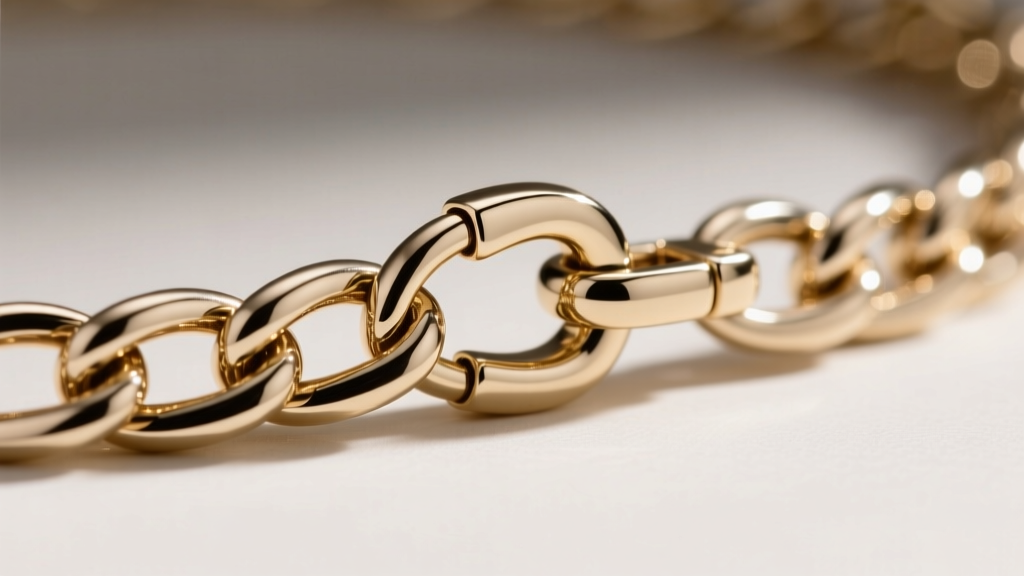
The Clasp: Cast Lobster vs. Spring Ring
Never use a standard spring-ring clasp for a custom grandmother necklace. The internal tension spring in a spring ring is prone to fatigue, and the small trigger mechanism easily breaks. Instead, specify a cast solid lobster clasp (typically 12mm or 14mm). Cast lobster clasps are forged from a single piece of metal with a heavier internal spring, providing a secure, satisfying snap that will not accidentally open when catching on a collar or scarf.
Step 2: Navigating Birthstone Hardness and Settings
When incorporating birthstones to represent children and grandchildren, you must account for the Mohs scale of mineral hardness. A grandmother necklace is subject to daily impacts, desk strikes, and accidental drops. Gemstones with a Mohs rating below 7 are highly susceptible to scratching and chipping if not set correctly.
| Birthstone (Month) | Mohs Hardness | Durability Risk | Recommended Setting |
|---|---|---|---|
| Diamond (April) | 10 | Extremely Low | Prong or Bezel |
| Sapphire / Ruby (Sept/July) | 9 | Very Low | Prong or Bezel |
| Emerald (May) | 7.5 - 8 | Moderate (Brittle) | Bezel (Mandatory) |
| Amethyst / Citrine (Feb/Nov) | 7 | Moderate | Bezel or Low-Profile Prong |
| Opal / Pearl (Oct/June) | 5.5 - 6.5 / 2.5 - 4.5 | Extremely High | Flush / Bezel (Avoid daily wear) |
Expert Tip: For months associated with fragile stones like Opal (October) or Pearl (June), consider substituting with a lab-grown Sapphire or Ruby in the corresponding color. Lab-grown stones share the exact same chemical and physical properties as mined stones (a 9 on the Mohs scale) but cost a fraction of the price and offer vastly superior durability for everyday jewelry. According to Jewelers of America, lab-grown gemstones have become a preferred choice for heirloom pieces due to their flawless clarity and structural integrity.
Step 3: Pendant Layout and Engraving Techniques
The layout of the charms dictates both the aesthetic and the physical weight distribution on the chain. The two most popular configurations for a grandmother necklace are the interlocking circles and the stacked disc layout.
Disc vs. Interlocking Layouts
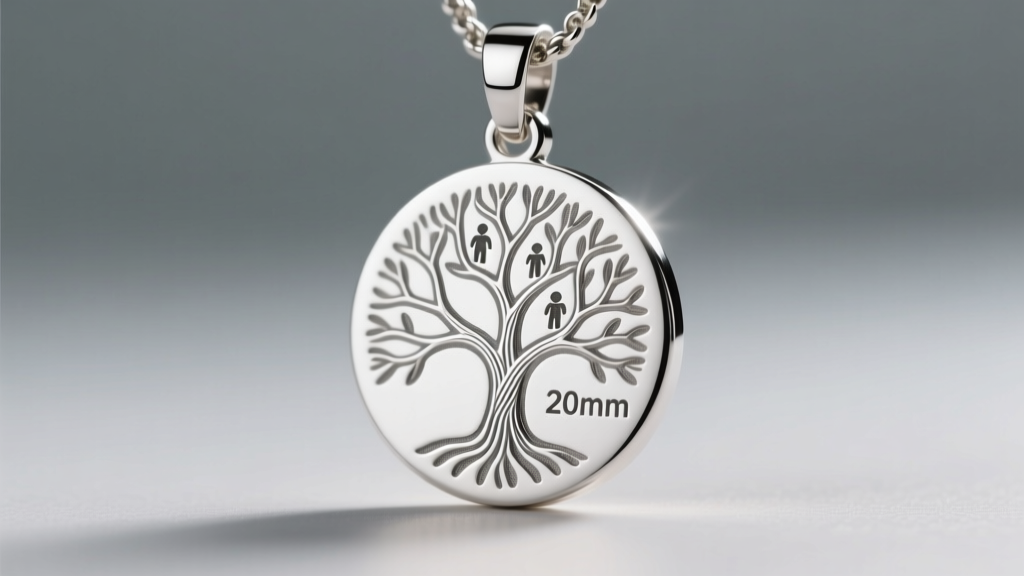
Interlocking circles (typically 12mm to 15mm in diameter) represent an unbreakable family bond. Because they move independently, they require individual jump rings. Ensure your jeweler uses soldered jump rings rather than open ones; an open jump ring will eventually pull apart under the pendulum motion of daily walking. Alternatively, a single large disc (22mm to 25mm) stamped with a family tree or multiple names offers a solid, unified canvas that eliminates the risk of tangled charms entirely.
Laser vs. Rotary Engraving
When personalizing the metal with names, dates, or fingerprints, the engraving method is critical.
- Rotary (Diamond Drag) Engraving: Uses a physical diamond-tipped bit to carve into the metal. While traditional, it can struggle with highly detailed fonts on small 12mm discs and may leave microscopic burrs that catch on fabric.
- Fiber Laser Engraving: The modern standard for fine jewelry. A fiber laser vaporizes the metal at a microscopic level, allowing for 0.001-inch precision. This is the only method capable of cleanly engraving a high-resolution fingerprint or a complex botanical family tree onto a 15mm gold disc without compromising the metal's structural integrity.
Step 4: Sizing for Comfort and Layering
Standard necklace lengths often fail to account for the specific comfort needs and wardrobe choices of older women. A standard 16-inch choker length is almost universally inappropriate for a grandmother necklace, as it can feel restrictive and sits awkwardly against higher necklines.
- 18-Inch (Princess Length): The most versatile choice. It rests perfectly on the collarbone, allowing the pendant to sit visibly outside the neckline of most blouses and sweaters.
- 20-Inch (Matinee Length): Ideal for layering over turtlenecks or for individuals who prefer a looser, less constricting feel around the neck. If choosing 20 inches, ensure the chain gauge is increased to 2.0mm to maintain visual proportion.
For maximum versatility, ask your jeweler to include a 2-inch extender chain at the clasp. This allows the wearer to adjust the necklace from 18 to 20 inches depending on the garment, ensuring the piece remains a staple in her daily rotation regardless of the season.
Long-Term Maintenance and Care
Even the most robust 14k gold and sapphire grandmother necklace requires mindful maintenance to preserve its heirloom status. Lotions, perfumes, and household cleaners can create a cloudy film over gemstones and degrade the polish on laser-engraved surfaces.
"To maintain the brilliance of bezel-set birthstones, clean the necklace bi-weekly using a solution of warm water and a few drops of mild, phosphate-free dish soap. Use a specialized, ultra-soft baby toothbrush to gently sweep behind the stones where skin oils and dust accumulate, taking care never to use abrasive pastes on laser-engraved silver or gold."
By prioritizing solid hardware, respecting gemological hardness scales, and utilizing modern precision engraving, you elevate the grandmother necklace from a simple sentimental trinket to a masterclass in fine jewelry design. It becomes a piece that honors the past while possessing the physical resilience to endure well into the future.


