How to Determine Necklace Chain Length: A Material & Drape Guide
Learn how to determine necklace chain length by factoring in metal density, drape physics, and tensile strength for a perfect fit every time.
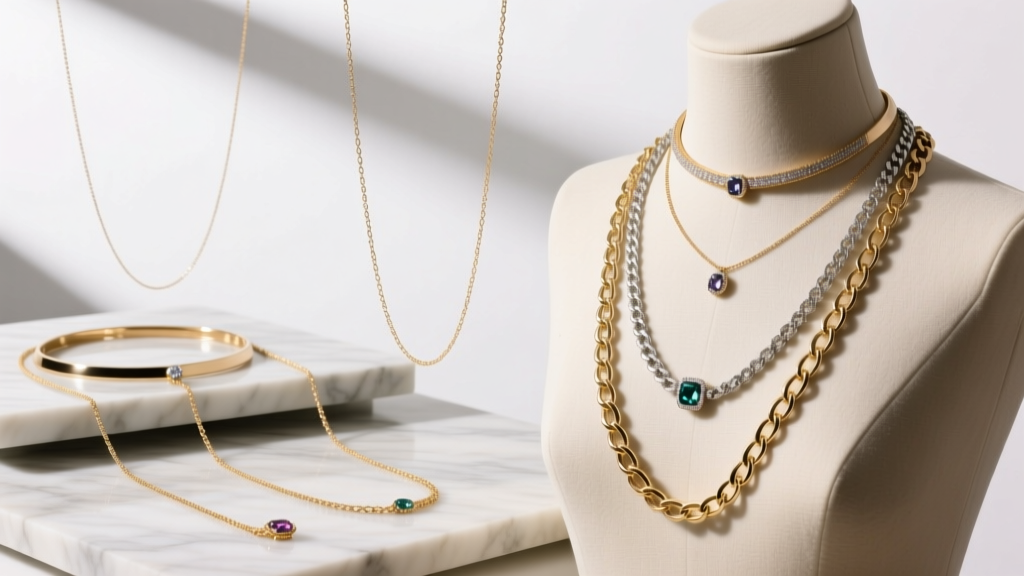

When most jewelry guides explain how to determine necklace chain length, they tell you to wrap a piece of string around your neck, measure it with a ruler, and add two inches. But this rudimentary approach ignores a fundamental reality of jewelry design: metallurgy. A 16-inch chain made of lightweight Grade 23 titanium will sit, drape, and feel completely different than a 16-inch chain crafted from solid 24-karat gold or dense tungsten carbide. As we navigate the jewelry landscape in 2026, understanding the intersection of material properties and physical dimensions is crucial for achieving the perfect fit.
The illusion of length is created by gravity, specific density, and tensile strength. To truly master necklace styling, you must learn how to determine necklace chain length not just by the tape measure, but by the atomic weight and structural yield of the metal itself.
The Physics of Drape: Density vs. Chain Length
Every metal has a specific gravity (SG), which dictates its density relative to water. This physical property directly influences the catenary curve—the natural drape—of a necklace when it rests on the clavicle. Heavy metals pull the chain downward into a sharper, deeper V-shape, effectively making the necklace feel and look longer than its actual measured length. Conversely, lightweight metals resist gravity, creating a wider, more rounded U-shape that sits higher on the chest.
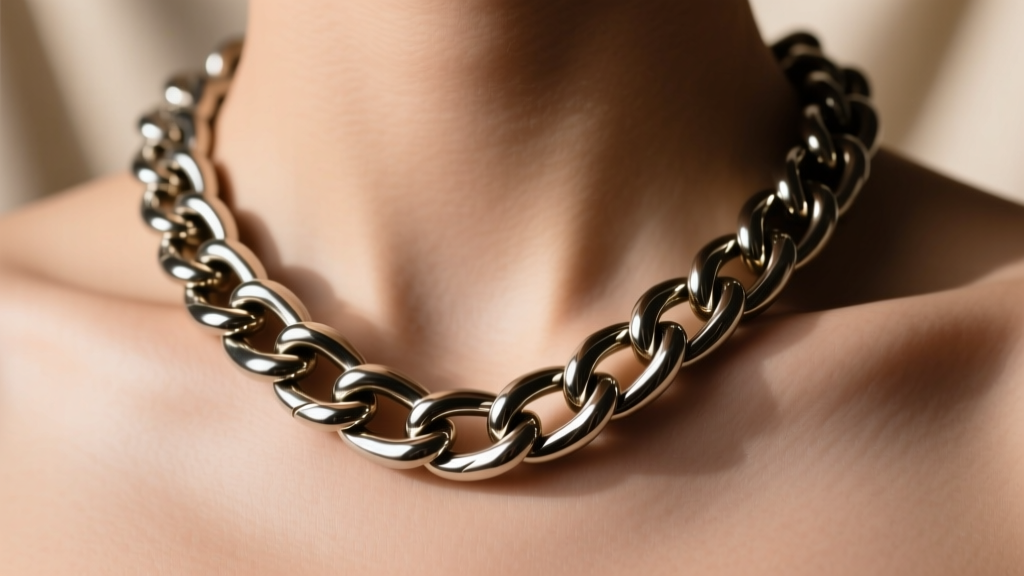
According to material science data published by AZoM, the specific gravity of common jewelry metals varies wildly. Titanium sits at a featherlight 4.5 g/cm³, while sterling silver is 10.36 g/cm³, and pure gold reaches a massive 19.32 g/cm³. If you are trying to achieve a delicate, high-sitting choker effect, choosing a dense metal like solid gold at a standard 14-inch length will result in the chain sagging awkwardly due to the sheer weight of the links pulling against the clasp.
Material-Specific Length Guidelines
To bridge the gap between measured length and visual length, jewelers use a concept called "Material-Adjusted Drape." Below is a structural comparison of how different materials behave at standard baseline lengths, assuming a uniform 2.0mm cable chain profile.
| Material | Density (g/cm³) | Baseline Length | Visual Drape Profile | Clasp Tension |
|---|---|---|---|---|
| Grade 5 Titanium | 4.43 | 18 inches | Wide U-shape, sits high | Very Low |
| Sterling Silver (925) | 10.36 | 18 inches | Standard curve, rests on collarbone | Moderate |
| 14k Yellow Gold | 13.50 | 18 inches | Deeper curve, drops below hollow | High |
| Tungsten Carbide | 15.60 | 18 inches | Sharp V-shape, pulls forward | Extreme |
Pro Tip: If you are transitioning from a titanium chain to a solid gold chain of the exact same style, subtract 0.5 to 1 inch from your gold chain order to achieve the identical visual neckline placement.
Tensile Strength and the "Max Length" Threshold
Another critical factor in figuring out how to determine necklace chain length is the tensile and yield strength of the metal. Long chains (24 inches and above) are subjected to continuous micro-tensions from body movement, clothing snags, and the pendulum effect of heavy pendants. If the metal's yield strength is too low, the chain will permanently stretch and deform over time.

Sterling silver, while beautiful, is relatively soft with an annealed yield strength of roughly 125 MPa. A 30-inch sterling silver cable chain at a delicate 1.2mm gauge is highly susceptible to stretching, eventually turning a 30-inch rope into a 31-inch misshapen oval. The Gemological Institute of America (GIA) frequently notes that alloying metals (like adding copper to silver or zinc to gold) is essential to increase durability for longer, thinner chains.
Conversely, aerospace-grade titanium boasts a yield strength exceeding 800 MPa. You can safely wear a 36-inch titanium chain at a micro-thin 0.8mm gauge without any risk of structural elongation. When planning long, layered opera or rope lengths, always prioritize high-tensile metals or increase the gauge thickness of softer metals by at least 0.5mm to compensate for the extended leverage.
Clasp Hardware: The Hidden Variable in Length
The clasp is the unsung hero—or villain—of necklace length. A standard 12mm lobster clasp adds nearly half an inch of rigid, non-draping length to the back of the neck. More importantly, the weight of the clasp interacts with the weight of the chain.
- Heavy Chains (Tungsten/Thick Gold): Require heavy-duty clasps to match the tensile load, but a heavy clasp will act as a counterweight, pulling the front of the necklace backward and effectively shortening the visual drape by up to an inch.
- Lightweight Chains (Titanium/Aluminum): Require small, lightweight spring-ring or magnetic clasps. Using a heavy brass lobster clasp on a lightweight chain will cause the necklace to constantly ride up and twist.
Step-by-Step: How to Determine Necklace Chain Length for Your Material
To synthesize these metallurgical concepts into a practical buying or styling decision, follow this four-step framework:
- Define the Visual Target: Decide where you want the chain to rest (e.g., base of the throat, collarbone, sternum). Measure this target on your body with a soft tape measure to get your "Visual Base Length."
- Apply the Density Modifier: If you are choosing a high-density metal (14k/18k gold, platinum, tungsten), subtract 0.5 inches from your Visual Base Length to account for the deeper gravitational drape. If choosing titanium or hollow-core metals, add 0.5 inches.
- Factor in Pendant Weight: If the chain will hold a pendant over 5 grams, the center of gravity shifts dramatically. Add 1 inch to your calculated length to prevent the chain from choking you as the pendant pulls the front downward.
- Adjust for Gauge and Tensile Limits: If your final calculated length exceeds 24 inches, ensure you are selecting a metal with high yield strength (like titanium or white gold) or increase the chain gauge to a minimum of 2.5mm if using sterling silver or pure gold.
"A necklace is not a static measurement; it is a dynamic suspension bridge. The materials you choose dictate the tension, the sag, and the ultimate silhouette on the body." — Master Jeweler's Adage
By moving beyond the tape measure and respecting the physical properties of your chosen metals, you eliminate the guesswork from jewelry shopping. Understanding how to determine necklace chain length through the lens of material science ensures that every piece you wear sits exactly where it was designed to, offering both flawless aesthetics and long-term structural integrity.


