Diamond Curved Bar Necklace Buying Guide: What to Look For
Discover how to choose the perfect diamond curved bar necklace. Our expert buying guide covers metal grades, diamond melee quality, and sizing tips.

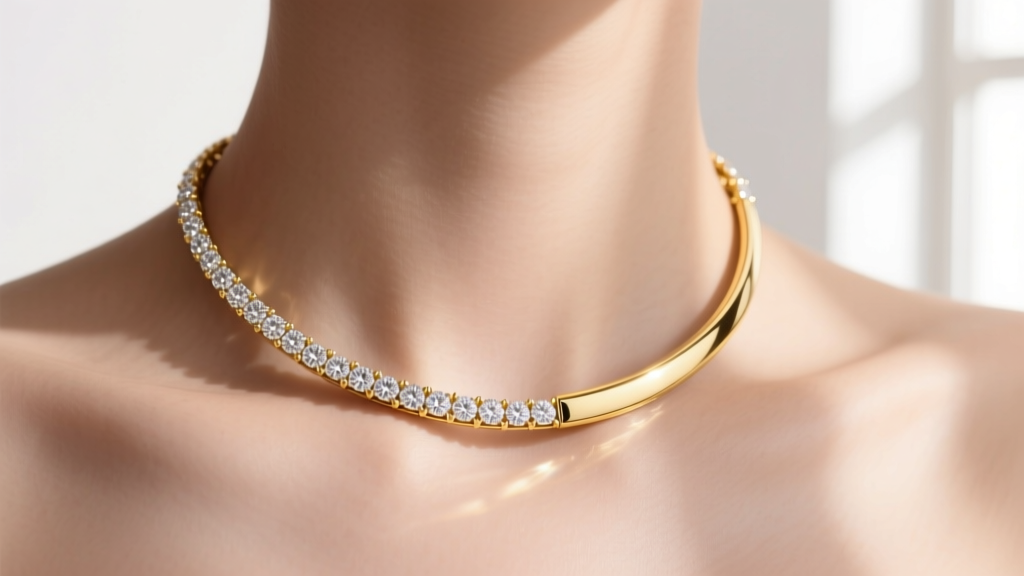
The diamond curved bar necklace has cemented its place as a modern jewelry staple, bridging the gap between minimalist everyday wear and red-carpet elegance. Unlike traditional straight bar pendants that tend to flip, twist, and sit awkwardly against the chest, a curved bar is ergonomically designed to follow the natural slope of the human clavicle. However, not all curved bars are created equal. From the structural integrity of the prongs to the hidden realities of melee diamond grading, there are critical factors that separate a timeless investment from a fragile, overpriced disappointment. This comprehensive buying guide breaks down exactly what to look for when shopping for a diamond curved bar necklace in 2026.
The Anatomy of the Curve: Why Geometry Matters
The primary advantage of a curved bar necklace is its ability to lay flush against the collarbone. A straight bar pendant relies entirely on gravity and chain tension, often resulting in the 'flip factor'—where the pendant turns sideways or rests vertically. A properly engineered curved bar features a specific bend radius, typically between 4 to 6 inches, which mirrors the anatomical curve of the average neckline. When evaluating a piece, look for a smooth, continuous arc rather than a segmented or 'kinked' bend. The bar should also feature a tapered profile, meaning it is slightly thicker in the center where the diamonds are set and gradually thins toward the ends where the jump rings attach to the chain. This tapering reduces weight at the extremities, preventing the necklace from sagging.
Evaluating the Diamonds: The Truth About Melee
The diamonds used in curved bar necklaces are classified as melee (pronounced meh-lay), which refers to small diamonds typically weighing between 0.01 and 0.10 carats each. Because melee diamonds are too small to be individually graded and certified by laboratories, they are sorted and sold in parcels based on general quality tiers. According to the Gemological Institute of America (GIA), the traditional 4Cs apply differently to melee stones:
- Cut: This is the most critical factor. A well-cut melee diamond will reflect light brilliantly, masking lower color and clarity. Ensure the jeweler uses 'full cut' melee (57-58 facets) rather than 'single cut' (17-18 facets), which can look glassy and dull.
- Color: Look for G-H color grades. Since the diamonds are set closely together in a shared prong or channel setting, any yellow tint will be magnified across the entire bar. G-H ensures a bright, white appearance against both white and yellow gold.
- Clarity: SI1 to I1 is standard and perfectly acceptable for melee. The stones are so small that inclusions are invisible to the naked eye. However, avoid 'I2' or 'Promotional' grades, which may contain visible black carbon spots or structural weaknesses.
- Total Carat Weight (TCW): Curved bars usually range from 0.25 TCW (delicate and subtle) to 1.50 TCW (bold and highly reflective). A 0.50 TCW is the sweet spot for everyday wear, offering maximum sparkle without overwhelming the neckline.
Metal Selection and Prong Durability
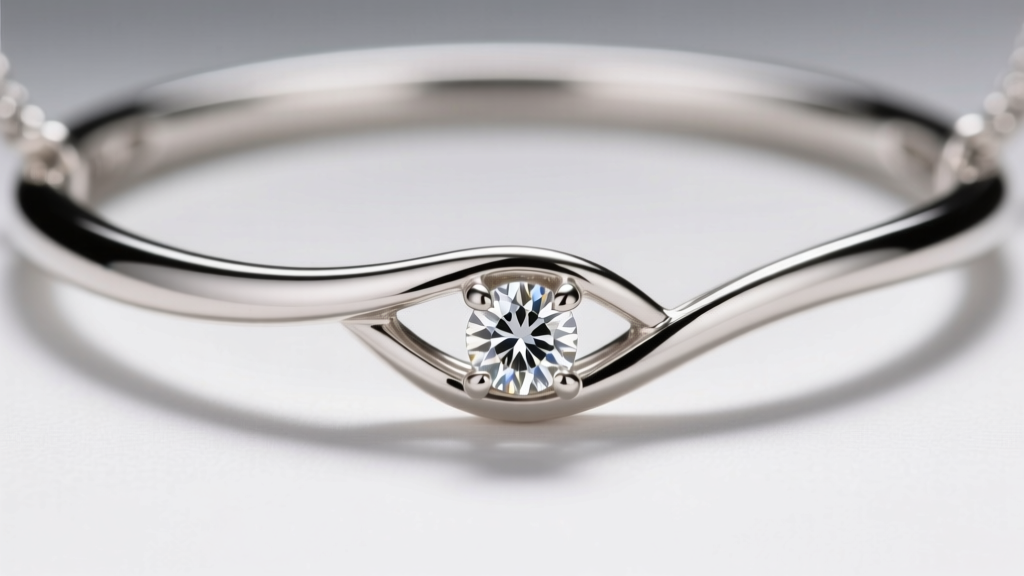
The metal you choose dictates both the aesthetic and the structural lifespan of your necklace. The setting style for curved bars is usually a 'shared prong' or 'U-prong' setting, where minimal metal is used to maximize diamond visibility. This makes the hardness of the metal crucial.
14k vs. 18k Gold
While 18k gold (75% pure gold) offers a richer, warmer yellow hue and is hypoallergenic, it is a softer metal. For a shared prong setting holding dozens of tiny diamonds, 14k gold (58.3% pure gold) is often the superior choice. The higher alloy content gives 14k gold greater tensile strength and hardness, meaning the prongs are less likely to bend, catch on clothing, or release a diamond upon impact. If you prefer 18k gold, ensure the prongs are slightly thicker or opt for a bezel-set curved bar for added security.
Platinum
Platinum is the ultimate metal for diamond settings. It is incredibly dense, naturally white (so it never requires rhodium plating like white gold), and develops a patina over time rather than wearing away. However, platinum curved bar necklaces command a significant premium, often costing 40% to 60% more than their 14k gold counterparts.
Chain Gauge and Clasp Mechanics
A diamond curved bar is deceptively heavy. A solid 14k gold bar with 0.50 TCW can weigh between 3 to 5 grams. Suspending this weight on a delicate 0.5mm chain is a recipe for disaster. According to maintenance guidelines from Jewelers of America, chain integrity is vital for pendants of this mass.
- Chain Thickness: Opt for a chain gauge between 1.0mm and 1.2mm. A box chain or a sturdy cable chain provides the necessary tensile strength to support the bar without stretching or snapping.
- Clasp Type: Avoid spring ring clasps, which are prone to failing under the pendulum-like swinging motion of a weighted bar. A lobster claw clasp with a welded jump ring is mandatory for security.
Sizing the Curve: Length and Neckline Compatibility
The visual impact of a curved bar changes drastically depending on the chain length. Because the bar itself takes up horizontal space (usually 1.5 to 2 inches across), it effectively shortens the visual drop of the necklace. Use the table below to select the right length for your wardrobe.
| Chain Length | Visual Drop | Best Necklines | Style Profile |
|---|---|---|---|
| 16 inches | Collarbone (Choker-ish) | Scoop necks, off-shoulder, V-necks | Modern, youthful, highly visible |
| 18 inches | Upper Chest | Crew necks, button-downs, blazers | Classic, versatile, standard fit |
| 20 inches | Mid-Chest | High necklines, turtlenecks, dresses | Elongating, elegant, layered look |
Pricing Tiers: What Should You Actually Pay?
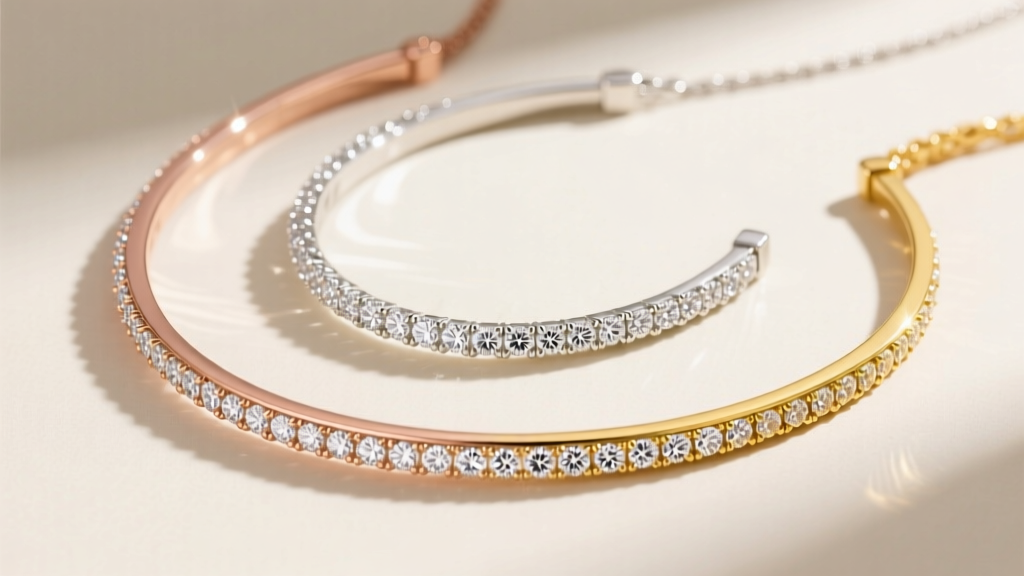
Understanding the market value prevents you from overpaying for brand names or underpaying for compromised quality. Here is the realistic pricing landscape for a standard 1.5-inch curved bar necklace in 2026:
- Budget ($150 - $350): Sterling silver or gold vermeil with lab-grown or natural melee diamonds (0.15 - 0.25 TCW). Warning: Vermeil prongs will eventually wear through to the base metal, risking stone loss.
- Mid-Range ($600 - $1,100): Solid 14k gold (yellow, white, or rose) with natural or high-grade lab-grown diamonds (0.25 - 0.50 TCW). This is the sweet spot for durability and value.
- Luxury ($1,500 - $3,500+): Solid 18k gold or Platinum featuring premium natural earth-mined diamonds (0.50 - 1.00+ TCW) with designer brand premiums.
Red Flags to Avoid When Shopping
Expert Insight: Always check the Federal Trade Commission (FTC) Jewelry Guides regarding metal stamping. If a piece is marketed as 'solid gold' but lacks a clear karat stamp (e.g., 14K, 585) and a maker's mark, walk away. Furthermore, beware of 'hollow' or 'electroformed' gold bars. While they look thick and substantial, they are essentially gold shells over a base metal or resin core. A single drop onto a hard surface will dent a hollow bar irreparably, and they cannot be resized or repaired by a standard bench jeweler.
Additionally, inspect the setting under magnification. If the diamonds appear to be sitting in a solid channel with no visible prongs, or if the metal looks suspiciously smooth over the girdle of the stones, they may be glued or tension-set improperly. Shared prongs should be visibly distinct and tightly folded over the crown of each diamond.
Final Verdict & Care Instructions
A diamond curved bar necklace is a masterclass in subtle luxury, provided you prioritize structural integrity over sheer carat weight. When making your purchase, prioritize a 14k or 18k solid gold construction, insist on a 1.0mm+ box or cable chain, and verify that the melee diamonds are G-H in color with full-cut faceting. To maintain the brilliance of your curved bar, clean it weekly using a soft baby toothbrush and a mild solution of warm water and dish soap. Avoid ultrasonic cleaners if your necklace features fracture-filled diamonds or fragile shared prongs, as the high-frequency vibrations can loosen the settings over time. By focusing on these technical details, your curved bar necklace will remain a flawless, sparkling staple in your collection for decades to come.


