Nana Necklace Gold: Troubleshooting Clasps & Tangles
Is your nana necklace gold chain tangling or hard to clasp? Discover expert troubleshooting for arthritis-friendly clasps, tangle-free weaves, and gold care.


The Hidden Frustrations of the Classic Nana Necklace
A gold "Nana necklace"—often a sentimental piece featuring family birthstones, a custom locket, or a delicate family tree pendant—is a staple of grandmotherly elegance. However, as of 2026, jewelers and gemologists are seeing a massive spike in repair requests for these exact pieces. The issues rarely stem from a lack of love for the jewelry; rather, they are rooted in functional design flaws that clash with the realities of aging, dexterity loss, and daily wear.
Whether the chain constantly tangles in knitwear, the clasp is impossible to operate with arthritic fingers, or the gold is leaving a dark smudge on the collarbone, these problems have specific, metallurgical, and mechanical solutions. Below, we break down the most common failures associated with gold Nana necklaces and provide expert-level troubleshooting frameworks to restore these heirlooms to their former glory.
Dexterity Dilemmas: Upgrading the Clasp for Arthritis
The standard lobster claw clasp is the default for 90% of commercial gold chains. Biomechanically, operating a small lobster clasp requires between 4 to 7 pounds of lateral pinch force, combined with fine motor targeting to align the tiny jump ring. For older adults experiencing osteoarthritis or rheumatoid arthritis, this daily ritual becomes a frustrating, sometimes painful, ordeal.
The Best Clasp Alternatives for Limited Grip Strength
If your Nana is struggling to put on her favorite gold necklace, take it to a local bench jeweler to swap the clasp. According to adaptive accessory guidelines highlighted by the Arthritis Foundation, minimizing pinch-force is critical. Here are the top three upgrades:
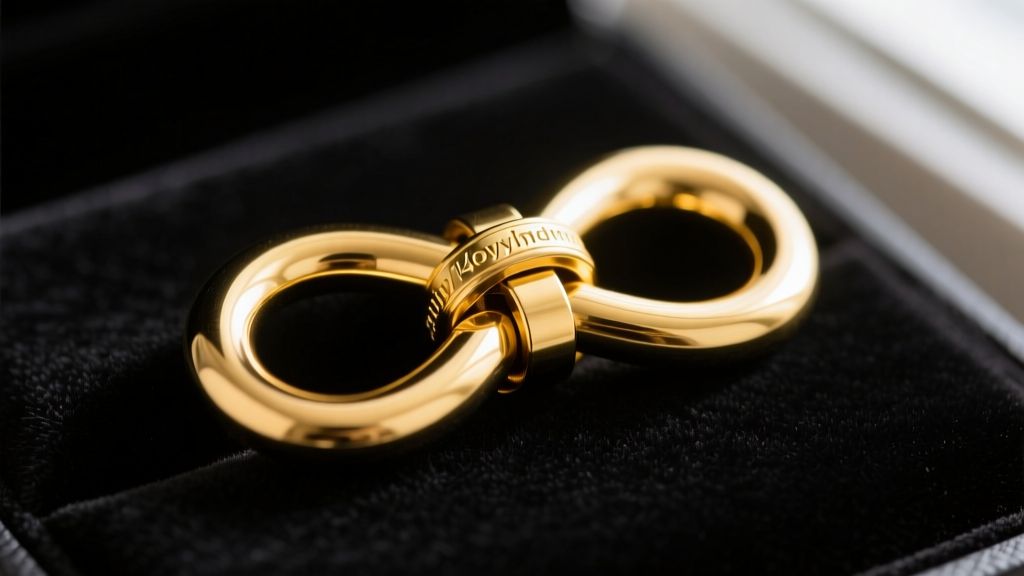
- Neodymium Magnetic Tube Clasps: These require less than 0.5 pounds of pull force. Modern 2026 designs feature a "figure-eight" safety latch that snaps over a small peg, preventing the necklace from falling off if the magnets are pulled laterally.
- Push-Button Box Clasps: Ideal for thicker gold chains (over 3mm). The tongue-and-groove mechanism slides in smoothly and locks with an audible click. A small side-button releases it with minimal downward pressure.
- Easy-Hook (S-Clasp) with Tension Guard: A modified S-hook where the bottom loop is slightly pinched to hold the jump ring securely, requiring zero pinch force to attach—just a simple sliding motion.
The Tangling Nightmare: Choosing the Right Chain Weave
There is nothing more aggravating than spending ten minutes untangling a fine gold chain from a wool cardigan. The tendency of a necklace to tangle or kink is not a matter of bad luck; it is strictly dictated by the geometry of the chain weave. Many well-meaning gift buyers purchase "flashy" flat chains that are structural nightmares for daily wear.
Chain Weave Durability & Tangle Matrix
Use this troubleshooting matrix to identify if the current chain is the culprit, and what to replace it with.
| Chain Style | Tangle Risk | Kink Risk | Dexterity Friendly? | Best Application |
|---|---|---|---|---|
| Herringbone | Low | Extreme | No (Too Stiff) | Occasional wear only; lays flat but permanently kinks if bent. |
| Snake | Low | High | No (Stiff) | Small pendants under 5g; prone to snapping if slept in. |
| Box | Very Low | None | Yes (Flexible) | Daily wear, heavy lockets, and pendants. |
| Wheat (Spiga) | Low | None | Yes (Flexible) | Everyday elegance; excellent tensile strength. |
| Rope | Medium | Low | Yes | Layering, standalone statement pieces. |
Troubleshooting Tip: If a herringbone or snake chain has already kinked, do not try to bend it back with your fingers. A bench jeweler can sometimes roll it out using a specialized steel rolling mill, but severe kinks compromise the structural integrity of the gold links, making future snapping inevitable.
Skin Irritation & Tarnish: Is It Really Solid Gold?
A common complaint is that a beloved gold Nana necklace suddenly starts turning the skin green or black, or causes an itchy rash. Pure 24k gold is entirely hypoallergenic and does not tarnish. However, jewelry is rarely 24k because pure gold is too soft to hold a pendant bail or clasp.
Troubleshooting the "Green Neck" Effect
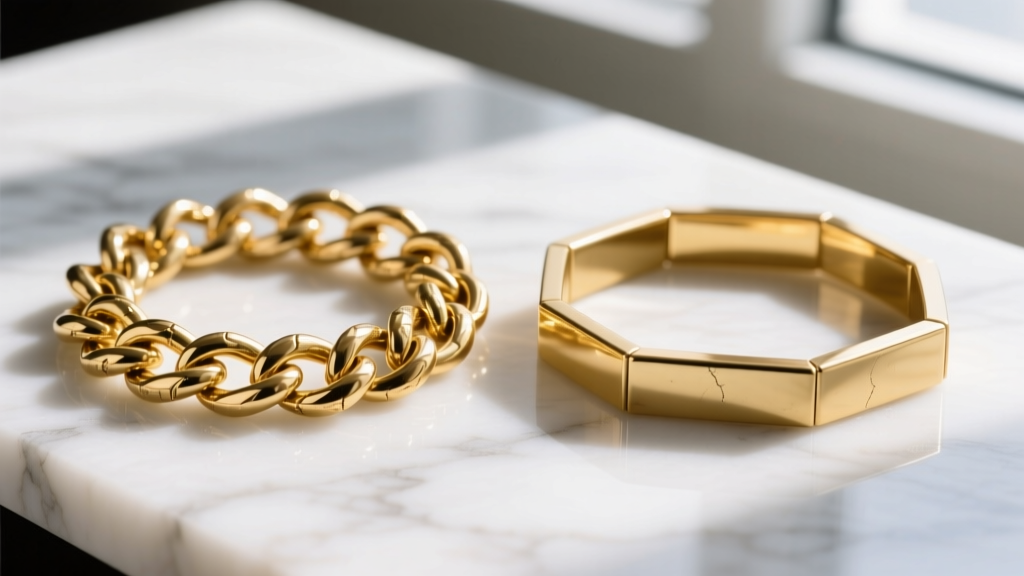
Most Nana necklaces are crafted in 14k gold. According to the Gemological Institute of America (GIA), 14k yellow gold is composed of 58.5% pure gold, with the remaining 41.5% made up of alloy metals like copper, silver, and zinc. It is these alloy metals that react to the environment.
"When a patient starts a new medication, particularly diuretics or beta-blockers, the pH level of their perspiration can become more acidic. This acid accelerates the oxidation of the copper alloys in 14k gold, resulting in a dark metallic smudge on the skin. It is not a fake chain; it is a chemical reaction." — Master Bench Jeweler
Actionable Fixes for Tarnish and Allergies
- The Barrier Method: Apply a microscopic layer of clear, jewelry-safe nail polish or a specialized nano-coating to the inside of the pendant and the clasp area where it touches the skin.
- Upgrade the Karat: If the budget allows, restring the pendant on an 18k gold chain. 18k gold contains 75% pure gold, significantly reducing the copper content and minimizing oxidation.
- Avoid Gold Vermeil for Daily Wear: If the necklace is gold vermeil (sterling silver dipped in gold), the friction from daily wear and washing will eventually wear through the microscopic gold layer, exposing the silver to sulfur in the air and causing rapid black tarnishing.
Structural Failures: Fixing Jump Rings & Pendant Bails
The weakest point of any Nana necklace is the jump ring connecting the chain to the sentimental pendant (like a heavy birthstone locket). Standard factory jump rings are "split rings"—meaning there is a tiny gap where the wire ends meet. Over time, the weight of the pendant pulls this gap open, and the necklace slips off, leading to devastating losses.
The Soldered Jump Ring Solution
To permanently troubleshoot this failure point, inspect the jump ring holding the pendant. If you see a seam, take it to a jeweler and request a soldered jump ring. The jeweler will use a laser or micro-torch to melt a tiny bead of gold solder into the seam, fusing the ring into a continuous, unbreakable circle. For heavy lockets, ensure the wire gauge of the jump ring is at least 20-gauge (0.81mm thick). Anything thinner, like a 22-gauge wire, will warp under the kinetic stress of daily movement.
Summary Checklist for a Trouble-Free Gold Necklace
Before gifting or re-gifting a gold Nana necklace, run it through this quick quality-assurance checklist to ensure it brings joy, not frustration:
- Clasp Test: Can it be opened and closed with one hand or with padded gloves on (simulating reduced nerve sensation)?
- Weave Check: Is it a Box, Wheat, or Rope chain to guarantee it won't tangle in winter clothing?
- Jump Ring Inspection: Is the ring connecting the pendant fully soldered shut?
- Alloy Awareness: Is the wearer on new medications that might require an 18k upgrade to prevent skin oxidation?
By addressing these mechanical and metallurgical realities, you ensure that a sentimental gold necklace remains a comfortable, beautiful, and worry-free staple in her daily wardrobe for decades to come. For more insights on gold purity standards and marketing claims, always refer to the Federal Trade Commission (FTC) Jewelry Guides to ensure you are getting the exact karat weight you paid for.


