2026 Diamond Hamsa Necklace Gift Guide & Style Match
Discover the perfect diamond hamsa necklace for any occasion. Our 2026 gift guide covers carat weights, metal grades, and meaning-based styling.

The Cultural and Spiritual Weight of the Hamsa
Gifting jewelry is never just about the materials; it is about the message. The hamsa, an ancient Middle Eastern and North African symbol depicting an open right hand, carries profound talismanic weight. Known in Islamic traditions as the Hand of Fatima and in Jewish traditions as the Hand of Miriam, the hamsa is universally recognized as a shield against the evil eye and a beacon for health, happiness, and good fortune. When you elevate this symbol with diamonds, you are gifting a piece of armor wrapped in luxury. As we navigate the jewelry market in 2026, the diamond hamsa necklace remains a top-tier choice for milestone gifting, bridging the gap between ancient spiritual protection and modern fine jewelry aesthetics.
Decoding Diamond Quality for Hamsa Pendants
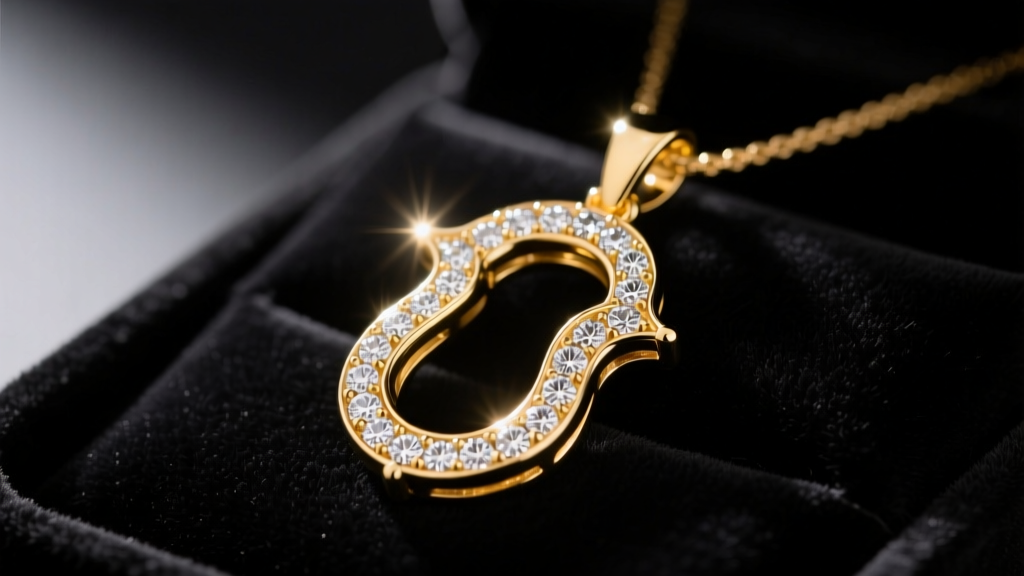
The vast majority of diamond hamsa necklaces utilize micro-pave or bead-set melee diamonds to outline the fingers and palm of the hand. Understanding the specific grading metrics for these small stones is crucial for avoiding overpriced or poor-quality gifts.
Melee Diamonds and Total Carat Weight (TCW)
Melee diamonds are tiny, typically ranging from 0.001 to 0.02 carats each. A standard 15mm to 20mm hamsa pendant holds roughly 30 to 60 melee stones, yielding a Total Carat Weight (TCW) of 0.15 to 0.50. Because these stones are so small, demanding flawless clarity is a waste of your budget. According to the Gemological Institute of America (GIA), SI1 to SI2 clarity and G to H color are the industry sweet spots for melee diamonds. Inclusions in this size range are entirely invisible to the naked eye, and near-colorless grades prevent the pendant from looking yellow against white gold or platinum.
Center Stones and Setting Styles
Many premium hamsa designs feature a central diamond—often a round brilliant or a marquise cut to represent the 'eye' in the palm. If your chosen piece has a center stone of 0.10 carats or larger, demand a minimum of VS2 clarity and G color. When examining the setting under a jeweler's loupe, look for bead-set or micro-prong settings. Bead-set melee diamonds are pushed into the metal with small, rounded beads of gold or platinum, creating a smooth surface that will not snag on silk or knitwear. U-prong settings expose more of the diamond's pavilion, maximizing light return but slightly increasing the risk of snagging.
The Metal Matrix: 14k vs. 18k Gold
For micro-pave settings, 14k gold (58.5% pure gold) is highly recommended over 18k gold (75% pure). The higher copper and silver alloy content in 14k gold provides the tensile strength necessary to keep micro-prongs secure over decades of daily wear. 18k gold is softer, making it a riskier choice for holding dozens of tiny melee stones securely in place.
Occasion Matching: When to Gift a Diamond Hamsa
Matching the specific design of the hamsa to the recipient's life event ensures the gift resonates on a personal level. Below is a strategic framework for matching occasions to specific necklace specifications.
| Occasion | Recommended Style | Metal & Diamond Specs | Estimated Budget (2026) |
|---|---|---|---|
| Bat Mitzvah / Confirmation | Delicate, minimalist outline hamsa | 14k Yellow Gold, 0.15 TCW SI1 Melee | $400 - $650 |
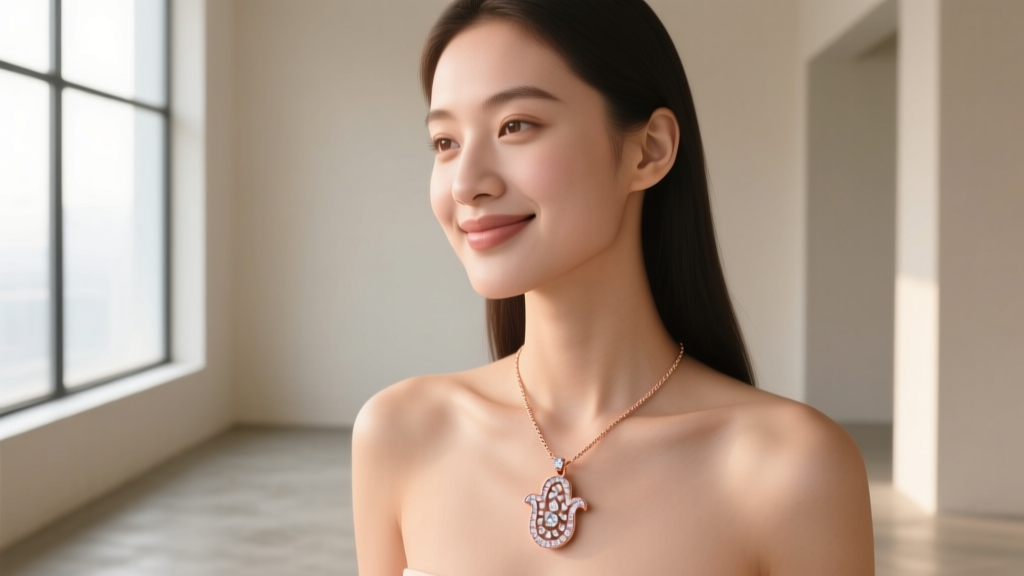
| New Mother / Baby Shower | Solid hamsa with a central blue sapphire or diamond 'eye' | 14k Rose Gold, 0.25 TCW, Bead-set | $700 - $1,100 |
| Milestone Graduation | Geometric or modern art-deco hamsa | 18k White Gold, 0.40 TCW VS2 Center | $1,200 - $1,800 |
| Romantic Anniversary | Double-layered or intertwined hamsa and evil eye | Platinum, 0.75+ TCW, VVS Clarity | $2,500+ |
Pro-Tip for Engraving: For milestone gifts, consider the reverse side of the hamsa. A flat-backed pendant allows for laser engraving. Limit engravings to 10-12 characters (like a significant date or a single word like 'Chai' or 'Amat') to maintain legibility on a small 15mm surface area.
Chain Selection: Elevating the Pendant
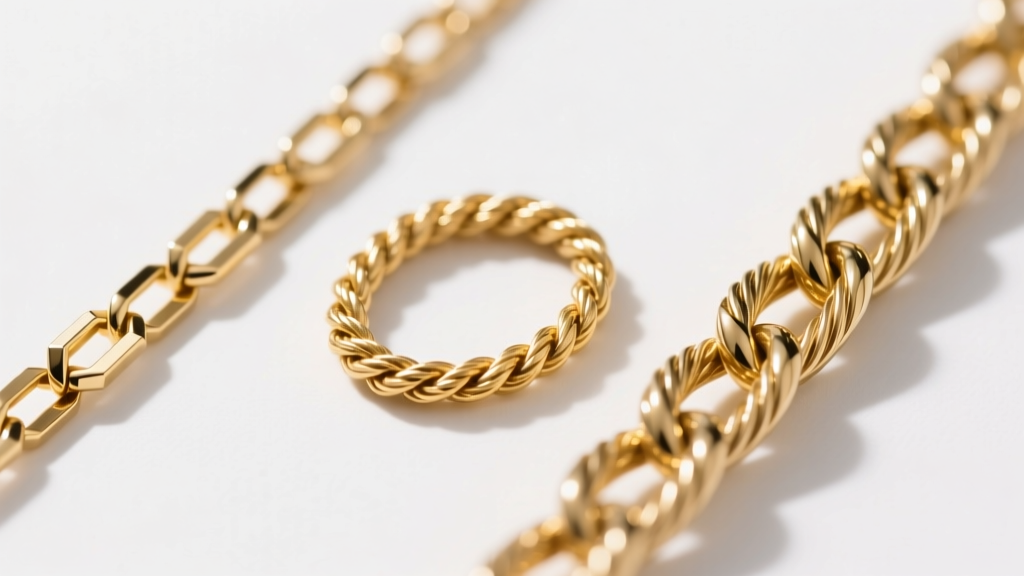
The chain is the structural backbone of any necklace. A mismatched chain can either overpower a delicate hamsa or snap under the weight of a solid gold pendant. Here is a breakdown of the best chain pairings based on gauge and link structure.
- Box Chains (0.9mm - 1.2mm): Excellent for pendants weighing under 3 grams. The flat, square links reflect light beautifully and lay flat against the collarbone. However, they can kink if slept in, so advise the recipient to remove it before bed.
- Cable Chains (1.0mm - 1.5mm): The classic, foolproof choice. Composed of uniform oval links, cable chains are highly durable, resist kinking, and are the easiest for a jeweler to repair if a link breaks.
- Rope Chains (1.5mm+): Generally too heavy and visually busy for delicate, micro-pave hamsas. Reserve rope chains for solid gold, non-pave hamsas with a single, larger diamond accent where the chain needs to bear significant weight.
Always ensure the chain is fitted with a lobster clasp rather than a spring ring. Lobster clasps offer superior tension and security, preventing the loss of a valuable diamond pendant during daily activities.
Price Tiers and Market Expectations
Navigating the pricing landscape in 2026 requires an understanding of what drives the cost of a diamond hamsa necklace. Labor-intensive micro-pave settings often cost more in craftsmanship than in raw diamond material.
Entry-Level ($300 - $600)
In this tier, expect 10k or 14k gold with a TCW between 0.10 and 0.20. The diamonds will be SI2 melee, and the pendant will likely be hollow-backed to reduce metal weight and cost. These are perfect for younger recipients or casual gifting.
Mid-Range ($700 - $1,500)
This is the sweet spot for quality and longevity. You will find solid 14k or 18k gold, 0.25 to 0.50 TCW, and potentially a VS2 clarity center stone. Brands in this tier often offer lifetime warranties on missing melee diamonds, which is a critical value-add.
Luxury and Designer ($2,000+)
Luxury pieces feature platinum or high-polish 18k gold, 0.75+ TCW, and VVS clarity diamonds. At this price point, you are also paying for designer hallmarks (such as Anita Ko or Sydney Evan) and bespoke, hand-carved wax models that give the hamsa a unique, organic texture that mass-produced molds cannot replicate.
Verifying Authenticity and Ethical Sourcing
When gifting a piece of jewelry meant to offer spiritual protection, the ethical origin of the materials is paramount. Ensure that the retailer complies with The Kimberley Process, which certifies that the diamonds are conflict-free. For purchases exceeding $1,500, request a grading report from a reputable laboratory like the GIA or IGI for the center stone. Furthermore, buying from retailers accredited by organizations like Jewelers of America provides an additional layer of consumer protection, ensuring that the metal hallmarks and diamond weights advertised are exactly what you receive. By paying attention to these granular details, you ensure your diamond hamsa necklace is not just a beautiful accessory, but a deeply meaningful, ethically sound heirloom.


