Diamond Heart Necklace Silver: A Technical Buying Guide
Discover the technical specifics of buying a diamond heart necklace silver setting, from sterling alloys to melee diamond grading and prong security.

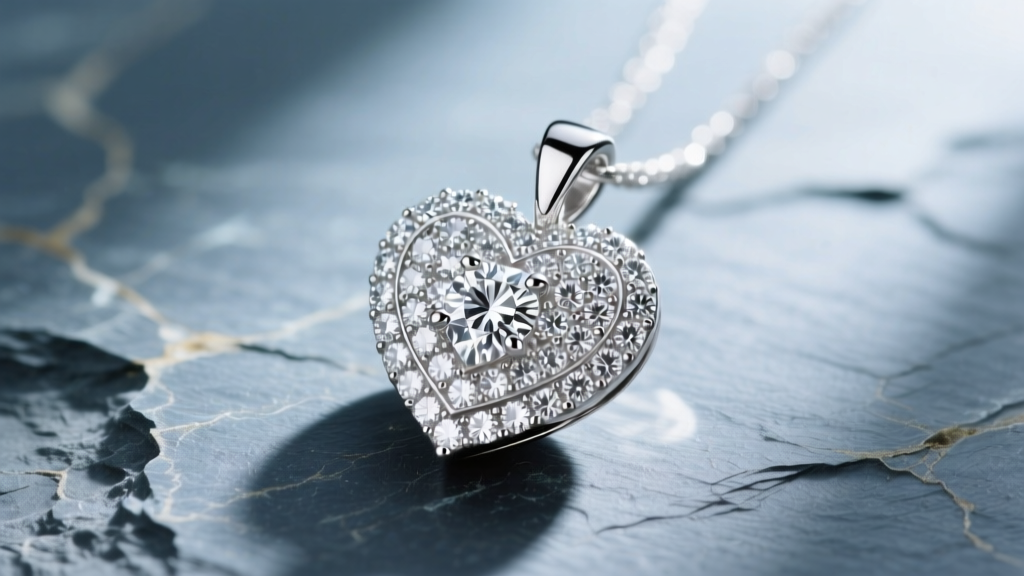
When evaluating a diamond heart necklace silver setting, consumers often focus solely on the carat weight and the aesthetic silhouette of the heart. However, from a metallurgical and gemological perspective, pairing the hardest natural material on earth (diamond) with a relatively soft, reactive precious metal (silver) presents unique engineering challenges. This technical deep dive explores the material science, diamond grading realities, and structural mechanics you must understand before investing in fine silver heart jewelry.
The Metallurgy of Silver Heart Pendants
Silver in its pure form (Fine Silver, 999) is too malleable to securely hold diamonds. The Vickers hardness of fine silver is roughly 25 HV, meaning a prong would bend and release a diamond under minimal lateral pressure. Therefore, alloying is mandatory for any functional diamond heart necklace silver piece.
Alloy Comparisons and Hardness Metrics
Jewelers rely on specific silver alloys to achieve the tensile strength required for micro-pave and shared-prong settings. Below is a technical breakdown of the most common silver alloys used in diamond heart pendants.
| Alloy Type | Composition | Vickers Hardness (HV) | Tarnish Resistance | Prong Security Rating |
|---|---|---|---|---|
| Fine Silver | 99.9% Ag | 25-30 | High | Poor (Too soft for prongs) |
| Sterling 925 | 92.5% Ag, 7.5% Cu | 60-70 | Low | Moderate (Industry Standard) |
| Argentium 935 | 93.5% Ag, Ge, Cu | 80-90 | High | Excellent (Superior durability) |
According to research presented at the Santa Fe Symposium on Jewelry Manufacturing Technology, the addition of germanium in Argentium silver not only drastically reduces firescale during casting but also increases the work-hardening potential of the metal, making it vastly superior for securing melee diamonds in intricate heart shapes.
Diamond Grading in Micro-Pave Silver Settings
The diamonds used in silver heart necklaces are almost exclusively melee (stones weighing under 0.15 carats). Understanding how these stones are graded and cut is critical to assessing the true value of the piece.
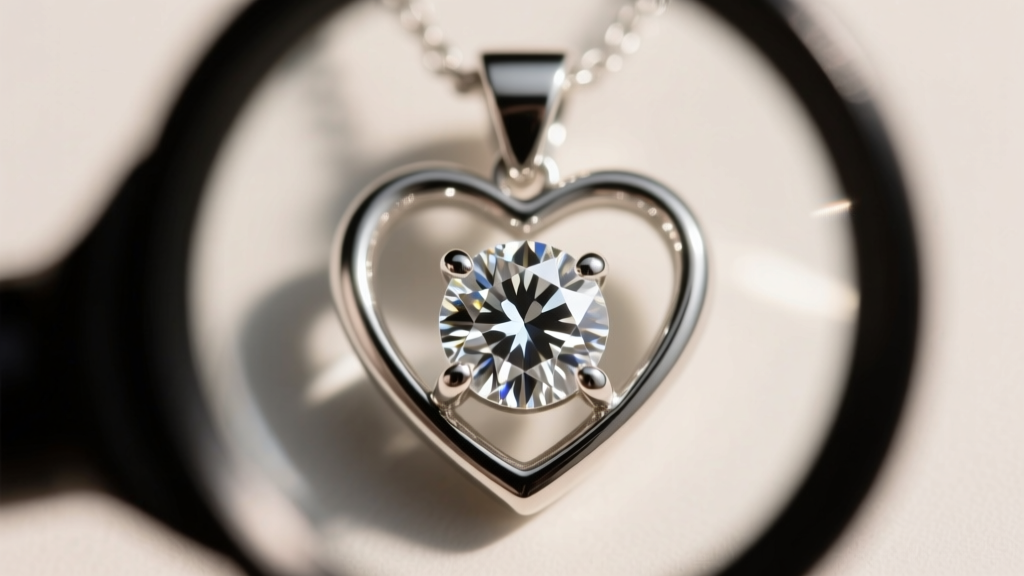
Single Cut vs. Full Cut Melee
- Single Cut (17-18 facets): Often used in lower-tier silver jewelry. These stones lack the complex light return of full cuts and can appear glassy or flat in dim lighting.
- Full Cut (57-58 facets): The standard for premium diamond heart necklace silver designs. Despite their microscopic size, full-cut melee diamonds possess the same facet architecture as a full-sized round brilliant, maximizing scintillation.
The Gemological Institute of America (GIA) notes that melee diamonds are rarely graded with full laboratory reports due to the cost-to-value ratio. Instead, they are sorted into parcel grades. In silver settings, manufacturers typically use commercial-grade melee (I1-I3 clarity, J-M color). However, the high reflectivity of a polished silver backing and a rhodium plating layer can create an optical illusion, making J-K color diamonds face up significantly whiter than their actual grade.
Prong Architecture and Failure Modes
The anatomy of a heart shape introduces specific vulnerabilities. A heart-shaped diamond or a heart-shaped halo outline features a deep cleft at the top and a sharp point at the bottom. Securing these extremes in silver requires specialized prong architecture.
When setting a heart-shaped solitaire in sterling silver, a standard V-prong is non-negotiable at the inferior point. Silver lacks the memory and tensile strength of platinum; if a standard round prong is used on the sharp tip of the diamond, the silver will eventually wear thin against the diamond's cleavage plane, leading to catastrophic stone loss.
For micro-pave diamond heart necklace silver designs, shared prongs are the norm. A bead-setting technique is often employed where a small burr raises a bead of silver over the girdle of the diamond. Because sterling silver is relatively soft, these beads can flatten over time due to friction against clothing. Buyers should inspect the setting under 10x magnification to ensure the silver beads are smoothly rounded and cover at least 15% of the diamond's crown.
The Rhodium Plating Factor
Almost all white metal diamond jewelry is plated with rhodium to prevent tarnish and provide a bright, platinum-like finish. The standard thickness for a silver pendant is 0.05 to 0.1 microns. Once this microscopic layer wears off at the high-friction points (like the bail and the bottom curve of the heart), the underlying yellowish-grey sterling silver is exposed, which can make the adjacent lower-color melee diamonds appear more yellow by contrast.
Chain Tensile Strength and Clasp Mechanics
A diamond heart pendant, especially one featuring a solid silver backing and a dense halo of melee diamonds, can easily weigh between 4 and 8 grams. The chain and clasp must be engineered to support this dynamic load.
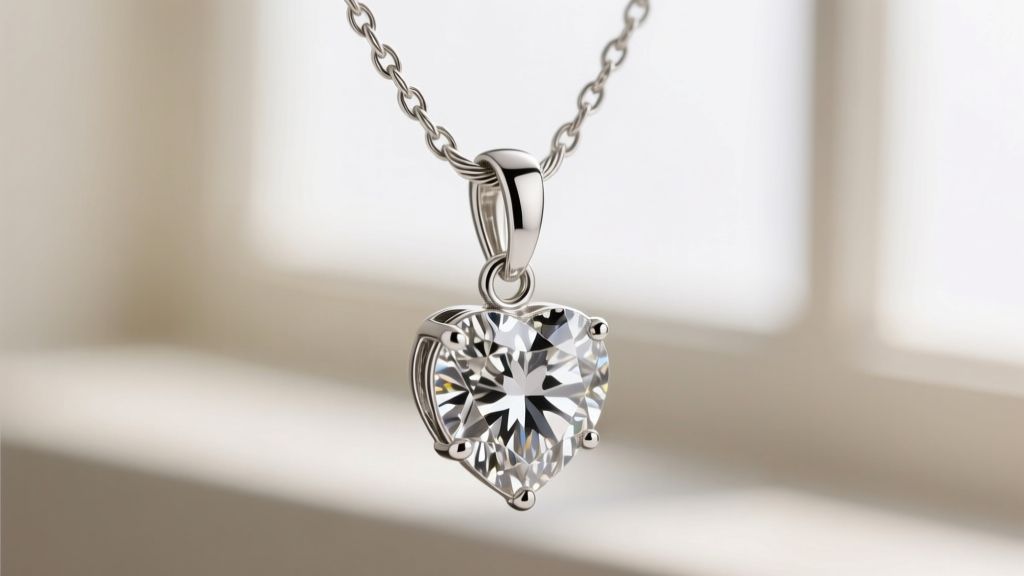
Evaluating the Suspension System
- The Clasp: Never rely on a standard spring-ring clasp for a heavy silver heart pendant. The internal tension spring is prone to failure and accidental depression. A cast or die-struck lobster clasp with a minimum length of 12mm is required for security.
- The Jump Ring: The jump ring connecting the clasp to the chain must be soldered shut. An open jump ring will slowly pull apart under the pendulum motion of a heavy heart pendant.
- The Chain Style: Avoid snake chains and herringbone chains. These styles have low tensile strength and are prone to permanent kinking. A 1.2mm to 1.5mm solid cable chain or a box chain offers the optimal balance of flexibility and structural integrity.
Maintenance and Tarnish Mitigation
Silver reacts with hydrogen sulfide in the atmosphere to form silver sulfide (tarnish). Maintaining a diamond heart necklace silver piece requires a careful balance between cleaning the metal and protecting the diamonds.
Ultrasonic cleaners are highly effective at removing sebum and lotion from micro-pave settings, but they pose a severe risk to fracture-filled or clarity-enhanced melee diamonds, which are common in silver jewelry. The high-frequency vibrations and heat can expand the filler resin, causing the diamonds to cloud or crack. Instead, use a soft-bristled brush with a mild, ammonia-free dish soap solution. For tarnish removal on the silver backing, use a specialized silver polishing cloth impregnated with micro-abrasives, taking extreme care not to rub the rhodium-plated prongs, which will accelerate the wear of the plating.
By understanding the metallurgical limits of silver, the optical properties of melee diamonds, and the mechanical requirements of the suspension chain, you can confidently evaluate the true craftsmanship and longevity of any diamond heart necklace silver setting.


