The Diamond Necklace Affair: Lessons in High-Carat Value
Discover how the historical Diamond Necklace Affair informs modern budget and value assessments for high-carat tennis and statement necklaces.

The Original Scandal: What Was The Diamond Necklace Affair?
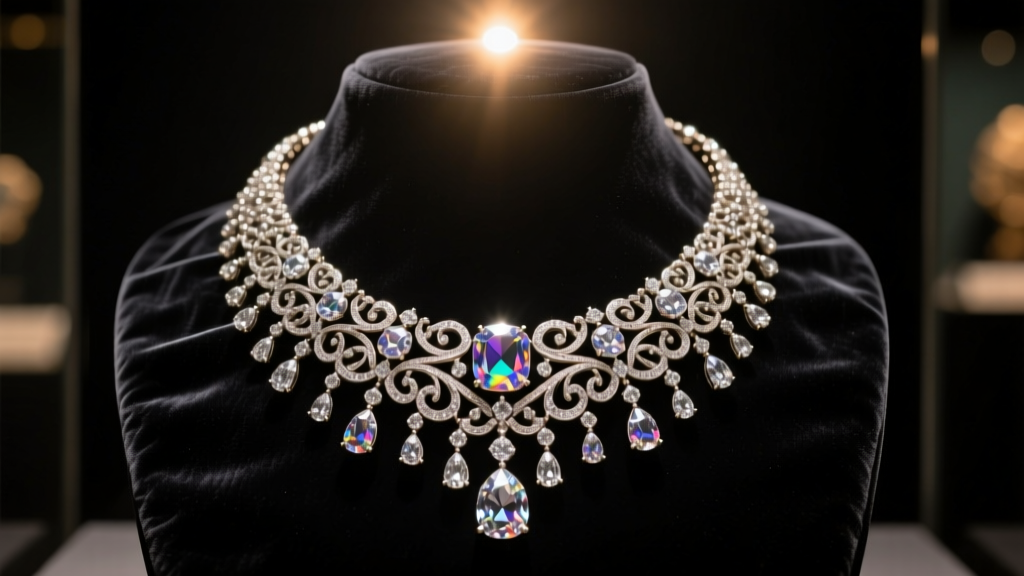
In 1785, the French monarchy was rocked by a scandal that would forever change the public perception of luxury, wealth, and royal excess. Known as The Affair of the Diamond Necklace, the controversy centered around a staggering piece of jewelry commissioned by King Louis XV for his mistress, Madame du Barry. Crafted by the royal jewelers Boehmer et Bassenge, the necklace was a monstrous, breathtaking collar featuring approximately 2,800 carats of diamonds, valued at an astronomical 1.6 million livres. When the King died, the jewelers were left with a piece so expensive that no one in Europe could afford it. Through a web of forgery, deception, and stolen identities orchestrated by the Countess de la Motte, the necklace was dismantled and sold off, while Marie Antoinette was falsely accused of orchestrating the fraud to avoid paying for it.
While the historical affair was rooted in political sabotage and treason, it offers a profound lesson for the modern jewelry buyer: the blind pursuit of massive carat weight and visual grandeur can lead to disastrous financial decisions. Today, as buyers seek out high-carat tennis necklaces and statement diamond collars, the market is fraught with its own modern 'affairs'—illusion settings, inflated natural diamond premiums, and a misunderstanding of how the 4Cs apply to neckwear. Assessing the true budget and value of a high-carat diamond necklace requires looking past the sheer size of the stones and evaluating the piece with a critical, gemological eye.
The Modern Affair: Chasing Carat Weight Blindly
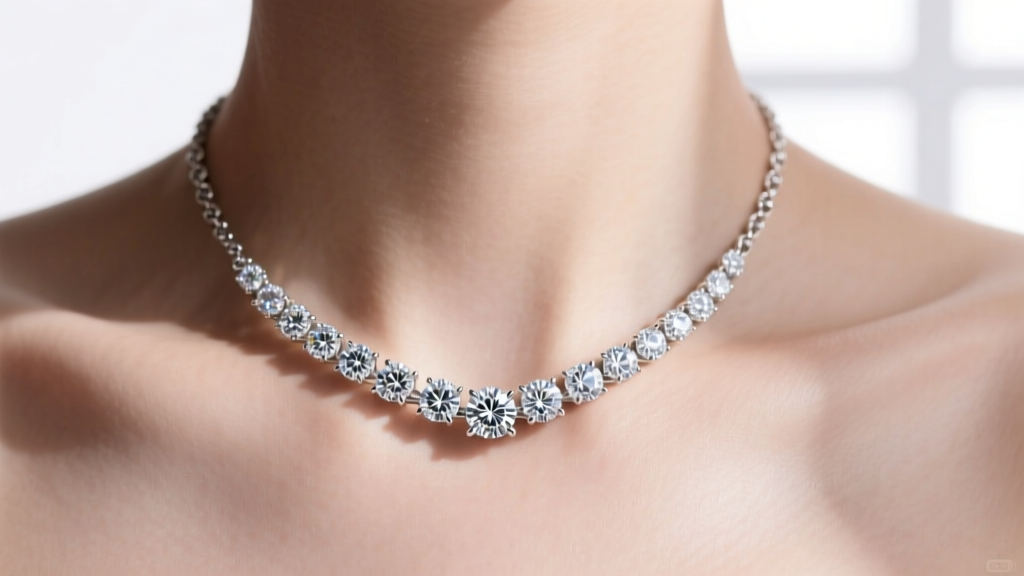
The allure of a 20-carat or 30-carat total weight (tcw) diamond tennis necklace is undeniable. It drapes the collarbone in continuous fire and serves as a ultimate status symbol. However, focusing solely on the total carat weight is the most common budgeting mistake modern consumers make. A 20-carat necklace composed of poorly cut, heavily included diamonds will look dull and cloudy compared to a 12-carat necklace featuring exceptionally cut, eye-clean stones. In the context of necklaces, light return is vastly more important than sheer mass. The diamonds sit against the skin and clothing, requiring maximum brilliance to stand out. If you sacrifice cut quality to afford a higher carat weight, you are essentially purchasing a modern version of the Boehmer et Bassenge folly: a piece that looks impressive on paper but fails to deliver its true optical potential in reality.
The Value Matrix: Adjusting the 4Cs for Neckwear
To properly assess the value of a diamond necklace, you must recalibrate how you apply the GIA Diamond 4Cs. The criteria for evaluating a diamond engagement ring do not perfectly translate to a necklace, primarily due to the focal distance. A ring is viewed from inches away; a necklace is viewed from across a table. This spatial difference allows for significant budget optimizations.
| Factor | Ring Priority | Necklace Priority | Budget & Value Tip |
|---|---|---|---|
| Cut | Excellent / Ideal | Excellent / Ideal | Never compromise. Light return is vital across the chest to prevent a 'dead' look against clothing. |
| Color | D - F (Colorless) | G - J (Near Colorless) | Necklaces sit further from the eye. J-color is perfectly acceptable and visually white, especially in yellow gold. |
| Clarity | VVS1 - VS2 | SI1 - SI2 | Inclusions are entirely invisible at conversational distance. SI1 offers the highest value-to-price ratio. |
| Carat | 1.00ct - 3.00ct | 10.00tcw - 30.00tcw | Prioritize uniform millimeter spread over exact carat weight to ensure a seamless drape. |
By shifting your clarity requirement from VS1 down to SI1, and your color requirement from F down to H or I, you can reduce the cost of a high-carat natural diamond tennis necklace by 30% to 45% without any perceptible loss in visual beauty. This is the ultimate insider secret to budgeting for luxury neckwear.
2026 Market Reality: Lab-Grown vs. Natural Pricing
The diamond market has undergone a seismic shift over the last decade, and by 2026, the pricing structures for lab-grown versus natural diamonds have firmly stabilized. For buyers looking to replicate the 'royal' look of a massive diamond collar without liquidating their assets, lab-grown diamonds offer an undeniable value proposition. However, it is crucial to understand the depreciation dynamics. Natural diamonds retain a degree of resale value and heirloom prestige, while lab-grown diamonds are priced purely on their optical and physical properties, functioning more like luxury consumer goods than investment assets.
Estimated Pricing Tiers (15 Carat Total Weight, G-H Color, SI1 Clarity)
- Natural Earth-Mined (14k White Gold): $28,000 - $38,000
- Lab-Grown CVD/HPHT (14k White Gold): $3,500 - $5,500
- Natural Earth-Mined (Platinum): $32,000 - $45,000
- Lab-Grown CVD/HPHT (Platinum): $4,500 - $6,500
If your primary goal is visual impact and everyday wearability, a lab-grown tennis necklace offers exceptional budget efficiency. If you are purchasing for generational wealth transfer or strict investment retention, natural diamonds remain the requisite choice, though you must be prepared for the steep initial premium.
The Illusion Setting Trap
In the 18th century, jewelers often used silver foil backs and closed-back settings to enhance the brilliance and perceived size of diamonds that lacked the precision cutting we have today. Today's equivalent is the 'illusion setting' or 'cluster pendant.' Many budget-friendly statement necklaces feature a central small diamond surrounded by a halo of micro-pave, or multiple small diamonds clustered together to mimic the silhouette of a single 3-carat stone. While these pieces offer massive visual spread for a fraction of the cost, they are a value trap in the secondary market. A cluster pendant weighing 2.00 tcw is composed of dozens of tiny melee diamonds, which possess virtually no resale value compared to a single, solid 2.00-carat solitaire pendant. When assessing value, always calculate the price-per-carat of the center stone, not the aggregate weight of the melee.
Provenance, Certification, and Insurance
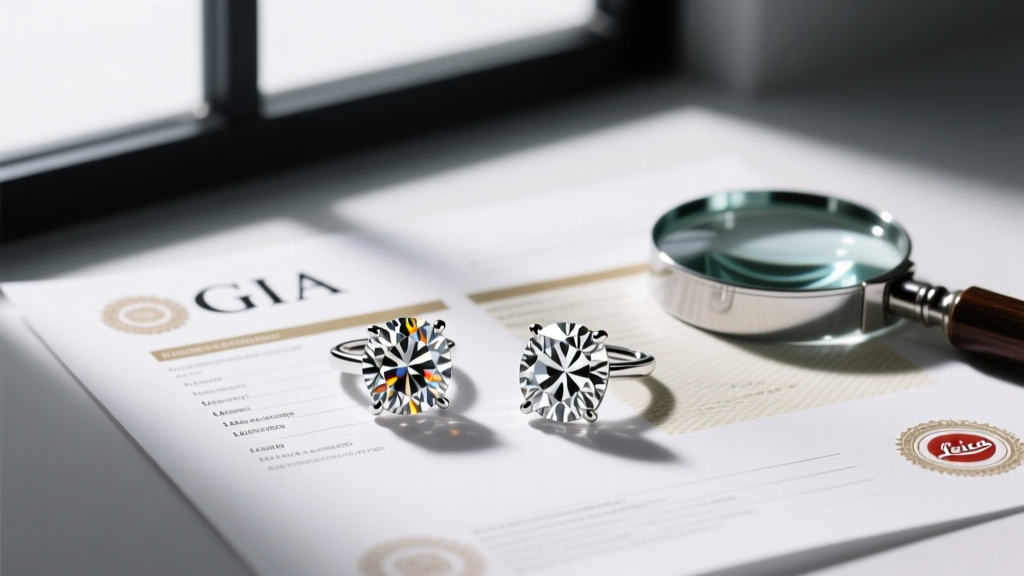
The downfall of Cardinal de Rohan in the original Diamond Necklace Affair was his failure to verify the provenance and authenticity of the transaction through proper, direct channels. Modern buyers must not make the same error. Any natural diamond necklace exceeding $10,000 in value must be accompanied by a grading report from a top-tier laboratory, specifically the GIA (Gemological Institute of America) or AGS (American Gem Society). EGL and IGI certificates, while useful for lab-grown stones, often feature looser grading standards for natural diamonds, which can result in you overpaying for a stone that is actually lower in color or clarity than the certificate claims.
Furthermore, insuring a high-carat necklace requires a specialized jewelry rider on your homeowner's or renter's insurance policy. Standard policies often cap jewelry payouts at $1,500 to $2,500. You must secure a recent, independent appraisal that details the exact millimeter dimensions, carat weight, and metal purity of the piece. In the event of loss or theft, an appraisal based on 'replacement value' rather than 'cash market value' ensures you can actually replace the necklace in the current retail environment.
Final Verdict: Securing Your Own Legacy
The Diamond Necklace Affair serves as a timeless cautionary tale about the intoxicating, sometimes blinding allure of massive gemstones. True value in modern neckwear is not found merely in the total carat weight, but in the harmonious balance of exceptional cut, smart compromises on clarity and color, and a clear understanding of the lab-grown versus natural market dynamics. By applying a rigorous, gemological framework to your purchase, you can acquire a breathtaking, high-carat diamond necklace that radiates brilliance across the collarbone, without falling victim to the financial scandals of the past.


