Selecting a Diamond Necklace: Metal Alloys and Stone Properties Guide
Compare platinum, 18k gold, and lab-grown stones to select a diamond necklace that balances durability, brilliance, and long-term wearability.

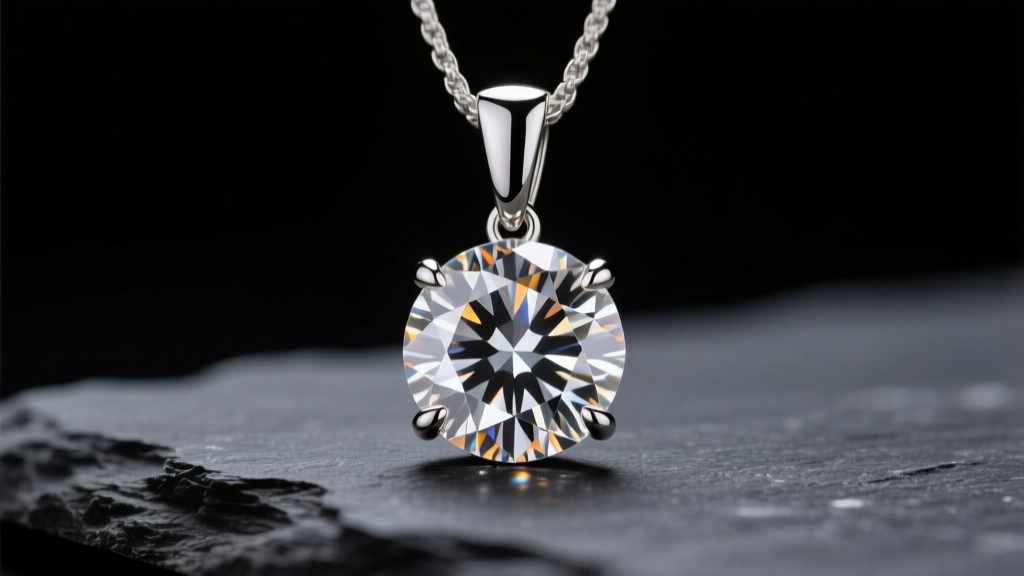
The Anatomy of a Diamond Necklace: Beyond the 4Cs
When consumers begin the journey of selecting a diamond necklace, the conversation almost exclusively revolves around the Gemological Institute of America’s (GIA) 4Cs: Cut, Color, Clarity, and Carat. While these metrics dictate optical performance and market value, they completely ignore the material science that governs the piece's structural integrity. A necklace is a high-wear garment accessory subject to tensile stress, shear force, and environmental degradation. To make a truly informed investment, one must evaluate the metallurgy of the chain and setting, alongside the crystallographic properties of the diamond itself.
In this guide, we bypass generic buying advice and delve into the physical properties of precious metal alloys and carbon lattices. Whether you are choosing a delicate 0.9mm cable chain or a heavy 3-carat solitaire pendant, understanding material failure modes is critical for long-term wearability.
Metallurgy of the Chain and Setting: Platinum vs. Gold Alloys
The structural backbone of any necklace is its metal. The choice between platinum and gold is not merely a matter of color; it is a decision regarding Vickers hardness (HV), density, and scratch displacement mechanics.
Platinum (Pt950): The Heavyweight Champion of Durability
Jewelry-grade platinum is typically alloyed at 95% purity with 5% ruthenium or cobalt (stamped as Pt950). With a density of 21.45 g/cm³, it is significantly heavier than gold. However, its most vital property is its scratch displacement. When platinum is scratched, the metal is displaced, not lost. Over time, this creates a soft, matte finish known as a patina. Furthermore, platinum exhibits excellent 'metal memory,' meaning it work-hardens and grips stones tighter over time, making it the superior choice for securing high-value center stones in pendant settings.
18K White Gold (75% Au): The Rhodium-Plated Standard
18K white gold is an alloy of 75% pure gold mixed with bleaching metals like palladium, nickel, or silver. Because it naturally retains a faint yellowish-grey hue, it is electroplated with rhodium to achieve a stark white finish. While its Vickers hardness (~125-140 HV) is comparable to platinum, gold loses microscopic layers of metal when scratched. A thin 18K white gold chain worn daily will eventually require re-polishing and rhodium re-plating to maintain its structural integrity and color.
14K Yellow and Rose Gold (58.5% Au): Tensile Strength
By reducing the pure gold content to 58.5% and increasing the alloy metals (copper, zinc, silver), 14K gold achieves higher tensile strength than 18K variants. This makes 14K gold highly resistant to snapping under tension, which is why it is the preferred material for ultra-fine chain styles (like 0.8mm to 1.0mm box or cable chains) that must support the kinetic movement of a pendant.
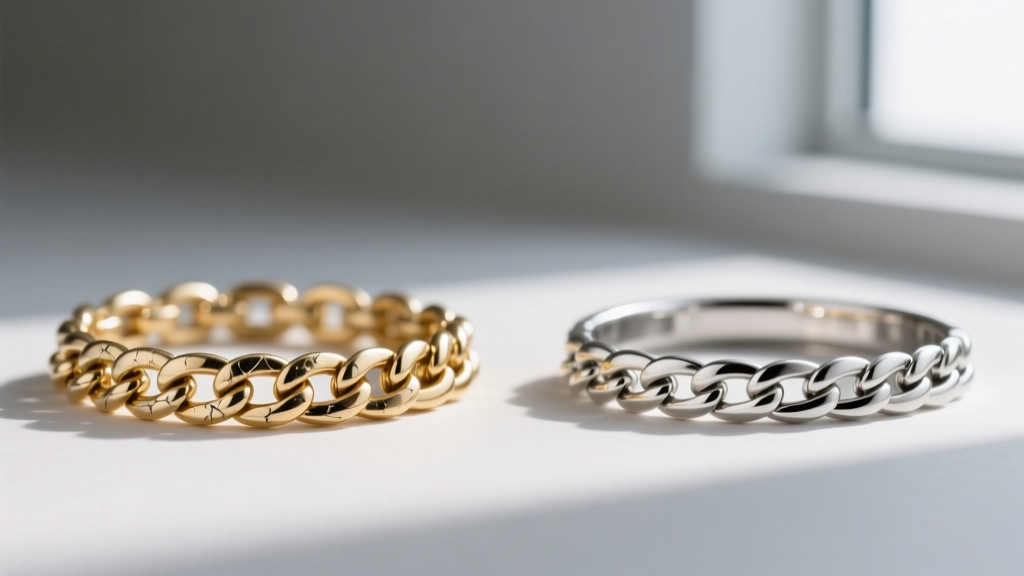
| Metal Alloy | Composition | Vickers Hardness (HV) | Scratch Behavior | Ideal Chain Gauge |
|---|---|---|---|---|
| Pt950 (Ruthenium) | 95% Pt, 5% Ru | 135 HV | Displaces metal (Patina) | 1.2mm - 2.5mm |
| 18K White Gold | 75% Au, 25% Pd/Ni | 125-140 HV | Loses metal (Requires Rhodium) | 1.0mm - 2.0mm |
| 14K Yellow Gold | 58.5% Au, 41.5% Alloy | 140-160 HV | Loses metal (Slow wear) | 0.8mm - 1.5mm |
Carbon Lattice Showdown: Natural vs. Lab-Grown Diamond Properties
From a purely chemical standpoint, both natural and lab-grown diamonds are crystalline carbon. However, their formation environments dictate distinct internal properties that affect both durability and light performance. According to the Gemological Institute of America (GIA), understanding these growth structures is vital for assessing long-term stability.
HPHT vs. CVD: Inclusions and Strain Patterns
Lab-grown diamonds are primarily created via High Pressure High Temperature (HPHT) or Chemical Vapor Deposition (CVD). HPHT diamonds often contain microscopic metallic flux inclusions (iron, nickel, cobalt) from the growth chamber. In rare cases, these metallic inclusions can slightly alter the stone's thermal conductivity. CVD diamonds, conversely, grow layer by layer and are prone to silicon inclusions and distinct strain patterns. While neither inclusion type compromises the Mohs 10 hardness rating, heavy strain patterns in poorly controlled CVD growth can create internal tension, making the stone slightly more susceptible to cleaving if struck precisely on a fault line.
Cleavage Planes and Impact Resistance
Diamonds possess perfect octahedral cleavage. This means that while they are the hardest natural material (resistant to scratching), they are not the toughest (resistant to breaking). A hard impact against a marble countertop directly on the diamond's girdle can cause a feather or chip. When setting a diamond pendant, the orientation of the stone's cleavage planes relative to the prongs is a master-level consideration often ignored in mass-produced jewelry.
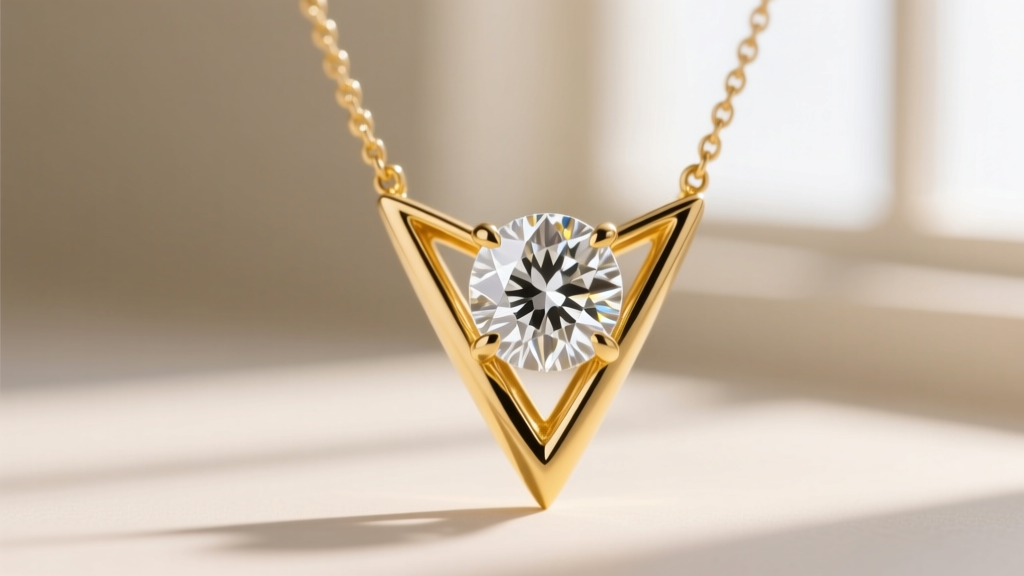
Prong Engineering: Securing the Stone Against Shear Force
A pendant swings freely, subjecting the setting to multidirectional shear forces. The engineering of the prongs is your first line of defense against stone loss.
- Prong Thickness: For a 1-carat round brilliant, prongs should be a minimum of 0.8mm in diameter at the base, tapering to 0.6mm at the tip. Anything thinner risks metal fatigue and snapping.
- V-Prongs for Fancy Shapes: Princess, pear, and marquise cuts feature sharp corners that align perfectly with the diamond's cleavage planes. A standard rounded prong leaves the tip exposed. A V-prong wraps the corner in a protective metal shield, distributing impact force away from the vulnerable crystal lattice.
- Bezel Settings: For active lifestyles, a full or half-bezel setting provides superior protection by encasing the girdle in a continuous metal wall, eliminating the risk of prong snagging and subsequent bending.
Environmental Degradation: Sweat, Cosmetics, and Metal Tarnish
The human body and its environment are hostile to precious metals. One of the most catastrophic failure modes for gold necklaces is stress corrosion cracking. When 10K or 14K gold is exposed to chlorine (found in swimming pools, hot tubs, and some household cleaners), the chlorine attacks the alloy metals (like copper and silver) at the microscopic grain boundaries. If the chain is under tension—such as supporting a heavy pendant—this chemical attack can cause the chain to snap cleanly without any prior warning signs.
"Never wear a gold necklace into a chlorinated pool. The combination of environmental chlorine and the mechanical tension of a pendant is the leading cause of sudden chain failure in 14K and 18K alloys."
— Master Bench Jeweler Structural Guidelines
Furthermore, daily exposure to lotions, perfumes, and sebum creates a microscopic film on the diamond's pavilion (the bottom facets). Because diamonds are lipophilic (oil-attracting), this film drastically reduces the stone's refractive index, making even a flawless, D-color diamond appear dull and lifeless. Regular ultrasonic cleaning is required, but caution must be exercised with fracture-filled diamonds or certain lab-grown stones with heavy internal strain, as ultrasonic vibrations can exacerbate internal faults.
Final Verdict: Matching Material Properties to Your Lifestyle
Selecting the right piece requires aligning material properties with your daily environment. If you prioritize a heirloom piece that will endure decades of daily wear with minimal metal loss, a Pt950 platinum setting on a 1.5mm box chain is unmatched. If you prefer the warm aesthetic of yellow gold but require high tensile strength for a delicate, layered look, a 14K gold cable chain offers the optimal balance of durability and color. Finally, understanding that your diamond's brilliance relies as much on its cut precision and daily degreasing as its origin ensures that your investment remains optically spectacular for a lifetime. For deeper data on global metal standards and alloy compositions, consult the World Gold Council archives.


