Expert Guide: Buying the Perfect Diamond Necklace Choker
Discover what to look for when buying a diamond necklace choker. Learn about carat weights, metal grades, clasp security, and pricing in our expert guide.

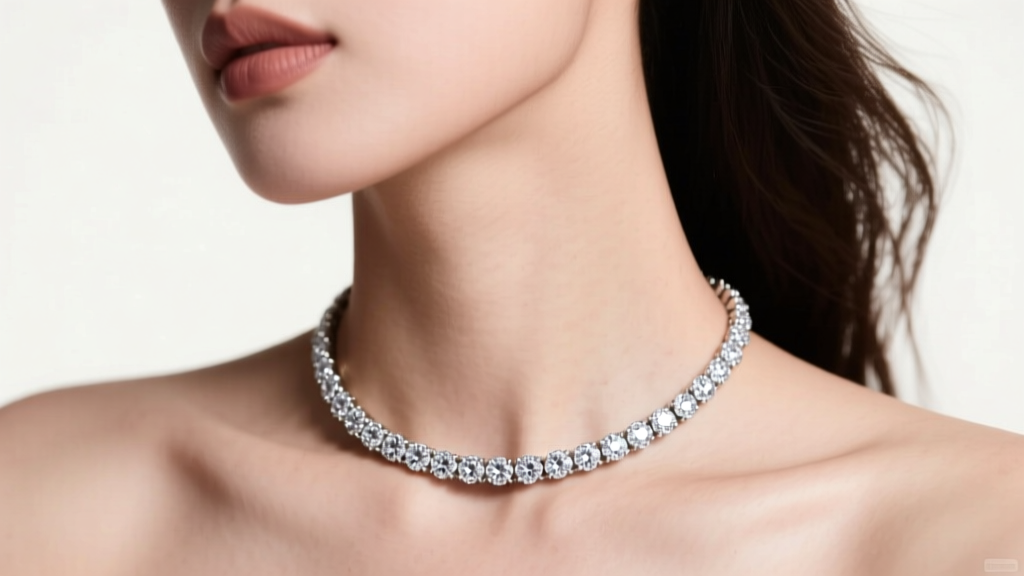
The Anatomy of a High-Quality Diamond Choker
A diamond necklace choker is fundamentally different from a standard pendant necklace or a long opera chain. Sitting precisely at the 14-inch to 16-inch mark, a choker rests directly on the collarbone and the base of the neck. This anatomical placement introduces unique structural challenges: the piece must drape flawlessly without buckling, withstand constant friction against the skin, and resist catching on the hairline. When evaluating a diamond choker, you are not just looking at the gemstones; you are assessing the engineering of the articulation, the security of the setting, and the durability of the alloy against human biology.
The most common failure mode in lower-tier chokers is poor articulation. A high-quality diamond tennis choker should feature individually articulated links or a micro-hinged bezel design that allows the metal to move like fabric. If you hold the choker up by one end and it hangs stiffly like a rigid rod rather than curving smoothly, it will sit awkwardly on the neck and place undue stress on the clasp.
Diamond Quality: Full Cut vs. Single Cut Melee
Most diamond necklace chokers rely on melee diamonds—small stones typically ranging from 0.01 to 0.02 carats each. Because these stones are small, many mass-market jewelers use 'single cut' melee diamonds, which feature only 17 or 18 facets. While this cuts costs, it severely diminishes the optical performance of the choker. Because a choker sits flat against the neck, it lacks the 360-degree light exposure of a ring or a dangling pendant. To compensate for this limited light return, you must insist on 'full cut' melee diamonds, which possess the standard 57 or 58 facets of a larger round brilliant. According to the Gemological Institute of America (GIA), the precision of the cut is the primary driver of a diamond's brilliance, and this is exponentially more critical in micro-stones where light leakage is a constant threat.
The Choker Priority Matrix
When allocating your budget for a diamond choker, prioritize the 4Cs differently than you would for a solitaire engagement ring. The following matrix outlines how to optimize your spend for maximum visual impact against the skin.
| Characteristic | Choker Priority | Expert Recommendation |
|---|---|---|
| Cut | Critical | Excellent/Ideal full-cut melee only. Avoid single-cut stones entirely. |
| Color | High | G-H range. Faces up completely white against the skin without the premium of D-F. |
| Clarity | Low | SI1 to VS2. Inclusions are virtually impossible to see in 0.02ct stones face-up. |
| Carat (TCW) | Medium | Focus on the spread and setting style rather than raw Total Carat Weight. |
Metal Selection and the Neck Sweat Factor
The base of the neck is a high-friction, high-moisture zone. It is exposed to sweat, body oils, perfumes, and cosmetics. This environment dictates your metal choice. While 18k white gold is a popular choice for diamond jewelry, it requires rhodium plating to achieve its bright white finish. On a diamond necklace choker, the constant friction against the skin and the acidic nature of neck sweat will accelerate the wear of this rhodium plating, often revealing the yellowish undertone of the white gold alloy beneath within six to twelve months.
For a low-maintenance, lifetime choker, platinum is the superior choice. It is naturally white, hypoallergenic, and its density provides the necessary weight to keep the choker draped securely without flipping. If you prefer the warmth of yellow or rose gold, opt for 14k rather than 18k. The higher alloy content in 14k gold increases its tensile strength and scratch resistance, making it better suited for the daily abrasion a choker endures. For detailed maintenance protocols, refer to the GIA Diamond Care Guide, which emphasizes removing jewelry before applying cosmetics or perfumes to prevent chemical degradation of the metal alloys.
Clasp Mechanics: Preventing Lateral Tension Failure
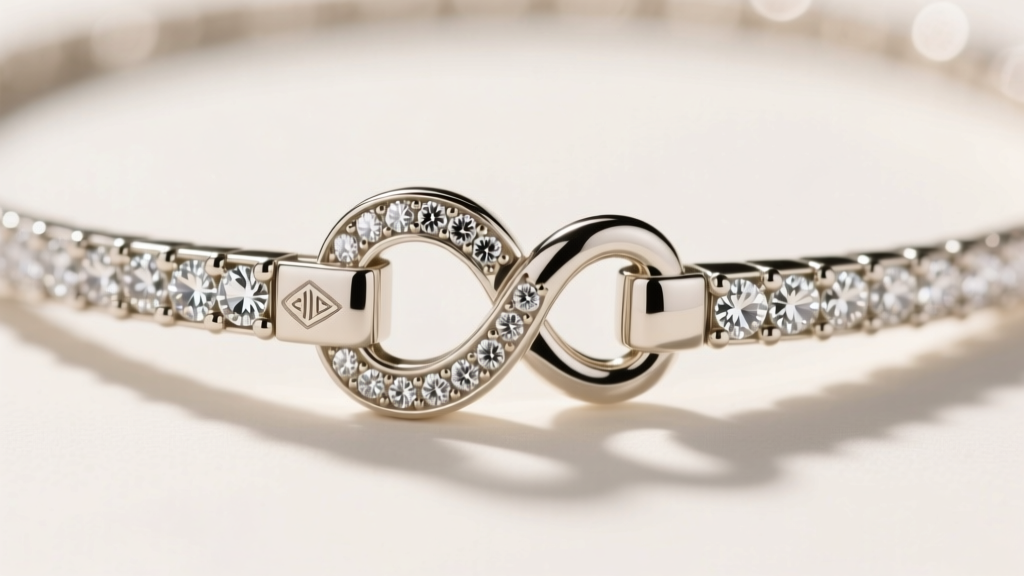
The clasp is the single most critical mechanical component of a diamond necklace choker. Unlike a long chain that hangs freely, a choker is subject to constant lateral tension as you turn your head, swallow, or look down. Standard lobster clasps and spring rings are entirely inadequate for diamond tennis chokers; their tiny internal springs are prone to fatigue and failure under this specific type of tension.
For any diamond choker with a Total Carat Weight (TCW) over 1.50 carats, a concealed box clasp with a friction tongue is mandatory. The tongue must snap firmly into the box with an audible click. Furthermore, the clasp must be flanked by dual figure-eight safety catches (safety wires) that hook over a pin on the opposite side. If the primary box mechanism fails, these safety catches will prevent the loss of the necklace.
Expert Troubleshooting Tip: To test a box clasp in-store, hold the choker horizontally and gently pull the two ends apart. If you feel any lateral 'give' or wiggling inside the clasp housing, the friction tongue is improperly calibrated and will eventually slip out during wear.
Setting Styles: Avoiding the Hairline Snag
Because a choker sits directly at the base of the neck, the back of the setting frequently interacts with the hairline. Traditional four-prong settings, while maximizing light entry, act like tiny hooks that will relentlessly catch and pull your hair. This is not just annoying; it can eventually bend the prongs and loosen the diamonds.
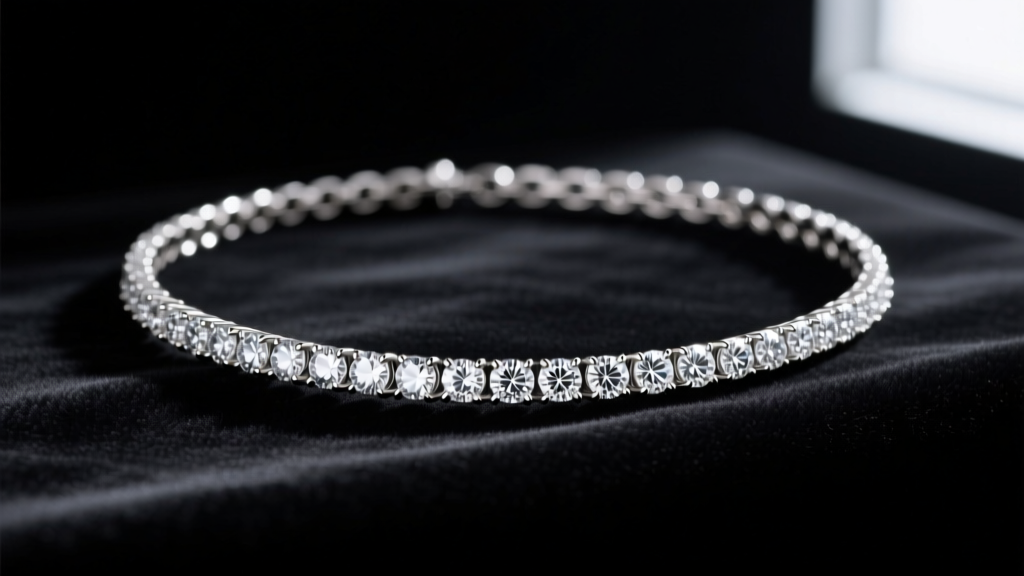
When buying a diamond necklace choker, prioritize bezel settings, semi-bezel designs, or low-profile pavé settings where the metal is smoothed and flush against the girdle of the diamond. A well-executed bezel-set tennis choker offers a sleek, modern aesthetic while completely eliminating the snagging issue. If you prefer the look of prongs, ensure the jeweler uses 'tipped' or 'rounded' prongs that have been polished to a smooth dome, and run your fingernail over the back of the settings to check for sharp edges before purchasing.
2026 Pricing Tiers: Lab-Grown vs. Natural
The pricing landscape for diamond chokers has shifted dramatically with the maturation of the lab-grown diamond market. When shopping, it is vital to compare apples to apples regarding Total Carat Weight (TCW) and metal weight. Here is what you should expect to pay for a standard 15-inch, 3.00 TCW round brilliant tennis choker in 14k or 18k gold:
- Lab-Grown Diamond Choker (3.00 TCW, G-H Color, VS Clarity): $1,800 to $3,200. This tier offers exceptional value, allowing buyers to maximize the physical size and spread of the diamonds without compromising on color or cut quality.
- Natural Diamond Choker (3.00 TCW, G-H Color, SI1-VS2 Clarity): $6,500 to $12,000. The premium reflects the rarity of matched natural melee stones. Ensure the stones are ethically sourced and accompanied by a reputable grading report or a detailed jeweler's invoice outlining the exact specifications.
- Solitaire Slider Choker (0.50ct - 0.75ct Center Stone): $1,200 to $4,500. A minimalist alternative featuring a single diamond on a fine cable chain. Pricing here is heavily dependent on the center stone's specific cut grade and fluorescence.
Sizing Your Neck for a Perfect Fit
A choker that is too tight will cause skin irritation and place dangerous stress on the links, while one that is too loose will droop and lose its structural elegance. To find your exact size, use a soft fabric measuring tape. Wrap it snugly around your neck exactly where you want the choker to sit—usually just above the collarbone. Note the measurement, and then add exactly 0.5 to 0.75 inches. This added length accounts for breathing room, swallowing, and natural fluctuations in body temperature and hydration. If your neck measures 14.5 inches, a 15-inch or 15.25-inch choker is your ideal target. Avoid buying a choker that matches your exact skin measurement, as it will feel suffocating.
Final Pre-Purchase Checklist
Before finalizing your investment, run through this rapid diagnostic checklist to ensure the piece meets professional standards:
- Articulation Test: Does the necklace drape like liquid when held from the center, or does it kink and fold rigidly?
- Snag Test: Run a piece of silk fabric or your own hair along the back of the settings. If it catches, the prongs or bezels need polishing.
- Clasp Security: Verify the presence of a box clasp with dual figure-eight safety catches for any piece over 1.50 TCW.
- Melee Verification: Ask the jeweler explicitly if the melee diamonds are 'full cut' (57/58 facets) rather than 'single cut'.
- Metal Integrity: Check the inside of the links for uniform stamping (e.g., PT950 or 14K) and ensure the links are soldered closed, not merely pinched.
By prioritizing structural engineering and optical performance over inflated clarity grades, you will secure a diamond necklace choker that remains brilliant, secure, and comfortable for decades of daily wear.


