Mastering the Diamond Necklace Theme: 2026 Buying Guide
Discover how to curate the diamond necklace theme in 2026. Our expert buying guide covers diamond grades, chain types, layering, and pricing tiers.

The Evolution of Intentional Jewelry Curation
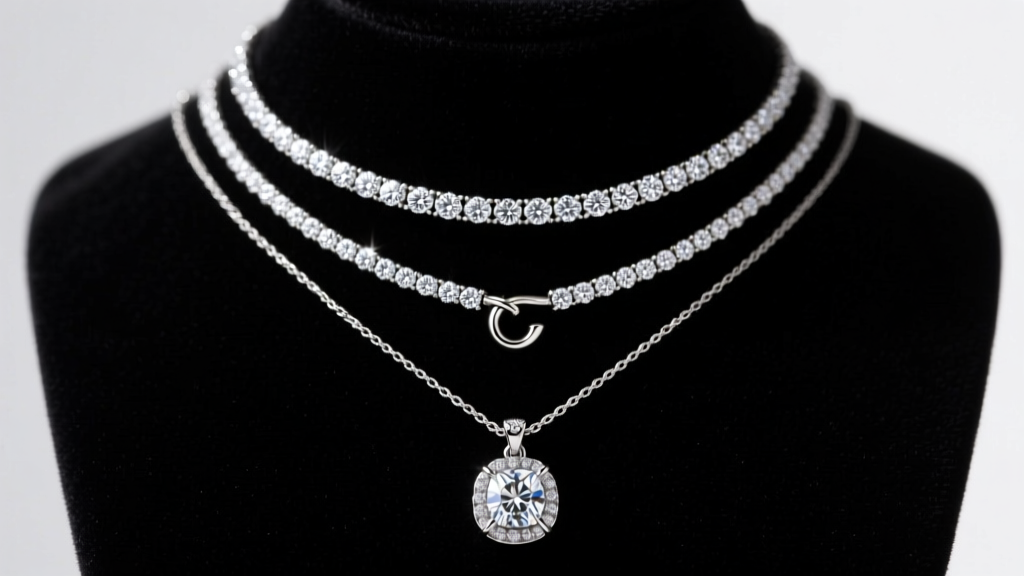
In 2026, jewelry curation has evolved from impulsive, standalone purchases to intentional, thematic collection building. At the forefront of this movement is the diamond necklace theme—a strategic approach to acquiring necklaces that share a cohesive design language, metal tone, and stylistic motif. Whether you are drawn to the icy precision of bezel-set modernism or the romantic intricacy of vintage-inspired milgrain halos, executing a unified theme requires a deep understanding of diamond grading, chain metallurgy, and spatial layering mechanics. This guide provides the exact specifications and decision frameworks needed to build a thematic diamond suite that balances aesthetic harmony with structural durability.
Defining Your Diamond Necklace Theme
A successful theme relies on a unifying anchor. Before evaluating individual stones, you must define the architectural language of your collection. The three dominant thematic frameworks in the current market are:
- The Bezel Minimalist Theme: Characterized by smooth metal rims encasing the diamond, flat profiles, and high-polish platinum or 18k white gold. This theme prioritizes sleekness and snag-free wearability.
- The Heritage Prong Theme: Rooted in classic four-to-six prong settings, milgrain detailing, and warm 14k or 18k yellow gold. This theme emphasizes maximum light return and vintage romance.
- The Geometric Art Deco Theme: Featuring baguette accents, hexagonal halos, and mixed-metal contrasts (e.g., a rose gold chain with a white gold setting). This theme is highly structured and relies on precise symmetry.
Once your theme is locked, every subsequent purchase—from the pendant setting to the chain link style—must adhere to these visual boundaries to maintain the integrity of the collection.
Diamond Specifications by Thematic Framework
The 4Cs (Cut, Color, Clarity, Carat) are not universally applied; they must be calibrated to your specific theme. According to the Gemological Institute of America (GIA), the setting style drastically alters how a diamond's color and clarity are perceived by the human eye.
Optimizing for the Bezel Minimalist Theme
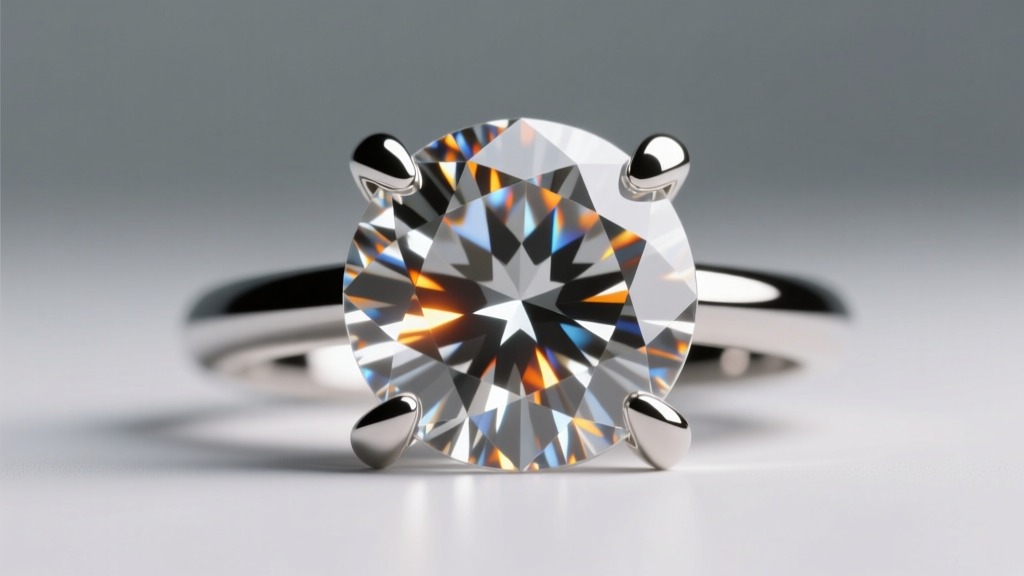
Because a bezel setting covers the diamond's girdle and restricts light entry from the sides, color trapping is common. Color Grade: Stick strictly to D-F (Colorless) to prevent the metal rim from amplifying yellow undertones. Clarity: VS1 or higher is required, as the magnifying effect of a flat, polished bezel can make SI1 inclusions visible to the naked eye. Cut: A Very Good cut is acceptable here, as the bezel inherently limits edge-to-edge scintillation.
Optimizing for the Heritage Prong Theme
Prong settings allow 360-degree light penetration, making cut quality the absolute priority. Cut: Only accept Ideal or Excellent grades with optimal table percentages (54-58%). Color: You can safely drop to G-H (Near Colorless) if setting in yellow gold, as the warm metal masks slight body color. Clarity: VS2 or eye-clean SI1 is perfectly adequate, as the exposed facets scatter light and hide minor carbon spots.
Chain Metallurgy and Durability Matrix
The chain is the backbone of the diamond necklace theme. A mismatched chain can ruin the visual flow and compromise the security of heavy pendants. The American Gem Society (AGS) emphasizes matching chain tensile strength to pendant weight. Below is a structural comparison of the most common chain types used in thematic layering.
| Chain Style | Tensile Strength | Best Theme Match | 2026 Avg. Price (16", 14k) |
|---|---|---|---|
| Cable (Oval Links) | Moderate | Heritage Prong, Everyday Solitaires | $250 - $400 |
| Box (Square Links) | High | Bezel Minimalist, Geometric Pendants | $350 - $550 |
| Wheat (Braided Oval) | Very High | Heavy Halos, Multi-Carat Pendants | $600 - $950 |
| Snake (Smooth Tubular) | Low (Prone to Kinking) | Lightweight Lariats, Chokers | $200 - $350 |
Expert Tip: If your theme involves pendants exceeding 1.00 carat (approx. 6.5mm), avoid snake chains entirely. The tubular structure of a snake chain is highly susceptible to permanent kinking when bent under the localized weight of a heavy diamond setting. Opt for a solid 14k or 18k wheat chain instead.
The Mechanics of Spatial Layering
Executing the diamond necklace theme often involves wearing multiple pieces simultaneously. The most common failure mode in layered necklaces is tangling, which occurs when chains are spaced too closely or feature interlocking link patterns.
The 1.5-Inch Spacing Rule
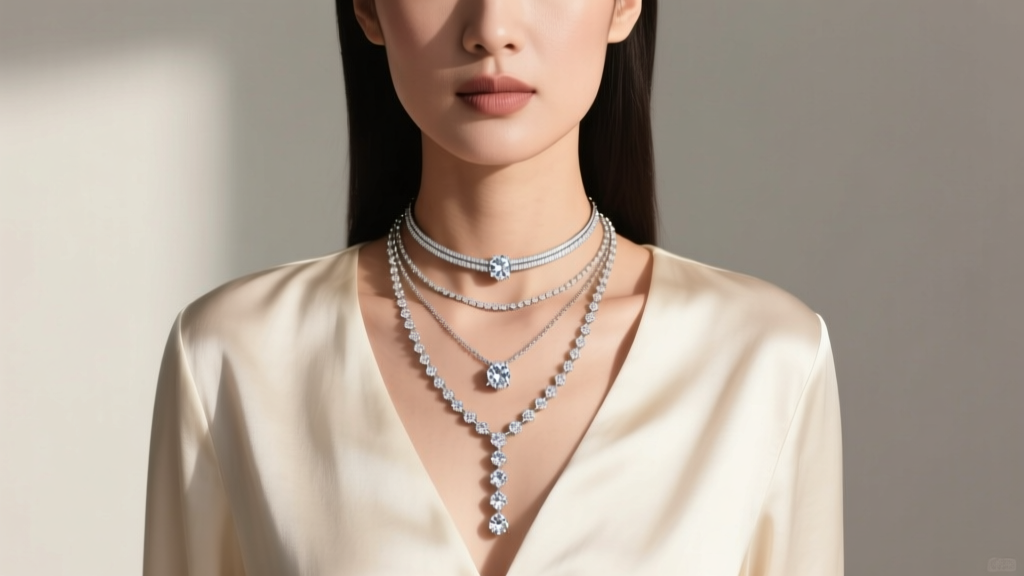
To prevent friction and tangling, maintain a minimum vertical drop of 1.5 inches between each necklace in your layered suite. A standard thematic layering trio follows this exact blueprint:
- The Anchor (14" - 15"): A diamond choker or tight tennis chain that sits above the collarbone.
- The Focal Point (16" - 17"): The primary pendant (e.g., a 0.50ct to 1.00ct solitaire) resting exactly on the collarbone.
- The Elongator (18" - 20"): A lariat, Y-necklace, or station chain that draws the eye downward, creating a slimming V-silhouette.
Furthermore, ensure that the physical thickness (gauge) of the chains varies. Pairing a 1.2mm box chain with a 0.8mm cable chain prevents the links from catching on one another.
Clasp Hardware and Security Protocols
The clasp is the most frequently overlooked component when building a diamond necklace theme, yet it dictates the longevity of your investment. Match your clasp type to the value and weight of the piece:
- Spring Ring Clasps: Cost-effective but structurally weak. The internal spring mechanism frequently fails under the tension of chains heavier than 3 grams. Reserve these only for ultra-lightweight, sub-0.25ct minimalist pendants.
- Lobster Claw Clasps: The industry standard for 2026. They offer a secure, self-closing lock and can support up to 15 grams of gold and diamond weight. Ensure the jump ring connecting the lobster clasp to the chain is soldered shut, not just pushed together.
- Fold-Over Box Clasps with Figure-8 Safety: Mandatory for diamond tennis chains or heavy thematic lariats. The box mechanism provides a flush, seamless look that maintains the uninterrupted line of a bezel minimalist theme, while the figure-8 wire acts as a secondary failsafe if the primary hinge loosens.
2026 Market Strategy: Lab-Grown vs. Natural Suites
Building a cohesive diamond necklace theme requires multiple stones that match perfectly in color and cut. Historically, acquiring a matched suite of natural diamonds for layering was cost-prohibitive. However, the 2026 market has seen lab-grown diamonds become the dominant choice for thematic collections. Because lab-grown stones can be grown in controlled batches, jewelers can easily source three 0.50ct solitaires with identical D-color and VVS2 clarity for a fraction of the cost of natural equivalents. This allows collectors to fully realize their thematic vision—such as a trio of matching bezel pendants for a graduated layering effect—without compromising on the strict 4C requirements dictated by their chosen aesthetic.
Final Thoughts on Thematic Curation
Mastering the diamond necklace theme is an exercise in restraint and precision. By defining your architectural framework, calibrating diamond grades to your specific setting style, and respecting the physics of chain metallurgy and spatial layering, you transition from merely buying jewelry to curating a legacy collection. Always demand laser-inscribed girdles for stones over 0.30ct, verify soldered jump rings, and prioritize cut quality above all else to ensure your thematic suite captures light flawlessly for decades to come.


