Diamond Slice Necklace Value Guide 2026: Cost vs Quality
Assess the true value of a diamond slice necklace in 2026. We break down pricing, backing materials, setting risks, and how to spot quality.

The Economics of the Diamond Slice Necklace
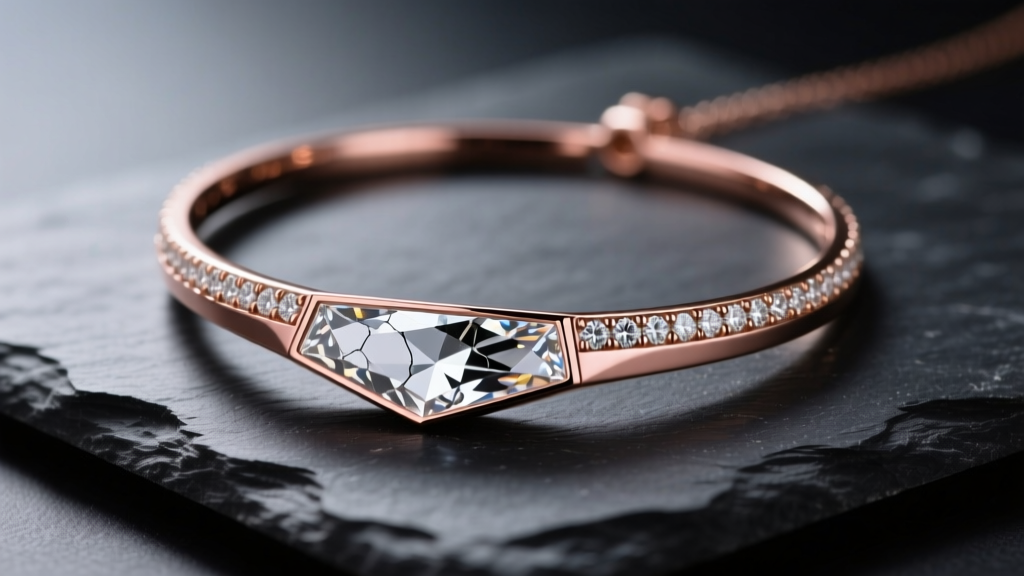
When evaluating alternative fine jewelry, the diamond slice necklace occupies a fascinating middle ground between raw, uncut crystals and traditional brilliant-cut gems. For buyers navigating the 2026 market, understanding the true value of these pieces requires looking past their striking, icy aesthetics and examining the lapidary economics that dictate their price. Unlike traditional diamonds, which are meticulously faceted to maximize light return, a diamond slice is a thin, flat cross-section of a rough diamond crystal. This unique cutting method fundamentally alters the pricing structure, offering a massive visual 'spread' for a fraction of the cost of a faceted stone.
The primary driver of value in traditional diamonds is the immense material loss during the faceting process. According to industry standards, cutting a rough diamond into a round brilliant results in a yield of only 30% to 40%, meaning over half the original carat weight is ground into dust. Diamond slices, however, are cut using ultra-thin diamond-wire saws with a kerf (material loss) of less than 0.2 millimeters. This means a 3-carat rough crystal can yield a 2.8-carat slice. Because the lapidary labor is minimal and the yield is exceptionally high, the price per carat plummets. However, this does not mean all slices are created equal. The market is currently flooded with heavily included, structurally compromised stones disguised by clever settings, making a rigorous value assessment essential before purchasing.
2026 Pricing Matrix: What You Should Actually Pay
To accurately assess a diamond slice necklace, you must decouple carat weight from visual size. A 2-carat diamond slice often possesses the surface area (the 'table') of a 4-carat or even 5-carat traditional diamond. Retailers frequently exploit this by pricing slices based on their visual footprint rather than their actual carat weight. Below is a realistic 2026 pricing matrix for natural, earth-mined diamond slices set in solid gold, excluding lab-grown alternatives which should command a 60-80% discount from these figures.
| Actual Carat Weight | Visual Spread Equivalent | Backing Material | Metal Setting | Fair Retail Price Range |
|---|---|---|---|---|
| 1.0 - 1.5 ct | 2.0 - 2.5 ct | Glass / Quartz | 14k Gold Vermeil | $450 - $850 |
| 2.0 - 3.0 ct | 4.0 - 5.0 ct | Black Onyx | 14k Solid Gold | $1,600 - $2,900 |
| 3.5 - 5.0 ct | 6.0+ ct | Solid Gold Backing | 18k Solid Gold | $3,200 - $5,800 |
If a retailer is asking traditional faceted diamond prices for a slice—citing its large visual presence—they are inflating the margin to compensate for the lack of brilliance and fire. A diamond slice will not sparkle like a brilliant cut; instead, it offers a subtle, icy translucence and a unique map of internal inclusions.
The Backing Debate: Hidden Value Killers
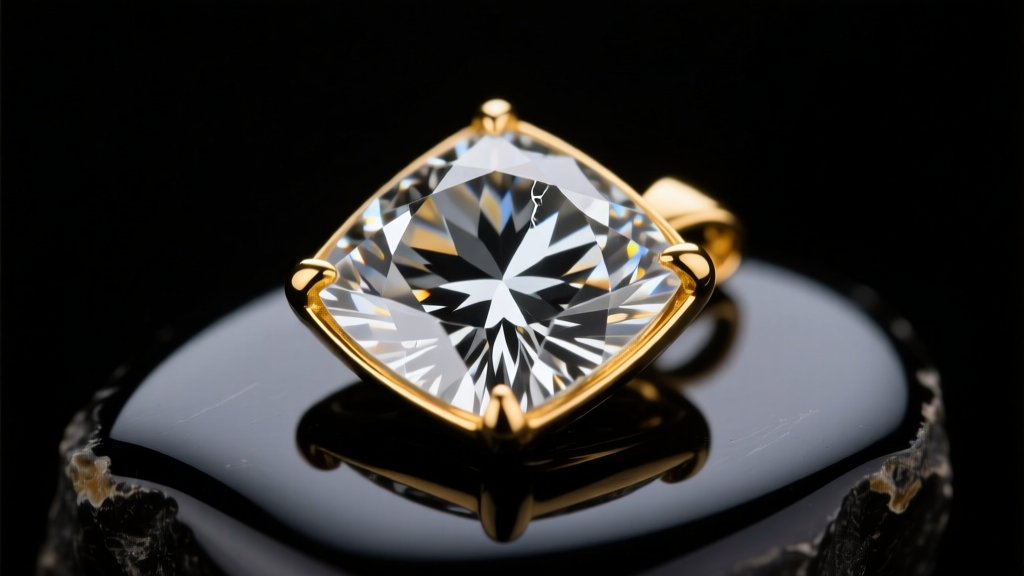
Because diamond slices are cut exceptionally thin—often between 0.8mm and 1.5mm to maximize yield from the rough—they are inherently fragile. To prevent the stone from snapping under the tension of a necklace setting, jewelers must mount the slice against a backing material. The choice of backing drastically impacts both the structural longevity and the intrinsic value of the necklace.
Glass and Quartz Backings (The Budget Tier)
Many entry-level diamond slice necklaces utilize a layer of clear glass or quartz cemented to the back of the diamond. While this provides a flat surface for the bezel to grip, it is a significant value killer. Over time, the adhesive can yellow, cloud, or degrade when exposed to UV light and skin oils. Furthermore, glass is significantly softer than diamond (rating a 5.5 on the Mohs scale compared to diamond's 10). If the backing is scratched or shattered, the entire structural integrity of the pendant is compromised, and replacing the backing requires specialized lapidary work that often costs more than the necklace itself.
Onyx and Solid Gold Backings (The Premium Tier)
High-value slices are backed by black onyx or a solid plate of gold. Black onyx provides a striking, high-contrast background that makes the white and gray inclusions within the diamond pop, enhancing its visual appeal. However, onyx can chip if dropped on a hard surface. The absolute gold standard for value and durability is a solid gold backing, where the diamond slice is essentially inlaid into a gold plate. This provides maximum structural support, eliminates the risk of adhesive degradation, and ensures the piece can be passed down as an heirloom. When consulting the American Gem Society buying guidelines, structural integrity and setting security are always paramount, making solid backings the only choice for daily-wear pendants.
Structural Integrity and Setting Failure Modes
The most common point of failure in a diamond slice necklace is the setting itself. Traditional diamonds have a polished, relatively uniform girdle (the outer edge). Diamond slices, conversely, often feature raw, jagged, or uneven girdles that follow the natural crystal habit. Setting an irregular, brittle edge requires immense skill.
Prong settings are a catastrophic risk for diamond slices. The localized pressure of a metal prong pressing against a thin, uneven edge will almost certainly cause the diamond to cleave or chip along its natural fracture lines. A full bezel setting, where a continuous rim of metal wraps entirely around the perimeter of the slice, is mandatory. However, not all bezels are equal. The bezel must feature a 'bearing' or 'lip'—a small shelf of metal that the diamond rests upon, preventing it from being pushed through the back of the setting. If you are inspecting a vintage or artisan diamond slice necklace, use a jeweler's loupe to ensure the bezel wire is not merely resting on top of the diamond's table, but is actually securing the girdle from the side.
The Buyer’s Inspection Checklist
Because slices are typically cut from heavily included rough diamonds that were deemed unsuitable for faceting, inclusions are guaranteed. However, understanding the GIA's clarity characteristics is vital to determining whether those inclusions are merely aesthetic or structurally dangerous.
- Feathers and Cleavage Planes: A 'feather' is a fracture within the diamond. If a feather intersects the girdle or the edge of the slice, the stone is a structural liability. A single knock against a granite countertop can cause the slice to split entirely in half. Avoid slices with edge-reaching feathers at all costs.
- Carbon Spots and Pinpoints: Black carbon inclusions and white crystalline pinpoints are completely stable. They do not weaken the stone and are part of the unique 'fingerprint' that makes slices desirable. A slice heavily peppered with black carbon spots can actually command a premium for its dramatic, galaxy-like appearance.
- Table Polish and Waviness: Run your fingernail lightly across the top surface of the slice. It should feel completely smooth and flat. If you feel ridges, waves, or pitting, the lapidary rushed the polishing process. Wavy surfaces distort light and indicate a low-tier cutting job.
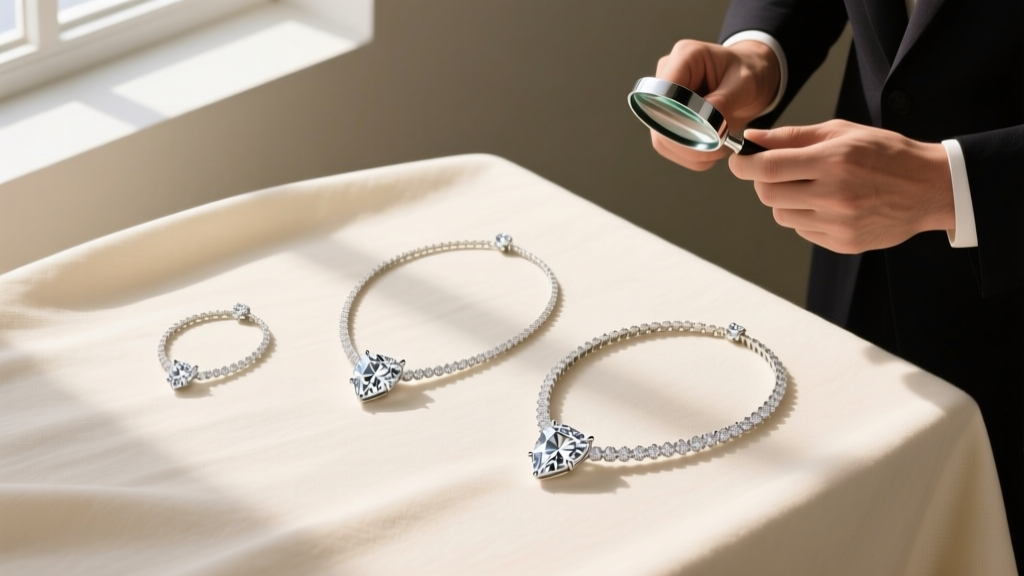
- Edge Sealing: Some manufacturers paint or coat the raw edges of the slice with a dark resin to hide chipping or to make the stone appear more uniform. Inspect the girdle under magnification to ensure the edge is natural diamond and not a synthetic coating that will eventually wear off.
Final Verdict: Investment vs. Aesthetic Value
As we move through 2026, the diamond slice necklace remains a triumph of aesthetic value over traditional financial investment. You are not buying a store of wealth; a diamond slice has virtually no secondary market liquidity compared to a certified round brilliant. Instead, you are purchasing a wearable piece of natural art. The true value lies in the uniqueness of the inclusion map, the massive visual presence on the neckline, and the modern, organic silhouette that traditional diamonds cannot replicate.
To ensure your budget is well-spent, demand solid gold or onyx backings, insist on a full bezel setting with a protective lip, and rigorously inspect the edges for structural fractures. By prioritizing lapidary craftsmanship and structural safety over sheer carat weight, you can secure a stunning, durable diamond slice necklace that offers unparalleled style for its price point.


