Diamond Starfish Necklace Buying Guide: What to Look For
Discover expert tips for buying a diamond starfish necklace. Learn about melee diamond quality, metal choices, sizing, and pricing in our complete guide.

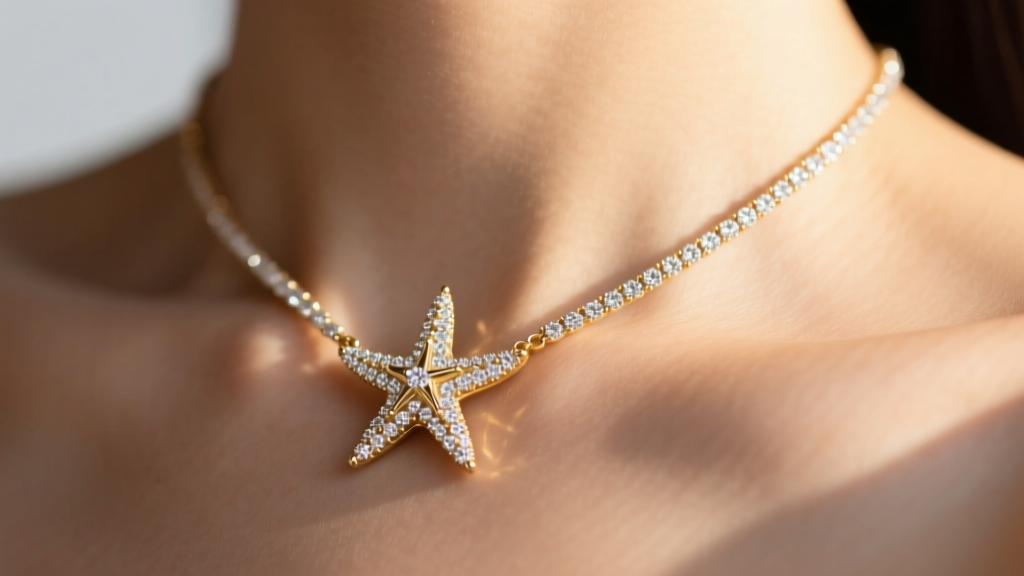
The Symbolism and Appeal of the Starfish Motif
The ocean has long been a profound source of inspiration for fine jewelry designers, but few marine motifs carry the deep symbolic resonance of the starfish. Representing regeneration, resilience, and divine guidance, a diamond starfish necklace is more than just a seasonal summer accessory; it is a talisman of personal strength and adaptability. As we navigate the jewelry market in 2026, the starfish pendant remains a highly sought-after staple for both everyday wear and meaningful milestone gifts.
However, buying a starfish necklace requires a nuanced understanding of jewelry anatomy. Unlike a simple solitaire pendant, a starfish features five distinct arms, intricate pavé or channel settings, and a complex metal framework. This comprehensive buying guide will walk you through the exact specifications, material grades, and structural details you need to evaluate before making your purchase.
Decoding Diamond Quality: The Melee Factor
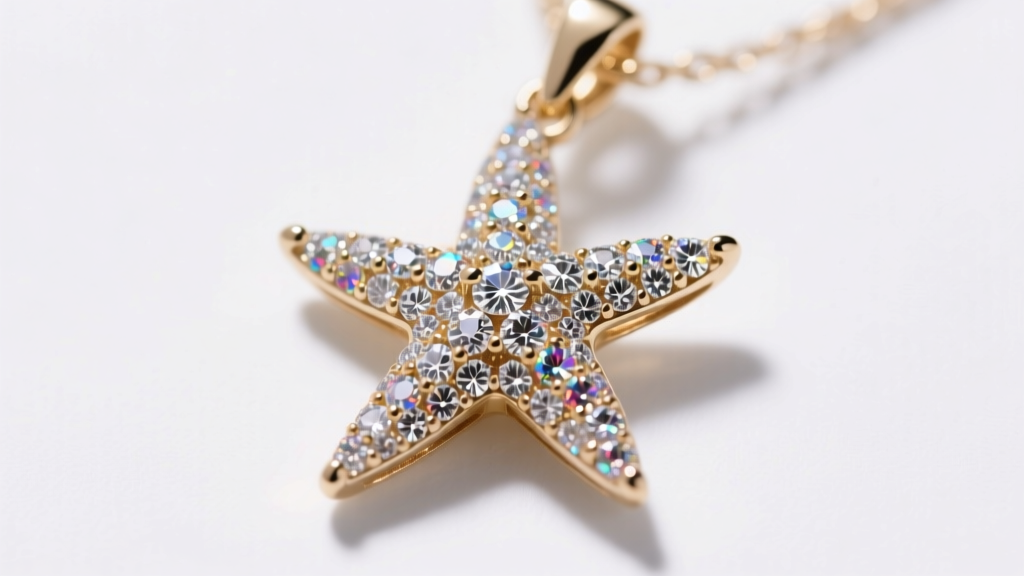
The most critical aspect of any diamond starfish necklace is the quality of the stones used to pave the five arms. Because starfish designs rarely feature a single large center stone, they rely heavily on melee diamonds—small diamonds typically weighing between 0.01 and 0.15 carats each. According to the Gemological Institute of America (GIA), melee diamonds are essential for adding brilliance to intricate jewelry designs, but they are graded differently than large center stones.
What to Look For in Melee Diamonds
- Cut Quality: This is the most important factor. Even in tiny sizes, a well-cut melee diamond will reflect light brilliantly. Look for brands that specify "ideal" or "excellent" cut melee, as poorly cut small diamonds will look dull and glassy, ruining the oceanic sparkle of the starfish.
- Color Grade: For white gold or platinum settings, ensure the melee diamonds are in the G-H color range (near colorless). If the diamonds are I-J or lower, they will appear noticeably yellow against the white metal, creating a muddy contrast.
- Clarity Grade: You can save money here. Because melee diamonds are so small, inclusions are virtually invisible to the naked eye. SI1 to I1 clarity is perfectly acceptable and standard for starfish arms, provided the stones are not heavily included to the point of structural weakness.
- Total Carat Weight (TCW): A delicate, everyday starfish pendant usually features a TCW of 0.15 to 0.30 carats. Larger, statement-sized starfish pendants can range from 0.50 to over 1.00 TCW.
Metal Selection: Matching the Oceanic Vibe
The metal you choose dictates both the durability of the necklace and its overall aesthetic. The intricate prongs holding the melee diamonds on a starfish pendant require a metal that can withstand daily wear without bending or losing stones.
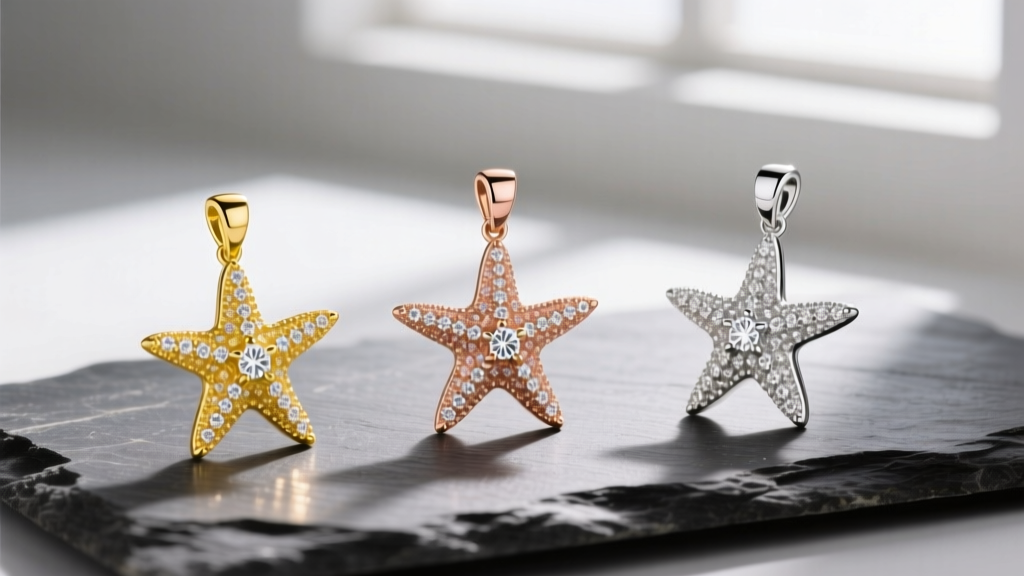
| Metal Type | Durability & Maintenance | Aesthetic Profile | Price Tier |
|---|---|---|---|
| 14k White Gold | Highly durable. Requires rhodium replating every 1-2 years to maintain bright white color. | Crisp, bright, and modern. Enhances the icy sparkle of white diamonds. | $$ (Best Value) |
| 18k Rose Gold | Very durable due to copper alloy. Does not require plating. Can cause reactions for those with copper allergies. | Warm, romantic, and vintage. Creates a beautiful contrast with white diamonds. | $$$ |
| Platinum (950) | Extremely durable and hypoallergenic. Develops a natural patina over time but never loses metal mass. | Heavy, premium, and naturally white. The ultimate choice for heirloom pieces. | $$$$ (Premium) |
| 14k Yellow Gold | Classic durability. Low maintenance. Scratches can be easily polished out. | Traditional and sun-kissed. Evokes a classic nautical, vintage seaside feel. | $$ |
Expert Tip: If you choose white gold, ensure the setting is finished with a high-quality rhodium dip. The Jewelers of America recommends regular professional cleaning and inspection for pavé settings, as the tiny prongs can wear down over time, regardless of the metal chosen.
Sizing, Proportions, and Setting Styles
A starfish pendant that is too large will look clunky and flip upside down on the chest, while one that is too small will lose its intricate details. The proportions of the arms and the center junction are vital.
The Sweet Spot for Dimensions
For a versatile piece that transitions from a beach vacation to a professional office environment, look for a starfish pendant measuring between 12mm and 16mm in diameter (roughly the size of a dime). This size allows the jeweler to use melee diamonds large enough to catch the light (usually 1.0mm to 1.3mm stones) without the pendant overwhelming the décolletage.
Setting Techniques
Examine the setting style used on the arms. Micro-prong pavé is the most common, using tiny metal beads to hold the diamonds. This maximizes light entry but requires careful maintenance. French pavé features V-shaped cutouts under the diamonds, offering a more intricate, high-end look and slightly more brilliance. Avoid channel settings for starfish arms, as the straight metal walls block light and make the curved, organic shape of the starfish look rigid and unnatural.
Chain Pairings and Clasp Mechanics
The chain is the unsung hero of any pendant necklace. A starfish motif is inherently organic and fluid, and the chain should complement, not compete with, this aesthetic.
- Cable Chains (0.9mm - 1.2mm): The classic choice. A delicate, round-link cable chain mimics the look of fine nautical rope and keeps the focus entirely on the diamond starfish.
- Box Chains (1.0mm): Offer a more modern, geometric contrast to the organic starfish shape. They are also highly resistant to kinking, making them excellent for daily wear.
- Length Matters: A 16-inch chain with a 2-inch extender is the industry standard for 2026, allowing the pendant to sit perfectly on the collarbone or drop slightly lower into a V-neckline.
Clasp Warning: Always check the clasp. Avoid tiny spring-ring clasps on chains thicker than 1.0mm, as they are notoriously difficult to operate and prone to breaking. Insist on a lobster clasp for secure, hassle-free fastening.
2026 Pricing: Lab-Grown vs. Natural Diamonds
The diamond market has evolved significantly, and lab-grown diamonds have completely transformed the pricing landscape for intricate melee jewelry. Because a starfish pendant requires dozens of precisely matched small diamonds, the cost of sourcing high-quality natural melee can be steep.
"Lab-grown melee diamonds allow designers to create highly intricate, diamond-heavy motifs like the starfish at a fraction of the cost, without sacrificing optical brilliance or physical durability."
- Lab-Grown Diamond Starfish Necklaces: Expect to pay between $350 and $800 for a high-quality 14k gold pendant with 0.25 TCW lab-grown melee. This is the smartest route for buyers prioritizing maximum sparkle on a moderate budget.
- Natural Diamond Starfish Necklaces: Prices typically range from $1,200 to $3,500+ depending on the brand prestige, metal weight, and exact color/clarity grading of the natural melee stones.
The Expert Pre-Purchase Checklist
Before you finalize your purchase, run the necklace through this quick expert checklist to ensure you are getting a piece of lasting quality:
- Prong Inspection: Are the prongs uniform, smooth, and free of snags? Run a piece of silk fabric over the pendant; if it catches, the prongs need polishing.
- Diamond Matching: Look closely at the five arms. Do the diamonds appear uniform in color and size? Mismatched melee is a sign of poor quality control.
- Chain Attachment: Is the jump ring (the loop connecting the pendant to the chain) soldered shut? An unsoldered jump ring will eventually pull apart and lose your pendant.
- Hallmarks: Verify that the clasp or jump ring is stamped with the metal purity (e.g., 14K, 585, PT950) and the manufacturer's trademark.
A diamond starfish necklace is a beautiful investment in resilience and style. By focusing on the cut quality of the melee diamonds, selecting a durable metal, and ensuring proper proportions, you will secure a breathtaking piece that captures the enduring magic of the ocean for decades to come.


