How to Clean and Maintain a Diesel Necklace Properly
Learn how to properly clean and maintain your Diesel necklace. Expert tips for stainless steel, PVD coatings, and leather to prevent tarnish.

Understanding Your Diesel Necklace Materials
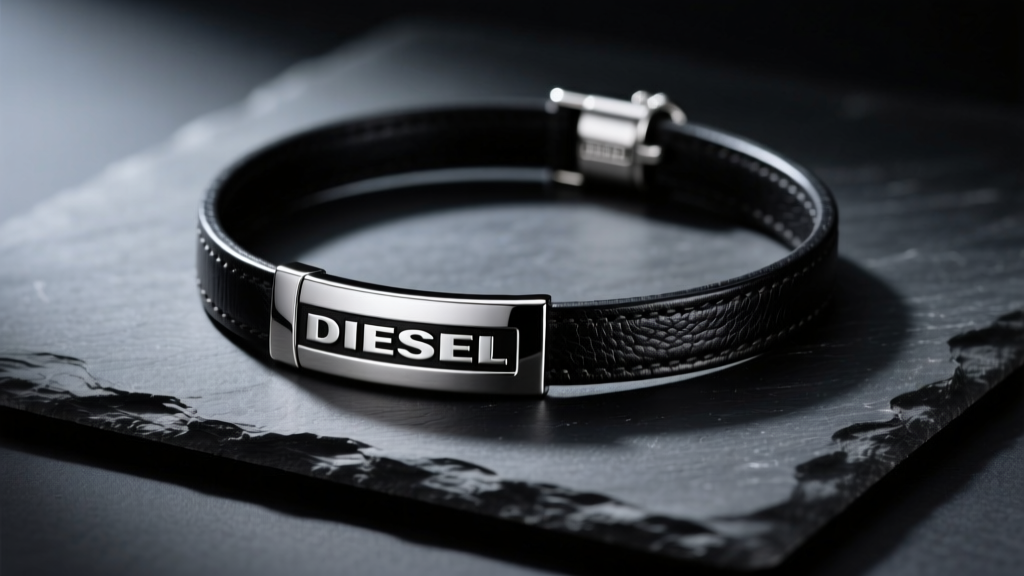
Diesel jewelry is renowned for its industrial aesthetic, mixing rugged textures with sleek, modern finishes. Before you apply any cleaning solution, it is critical to identify the exact materials composing your specific piece. A standard Diesel necklace typically features a combination of 316L surgical stainless steel, PVD (Physical Vapor Deposition) coatings, genuine leather cords, and occasionally onyx or crystal accents.
316L stainless steel is highly resistant to corrosion and tarnish due to its molybdenum content, which prevents pitting from chlorides. However, the black or gunmetal finishes often seen on Diesel pendants are achieved through PVD coating. Unlike traditional electroplating, PVD bonds a microscopic layer of titanium nitride or zirconium to the steel in a vacuum chamber. While incredibly durable and scratch-resistant, PVD can be permanently clouded by harsh chemicals. Furthermore, the braided or flat leather cords used in many Diesel designs are highly porous and will degrade, stiffen, or rot if exposed to excessive moisture or standard jewelry dips.
The Safe Cleaning Protocol for Stainless Steel and PVD
To safely clean the metal components of your necklace without compromising the PVD finish or the structural integrity of the steel, follow this step-by-step protocol recommended by metalworking experts and the British Stainless Steel Association.
Step 1: Prepare a pH-Neutral Bath
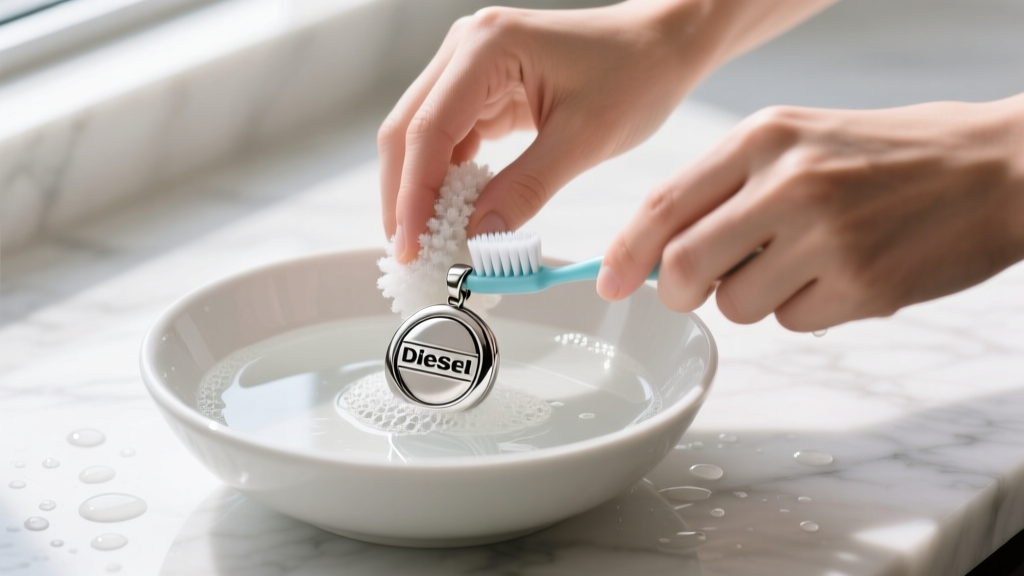
Fill a small ceramic or glass bowl with lukewarm water. Add two to three drops of a mild, pH-neutral dish soap (such as original Dawn). Avoid soaps with added moisturizers, citrus extracts, or micro-abrasives, as these can leave a filmy residue on the steel or degrade the PVD layer over time.
Step 2: Targeted Agitation
Submerge only the stainless steel and PVD pendant in the solution for three to five minutes. This loosens sebum, dead skin cells, and environmental dust. Using a soft-bristled baby toothbrush or a dedicated horsehair jewelry brush, gently agitate the crevices of the pendant. Pay special attention to the bail (the loop where the chain or cord threads through), as this area accumulates the most friction-based grime.
Step 3: Rinsing and Drying
Rinse the pendant thoroughly under lukewarm running water to remove all soap residue. Immediately dry the metal with a clean, lint-free microfiber cloth. Do not air dry, as tap water contains dissolved minerals that will leave hard water spots on the polished steel surfaces, dulling the reflective finish.
Specialized Care for Leather Cords and Accents
Leather requires an entirely different maintenance approach. Water is the enemy of genuine leather, causing it to lose its natural oils, crack, and eventually snap. If your Diesel necklace features a leather cord, never submerge it in your cleaning bath.
For surface dirt on leather, use a slightly damp (not wet) microfiber cloth to gently wipe down the cord. For deeper stains or accumulated body oils, apply a tiny amount of saddle soap to a soft cloth, work it into a light lather, and gently massage it into the leather. Wipe away the excess with a separate damp cloth and let it air dry away from direct heat or sunlight.
Once the leather is completely dry, it must be reconditioned. Apply a minuscule drop of leather balm or mink oil to your fingertips and rub it into the cord. This restores the lipid barrier, keeping the leather supple and preventing the dry rot that frequently plagues mixed-material fashion jewelry.
Clasp Maintenance: Magnetic vs. Lobster Clasps
Diesel frequently utilizes both heavy-duty lobster clasps and sleek magnetic barrel clasps. Each requires specific attention:
- Lobster Clasps: The internal spring mechanism can become clogged with lint and skin oils, causing the lever to stick. Use a can of compressed air to blow out the crevice, and apply a microscopic drop of synthetic watch oil to the hinge pin to restore smooth operation.
- Magnetic Clasps: Because they contain strong neodymium magnets, these clasps attract microscopic steel shavings and metallic dust from your environment. Use a soft, dry toothbrush to sweep the magnetic face clean. Never use liquid cleaners near the magnetic seam, as moisture trapped inside the barrel can cause internal rusting that weakens the magnetic hold.
Common Cleaning Mistakes That Ruin Fashion Jewelry
Many well-intentioned cleaning methods are actually highly destructive to mixed-material jewelry. Refer to the table below to ensure you are not inadvertently damaging your piece.
| Cleaning Method | Why It Fails / Damage Caused | Safe Alternative |
|---|---|---|
| Ultrasonic Cleaners | High-frequency vibrations can shatter onyx accents and cause PVD coatings to micro-flake or peel. | Manual soft-brush cleaning with mild soap. |
| Toothpaste & Baking Soda | Highly abrasive. Scratches polished 316L steel and permanently scuffs matte PVD finishes. | pH-neutral liquid dish soap and water. |
| Silver Dip Solutions | Formulated for sterling silver sulfide tarnish. Contains thiourea, which chemically attacks stainless steel and leather. | Microfiber polishing cloth for steel. |
| Boiling Water | Thermal shock can crack glued-in crystal or stone accents and instantly warp leather cords. | Lukewarm water (approx. 98°F / 37°C). |
For comprehensive guidelines on handling varied jewelry materials, the Gemological Institute of America (GIA) strongly advises against using generic household cleaners on any mixed-media accessories, emphasizing that material-specific care is the only way to preserve structural integrity.
Long-Term Storage and Maintenance Strategies
How you store your Diesel necklace when it is not being worn is just as important as how you clean it. Stainless steel does not tarnish in the traditional sense, but it can suffer from surface oxidation if exposed to high humidity or airborne sulfur compounds over long periods.
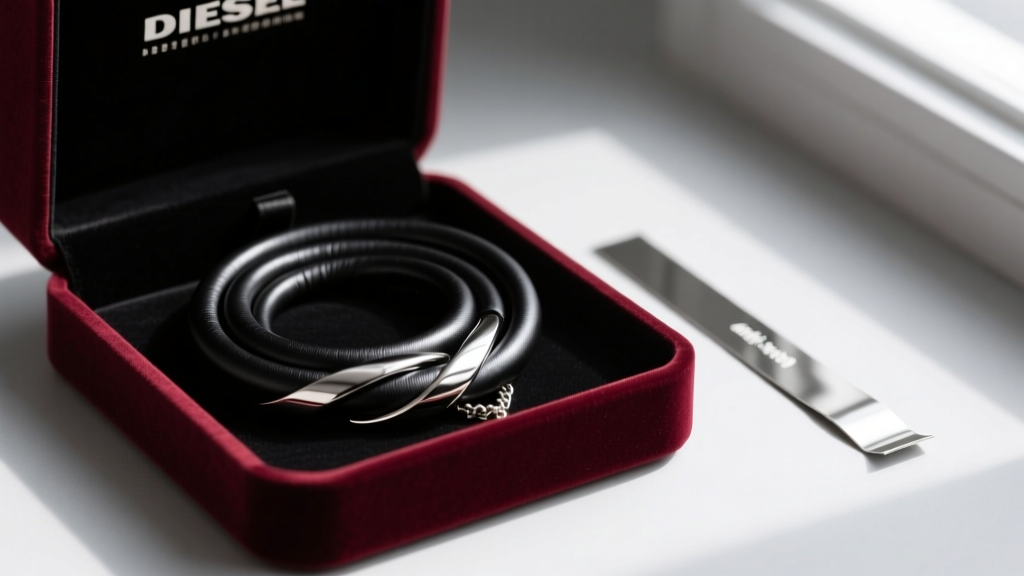
Always store your necklace in a cool, dry environment. If the piece features a leather cord, hang it on a wide, padded jewelry hook to prevent the leather from developing permanent kinks or memory creases. If you must store it in a drawer or box, coil the leather loosely in a wide circle—never fold or crimp it.
Place an anti-tarnish tab or a small silica gel desiccant packet inside the storage compartment to control ambient moisture. Keep the necklace away from direct sunlight, as prolonged UV exposure will bleach and dry out the leather cord, leading to premature fraying near the clasp connections.
Expert Answers to Common Maintenance Questions
Can I wear my Diesel necklace in the shower or pool?
It is highly discouraged. While 316L steel can withstand brief water exposure, the chlorine in swimming pools and the harsh sulfates in shampoos will rapidly degrade the PVD coating and strip the natural oils from the leather cord, causing it to become brittle and snap.
How often should I clean the metal pendant?
For daily wearers, a quick wipe-down with a dry microfiber cloth at the end of the day is sufficient to remove sweat and oils. A full wet-cleaning protocol should only be necessary once every four to six weeks, or when visible grime accumulates in the pendant's engravings.
My PVD coating is fading. Can it be restored?
PVD is a permanent vacuum-bonded layer, not a surface paint. Once it wears through due to friction or chemical damage, it cannot be polished back. However, you can take the piece to a professional jeweler who specializes in PVD re-coating services to have the layer reapplied in a controlled vacuum environment.


