How to Display Necklaces for Sale: Budget & Value Guide
Learn how to display necklaces for sale on a budget without sacrificing perceived value. Compare display materials, costs, and ROI for jewelry vendors.

The Hidden ROI of Jewelry Display: Why Budget Doesn't Mean Cheap
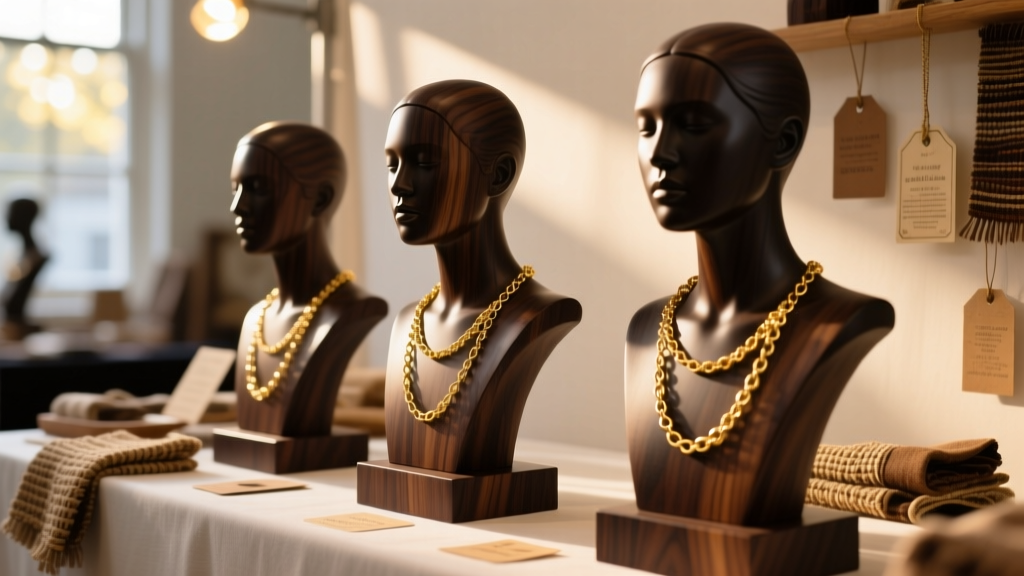
When figuring out how to display necklaces for sale, emerging jewelers and boutique owners often fall into a dangerous trap: equating 'budget-friendly' with 'cheap.' The reality of retail psychology is unforgiving. A meticulously crafted $250 sterling silver pendant draped over a $2 flimsy plastic stand will instinctively be perceived by the consumer as a $20 trinket. Conversely, a $40 brass chain displayed on a structured, well-lit, matte-finished bust can easily command a $120 price point.
As we navigate the 2026 retail landscape, the cost of customer acquisition is higher than ever. Your physical or digital display is your silent salesperson. This guide breaks down the exact materials, formats, and lighting specifications you need to maximize perceived value while strictly managing your overhead budget. We will analyze failure modes, material grades, and provide a concrete framework for allocating your display capital.
Material Breakdown: What to Avoid and What to Buy
The surface material of your necklace display does more than just look good; it actively interacts with your inventory. Choosing the wrong material can lead to rapid inventory degradation, turning a budget setup into an expensive liability.
The Tarnish Trap: Cheap Velvets and Faux Leathers
Many budget-friendly display busts imported from overseas are wrapped in PVC-based faux leathers or synthetic velvets dyed with sulfur-heavy compounds. According to metallurgical guidelines discussed by experts at Ganoksin, these materials off-gas hydrogen sulfide and sulfur dioxide. When trapped in a display case or storage box, these gases react with the copper alloy in sterling silver, causing severe black tarnishing within weeks. If you are selling silver necklaces, avoiding PVC-wrapped displays is non-negotiable.
High-Value Budget Alternatives
Instead of synthetic velvets, allocate your budget toward these high-ROI materials:
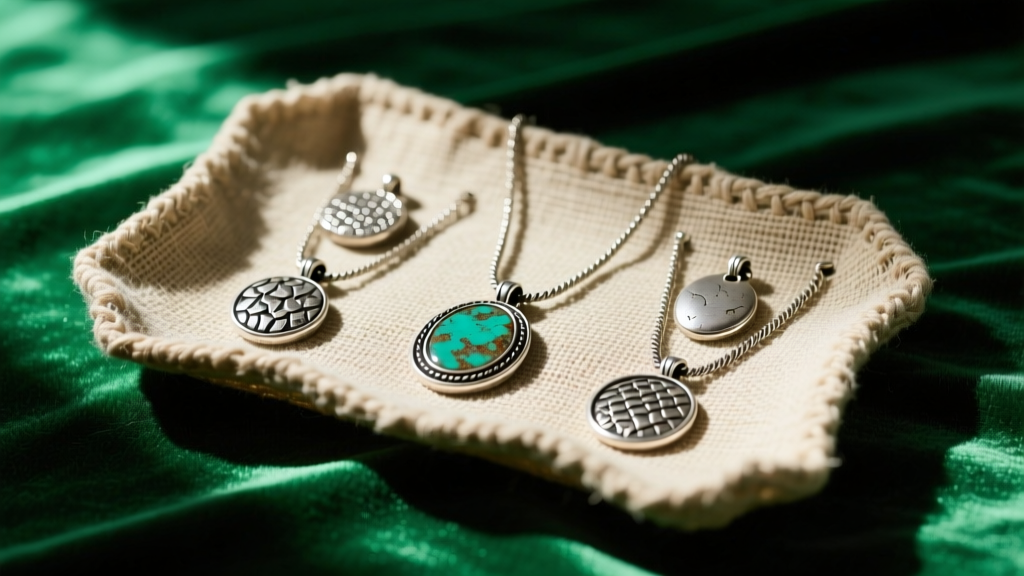
- Unbleached Acid-Free Linen: Costs roughly $8 to $12 per yard wholesale. It provides a neutral, organic, and highly textured background that makes polished metals and colorful gemstones pop without reflecting distracting light.
- Pacific Silvercloth: Embedded with microscopic silver particles that absorb tarnish-causing gases before they reach your jewelry. While pricier ($25-$35 per yard), using this as a liner for your primary display trays acts as an insurance policy for your silver inventory.
- Matte Silicone Pads: For flat-lay necklace photography or market tables, food-grade matte silicone ($15 per large sheet) prevents chains from sliding and eliminates static cling, a common issue with cheap acrylics.
Display Formats: Cost vs. Conversion Rate Analysis
Not all necklace lengths drape correctly on standard displays. A 14-inch choker will look choked and distorted on a standard 16-inch bust, while a 30-inch lariat will pool awkwardly on a tabletop. Below is a comparative analysis of display formats, evaluating their wholesale cost, perceived value, and specific use cases.
| Display Format | Avg. Wholesale Cost | Perceived Value | Best Necklace Type | Primary Failure Mode |
|---|---|---|---|---|
| Flocked MDF Bust | $4.00 - $7.00 | Low to Medium | Standard 18" chains | Flocking rubs off, revealing cheap wood underneath; looks dated. |
| Solid Walnut/Maple Bust | $45.00 - $85.00 | Very High | Heavy pendants, statement pieces | High initial capital; heavy to transport for craft fairs. |
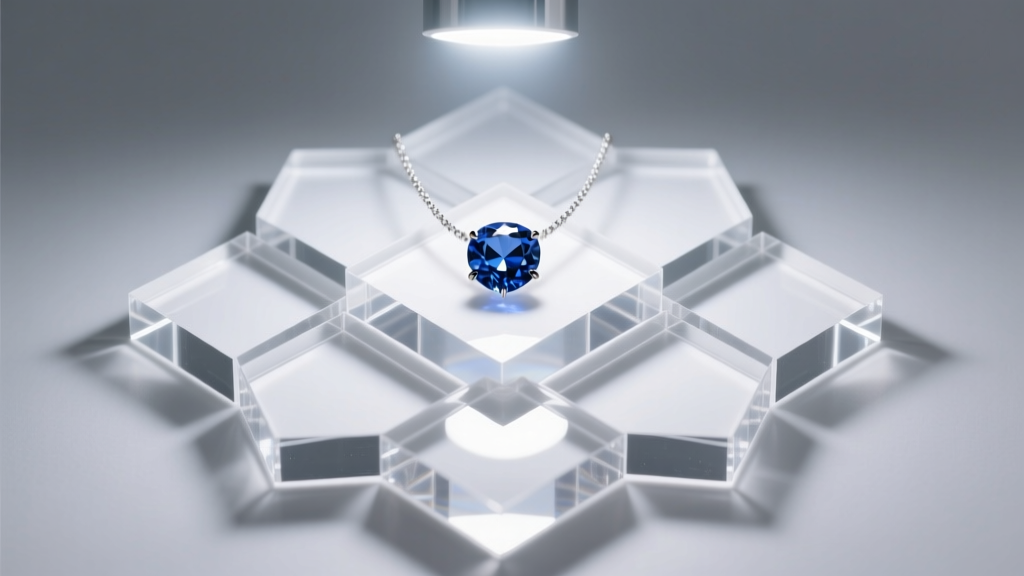
| 5mm Cast Acrylic T-Bar | $12.00 - $22.00 | High (Modern) | Delicate chains, layering sets | Scratches easily if cleaned with paper towels; 3mm extruded acrylic snaps. |
| Slotted Gridwall Panel | $15.00 - $30.00 | Medium (Volume) | High-volume, lower-priced items | Can look like a flea market if not paired with premium signage and lighting. |
For vendors wondering how to display necklaces for sale at high-end artisan markets, the Solid Wood Bust combined with a Cast Acrylic T-Bar offers the best hybrid approach. Use the wood for your anchor, high-ticket pieces, and the acrylic for your layered, lower-priced entry items. Always ensure acrylic is at least 5mm thick and 'cast' rather than 'extruded' to prevent yellowing and snapping under the weight of heavy chain links.
Lighting and Angles: The Zero-Cost Value Multipliers
You can buy the most expensive display busts on the market, but if your lighting is poor, your jewelry will look dull. The Etsy Seller Handbook and various gemological retail guides emphasize that lighting is the single most critical factor in jewelry presentation. The metrics you need to care about are Color Temperature (Kelvin) and Color Rendering Index (CRI).
Dialing in Your Kelvin and CRI
Never use standard hardware store bulbs, which typically have a CRI of 70-80. A low CRI makes rubies look brown and sapphires look black. You must invest in LED spotlights with a CRI of 95 or higher. This ensures the true spectral colors of your gemstones and the accurate warmth of your gold alloys are visible to the buyer.
- For Yellow Gold and Rose Gold: Use 3000K to 3500K LEDs. This warmer spectrum enhances the rich, buttery tones of 14k and 18k gold.
- For Sterling Silver, White Gold, and Diamonds: Use 4000K to 5000K LEDs. This cooler, daylight-balanced spectrum maximizes the icy brilliance and scintillation of white metals and clear stones.
If you are operating on a strict budget and can only afford one lighting setup, choose 4000K with a CRI of 95+. It is the most neutral and forgiving spectrum for mixed-metal inventories.
Sourcing Strategy: Where to Buy Wholesale Display Supplies
Buying retail display supplies from Amazon or craft stores will destroy your profit margins. To maintain a healthy budget, you must source like a established boutique. In 2026, the best approach is a tiered sourcing strategy:
- Paco Jewelry Supplies & Stuller: Excellent for high-quality, specialized items like Pacific Silvercloth liners, specialized collar busts for chokers, and premium anti-tarnish strips (always keep 3M Anti-Tarnish strips in your enclosed display cases).
- Uline: Surprisingly excellent for the structural basics. Their shipping and packaging materials, as well as basic acrylic risers and minimalist display blocks, are commercial-grade and priced for bulk.
- Alibaba (Verified Suppliers Only): Use this strictly for high-volume, low-risk items like basic acrylic T-bars or unbranded kraft paper jewelry boxes. Never source fabric-wrapped items here due to the aforementioned PVC off-gassing risks.
Final Verdict: Allocating Your $500 Display Budget
If you are launching a new necklace line or revamping your market booth with a strict $500 budget, here is the exact allocation that yields the highest perceived value and ROI:
- $150: Three premium solid wood or high-density matte resin busts for your top-tier, high-margin statement necklaces.
- $80: Five 5mm cast acrylic T-bar stands for displaying layered chain sets and mid-tier pendants.
- $60: Three yards of high-quality, unbleached acid-free linen to drape tables and line secondary trays.
- $120: Two high-CRI (95+) LED clamp-on spotlights with adjustable goosenecks to control your lighting environment regardless of the venue's overhead lighting.
- $90: Bulk 3M anti-tarnish strips, specialized jewelry cleaning cloths for on-the-spot polishing before a customer views a piece, and premium minimalist packaging for the final sale handoff.
By prioritizing material integrity, precise lighting, and strategic formatting over sheer volume of cheap props, you elevate your brand. Mastering how to display necklaces for sale is not about spending the most money; it is about spending the right money on the details that subconsciously signal quality to your buyers.


