How Do You Make a Shark Tooth Necklace? Budget Guide
Learn how do you make a shark tooth necklace on a budget. We break down material costs, authentic vs. fossilized teeth pricing, and DIY hardware value.

The True Cost of DIY Shark Tooth Necklaces in 2026
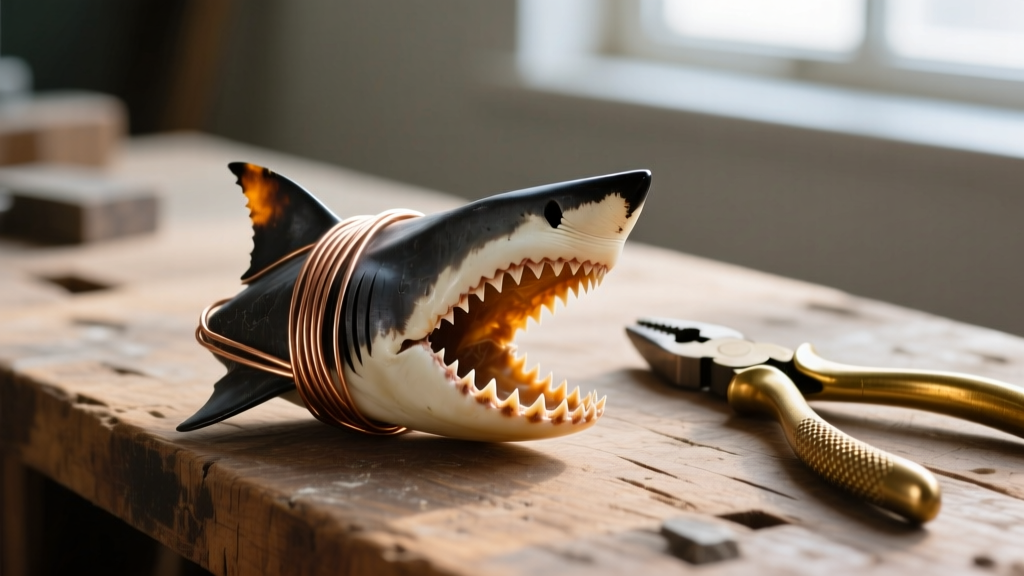
If you have ever found yourself asking, "how do you make a shark tooth necklace," you are likely looking for a meaningful, rugged, and ocean-inspired piece of jewelry. However, the gap between a cheap, tourist-trap souvenir and a high-quality, handcrafted pendant is vast. From a budget and value assessment perspective, crafting your own shark tooth necklace offers immense financial upside, provided you understand the material costs, ethical sourcing requirements, and hardware longevity.
As of 2026, the retail market for authentic, ethically sourced or fossilized shark tooth necklaces ranges from $65 to over $250, depending on the metalwork and the rarity of the specimen. By sourcing your own materials and utilizing budget-friendly wire wrapping or drilling techniques, you can reduce your cost basis to under $25. This guide breaks down the exact economics of DIY shark tooth jewelry, helping you maximize value without sacrificing durability or aesthetics.
Sourcing the Tooth: Fossil vs. Modern vs. Replica Pricing
The centerpiece of your necklace dictates the baseline of your budget. The market is flooded with counterfeit teeth made from dyed resin or bone powder composites. According to identification guidelines from the Gemological Institute of America (GIA), genuine fossilized teeth will feel significantly heavier than resin and will possess natural enamel imperfections and root matrix variations.
When budgeting, you must also consider the ethical and legal implications of modern teeth. The Convention on International Trade in Endangered Species (CITES) strictly regulates the sale of teeth from protected species like the Great White shark. Therefore, budget-conscious and ethically minded makers should focus on fossilized specimens or verified bycatch from non-restricted species.
| Material Type | Average Cost (2-inch Specimen) | Durability & Workability | Value Assessment |
|---|---|---|---|
| Megalodon Fossil (Morocco) | $18 - $45 | High (Heavy, requires strong bail) | Excellent investment; holds intrinsic geological value. |
| Mako Fossil (Miocene Era) | $12 - $25 | Medium (Lighter, easier to wire wrap) | Best budget-to-authenticity ratio for everyday wear. |
| Modern Tiger Shark (Ethical Bycatch) | $30 - $60 | High (Dense enamel, drillable) | Premium pricing; requires strict CITES documentation. |
| High-Grade Resin Replica | $3 - $8 | Low (Cannot be drilled easily, melts) | Poor long-term value; best for temporary costume wear. |
Choosing Your Hardware: Wire Wrapping vs. Drilling vs. Bails
Once you have your tooth, the next critical budget decision is the attachment method. How you secure the tooth impacts both your tooling costs and the structural integrity of the pendant.
1. Wire Wrapping (The Budget Champion)
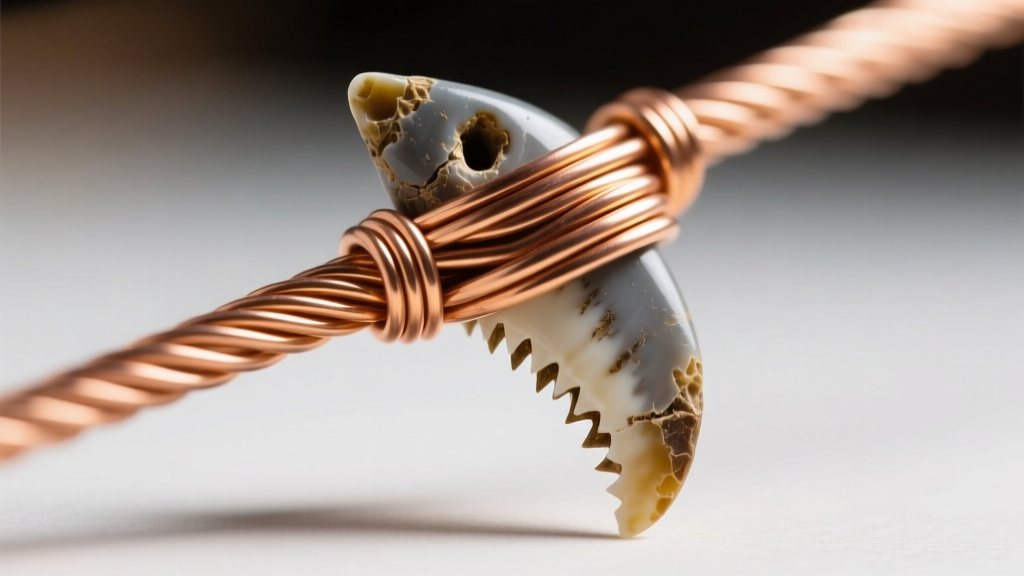
Wire wrapping is the most cost-effective and non-destructive method. You will need 20-gauge or 22-gauge dead-soft wire. Copper wire is highly malleable and costs roughly $6 for a 20-yard spool, making it the ultimate budget material. If you prefer the look of precious metals, dead-soft sterling silver wire costs approximately $35 per ounce. A single shark tooth bail requires about 6 to 8 inches of wire, meaning your precious metal cost per pendant is under $3. Wire wrapping preserves the fossil's integrity, maintaining its resale and heirloom value.
2. Drilling (High Risk, Mid-Range Cost)
Drilling a hole through the root or enamel allows for a simple jump-ring attachment. However, this requires a rotary tool (like a Dremel) and diamond-tipped burr bits ($12-$15 for a set). Fossilized enamel is incredibly brittle; without continuous water cooling during the drilling process, thermal shock will fracture the tooth, instantly destroying your investment. From a value perspective, drilling is only recommended for modern, non-fossilized teeth or thick-rooted specimens where the structural compromise is minimal.
3. Glue-On Bails (The Hidden Cost Trap)
Sterling silver or pewter glue-on bails cost between $4 and $9 each. While they save time, they require two-part jeweler's epoxy. Over time, exposure to sweat, saltwater, and UV light degrades the adhesive bond. A $9 bail failing and losing a $40 Megalodon tooth in the ocean is a catastrophic loss of value. We advise against glue-on bails for heavy fossilized teeth.
Cord, Chain, and Findings: Where to Save and Splurge
The suspension material you choose drastically alters the final price point and the aesthetic vibe of the necklace. According to wholesale suppliers like Fire Mountain Gems, buying cord and chain in bulk spools rather than pre-cut retail lengths can reduce your findings budget by up to 70%.
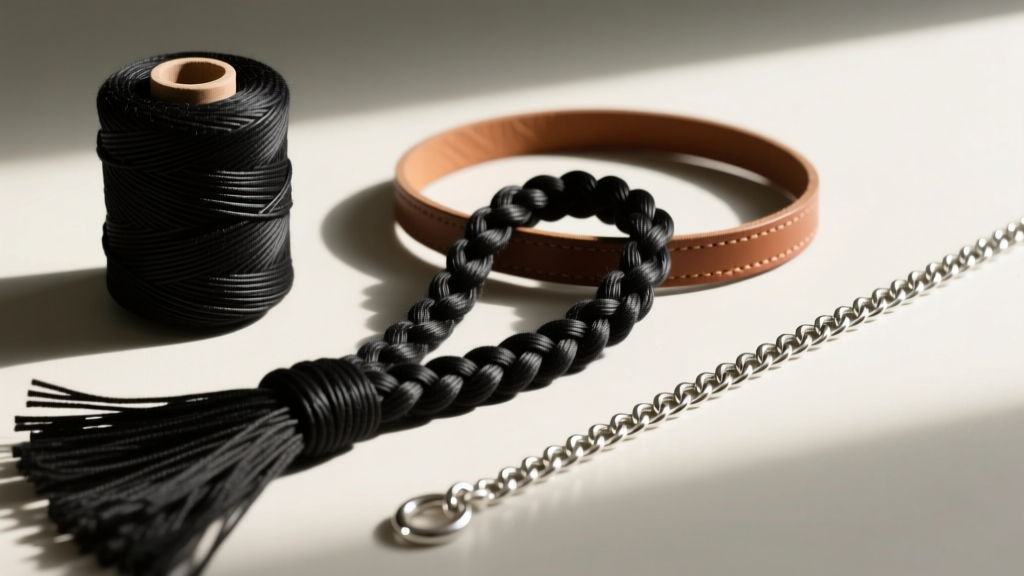
- Waxed Cotton Cord (Budget Pick): At $3 for a 50-yard spool, waxed cotton is waterproof, highly durable, and provides a rugged, surfer aesthetic that pairs perfectly with shark teeth. It is the undisputed king of budget necklace making.
- Kangaroo Leather (Mid-Range Splurge): Priced around $15 to $20 for a multi-yard lace, kangaroo leather offers immense tensile strength (up to 1,000 lbs of break strength) while remaining incredibly thin and supple. It elevates the perceived value of the necklace without the exorbitant cost of precious metal chains.
- Sterling Silver Rolo Chain (Premium Investment): A 2mm sterling rolo chain costs $25 to $40 for 18 inches. While expensive, pairing a high-grade, polished Megalodon fossil with a heavy silver chain transforms the piece from casual beachwear into a luxury men's or women's statement pendant, justifying a high retail markup if you choose to sell it.
Step-by-Step Budget Assembly (Wire Wrap Method)
To maximize your budget and ensure a secure hold, follow this specific wire-wrapping framework designed for asymmetrical fossilized teeth:
- Measure and Cut: Cut 12 inches of 20-gauge dead-soft copper or sterling silver wire using flush cutters.
- Create the Anchor: Fold the wire in half to find the center. Place the center of the wire against the back of the tooth, just below the root line.
- The Base Wrap: Bring both ends of the wire to the front of the tooth, crossing them tightly over the root. Pull firmly to seat the wire into the natural grooves of the fossil.
- Form the Bail: Take the longer end of the wire and wrap it upward, creating a tight, cylindrical loop (the bail) at the top center of the tooth. Use round-nose pliers to ensure the inner diameter is large enough for your chosen cord (minimum 4mm for leather).
- Secure and Trim: Wrap the remaining tail wire tightly around the base of the bail two to three times to lock the structure. Trim the excess wire flush and use chain-nose pliers to tuck the sharp end into the wrap, preventing it from scratching the wearer.
- Work Hardening: Gently tap the wire bail with a nylon-jaw hammer or a rawhide mallet. This work-hardens the metal, increasing its tensile strength so it won't bend when the heavy tooth swings.
Value Assessment: Is It Worth Making vs. Buying?
When evaluating the ROI of learning how do you make a shark tooth necklace, the financial and qualitative benefits heavily favor the DIY route. A commercially produced, wire-wrapped fossilized Mako necklace in a boutique surf shop will easily retail for $85 to $120. By sourcing a quality 2-inch Mako fossil online ($15), utilizing a spool of 20-gauge copper wire ($0.50 per project), and stringing it on bulk waxed cotton cord ($0.10), your total material cost sits at roughly $15.60.
Beyond the sheer profit margin, the value of a DIY necklace lies in the customization and ethical assurance. You control the provenance of the fossil, ensuring you are not contributing to the illegal poaching of modern, protected shark species. You also avoid the structural shortcuts often taken in mass-produced jewelry, such as weak glue bonds or thin, easily snapped jump rings. Ultimately, crafting your own shark tooth necklace is not just a budget-friendly endeavor; it is an exercise in creating a durable, heirloom-quality artifact that respects both your wallet and the ocean's apex predators.


