Doms Necklace Materials: Titanium, Gold, and Steel Compared
Discover the best materials for your Doms necklace. We compare titanium, 14k gold, and surgical steel for durability, weight, and skin safety.

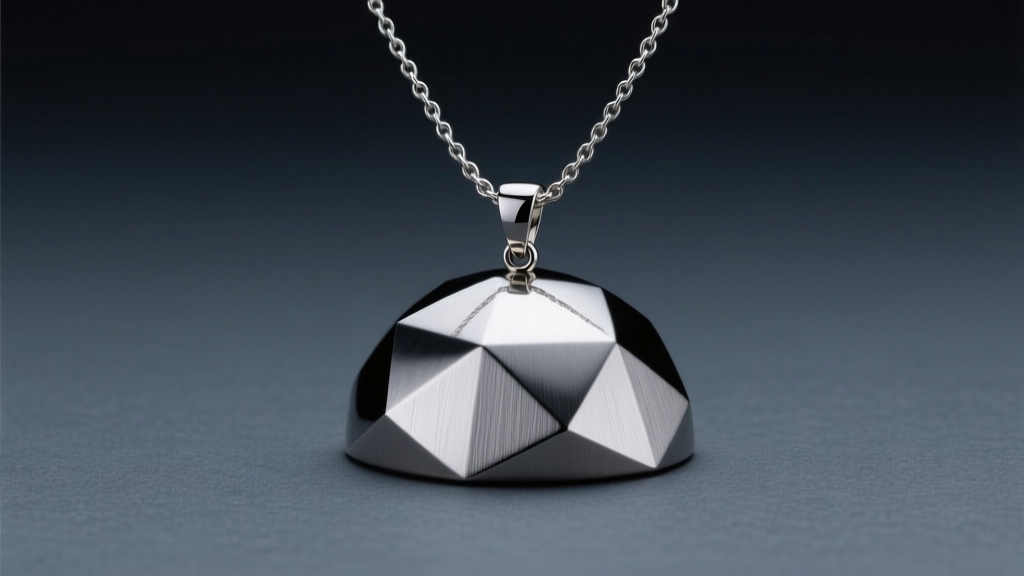
The Engineering Behind the Doms Necklace
The architectural jewelry movement has firmly cemented the Doms necklace—a structural, dome-inspired pendant style—as a wardrobe staple in 2026. Characterized by convex, geometric silhouettes and brutalist minimalism, the Doms pendant is a masterclass in spatial design. However, the visual appeal of these hollow or semi-solid geometric pieces is only half the equation. Because of their three-dimensional volume, the metallurgical properties of the chosen material dictate not just the necklace's longevity, but its physical drape, center of gravity, and biocompatibility against the skin.
Unlike flat stamped pendants, a Doms necklace acts as a lever on the chain. The outward projection of the dome creates a pendulum effect, meaning the metal must possess high yield strength to prevent the bail (the loop connecting the pendant to the chain) from warping over time. Choosing the wrong alloy can lead to a heavy, neck-straining piece or a delicate one prone to catastrophic denting. Below, we deconstruct the three dominant metals used in contemporary Doms necklaces: Grade 5 Titanium, 316L Surgical Steel, and Solid Gold Alloys.
Core Material Breakdown: Weight, Tarnish, and Biocompatibility
Grade 5 Titanium (Ti-6Al-4V)
For large-scale, oversized Doms pendants, Grade 5 Titanium is the undisputed champion of structural integrity. Alloyed with 6% aluminum and 4% vanadium, this aerospace-grade metal boasts a yield strength of approximately 830 MPa. More importantly for jewelry, its density is just 4.43 g/cm³—nearly half that of steel. This allows designers to create massive, 40mm+ hollow dome pendants that weigh less than 10 grams, eliminating cervical strain during all-day wear. Titanium is also entirely inert, making it the gold standard for wearers with severe contact dermatitis.
316L Surgical Stainless Steel
316L steel is the workhorse of accessible architectural jewelry. The 'L' denotes low carbon, which prevents carbide precipitation during the welding and casting processes, ensuring the structural seams of a hollow dome remain corrosion-resistant. Containing 16-18% chromium and 2-3% molybdenum, 316L offers excellent tarnish resistance and a high Mohs hardness of 5.5. However, its density (8.0 g/cm³) means a solid-cast Doms pendant will feel substantially heavier, requiring a thicker, more robust chain to support the load without stretching.
14k and 18k Solid Gold Alloys
Pure 24k gold is far too malleable for the structural demands of a Doms necklace; a bumped dome would dent irreparably. Therefore, jewelers rely on 14k (58.5% pure) or 18k (75% pure) alloys. According to hallmarking standards outlined by the Birmingham Assay Office, these alloys are mixed with copper, silver, and zinc to increase tensile strength. While 18k gold offers a richer, warmer hue and superior tarnish resistance, 14k gold provides a harder surface better suited for the inevitable micro-abrasions a protruding dome pendant will face.
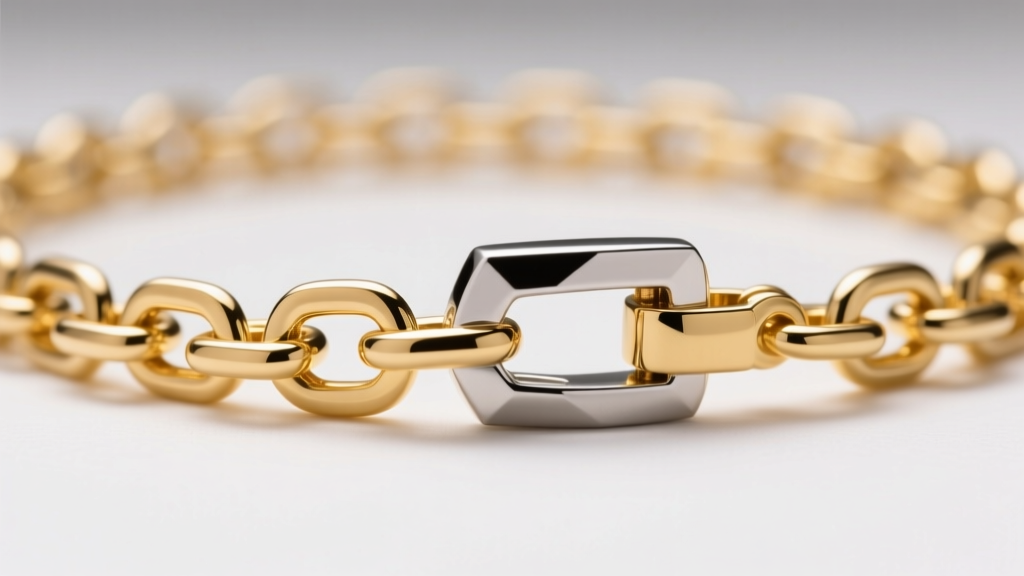
Comparative Data: Doms Necklace Material Matrix
When sourcing a Doms necklace, understanding the empirical data behind the metals is crucial for matching the piece to your lifestyle. The following matrix, informed by standard jewelry metal property charts, breaks down the critical specifications.
| Material | Density (g/cm³) | Mohs Hardness | Tarnish Resistance | Avg. Price Range (USD) | Hypoallergenic |
|---|---|---|---|---|---|
| Grade 5 Titanium | 4.43 | 6.0 | Exceptional | $60 - $180 | Yes (100%) |
| 316L Steel | 8.00 | 5.5 | High | $25 - $85 | Mostly (Contains Nickel) |
| 14k Yellow Gold | 12.90 | 3.5 - 4.0 | Moderate | $250 - $650 | Varies (Check for Nickel) |
| 18k Yellow Gold | 15.60 | 2.5 - 3.0 | High | $500 - $1,400+ | Mostly (Higher Purity) |
Real-World Failure Modes and Wear-and-Tear
Theoretical hardness ratings do not always translate to real-world durability, especially for a pendant shape that protrudes from the chest. Here are the specific failure modes associated with Doms necklaces based on their material composition:
- Bail Fatigue in Gold: Because gold alloys are denser and softer, the constant pendulum friction of a heavy dome pendant against the bail loop can cause 'galling' (material wear). Over 3-5 years, an 18k gold bail can thin by up to 15%, risking pendant loss.
- Hollow-Dome Denting: Many steel and titanium Doms necklaces utilize hollow electroforming or sheet-metal stamping to reduce weight. While Grade 5 Titanium has high tensile strength, a sharp, direct impact to a 1mm-thick hollow dome will cause a permanent concave dent that cannot be hammered out without specialized internal mandrels.
- Clasp Galling in Steel: 316L steel is notorious for 'thread galling' in lobster clasps. The microscopic friction between the steel lever and the housing can cause the clasp to seize or snap open unexpectedly. Always inspect the spring mechanism of steel Doms necklaces bi-annually.
Chain Pairing for Structural Pendants
A Doms necklace is only as strong as the chain that supports its unique center of gravity. The convex shape of the pendant pushes the weight forward, requiring a chain with high lateral rigidity.
Expert Rule of Thumb: Never pair a heavy, solid-cast Doms pendant with a delicate cable or box chain. The forward leverage will permanently stretch the links. Opt for a Wheat (Spiga) chain or a thick Mariner link, which distribute the pendulum torque across multiple interwoven planes.
For lightweight, hollow titanium domes, a 1.5mm to 2.0mm Box chain is ideal. The rigid, square links of a box chain complement the brutalist, geometric aesthetic of the dome while providing enough structural support to prevent the pendant from flipping upside down during movement.
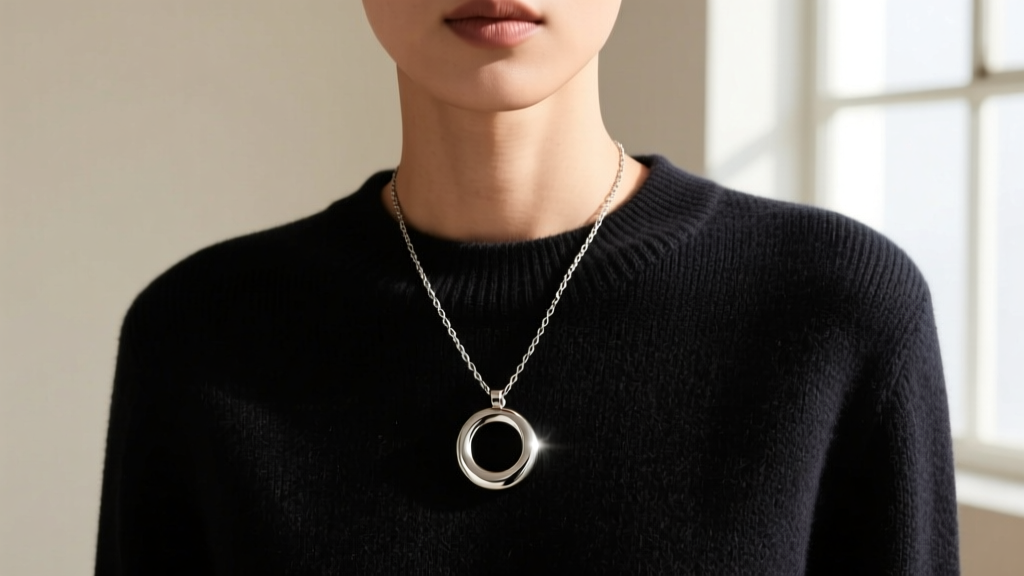
Skin Biocompatibility and the Nickel Directive
Because a Doms pendant rests directly against the sternum—an area prone to sweating and friction—metal ion leaching is a critical concern. Under the European EN 1811:2011 standard, jewelry intended for prolonged skin contact must not release more than 0.5 µg/cm²/week of nickel. While 316L surgical steel is marketed as 'hypoallergenic,' it contains up to 14% nickel. In highly acidic sweat environments, the passive chromium oxide layer can temporarily break down, releasing nickel ions and triggering contact dermatitis in sensitive individuals. If you have a known nickel allergy, bypass steel entirely and invest in a Grade 5 Titanium or high-purity 18k Palladium-White Gold Doms necklace.
Care, Maintenance, and Ultrasonic Warnings
Maintaining the architectural brilliance of a Doms necklace requires specific care protocols. The curved, reflective surfaces of dome pendants are magnets for sebum, lotion, and environmental dust, which can quickly dull the metal's luster.
Ultrasonic Cleaning Dangers: Never place a hollow-constructed Doms necklace in an ultrasonic cleaner. The high-frequency cavitation bubbles can force cleaning solutions into the microscopic seams of the pendant's bail or laser-welded joints. If the piece is not 100% hermetically sealed, the trapped liquid will cause internal oxidation or create a sloshing sound. Instead, use a mild, phosphate-free dish soap and a soft-bristled baby toothbrush to gently agitate the crevices where the dome meets the bail, rinsing with distilled water to prevent hard water spotting.
For solid gold Doms necklaces, micro-scratches are inevitable due to the metal's lower Mohs hardness. Rather than aggressively machine-polishing the piece—which removes microscopic layers of gold and softens the crisp architectural edges—embrace the patina. A lightly brushed or satin-finished titanium or steel dome will naturally hide wear patterns far better than a high-mirror polish, ensuring your architectural statement piece remains timeless for decades.


