Dragon Necklaces: A 2026 Material & Durability Guide
Discover the best metals for dragon necklaces in 2026. We compare 925 silver, 316L steel, titanium, and bronze for detail, weight, and tarnish.

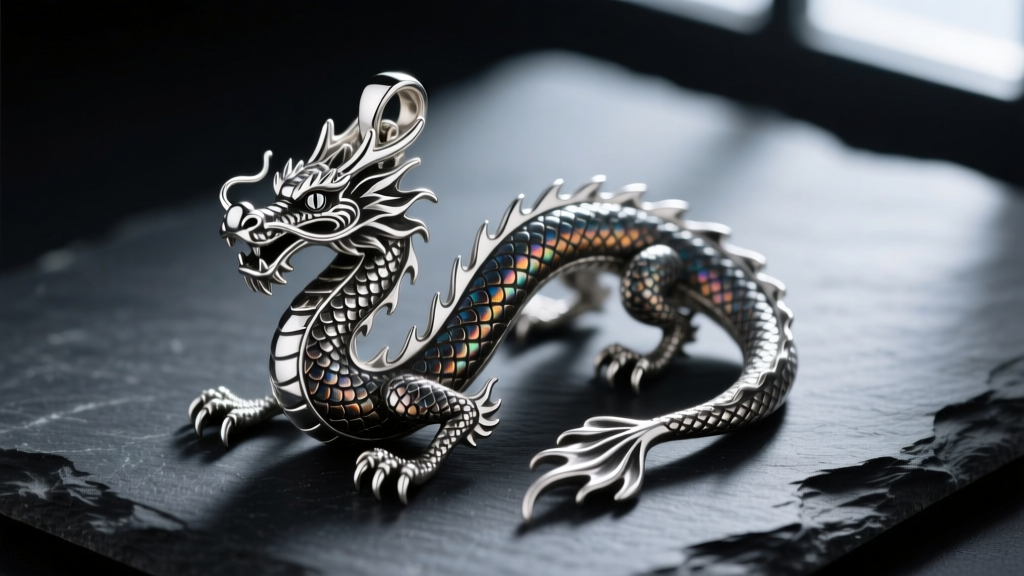
Dragon necklaces have transcended niche fantasy circles to become a staple in gothic, geek-chic, and avant-garde fashion. However, the intricate topography of a dragon pendant—complete with overlapping scales, swept-back wings, and jagged claws—presents unique metallurgical challenges. The material you choose dictates not only the aesthetic and weight of the piece but also how well it retains microscopic details over years of daily wear. In this 2026 guide, we break down the material properties, failure modes, and maintenance requirements of the most common metals used in dragon jewelry.
The Anatomy of a Dragon Pendant: Why Material Matters
Unlike smooth, minimalist pendants, dragon necklaces are essentially miniature sculptures. They feature deep undercuts, sharp protrusions, and recessed textures. This 3D topography means the metal must possess excellent castability or machinability to capture fine details like individual scales or the texture of a dragon's eye. Furthermore, deep crevices trap skin oils, moisture, and environmental pollutants, accelerating tarnish and corrosion in reactive metals. Finally, the physical weight of a large, solid metal dragon can cause neck strain if the material's density is too high, making the choice of alloy a critical ergonomic decision.
Metal Showdown: Comparing the Top 5 Materials
1. 925 Sterling Silver (The Detail King)
Sterling silver (92.5% pure silver, 7.5% copper) remains the gold standard for intricate fantasy jewelry. According to the Gemological Institute of America (GIA), the addition of copper provides the necessary hardness for jewelry, but it also introduces a vulnerability: tarnish. When exposed to sulfur in the air and skin, the copper reacts to form silver sulfide, creating a black patina.
E-E-A-T Insight: For dragon pendants, many jewelers apply a rhodium plating (typically 0.1 to 0.3 microns thick) to prevent tarnish. However, rhodium wears off high-friction areas (like the dragon's snout or wingtips) within 12 to 18 months. Unplated, oxidized silver is often preferred for dragon necklaces, as jewelers intentionally use liver of sulfur to blacken the deep scales, making the raised silver details pop. The Vickers hardness of 925 silver is roughly 65-75 HV, making it soft enough to capture flawless wax-cast details but prone to scratching if it rubs against harder surfaces.
2. 316L Surgical Stainless Steel (The Everyday Workhorse)
If you want a dragon necklace you can wear in the shower, at the gym, and in the ocean without a second thought, 316L stainless steel is the answer. The 'L' stands for Low Carbon, and the alloy includes 2-3% molybdenum, which drastically increases resistance to chlorides (like sweat and seawater).
Failure Mode: Because 316L steel is incredibly hard (150-200 HV) and has a high melting point, it is difficult to cast using traditional lost-wax methods. Instead, high-quality steel dragon pendants are often CNC machined or produced via metal injection molding (MIM). Cheaper steel pendants may lack the razor-sharp scale definition found in silver. Always verify the steel is 316L and not 304; 304 lacks molybdenum and will eventually develop superficial rust spots from acidic sweat.
3. Grade 5 Titanium (The Lightweight Titan)
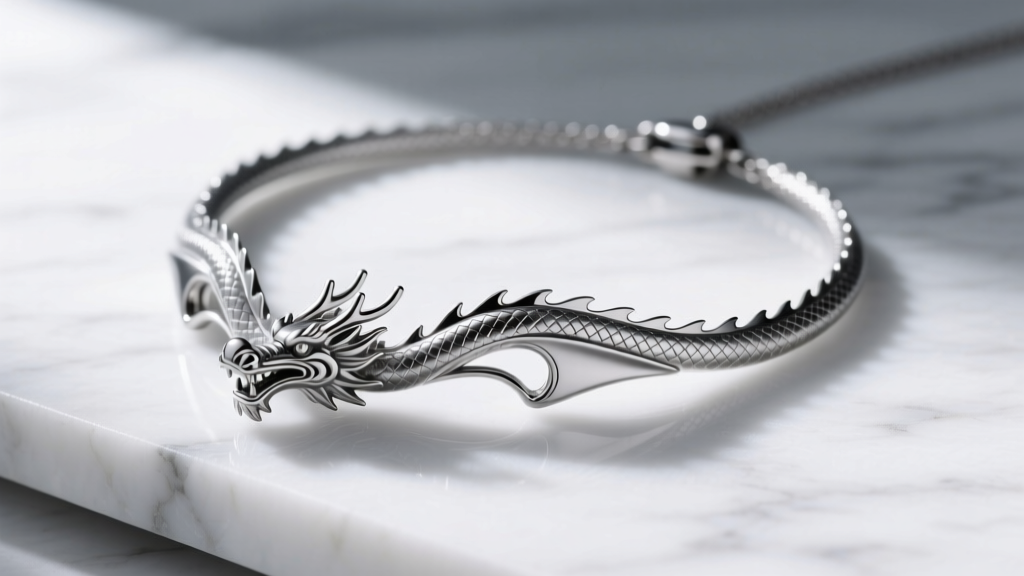
Titanium is revolutionizing large-scale fantasy jewelry. A solid, palm-sized dragon pendant cast in sterling silver can easily weigh 45 to 60 grams, leading to severe neck fatigue and chain stretching. Grade 5 Titanium (Ti-6Al-4V) offers a massive ergonomic advantage: its density is just 4.43 g/cm³, compared to silver's 10.49 g/cm³. The exact same dragon pendant in titanium will weigh less than half as much.
Properties: Titanium is completely hypoallergenic and biocompatible. It will never tarnish or turn your skin green. However, its extreme hardness makes post-casting polishing difficult, so titanium dragon necklaces usually feature a brushed, matte, or bead-blasted finish rather than a high mirror polish. Expect to pay a premium ($120–$350) due to the specialized tooling required to work the metal.
4. Bronze and Brass (The Antique Patina)
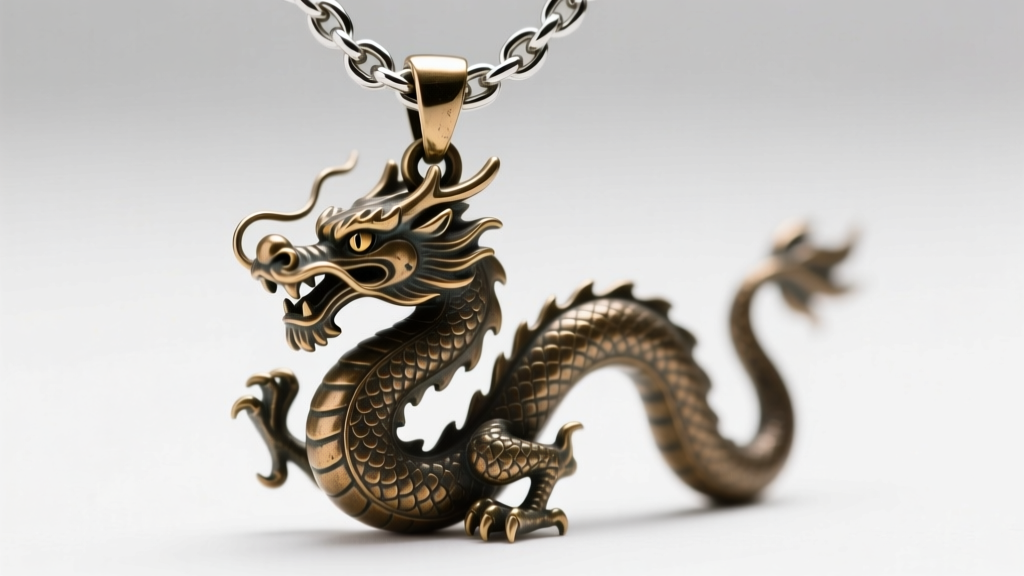
Bronze (copper and tin) and brass (copper and zinc) are heavily utilized in steampunk and antiqued dragon designs. These alloys naturally oxidize to a rich, earthy brown or green patina, giving the dragon an 'ancient relic' appearance.
Skin Reaction Warning: The copper in these alloys reacts with the acidity in human sweat (pH 4.5–6.0) to form copper chloride, which will leave a harmless but unsightly green stain on your chest. To mitigate this, look for bronze pendants that have been sealed with a microcrystalline wax or a clear polyurethane coating, though these coatings will need to be reapplied annually.
5. Pewter (The Budget Trap)
Pewter is a soft, low-melting-point alloy primarily composed of tin. While it is cheap and easy to cast, it is a poor choice for intricate dragon necklaces. With a Vickers hardness of just 15-20 HV, pewter is highly susceptible to deformation.
Failure Mode: The delicate wingtips, horns, and claws of a pewter dragon pendant will easily bend, warp, or snap off if the necklace catches on a sweater or is stored improperly in a jewelry box. Avoid pewter for any dragon design featuring protruding, fragile elements.
Material Properties Comparison Chart
| Metal Alloy | Vickers Hardness (HV) | Detail Retention | Tarnish / Corrosion Risk | Avg. Price Range (2026) |
|---|---|---|---|---|
| 925 Sterling Silver | 65 - 75 | Exceptional | High (Sulfide Tarnish) | $80 - $250 |
| 316L Stainless Steel | 150 - 200 | Moderate to Good | Very Low | $35 - $90 |
| Grade 5 Titanium | 340 - 360 | Good (Matte finishes) | None | $120 - $350 |
| Bronze / Brass | 80 - 110 | Very Good | High (Oxidation/Patina) | $50 - $150 |
| Pewter | 15 - 20 | Poor (Bends easily) | Moderate (Dullness) | $15 - $40 |
Chain Selection: Supporting the Beast
A heavy dragon pendant requires a chain engineered to handle dynamic tensile stress. The most common failure point in fantasy necklaces is not the pendant itself, but the chain snapping at the clasp or the bail (the loop connecting the pendant to the chain).
Gauge and Width: For pendants weighing over 25 grams, avoid delicate chains like standard cables or ropes under 2.0mm. Opt for a 3.0mm to 4.5mm Wheat chain, Curb chain, or Figaro chain. Wheat chains are particularly recommended because their woven, braided structure distributes tension evenly across multiple links, preventing sudden catastrophic failure.
Clasp Mechanics: Standard spring-ring clasps are insufficient for heavy dragon pendants; the internal spring mechanism will fatigue and fail. Always upgrade to a heavy-duty lobster clasp with a welded jump ring, or a toggle clasp, which uses the physical weight of the pendant to keep the T-bar securely seated in the ring.
Care and Maintenance by Metal Type
Maintaining the intricate scales and crevices of a dragon necklace requires specific protocols depending on the metal:
- Oxidized Silver & Bronze: Never use liquid silver dip or ultrasonic cleaners. The harsh chemicals and high-frequency vibrations will strip the intentional dark patina from the deep scales, leaving the pendant looking flat and washed out. Instead, use a soft horsehair detailing brush and a dry, untreated microfiber cloth to gently wipe only the raised, high-polish areas.
- 316L Steel & Titanium: These can be cleaned with warm water, a drop of mild dish soap, and a soft toothbrush to dislodge dead skin cells and sebum trapped between the dragon's scales. They can safely be placed in an ultrasonic cleaner if necessary.
- Storage: Because dragon pendants feature sharp protrusions, they will scratch other jewelry. Store them individually in a soft flannel pouch or a dedicated compartment with a silica gel packet to control ambient humidity and slow oxidation.
Final Verdict: Which Metal Should You Choose?
If you prioritize microscopic detail and traditional luxury, 925 sterling silver with intentional scale oxidation is unmatched. If you need a rugged, waterproof piece for daily wear without maintenance, 316L stainless steel is the most practical choice. For those investing in a massive, statement-making dragon who want to avoid neck strain, Grade 5 Titanium is the ultimate modern upgrade. Avoid pewter entirely, and reserve bronze for collectors who appreciate the evolving, organic nature of a living patina.


