Drop Necklace Silver Buying Guide: How to Choose the Right Piece
Discover how to choose the perfect drop necklace silver piece. Learn about sterling grades, chain lengths, pendant weights, and 2026 pricing tiers.


The Enduring Appeal of the Silver Drop
A well-crafted drop necklace silver piece remains a cornerstone of modern jewelry styling, bridging the gap between minimalist everyday wear and striking evening elegance. Unlike stationary pendants, a drop pendant is designed to move, catching the light and drawing the eye downward to elongate the neckline. However, this dynamic movement introduces unique structural challenges that buyers often overlook. When investing in a drop necklace, understanding the metallurgy, chain mechanics, and bail engineering is critical to ensuring longevity. In this comprehensive 2026 buying guide, we break down the exact specifications you need to look for to avoid premature wear, tarnish, and structural failure.
Metallurgy Matters: Decoding Silver Grades
Not all silver is created equal. The term "silver" on a jewelry tag can be misleading if you do not understand the specific alloy composition. According to the Gemological Institute of America (GIA), pure silver is too soft for functional jewelry, necessitating the addition of alloy metals. Here is how the three primary silver grades perform in drop necklace applications:
| Silver Grade | Composition | Tarnish Resistance | Best Application | Price Premium |
|---|---|---|---|---|
| Sterling (.925) | 92.5% Ag, 7.5% Copper | Low (Prone to oxidation) | Standard chains, stamped pendants | Baseline |
| Argentium (.935) | 93.5% Ag, Germanium, Copper | Very High (Self-healing oxide layer) | Premium chains, hypoallergenic needs | +15% to 25% |
| Fine (.999) | 99.9% Pure Silver | Highest | Heavy cast pendants only (Never chains) | +30% (Artisan castings) |
Expert Insight: If you are purchasing a heavy, solid-cast teardrop pendant, Fine (.999) silver is acceptable because the pendant does not endure tensile stress. However, the chain supporting it must be Sterling or Argentium. Argentium silver, which replaces some copper with germanium, has become the industry standard for high-end silver chains in 2026 due to its remarkable resistance to sulfur-induced tarnishing.
The Physics of the Drop: Chain and Bail Mechanics
The defining characteristic of a drop necklace is its pendulum-like motion. This constant swinging creates localized friction at the point where the pendant meets the chain. Choosing the wrong chain type will result in the chain acting like a microscopic saw, eventually cutting through the silver bail.
Chain Types to Avoid and Embrace
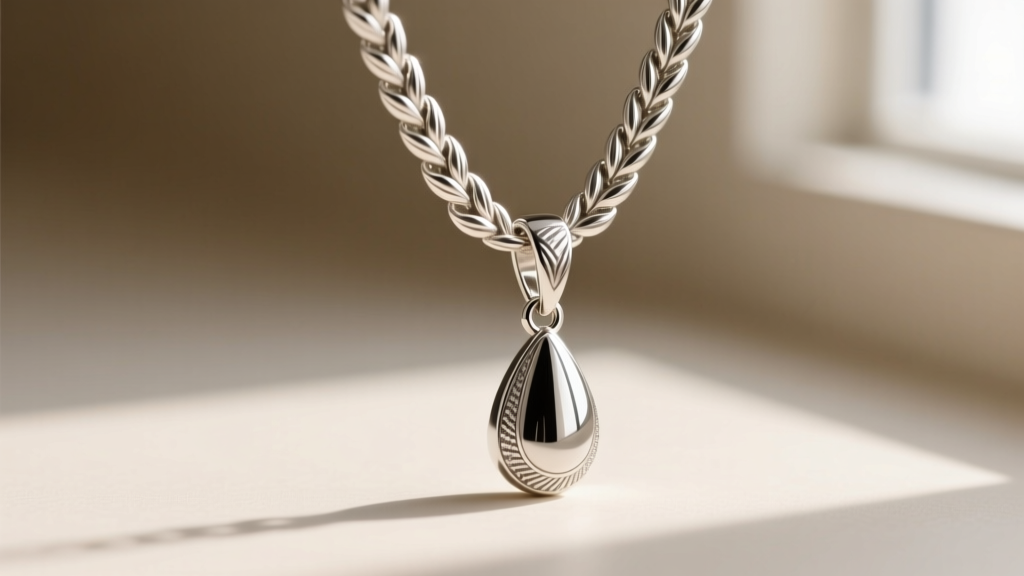
- Avoid Cable and Curb Chains for Heavy Drops: The individual round links of a standard cable chain create high friction points. Over time, a heavy silver drop will wear a groove into the soft silver bail, leading to loss of the pendant.
- Embrace Wheat (Spiga) and Rope Chains: These woven, multi-directional chains distribute the friction across a wider surface area. A 1.5mm to 2.0mm silver wheat chain offers the ideal balance of fluid drape and tensile strength for pendants weighing between 5 and 15 grams.
- The Box Chain Alternative: For geometric or architectural silver drops, a 1.2mm box chain provides a rigid, modern aesthetic while maintaining excellent structural integrity at the bail connection point.
Bail Engineering: The Unsung Hero
The bail is the loop that connects the pendant to the chain. For a drop necklace silver design, avoid "glue-on" or peg bails entirely; the downward kinetic force will eventually compromise the adhesive. Look for integral cast bails (where the bail is part of the original wax mold and cast in one piece with the pendant) or soldered wrap bails that feature a hardened steel or platinum inner lining to resist chain friction.
Proportion, Length, and Neckline Pairing
A drop pendant alters the visual geometry of your torso. The length of the chain dictates where the "drop" terminates, which must be carefully matched to your wardrobe. The Jewelers of America recommends standardizing your chain lengths based on the following neckline frameworks:
- 16-Inch (Choker/Collar): The drop rests in the suprasternal notch (the hollow of the throat). Best paired with V-necks, scoop necks, and open-collared button-downs. Avoid with high turtlenecks, as the pendant will get lost in the fabric folds.
- 18-Inch (Princess): The most versatile length. The drop rests on the collarbone. This length works seamlessly over crew necks, boat necks, and lightweight knitwear. It provides enough visual weight to anchor a minimalist outfit.
- 20 to 24-Inch (Matinee/Opera): The drop plunges to the sternum or upper abdomen. This is strictly for deep-V necklines, wrap dresses, or layering over solid-colored, heavyweight fabrics like silk blouses or fine-gauge merino wool.
Gemstone Settings in Silver Drops
Many silver drop necklaces feature a singular gemstone—commonly moonstone, labradorite, onyx, or turquoise—to enhance the teardrop silhouette. Because silver is softer than gold or platinum, the setting must be engineered to protect the stone from impact.
Bezel vs. Prong Settings: For a drop pendant, which is prone to swinging and striking surfaces, a full bezel setting is vastly superior to prongs. A bezel wraps a continuous ribbon of silver around the gemstone's girdle, protecting the edges from chipping. If you prefer the light-return of a prong setting, ensure the silver prongs are at least 1.2mm thick and feature a "V-prong" at the pointed tip of the teardrop stone to prevent cleavage-plane splitting.
2026 Market Pricing and Value Tiers
Understanding what you should pay for a drop necklace silver piece requires navigating three distinct market tiers. Prices below reflect the 2026 landscape, accounting for recent fluctuations in raw silver spot prices and artisan labor costs.
| Market Tier | Price Range (USD) | What to Expect | Red Flags to Avoid |
|---|---|---|---|
| Fast Fashion / Mass Market | $25 - $65 | Hollow-cast pendants, thin cable chains, rhodium flash plating over brass or low-grade silver. | Pendants that feel unusually light; chains that kink easily. |
| Mid-Tier / Artisan | $85 - $250 | Solid .925 or Argentium silver, integral cast bails, genuine semi-precious stones in bezel settings. | Lack of a ".925" or "925" hallmark stamp on the bail or clasp. |
| Fine Jewelry / Designer | $300 - $800+ | Heavy gram weight (15g+), patented clasp mechanisms, premium gemstones, lifetime structural warranties. | Overpaying for brand prestige when the silver gram weight is under 5 grams. |
Clasp Mechanics and Security
The clasp is the most common point of failure on any necklace. For a drop necklace, the weight of the pendant naturally pulls the chain downward, which can cause standard spring-ring clasps to catch on clothing and pull open.
The Upgrade: Look for a lobster clasp with a reinforced internal spring, or better yet, a box clasp with a figure-eight safety latch on heavier pieces. If your chosen necklace features a standard spring ring, have a local jeweler swap it for a 5mm or 7mm lobster clasp—a $15 upgrade that will save you from losing a cherished pendant.
Final Verdict: Care and Maintenance
To maintain the brilliant luster of your silver drop, avoid storing it in humid environments like bathrooms. The sulfur in the air accelerates tarnishing, particularly on .925 sterling silver. Store the necklace laid flat in an anti-tarnish cloth pouch to prevent the chain from tangling and the pendant from scratching against other metals. By prioritizing Argentium alloys, woven chains, and secure bezel settings, your drop necklace will remain a flawless, dynamic staple in your wardrobe for decades to come.