The Ultimate Ear Necklace Material Guide: Titanium vs Gold
Discover the best metals for your ear necklace. We compare implant-grade titanium, 14k gold, and steel for durability, tension, and hypoallergenic wear.

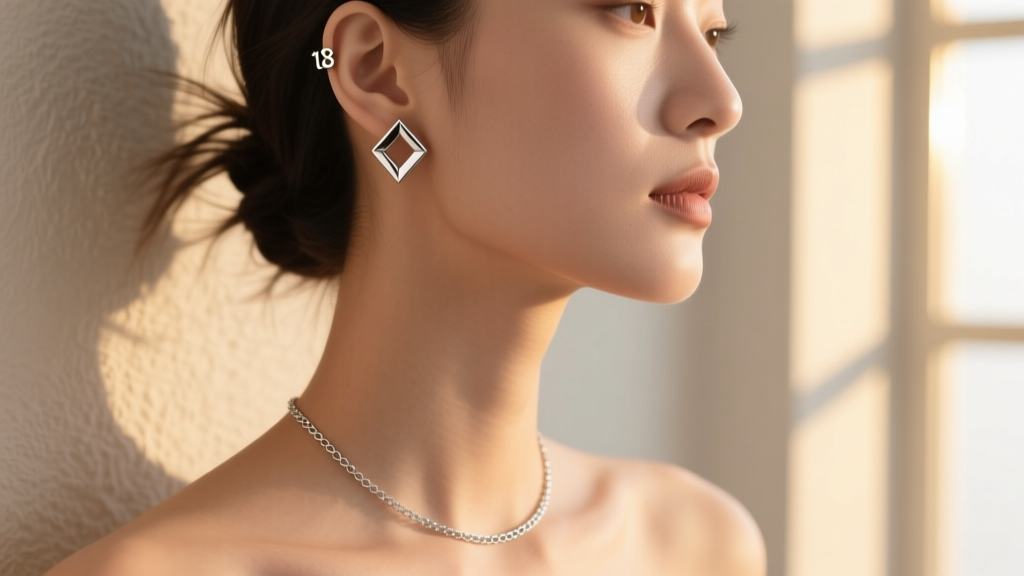
The Biomechanics of the Ear Necklace
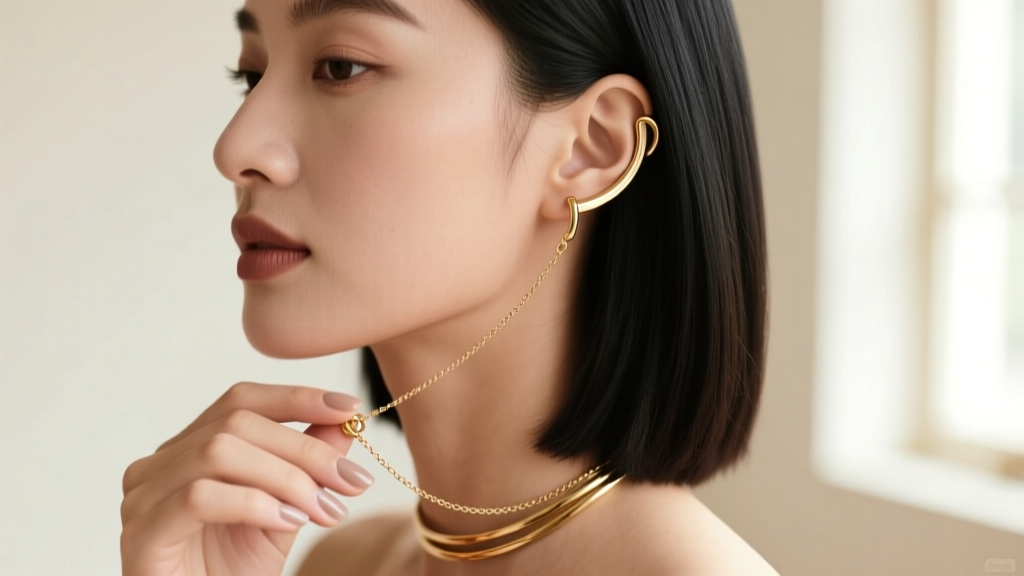
The modern ear necklace—a continuous or linked chain bridging an ear cuff, stud, or hook to a collarbone or choker chain—is one of the most striking trends in contemporary body jewelry. However, from a metallurgical and anatomical perspective, it presents a unique engineering challenge. Unlike a standard pendant necklace that rests passively on the clavicle, an ear necklace acts as a dynamic lever. When the neck chain snags on clothing or hair, the tensile load is transferred directly to the earlobe or cartilage piercing.
Because the ear connection point is subjected to sudden, high-impact tension while simultaneously residing in a highly sensitive, bacteria-prone microenvironment, the choice of metal is not merely an aesthetic decision. It is a matter of structural integrity and dermatological safety. In this guide, we dissect the material properties of the most common metals used in ear-to-neck chains, evaluating their tensile strength, nickel release rates, and long-term viability.
Anatomy of the Connection: Three Distinct Zones
To understand material requirements, we must divide the ear necklace into three functional zones, each demanding specific metal properties:
- The Ear Anchor: The stud, hook, or cuff that sits inside or against the piercing. This zone requires strict biocompatibility and a smooth surface finish to prevent tissue micro-tears.
- The Suspension Chain: The draping chain connecting the ear to the neck. This zone requires high flexibility and resistance to work-hardening and snap fractures.
- The Jump Ring Interface: The critical link connecting the ear anchor to the chain. This component bears the highest shear stress and must resist deformation.
Material Showdown: Titanium, Gold, and Steel
Not all jewelry metals are created equal. Below is a comparative analysis of the primary alloys used in high-end and commercial ear necklaces, benchmarked against industrial material standards.
| Material Grade | Tensile Strength (MPa) | Nickel Release (µg/cm²/week) | Recommended Gauge | Best Application Zone |
|---|---|---|---|---|
| ASTM F136 Titanium (Ti-6Al-4V ELI) | ~890 MPa | 0.00 (Nickel-Free) | 20G - 18G | Ear Anchor & Jump Rings |
| 14k Solid Gold (Nickel-Free Alloy) | ~550 MPa | < 0.10 | 18G - 16G | Suspension Chain & Anchors |
| 18k Solid Gold | ~400 MPa | < 0.05 | 16G+ | Decorative Ear Cuffs |
| 316L Surgical Stainless Steel | ~485 MPa | 0.10 - 0.50 | 18G - 16G | Neck Chain (Non-Piercing) |
| 925 Sterling Silver | ~300 MPa | 0.00 (But high tarnish/sulfide) | 16G+ | Avoid for Ear Anchors |
The Hypoallergenic Imperative: Pierced vs. Intact Skin
The most critical factor in selecting an ear necklace metal is understanding the difference between intact skin (the neck) and a fistula (the healed ear piercing). The European Union’s Nickel Directive (EN 1811:2011) strictly limits nickel release for post-assemblies intended to be inserted into pierced ears to 0.2 µg/cm²/week.
While 316L surgical steel is often marketed as 'hypoallergenic,' it contains up to 10-14% nickel bound in its crystalline lattice. Over time, exposure to the slightly acidic pH of human sweat and sebum can leach nickel ions from the steel. On the neck, this might cause mild contact dermatitis. Inside an ear piercing, however, it can trigger localized granulomas, hypergranulation, and piercing rejection. For the ear anchor of your ear necklace, the Association of Professional Piercers (APP) strongly recommends only implant-grade materials like ASTM F136 Titanium or high-karat, nickel-free gold.
Why 14k Gold Outperforms 18k Gold for Tension
When it comes to gold ear necklaces, purists often gravitate toward 18k gold for its rich color and higher purity (75% gold). However, from a structural engineering standpoint, the Gemological Institute of America (GIA) notes that 18k gold is significantly softer and more malleable than 14k gold (58.5% gold).
Expert Insight: If your ear necklace features a fine chain that is prone to snagging, 18k gold jump rings will slowly stretch and pull apart under repetitive micro-tension. 14k gold, alloyed with copper, silver, and zinc, offers a superior yield strength, making it the much safer choice for the structural links and ear hooks that bear the mechanical load of the necklace.
The Danger of Mixed Metals: Galvanic Corrosion
A common mistake in styling and manufacturing ear necklaces is mixing different base metals—for example, attaching a sterling silver ear cuff to a gold-plated brass neck chain. When these two dissimilar metals are bridged by an electrolyte (such as perspiration or high ambient humidity), they create a microscopic galvanic cell.
In this 'battery effect,' the less noble metal (silver or brass) becomes the anode and corrodes rapidly, while the more noble metal (gold) acts as the cathode. This not only destroys the structural integrity of the jump rings, leading to sudden chain failure, but it also releases metallic salts into the skin, causing severe allergic contact dermatitis and permanent hyperpigmentation of the earlobe. Always ensure that the ear anchor, the connecting jump rings, and the primary suspension chain are forged from the exact same base metal alloy.
Gauge Sizing and the 'Cheese Cutter' Effect
The thickness of the wire used at the ear connection point dictates both the comfort and the safety of the ear necklace. Standard lobe piercings are typically 20-gauge (0.81mm) or 18-gauge (1.02mm).
If a heavy neck chain is attached to a 22-gauge (0.64mm) or thinner ear hook, the downward force concentrates onto a microscopic surface area of the piercing fistula. Over time, this continuous pressure can cause the jewelry to slowly migrate and slice through the tissue—a phenomenon known in the body modification industry as the 'cheese cutter effect.' To prevent this, the ear anchor and the immediate connecting links of an ear necklace should never be thinner than 18-gauge (1.02mm), regardless of how delicate the rest of the collarbone chain appears.
Tension-Release Design Features
To mitigate the risk of earlobe tearing during a severe snag, high-end jewelers engineer intentional failure points into the ear necklace design. Look for the following structural safeguards:
- Magnetic Breakaway Clasps: Placed midway down the suspension chain, these neodymium magnetic links will safely detach under 2-3 lbs of lateral force, saving the ear piercing from trauma.
- Sacrificial Jump Rings: Using a slightly softer alloy or a thinner gauge for the jump ring connecting the neck chain to the ear anchor ensures that if a snag occurs, the ring bends open rather than tearing the ear tissue.
- Ear Cuff Tensioners: For non-pierced ear necklaces, the cuff must feature a silicone-lined inner grip or an adjustable tension screw to prevent the metal from slipping off the cartilage when the neck chain shifts.
Final Verdict: Choosing Your Metal
When investing in an ear necklace, prioritize the biocompatibility of the ear anchor above all else. Implant-grade titanium (ASTM F136) remains the undisputed champion for sensitive piercings, offering unmatched tensile strength and zero nickel exposure. If you prefer the warmth of precious metals, opt for 14k solid gold, ensuring it is explicitly alloyed without nickel. Avoid surgical steel for the ear connection, and never mix dissimilar metals across the chain. By respecting the metallurgical realities of tension and skin contact, your ear necklace will remain a safe, enduring, and breathtaking staple in your jewelry wardrobe.


