How to Clean and Care for Your Favorite Easter Necklace
Learn expert cleaning and storage tips for your Easter necklace. Protect enamel, gold vermeil, and pastel gemstones with our detailed maintenance guide.

The Unique Material Profile of Spring and Easter Jewelry
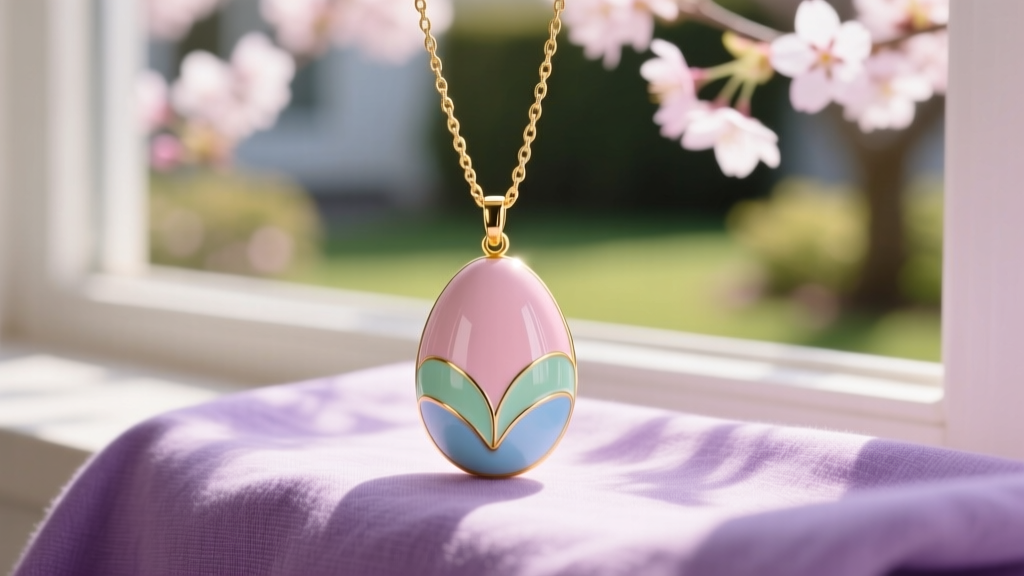
Easter necklaces are beloved seasonal staples, often featuring intricate motifs like enameled eggs, floral pendants, springtime crosses, and delicate bunny charms. However, the very materials that make these pieces visually striking—vitreous enamel, gold vermeil, and porous pastel gemstones—also make them highly susceptible to environmental damage, tarnishing, and improper cleaning techniques. Unlike solid 14k gold or platinum chains, an Easter necklace requires a highly specialized maintenance protocol to preserve its vibrant colors and structural integrity.
To properly care for these pieces, you must first understand their material anatomy. Most high-quality holiday pendants utilize vitreous enamel, which is essentially powdered glass fused to metal at extreme temperatures. While beautiful, vitreous enamel is brittle and can chip upon impact with hard surfaces. Conversely, more affordable seasonal jewelry often uses cold enamel (an epoxy-based resin), which is prone to scratching, yellowing from UV exposure, and peeling when exposed to harsh chemicals. Furthermore, the chains suspending these pendants are frequently crafted from gold vermeil—a thick layer of gold (minimum 2.5 microns) plated over sterling silver. According to the American Gem Society, treating vermeil like solid gold will rapidly strip the plating, exposing the silver core to rapid oxidation.
The 4-Step Cleaning Protocol for Enamel and Pastel Gemstones
When your Easter necklace accumulates skin oils, lotion residue, and environmental dust, it requires a gentle, non-abrasive cleaning approach. Pastel gemstones frequently used in spring jewelry—such as rose quartz, morganite, aquamarine, and pearls—are often heavily included or porous, meaning aggressive scrubbing can cause micro-fractures or surface dulling.
Step 1: Prepare a pH-Neutral Bath
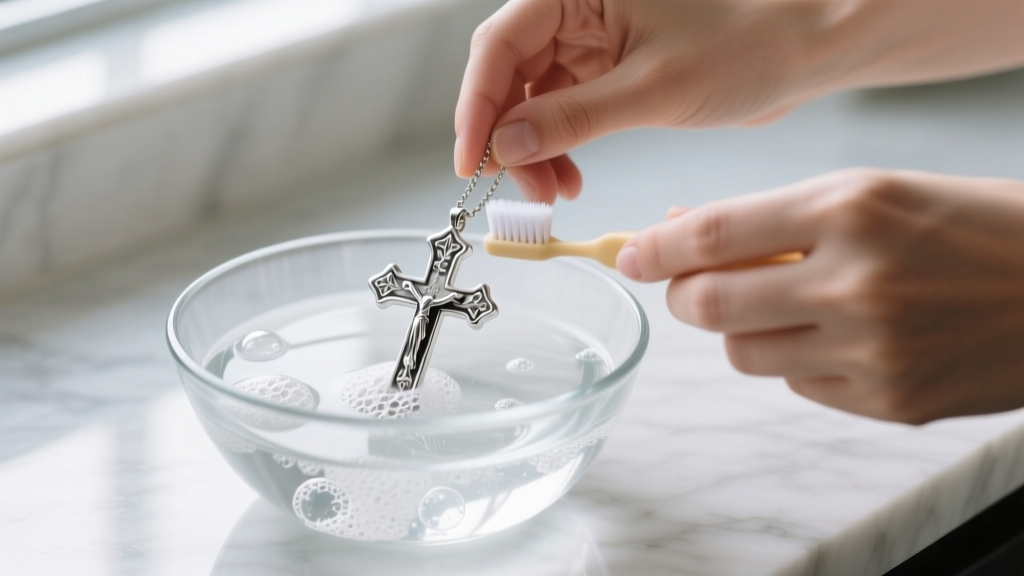
Fill a small glass bowl with lukewarm distilled water. Tap water contains chlorine and heavy minerals that can leave a cloudy film on pastel gemstones and accelerate the tarnishing of sterling silver bases. Add two drops of a pH-neutral, fragrance-free dish soap (such as original Dawn). Avoid any soaps containing moisturizers or citrus extracts, as the citric acid can etch the surface of pearls and soft enamel.
Step 2: The Three-Minute Soak
Submerge your Easter necklace in the solution for exactly three minutes. This brief window is sufficient to loosen sebum and cosmetic buildup without allowing water to penetrate the microscopic gaps between the enamel and the metal backing, which can cause the adhesive on cold enamel pieces to fail.
Step 3: Targeted Agitation
Using an extra-soft baby toothbrush (never a standard adult toothbrush, as the bristles are too rigid and will leave micro-scratches on gold vermeil), gently brush the crevices of the pendant. Use light, circular motions. If your necklace features a pearl or opal accent, skip brushing the gemstone entirely and only clean the surrounding metal bail.
Step 4: Pat Dry and Air Cure
Remove the necklace and pat it dry with a lint-free microfiber cloth. Do not rub vigorously. Allow the piece to air dry completely on a towel for at least two hours before storing it, ensuring no moisture remains trapped in the chain links or pendant bail.
The Ultrasonic and Chemical Danger Zone
One of the most common and catastrophic mistakes jewelry owners make is placing seasonal pieces into ultrasonic cleaners. While ultrasonic machines operating at 40kHz frequencies are excellent for solid diamond and platinum jewelry, they are notoriously destructive to Easter necklaces. The high-frequency sound waves create microscopic cavitation bubbles that implode against the jewelry's surface. This violent action will instantly shatter vitreous enamel, fracture included pastel gemstones like emerald or morganite, and strip gold vermeil plating down to the bare silver.
"Never use ultrasonic cleaners or steamers on porous gemstones, enamel work, or plated jewelry. The vibrations and extreme heat will compromise the structural integrity of the piece and cause irreversible delamination." — Gemological Institute of America (GIA)
Similarly, avoid commercial silver dip solutions. These liquid tarnish removers rely on thiourea and strong acids to strip oxidation from silver. If the solution seeps under the edge of an enamel inlay, it will permanently discolor the resin or cause the glass enamel to pop out of its metal bezel.
Long-Term Storage Framework for Seasonal Pieces
Because Easter necklaces are typically worn for only a few weeks each year, how they are stored for the remaining eleven months dictates their longevity. Sterling silver tarnishes when exposed to hydrogen sulfide in the air, and gold vermeil can suffer from galvanic corrosion if stored improperly.
- Individual Polyethylene Enclosures: Store each necklace in its own airtight, zip-top polyethylene bag. Avoid PVC plastics, as they can off-gas chemicals that pit the surface of pearls and soft gems.
- Anti-Tarnish Strips: Place a 3M anti-tarnish strip inside each bag. These strips absorb sulfur compounds and can protect silver and vermeil from oxidation for up to 12 months in a sealed environment.
- Humidity Control: Include a small silica gel desiccant packet in your primary jewelry drawer or safe to maintain a relative humidity below 40%. High humidity accelerates the oxidation process and can cause epoxy-based cold enamels to cloud.
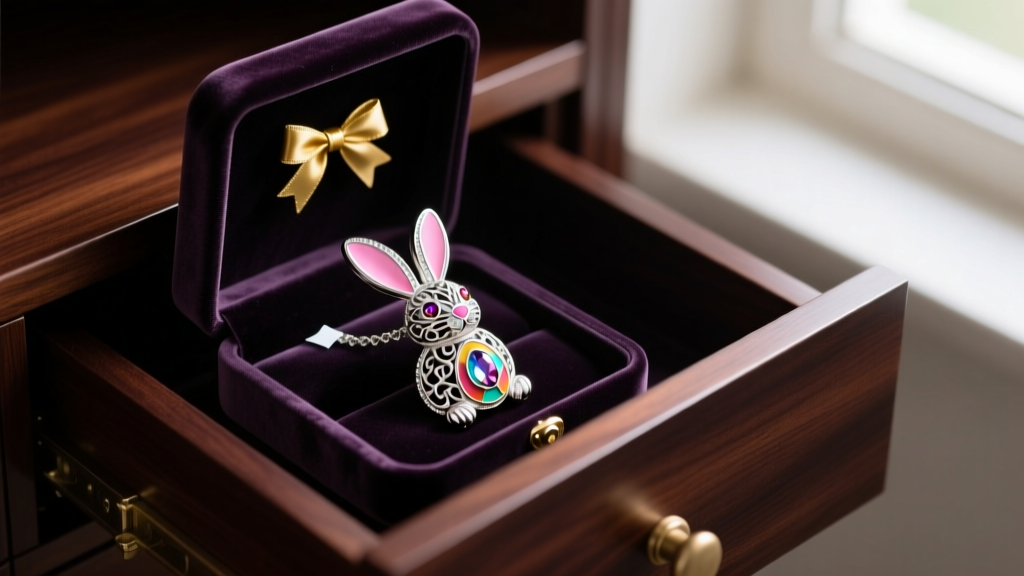
- Suspension over Coiling: To prevent the delicate chains from tangling and kinking, hang the necklaces on a velvet-lined jewelry arbor or lay them perfectly flat. Never coil a vermeil chain tightly, as this stresses the metal and causes the plating to flake at the bend points.
Troubleshooting Table: Fixing Common Easter Necklace Issues
Even with meticulous care, seasonal jewelry can encounter specific issues. Use this diagnostic framework to address common problems without causing further damage.
| Issue | Root Cause | Actionable Solution |
|---|---|---|
| Cloudy Pastel Gemstone | Lotion or hairspray buildup on the pavilion (back) of the stone. | Use a wooden toothpick wrapped in a microfiber cloth dampened with rubbing alcohol to gently clean the back of the stone, avoiding the metal setting. |
| Vermeil Chain Turning Black | Sulfur exposure and depleted gold plating exposing the sterling silver core. | Do not use silver dip. Gently polish with a dry, treated silver polishing cloth (like a Sunshine Cloth), applying zero pressure to the gold-plated sections. |
| Small Chip in Vitreous Enamel | Impact against a hard surface causing the glass to fracture. | Enamel cannot be glued. Take the piece to a professional lapidary or enamelist who can use a laser welder to repair the metal bezel and re-fire the glass. |
| Sticky Cold Enamel Surface | UV degradation and chemical breakdown of the epoxy resin. | Wipe gently with a damp cloth. If degradation is severe, the piece must be sent back to the manufacturer for a complete resin pour replacement. |
| Loose Pendant Bail | Friction from the chain wearing down the jump ring or solder joint. | Stop wearing immediately. A local jeweler can re-solder the bail using a laser to avoid heating the adjacent enamel or heat-sensitive gemstones. |
Final Thoughts on Preserving Holiday Heirlooms
An Easter necklace is more than just a seasonal accessory; it is often a sentimental piece passed down through generations or purchased to commemorate a specific springtime milestone. By respecting the unique vulnerabilities of enamel, gold vermeil, and pastel gemstones, and by strictly avoiding ultrasonic cleaners and harsh chemicals, you can ensure that your holiday jewelry remains as vibrant and flawless as the day it was acquired. Consistent, gentle care is the ultimate secret to preserving the delicate beauty of your seasonal collection.


