An Easy Way to Untangle Necklaces: Tools, Chains & Storage
Discover an easy way to untangle necklaces and prevent future knots. Learn which chain styles tangle least and the best tools and storage to buy.

There are few things more frustrating in jewelry ownership than reaching into your jewelry box for a delicate pendant necklace, only to pull out a microscopic, impenetrable bird's nest of metal links. The dreaded "jewelry box knot" is a universal annoyance, but it is not an unavoidable one. Finding an easy way to untangle necklaces is only half the battle; the true secret lies in understanding chain geometry, purchasing the right maintenance tools, and investing in preventative storage. In this comprehensive buyer's guide, we break down the physics of chain tangling, which necklace styles to buy if you hate knots, and the exact tools you need to keep your collection pristine.
The Physics of Chain Tangling: Why Some Knot and Others Don't
Before you can solve the problem, you must understand the mechanics behind it. Chain tangling is driven by three primary factors: link geometry, friction coefficients, and electrostatic attraction. When necklaces are tossed into a drawer or travel bag, kinetic energy causes the links to shift. If a chain features rounded, highly mobile links (like a standard cable chain), the individual loops easily pivot, slip through one another, and lock into place when tension is applied.
Furthermore, chains with high surface texture—such as rope or twisted chains—act like microscopic Velcro. The grooves and ridges catch on adjacent links, drastically increasing the friction coefficient and making knots tighter and harder to undo. Conversely, chains with flat, smooth exterior profiles slide past one another with minimal resistance, making them inherently tangle-resistant. Understanding this physics framework is the first step in making smarter jewelry purchases.
Buying Tangle-Resistant Chains: What to Look For
If you are shopping for a new necklace and want to minimize future headaches, the weave of the chain is your most critical purchasing criterion. Below is a decision framework to help you choose the right chain style based on your lifestyle and tolerance for maintenance.
| Chain Style | Tangle Risk | Link Geometry & Friction | Best Use Case |
|---|---|---|---|
| Box Chain | Very Low | Square, interlocking links with flat exterior surfaces that slide smoothly. | Everyday wear, heavy pendants, travel. |
| Wheat Chain | Low | Braided, oval links woven in one direction; highly flexible but low snag risk. | Delicate pendants, layering. |
| Cable Chain | High | Uniform rounded links that pivot freely and easily slip through each other. | Minimalist looks (requires careful storage). |
| Rope Chain | Very High | Twisted, textured links with high surface friction that catch and bind. | Statement pieces (store individually). |
| Herringbone | Moderate | Flat, V-shaped links. Low tangle risk, but high kink risk if bent. | Collar necklaces, worn flat against skin. |
A Warning on Herringbone and Snake Chains
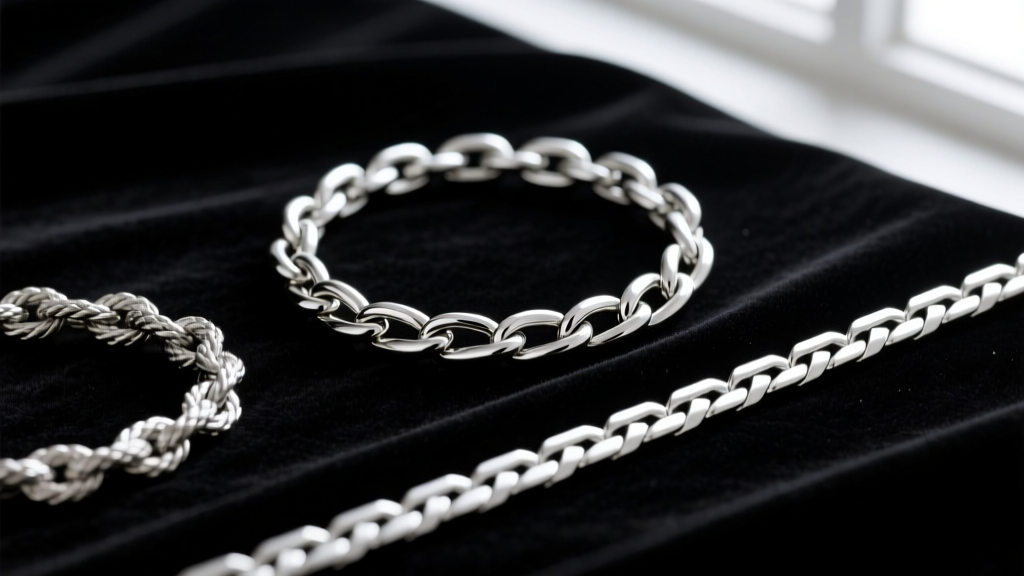
While flat chains like herringbone and snake weaves rarely tangle, they present a different structural vulnerability. These chains are composed of tightly packed, work-hardened metal links. If a herringbone chain is bent past a 45-degree angle or folded under pressure, the metal will permanently kink and weaken. When buying these styles, ensure you are also purchasing rigid, flat-lay storage to protect your investment.
The Best Tools to Buy: Finding an Easy Way to Untangle Necklaces
When prevention fails and you are faced with a stubborn knot, pulling and picking with your fingers will only tighten the metal links and risk snapping the chain. To find an easy way to untangle necklaces, you need to reduce friction and use precision tools. Here is what you should add to your jewelry care kit.
1. Precision Needles
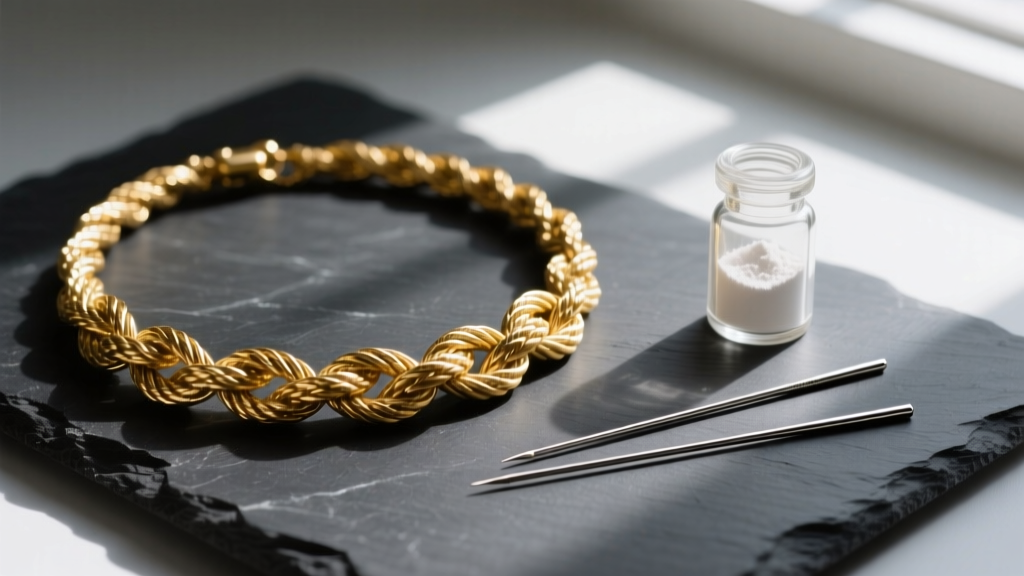
Forget standard sewing needles; they are often too thick for fine jewelry chains. Invest in a set of beading needles or fine quilting needles. Look for Size 10 (1.3mm diameter) or Size 12 (1.1mm diameter) needles. These are rigid enough to lever against metal links but thin enough to slip into the microscopic gaps of a 0.9mm cable chain knot without scratching the gold or silver.
2. The Right Lubricants (And What to Avoid)
To loosen a tight knot, you must reduce the friction between the metal links. The best, safest lubricant is talc-free baby powder (usually cornstarch-based) or finely milled graphite powder. Simply sprinkle a generous amount over the knot, massage it gently into the links, and use your needles to work the knot apart.
Expert Warning: Never use household oils, WD-40, or heavy lotions to untangle chains featuring porous gemstones. According to the Gemological Institute of America (GIA), organic and porous gems like pearls, opals, turquoise, and emeralds can absorb oils and chemicals, leading to irreversible discoloration and structural degradation. Stick to dry powders for safety.
3. Silicone Untangling Mats
Attempting to untangle a chain on a hard surface like a glass vanity or marble countertop often results in the necklace slipping away from you. Purchase a small, textured silicone jewelry mat (typically priced between $8 and $15). The high-grip surface holds the bulk of the necklace in place while you work on the knot with your needles.
Storage Solutions: The Ultimate Preventative Purchase
The most effective way to deal with tangles is to never let them form. Upgrading your jewelry storage is a one-time purchase that pays dividends in time saved and chain longevity. When shopping for storage, prioritize isolation and anti-tarnish properties.
Hanging Organizers vs. Compartmentalized Boxes
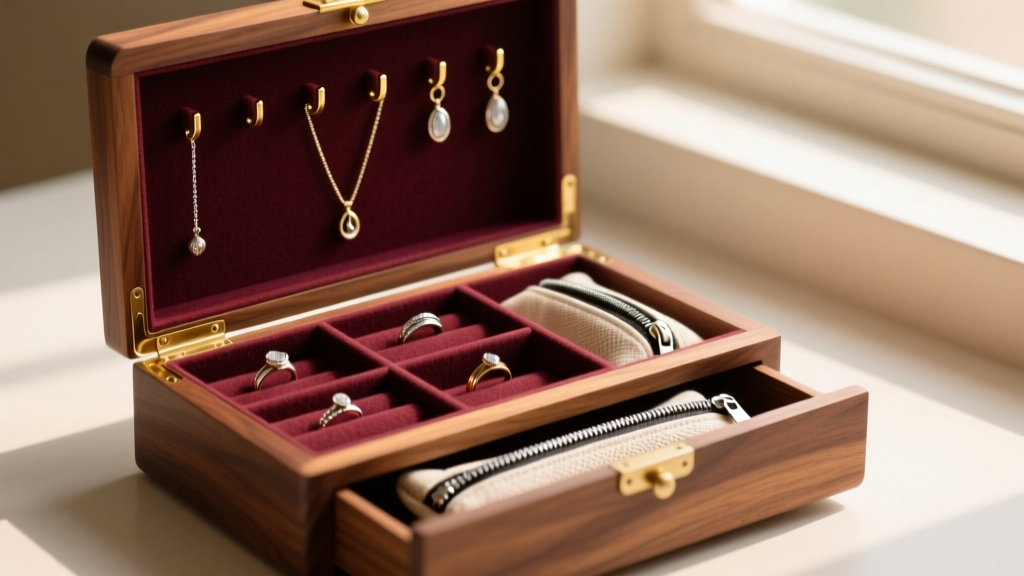
For long chains (20 inches and above), gravity is your friend. Wall-mounted or closet-door hanging jewelry organizers with individual hooks keep chains fully extended and separated. Look for organizers made from Pacific Silvercloth or treated flannel, which actively absorb sulfur and moisture from the air, preventing both tangles and tarnish.
If you prefer a traditional jewelry box, ensure it features individual, snap-closure compartments or dedicated padded rolls for necklaces. Avoid open-concept "catch-all" trays at all costs; these are the primary breeding grounds for multi-chain knots.
Travel Storage: The Zip-Pouch Method
Travel is where most necklaces meet their doom. Do not simply clasp your necklace and toss it into your toiletry bag. Instead, buy a pack of small, 2x3 inch anti-tarnish ziplock pouches (available from brands like Connoisseurs or Witz). Thread the chain through a plastic drinking straw before clasping it—this rigid barrier makes tangling physically impossible—and then seal it in the pouch.
Step-by-Step Untangling Method (When Prevention Fails)
If you are currently staring down a massive knot, follow this exact protocol used by professional jewelers to safely separate the links:
- Unclasp Everything: If multiple necklaces are tangled together, unclasp each one immediately. A closed loop creates a topological nightmare that is exponentially harder to solve.
- Apply Powder: Lay the knot flat on your silicone mat. Dust it heavily with cornstarch-based baby powder.
- Massage the Edges: Do not pull the center. Gently massage the outer edges of the knot to create slack.
- Leverage with Needles: Insert your Size 12 beading needle into the center of the tightest loop. Instead of pulling, use a gentle twisting motion to widen the gap.
- Work Outward: Once the center loop is loosened, use two needles to pull the intersecting chains in opposite directions, working your way from the center to the tails.
- Clean the Chain: Once untangled, wipe the chain with a microfiber polishing cloth to remove the powder residue. For a deeper clean, use a specialized jewelry dip, provided your chain does not feature porous stones (see Jewelers Mutual care guidelines for gemstone-specific cleaning advice).
By understanding the structural realities of chain weaves, equipping yourself with precision tools, and investing in isolation storage, you can permanently eliminate the frustration of knotted jewelry. The next time you shop for a necklace, let tangle-resistance guide your hand, and enjoy a collection that is always ready to wear.


