Egyptian Necklace Ancient Motif Care & Cleaning Guide
Learn expert care, cleaning, and storage tips for your Egyptian necklace ancient motif jewelry, protecting lapis, turquoise, and gold vermeil.

The Material Science of Egyptian Revival Jewelry
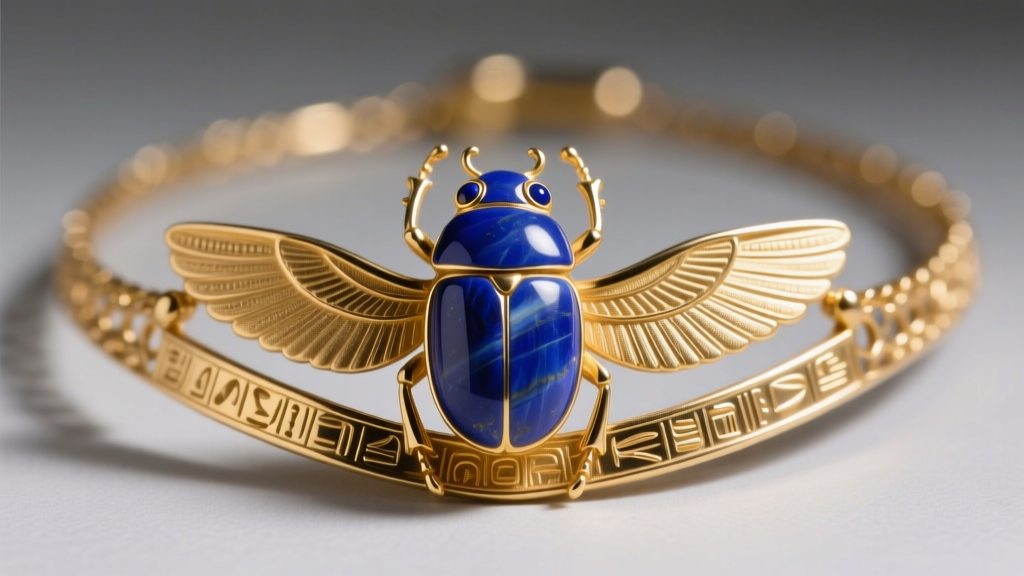
Egyptian revival jewelry has captivated designers and collectors since the discovery of Tutankhamun's tomb in 1922. Whether you possess a genuine artifact or an Egyptian necklace ancient motif replica, the material science dictates a highly specific approach to care and maintenance. The iconic aesthetic relies heavily on a triad of semi-precious stones—lapis lazuli, turquoise, and carnelian—often set in gold, silver, or faience. Understanding the geological and chemical properties of these materials is the first step in preserving their historical allure and structural integrity.
Unlike modern brilliant-cut diamonds or sapphires, the stones traditionally used in Egyptian jewelry are largely porous, chemically reactive, and relatively soft on the Mohs scale. Treating an ancient-style collar necklace or a scarab pendant with modern, aggressive jewelry cleaning methods will result in irreversible damage, including glaze crazing, stone discoloration, and the stripping of intentional metal patinas.
Decoding the Core Stones: Lapis, Turquoise, and Carnelian
To properly care for your pieces, you must understand the vulnerabilities of the specific stones involved. The Gemological Institute of America (GIA) notes that the physical structure of these stones demands a departure from standard ultrasonic cleaning protocols.
Lapis Lazuli: The Calcite Vulnerability
Lapis lazuli is not a single mineral but a rock composed primarily of lazurite, calcite, and pyrite. While the lazurite provides the deep royal blue, the calcite inclusions (the white streaks) are highly sensitive to acids. Even mild acidic solutions, including diluted vinegar or harsh commercial jewelry dips, will dissolve the calcite, leaving the surface pitted and dull. Furthermore, the pyrite (iron sulfide) inclusions can oxidize and rust if exposed to prolonged moisture, turning the beautiful metallic flecks into brown, degraded spots.
Turquoise: The Porous Sponge
Turquoise is a hydrous phosphate of copper and aluminum, rating only 5 to 6 on the Mohs hardness scale. Its defining characteristic in jewelry care is its extreme porosity. According to GIA's turquoise care guidelines, this stone acts like a microscopic sponge, readily absorbing skin oils, cosmetics, perfumes, and even household chemicals. Over time, absorbed oils and acids will alter the stone's chemical composition, shifting its vibrant sky-blue or robin's-egg hue to a muddy, irreversible green.
Carnelian and Faience: Thermal and Physical Shock
Carnelian, a variety of chalcedony (Mohs 6.5-7), is the most durable of the Egyptian triad. However, it is susceptible to thermal shock. Sudden temperature changes—such as moving from a hot steam cleaner to cold rinse water—can cause internal fracturing. Faience, the ancient glazed ceramic used in many replica and historical pieces, is incredibly fragile. The glaze can craze (develop fine cracks) if exposed to humidity fluctuations or abrasive polishing.
The Step-by-Step Cleaning Protocol for Porous Stones
Forget ultrasonic cleaners, steamers, and chemical dips. Cleaning an Egyptian-style necklace requires a gentle, manual approach that respects the stone's matrix and the metal's finish.
The Distilled Water and pH-Neutral Method
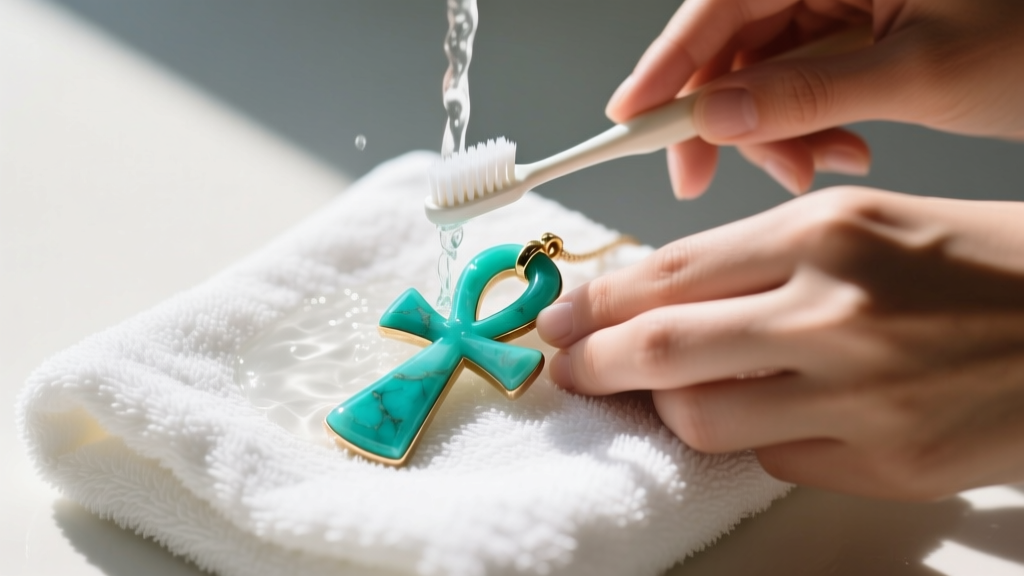
- Preparation: Mix a few drops of pH-neutral, phosphate-free dish soap (like Dawn) into a bowl of lukewarm distilled water. Avoid tap water, as the chlorine and dissolved minerals can leave deposits on porous stones.
- Application: Do not submerge the necklace. Submersion can weaken the adhesives used in bezel settings and cause water to become trapped behind the stones, leading to metal corrosion from the inside out.
- Agitation: Dip an extra-soft baby toothbrush into the solution and gently tap the bristles against the stone and metal. Use a light, circular motion to lift dirt from the intricate hieroglyphic engravings and the crevices around the scarab or ankh settings.
- Rinsing: Wipe the piece with a microfiber cloth dampened with plain distilled water. Never hold the necklace under a running faucet, as the water pressure can dislodge delicate foil backings or tension-set stones.
- Drying: Immediately pat dry with a lint-free cloth. Use a wooden toothpick or a blast of compressed air to remove moisture trapped in the metalwork crevices.
Conservator's Warning: Never use baking soda or toothpaste to clean turquoise or lapis. These mild abrasives will scratch the stone's surface and pack into the metal engravings, creating a dull, white residue that is nearly impossible to remove without professional tools.
Metal Maintenance: Preserving Vermeil and Oxidized Silver
The metalwork in Egyptian motif jewelry is just as critical as the stones. Modern replicas frequently utilize gold vermeil or intentionally oxidized sterling silver to mimic the aged look of excavated artifacts.
Gold Vermeil Care
True gold vermeil consists of a thick layer of gold (at least 2.5 microns) plated over a sterling silver base. Standard polishing cloths infused with jeweler's rouge are too abrasive and will gradually strip the gold layer, exposing the silver beneath. To clean vermeil, use only a clean, untreated, ultra-fine microfiber cloth to buff away fingerprints and skin oils. If the piece requires deeper cleaning, rely strictly on the soapy distilled water method outlined above.
Oxidized and Antiqued Silver
Many Egyptian collar necklaces and pendants feature 'antiqued' silver, where the recessed areas of the metal are intentionally darkened with silver sulfide to highlight the intricate relief work of gods, hieroglyphs, or lotus flowers. Never use liquid silver dips or polishing pastes. These products are designed to strip tarnish and will instantly remove the dark patina, leaving the piece looking flat, overly bright, and historically inaccurate. Instead, gently polish only the raised, high-relief areas of the silver with a dry polishing cloth, leaving the dark recesses untouched.
Storage and Environmental Hazards
Proper storage is the most effective form of preventive conservation. The environment in which you store your jewelry dictates its lifespan. Below is a matrix detailing specific environmental hazards and their corresponding storage solutions.
| Material | Primary Environmental Hazard | Optimal Storage Solution |
|---|---|---|
| Turquoise | Absorbs ambient humidity and chemical off-gassing from plastics. | Acid-free tissue paper inside a breathable cotton pouch. |
| Lapis Lazuli | Prolonged exposure to direct UV light can fade lower-grade stones. | Opaque, lined jewelry box away from windows. |
| Oxidized Silver | Airborne sulfur compounds cause uncontrolled, uneven tarnishing. | Airtight container with 3M Pacific Silvercloth anti-tarnish strips. |
| Faience / Glaze | Rapid fluctuations in temperature and humidity cause glaze crazing. | Climate-controlled room (40-50% relative humidity), padded tray. |
When storing multi-strand Egyptian collar necklaces, always lay them flat. Hanging heavy, beaded collars on standard jewelry hooks places immense tensile stress on the silk or nylon threading, leading to premature stretching and eventual catastrophic strand failure.
Daily Wear Precautions and the 'Last On, First Off' Rule
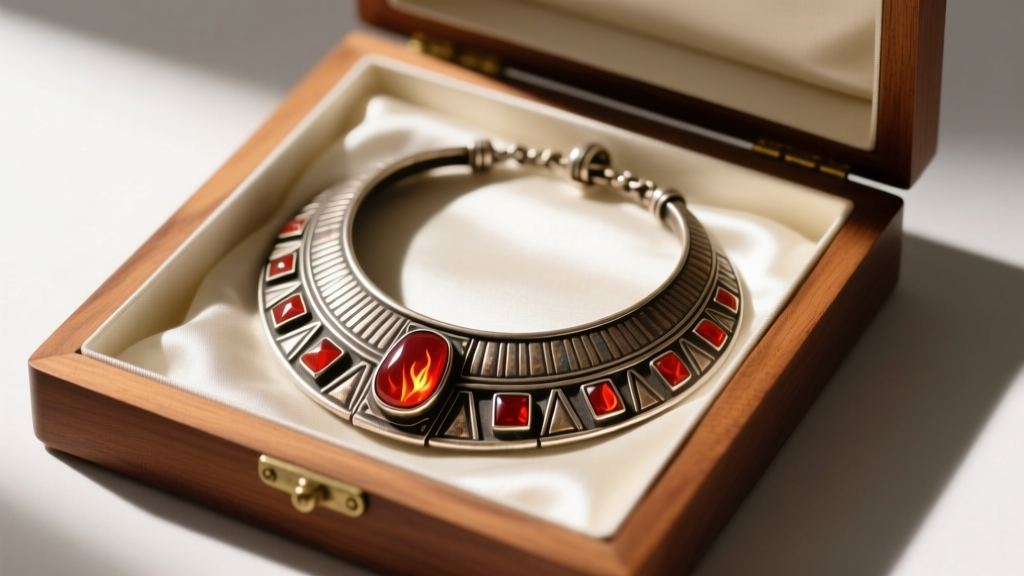
The chemicals we apply to our bodies daily are the primary enemies of ancient-style jewelry. Perfumes, hairsprays, lotions, and sunscreens contain alcohols and emulsifiers that will coat turquoise and degrade the adhesives in foil-backed settings. Adopt the strict 'Last On, First Off' protocol: your Egyptian necklace should be the very last item you put on after your cosmetics and perfumes have fully dried, and the very first item you remove upon returning home.
Furthermore, remove your jewelry before swimming. The chlorine in pools and hot tubs is highly corrosive to the copper alloys found in both carnelian treatments and gold vermeil bases, while salt water will rapidly accelerate the pitting of pyrite inclusions in lapis lazuli.
When to Seek Professional Conservation
While routine maintenance can be performed at home, certain structural issues require the intervention of a professional jeweler or a museum conservator. If you notice the bezel wire pulling away from a cabochon stone, or if the threading on a multi-strand beaded piece feels stiff and brittle, cease wearing the item immediately. Attempting to clean a structurally compromised piece can result in the loss of irreplaceable stones. For genuine antiquities, the Metropolitan Museum of Art's conservation department advises against any home cleaning, recommending that historical artifacts only be treated by certified antiquities conservators who understand the ethical mandate of preserving original burial patinas and ancient tool marks.


