Eight Ball Necklace Anatomy: Metals, Enamel & Chain Pairing
Explore the technical anatomy of the eight ball necklace. We break down metal grades, enamel types, and chain gauges for optimal durability and style.

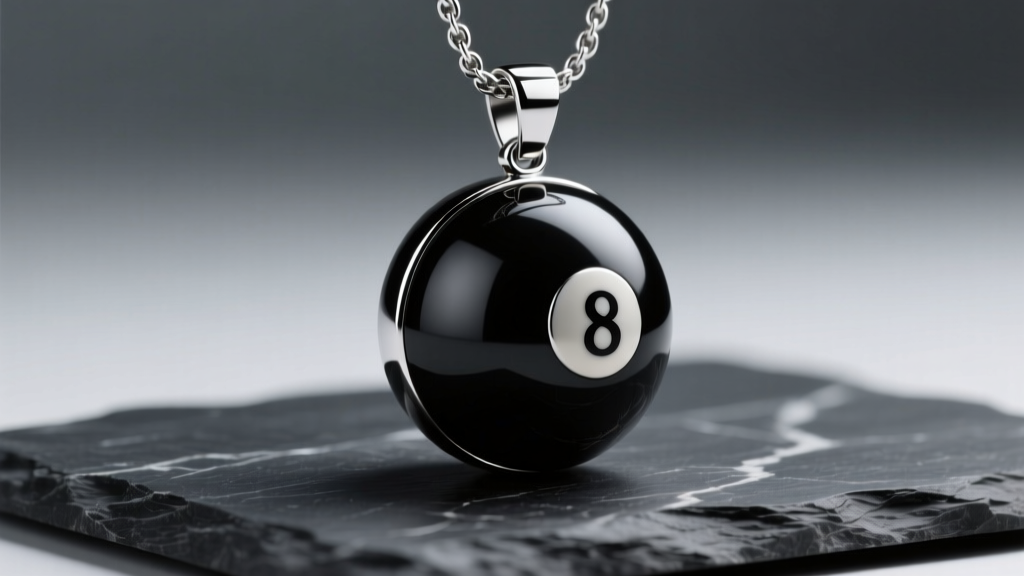
The eight ball necklace has transcended its origins in billiard hall culture and 90s streetwear to become a permanent staple in contemporary alternative and luxury jewelry. However, beneath the playful geometry of the black sphere and the stark white numeral lies a complex intersection of metallurgy, enamel application, and mechanical stress engineering. For serious collectors, bench jewelers, and daily wearers alike, understanding the technical specifications of an eight ball pendant is crucial for ensuring longevity. This deep dive explores the material science, manufacturing techniques, and structural mechanics that separate a premium eight ball necklace from a fast-fashion novelty.
The Metallurgy of the Eight Ball Pendant
The base metal of your pendant dictates not only its weight and luster but also its resistance to environmental degradation. According to Rio Grande's metallurgy guide, the three most common metals used for high-quality eight ball pendants each present unique structural advantages and failure modes.
316L Surgical Stainless Steel
For matte-finished or PVD-coated (Physical Vapor Deposition) eight ball necklaces, 316L stainless steel is the industry standard. The "L" denotes low carbon, while the addition of 2-3% molybdenum drastically increases resistance to pitting corrosion from chlorides (like sweat and seawater). With a Vickers hardness (HV) of roughly 150-200, 316L is highly resistant to scratching but difficult for bench jewelers to resize or solder if the bail breaks. It is the optimal choice for heavy, oversized streetwear pendants that endure high-impact environments.
925 Sterling Silver and Rhodium Plating
Sterling silver (92.5% pure silver, 7.5% copper alloy) offers superior acoustic resonance and a brighter, whiter luster that complements the white enamel of the "8" circle. However, the copper content makes it highly susceptible to sulfur-induced tarnishing. Premium eight ball silver pendants are electroplated with rhodium. When evaluating a piece, look for a plating thickness of at least 1.5 to 2.5 microns; anything thinner will wear through to the copper alloy within six months of daily friction, leading to rapid oxidation.
Solid 14k Gold Alloys
Solid 14k gold (58.5% pure gold) is the apex choice for heirloom-quality eight ball necklaces. Yellow 14k is alloyed with copper and silver, yielding a Vickers hardness of about 120-140 HV, making it softer than steel but highly malleable for intricate bail soldering. White 14k gold, alloyed with nickel or palladium, provides a harder surface (up to 160 HV) that naturally mimics the high-contrast aesthetic of the billiard ball motif without requiring rhodium plating.
Enamel Techniques: Vitreous vs. Cold Resin
The stark contrast between the black sphere and the white number is the defining visual characteristic of the eight ball necklace. Achieving this contrast requires advanced enameling techniques, which heavily influence the pendant's durability and price point.
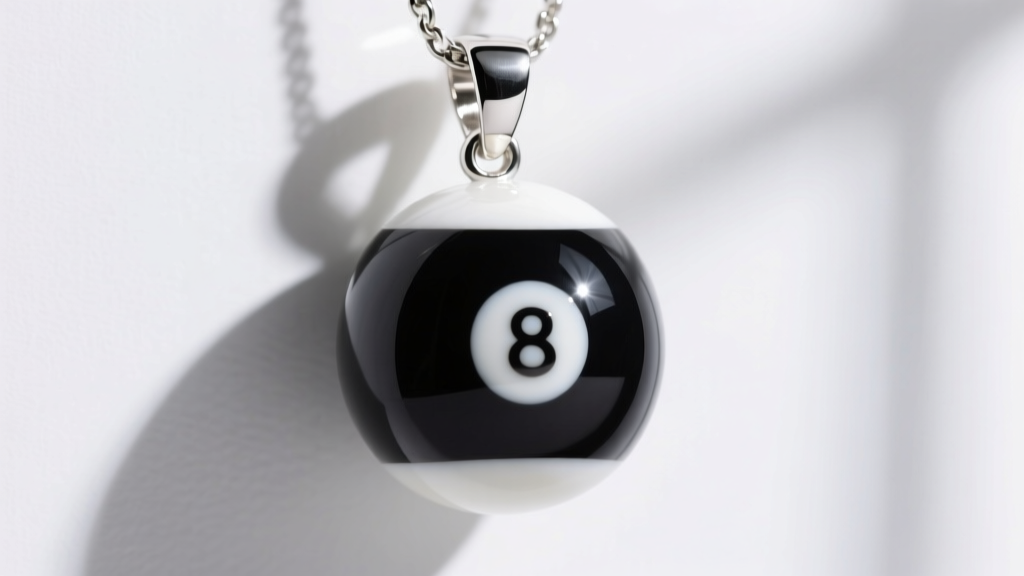
Vitreous Enamel (Fired Glass)
Vitreous enamel involves fusing powdered silica glass to the metal substrate in a kiln at approximately 1400°F (760°C). As detailed in Ganoksin's enameling basics, this process creates a permanent, glass-like bond with a Mohs hardness of 5 to 6. Vitreous enamel will never fade, yellow, or scratch under normal wear. However, it is brittle; a hard drop onto a tile floor can cause thermal or kinetic shock, resulting in micro-fractures or complete shattering of the white numeral circle.
Cold Enamel (Epoxy Resin)
Cold enamel is a two-part pourable epoxy resin that cures at room temperature. It is significantly more impact-resistant than vitreous glass, making it ideal for active wearers. Historically, the primary failure mode of white cold enamel was UV degradation, causing the "8" to yellow after 2 to 3 years of sun exposure. As of 2026, premium jewelry manufacturers have integrated advanced HALS (Hindered Amine Light Stabilizers) into their resin formulations, virtually eliminating UV yellowing and bridging the longevity gap between cold and vitreous enamels.
Bail Mechanics and Chain Gauge Pairing
The bail—the loop connecting the pendant to the chain—is the highest-stress component of any eight ball necklace. Because the spherical shape of the pendant acts as a pendulum, it generates continuous kinetic friction against the inner curve of the bail and the chain links.
Expert Bench Tip: Never pair a soft metal pendant (like 925 silver) with a harder metal chain (like titanium or stainless steel). The differential in Mohs hardness will cause the chain to act as a file, sawing through the silver bail in a matter of months. Always match metal hardness or use a sacrificial jump ring buffer.
Selecting the correct chain gauge is equally critical. An undersized chain will snap under the pendulum weight, while an oversized chain will cause excessive wear on the bail's interior diameter. Use the matrix below to pair your eight ball pendant with the correct chain specifications.
| Pendant Weight | Pendant Diameter | Recommended Chain Gauge | Optimal Chain Style |
|---|---|---|---|
| 5g - 10g | 12mm - 15mm | 1.5mm - 2.0mm | Cable, Box, or Rope |
| 11g - 20g | 16mm - 22mm | 2.5mm - 3.5mm | Curb, Figaro, or Miami Cuban |
| 21g - 35g+ | 25mm - 35mm+ | 4.0mm - 6.0mm | Heavy Curb or Franco |
Proportional Scaling and Drop Lengths
The visual impact of an eight ball necklace relies heavily on proportional scaling relative to the wearer's anatomy and the intended styling context. The spherical geometry of the pendant demands careful consideration of chain length to ensure the piece sits correctly on the sternum.
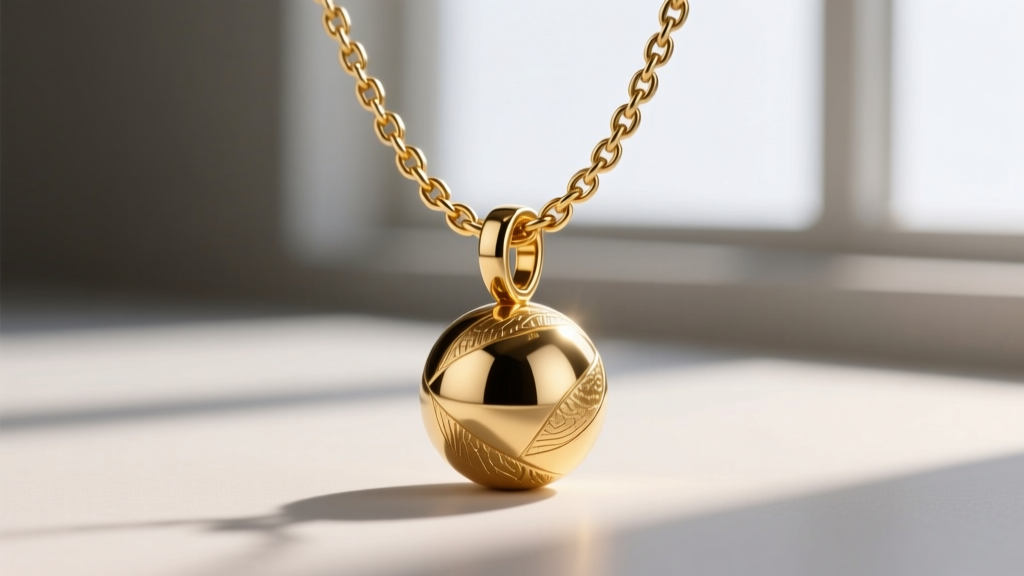
- The 18-Inch Choker Drop: Best suited for smaller pendants (12mm-15mm). This length sits at the base of the throat, ideal for smart-casual layering over crewneck t-shirts or button-down collars.
- The 20-to-22-Inch Standard: The most versatile length, allowing a 20mm pendant to rest perfectly in the clavicle hollow. This is the standard for single-piece, everyday wear.
- The 24-to-30-Inch Streetwear Drop: Reserved for oversized, heavy pendants (25mm+). This length allows the eight ball to hang over hoodies and outerwear, functioning as a bold focal point in layered streetwear aesthetics.
Maintenance and Failure Modes
Proper maintenance of an eight ball necklace requires an understanding of its composite materials. While the metal base may require aggressive polishing, the enamel details dictate strict limitations on cleaning methods.
Ultrasonic Cleaners: Never place a vitreous enamel eight ball pendant in an ultrasonic cleaner. The high-frequency cavitation bubbles can create micro-shocks that will fracture the glass enamel, causing the white numeral to flake away from the metal substrate. Cold enamel (epoxy) is generally safe in ultrasonic baths, but prolonged exposure to harsh chemical solvents can degrade the resin's surface gloss.
Polishing Compounds: When polishing the metal sphere or bail, use a soft muslin wheel with a mild rouge compound. Avoid aggressive cutting compounds like tripoli, which can easily slip and scour the adjacent enamel, leaving permanent, hazy scratches on the black or white surfaces. For routine cleaning, a simple soak in warm water with a few drops of mild dish detergent, followed by a gentle brushing with a soft-bristled toothbrush, is the safest method to remove sebum and environmental grime without compromising the structural integrity of the piece.


